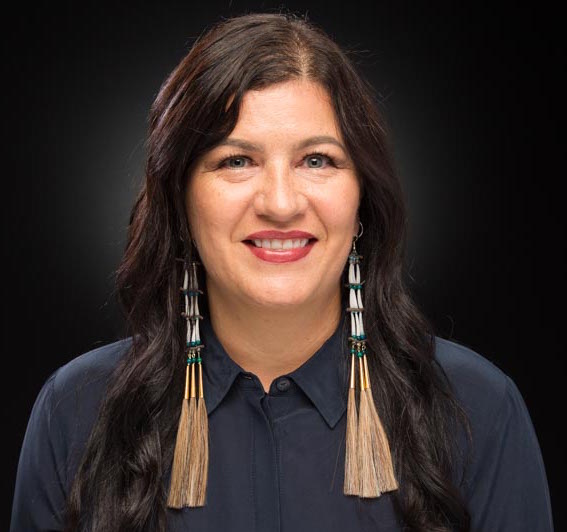
Lori Campbell, newly appointed Associate Vice President, Indigenous Engagement, at the University of Regina has a long history of advocacy. A survivor of the infamous “Sixties Scoop”, she has used her voice to amplify issues affecting Indigenous peoples for many years, responding to media interview requests despite the challenges of doing so.
We all benefit from her willingness to engage and educate, and Informed Opinions is proud to feature her profile in our database of sources. Given the understandable reasons many women representing historically-excluded communities have for not speaking to journalists, we especially appreciate her shared insights below.
Informed Opinions (IO): Given the risks associated with speaking up publicly, especially as an Indigenous woman weighing in on controversial and/or misunderstood issues, why do you say yes to media interviews?
Lori Campbell (LC): In our culture, knowledge and skills come with responsibility. We all have expertise in different areas; we all have a role. I have had, and continue to have, many teachers in my life, many mentors, and they have seen that I have a skill set to navigate media and to get our voices heard. They have nurtured this ability, and speaking to the media is one of those ways I can give back to my community.
IO: How has your perspective on the importance of doing this shifted over the years?
LC: I don’t get rattled so much by reporters now. Some have their own agenda and they want to ask you the same thing five different ways to try to get the answer they want to hear. I used to think maybe they didn’t understand my first answer, but now I know different so I simply keep on my messaging and respond with what I want told.
IO: What preparation strategies have you found to be especially helpful?
LC: Oftentimes I am called upon when there are tragedies or devastation that occur in our communities and to our people. It can be difficult because while providing my expertise, I am also living through the trauma in real time. Usually in these instances I prepare a couple of lines that are really key to the message I want to get out and try to stick to them. And I also do some deep breathing and let the ancestors, the energy flow through me.
IO: What kind of feedback have you received to your commentary either from people in your network or from members of the public more broadly?
LC: From my community, I receive a lot of positive feedback for standing up and carrying our voice forward and for telling it like it is and not holding back.
From the broader community, I also get a fair bit of positive feedback because it helps them learn. I always call on people to do differently, do better, once they know different and know better.
But there are always a few people who just want to be adversarial, who want to say “well, there are two sides to every story” when they hear about residential schools, for example. So I ask “What is the side of the story that explains why there are graveyards and unmarked graves with children outside of residential schools but not other schools across the country?”
IO: What impact — positive or negative — do you think your media engagement and enhanced profile have had on your professional work opportunities or reputation?
LC: Generally, I would say it has been positive. In all honesty, I prefer some reaction to no reaction on the issues I speak to. No reaction means that people are so disengaged that they don’t care. Even if a reaction is negative, at least it shows engagement.
Then again, sometimes your words are spun in a way that you don’t intend. It is important to have trust in our communities. When I hear a statement from an Indigenous leader who I admire and it sounds bad, instead of thinking “I can’t believe they said that”, I reach out to that person because I know they are likely feeling frustrated and angry about how they were presented in the story, and worried about what our community will think.
LC: Generally, I don’t engage with them. I often don’t read public comments. There are trolls and they are terrible. That’s why CBC can’t even allow comments on online stories with Indigenous content.
IO: Do you have any advice for other women who remain reluctant to share their knowledge through media?
LC: Even when your voice shakes, stand and speak. Our voices bring value, a unique narrative and perspective, and they inspire. Our stories need to be told.
“We may never know who we touched or how, but we must trust that someone has heard what they needed to hear in what we have shared and it has impacted them profoundly.“
Informed Opinions is a national non-profit working to amplify the voices of women and gender-diverse people and ensure they have as much influence in public conversations as men’s.
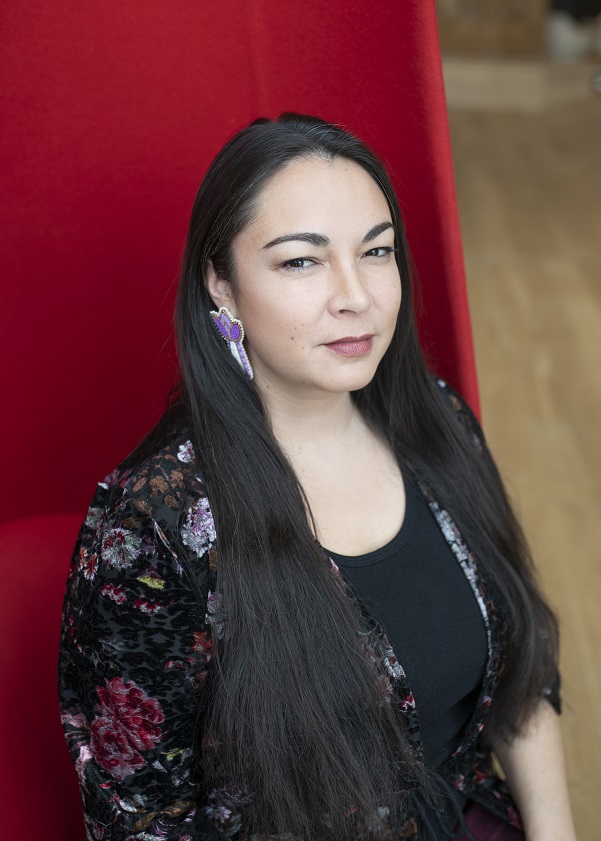
andAmy Ede.In the context of our collaboration to engage and support more Indigenous women and gender diverse people in being heard through the media, the two recently sat down (virtually) to discuss related ideas.
SHARI: I’m embarrassed to admit that when we started Informed Opinions in 2010, I seriously under-estimated the obstacles to bridging the gender gap in Canadian media. Blinded by my own, relatively benign experience, I thought “if I just show women how under-represented our voices are; teach them how to translate their knowledge into publishable op eds, or become more comfortable and effective in media interviews; and then make it easy for journalists to find them, that will do it.”
I failed to realize how reluctant many women are, especially if they work in sectors where they’re constantly being reminded in subtle or explicit ways that they don’t belong. As a woman who never had kids of my own, I also didn’t appreciate just how challenging it is to make time for unpaid media engagement while holding down a job and raising a family.
And even though I’ve been getting hate mail since the days when trolls had to address and stamp an actual envelope, my privilege blinded me to how much worse the backlash directed to BIPOC women is, especially when facilitated by toxic social media culture.
AMY: Yes,doxxing (the public broadcasting of personal details about how to find a person offline) is a terrifying form of oppression and the violence in real life and on social media is omnipresent and magnified for Indigenous women. Every interaction presents a choice to face violence or be silent. Real life danger looms large as we know that white men may rape and murder Indigenous women, girls, Two-Spirt and LGBTQQIA people with impunity. The cases of Missing and Murdered Indigenous Women and Girls, including Cindy Gladue and Tina Fontaine, show a justice system that dehumanizes us and robs us of our dignity just as the perpetrators have.
Encouraging us to step up is asking us to engage with systems that have ignored, pressured, manipulated, or exploited us. We have been consulted but our input has not been honoured. In addition, demands for unpaid labour, rationalized by community good or awareness, have exhausted us. We are asked to be experts on Indigenous culture or history, educating journalists, interviewers and consultants about basic things that should have been taught in schools.
I share a great deal of myself through the news media and on social media because I want to be seen and understood in a system that erases, displaces and misrepresents me. I have experienced the hurt and humiliation of opening an article about an Indigenous woman advocate I look up to and being thrown into the horrifying details of her childhood abuse in the opening paragraphs.
I know that there is always a possibility of harm to myself and others when I lend my voice to a medium I can’t control. The best I can do is equip myself with the tools I need to advocate for strength-based, solution-focused, and trauma-informed communications and go the extra mile to educate others. It’s a privilege that I have the support systems and conviction that I need to do this and that trailblazers like Ellen Gabriel and Pam Palmater have normalized being outspoken.
SHARI: The sobering context you share echoes the perspectives we heard this summer during a roundtable we convened with BIPOC women who are featured in our database of expert sources. White journalists and sources need to better understand how fraught the terrain is for those who don’t enjoy privileges we take for granted.
At the same time, we remind women with critically valuable insights that if they decline interview opportunities, counting themselves out because they’re not “the best” person, this is as much of a problem as journalists failing to seek their perspectives in the first place. The journalist will simply go to the next available source, who’s likely to be male, and unlikely to be fettered by the self-expectation that he has to know everything.
That’s why we encourage women to focus on their ability to “add value”. And because they have relevant experience — or they wouldn’t have been contacted in the first place — they can almost always clear that bar.
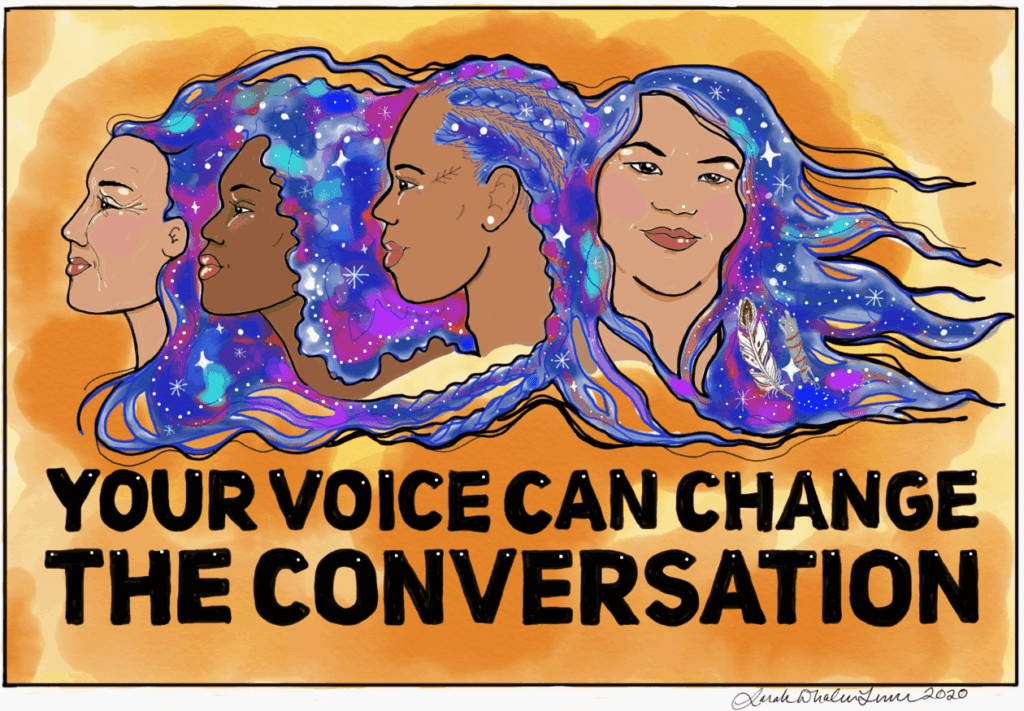
“The galactic imagery in this work suggests the infinite knowledge that lives within us. The lived experience of these four women is valid and theirs to share.” – Sarah Ayaqi Whalen-Lunn (she/her) is an Inuk artist based out of Anchorage
AMY: I see Indigenous women on Twitter who are experts on traditional Indigenous governance structures, relational worldviews, and artistic practices posting brilliant statements in the public domain, for free. A decolonized perspective on holding knowledge recognizes that job titles and institutional credentials are irrelevant to the value of a person, their ideas, and the level of respect we show them. We need to change not only how we listen, but who we listen to, facilitating the amplification of these perspectives.
SHARI: The absence of financial compensation for one’s hard-won insights compounds the problems of invisibility. The deck is stacked against those who are already challenged by racist structures and don’t have the time to invest in labour that’s not only risky but unpaid.
Another challenge is that dominant media practices have created the perception that you have to look or sound a certain way to be considered credible. The image of authority that’s been reinforced by news media for centuries is that of a middle-age white male dressed in business attire. And so anyone outside of that frame is more likely to feel undermined before they even open their mouths.
AMY: Some women are resisting constructs of appropriate ways to express themselves and exercising our right to be angry. Black and Indigenous women have led the way in challenging the notion that we need to be polite, approachable, and smile in order to be heard; that we don’t have to create a safe space for others to witness our outrage. When Minister Hadju was on CBC’s Power & Politics in a leather flight jacket, an Indigenous woman leader expressed that this was how she wanted to dress for interviews. We need to dress in ways that make us feel powerful and ourselves.
I was approached to speak on an Ask Women Anything panel in Ottawa back in 2018, when I’d recently departed my position as Director of Communications at the Native Women’s Association of Canada. I wrote speeches and presentations for others but I didn’t see how I had a voice that mattered.
Participating convinced me that I’m an expert in my own personal experience. The act of voicing my truth legitimizes shared experiences of violence, racism, and erasure and helps others better understand the barriers to the health and wellbeing facing many Indigenous women, Black women, and Women of Colour.
SHARI: I’d forgotten that connection! Ask Women Anything is an Ottawa-based grassroots amplification initiative that was created by Informed Opinions’ previous board Chair, Amanda Parriag as a project of Informed Opinions. It became such a powerful platform for voices and perspectives that have been traditionally marginalized that Amanda is now leading it as a stand-alone entity.
AMY: After the panel, Amanda offered to co-write an op-ed with me for a national publication. The piece we wrote lamenting that “progress” had become a dirty word was published in The Toronto Star, and generated a lot of reader engagement. The next time I felt that I had a perspective that needed to be heard, I had the confidence and experience to be published on my own. It’s our responsibility not only to speak out, but to encourage and lend capacity and resources to others who are finding their own voice in media.
I’m experienced in advocacy, I’m engaged with my community, and I spend a lot of time learning and writing about Indigenous priorities. Who I am and what I do has made me artful in the communication of difficult truths. I know that my voice can change the conversation and I put in extra work to be heard on my own terms.
AMY: This was a success for me in many ways. I fear backlash from the Indigenous community the most and was shocked not to be called in or called out on something egregious. My tweet about the article received over 100 retweets from accounts including 1492 LandBackLane, so I hope that land and water defenders knew it was a love letter to them and their work and that Indigenous readers knew I wasn’t trying to speak on their behalf. Non-Indigenous readers told me that they felt informed and that was also a goal; to stomp out confusion and build understanding that I hope will turn into support.
SHARI: We’ve seen so many examples of women creating demonstrated impact by sharing experiences and perceptions that were previously under-reported or missing entirely.
It’s impossible to predict what difference it would make if women were quoted 50% of the time (instead of 30%, as our Gender Gap Tracker is currently showing). But we experimented by taking 100 op eds written by women we’d trained that were published in influential daily newspapers. We created a word cloud to see what issues came up most often. Then we created a comparable word cloud with a random sample of 100 op eds written by men during the same period of time. Finally, we deducted the words that were common to both samples to end up with the issues that only gained prominence when women’s voices were featured.
It was a heartbreaking exercise. Some words were completely predictable: women, girls, sexual, assault. But many others were not, like food and water, evidence and impact, racism and police! What’s interesting is that we did this experiment in 2016, before the #MeToo movement and #BlackLivesMatter — though interestingly after #IdleNoMore. It’s deeply concerning to think of the issues that are not getting attention because we chronically under-represent the people — women, Indigenous people, people of colour, people living with a disability, LGBTQQIA — who are most affected by them.
AMY: I agree that the more we expand representation in media to include people who identify as Two-Spirit and non-binary, women of diverse faiths, women experiencing incarceration, women who live in rural, remote, and northern areas, working-class women, women experiencing poverty, and women who are street associated, the better we will be able to see the landscape as it is.
It interests me that evidence and impact are included in the word cloud. Indigenous women are trained to give evidence beyond our lived experiences because we are not believed. With better awareness of our lived experiences and understanding of our priorities, it may be possible to speak without first quantifying how we have been silenced, why our knowledge is valuable, and why our voices are deserving of respect.
Informed Opinions is actively focused on including voices more representative of the population in the Circle of Experts. We’re seeking Indigenous women and gender diverse people across industries and with professional and personal expertise to join. There’s no limit to the number of rich perspectives needed from First Nations, Inuit, and Métis women, as well as others with a story to tell.
Shari Graydon is the Catalyst of Informed Opinions, a non-profit working to amplify women and gender diverse individuals’ voices and ensure they have as much influence in public conversations as men’s.
One of the wonderful things about truly inspiring people is that their influence outlasts them. The power of their actions and words can continue to change minds and motivate choices well beyond their time among us. It requires no prescience to predict that this will be true of the just-passed Ruth Bader Ginsberg.
Yes, the US Supreme Court has lost a giant of jurisprudence, and now millions of progressive-minded American voters and law-makers are properly outraged by the hypocritical intentions of Mitch McConnell. He has pledged to replace RBG before the upcoming November elections, despite his unwillingness to permit Barack Obama to appoint his own nominee leading up to the 2016 elections.
How that drama will play out remains to be seen. But regardless, the rest of us can continue to benefit from the many lessons the “Notorious RBG” taught us, both explicitly and by example. Here are just a few…
While attending Columbia law school, Ruth Bader Ginsburg was invited to dinner by the dean along with the seven other female students (out of a class of 500). He asked each of them how they justified taking up a spot that should have rightly gone to a male student. RBG responded that she wanted to understand and be able to support her husband in his legal career.
A worthy goal, but hardly one that foretold her eventual impact on women’s equality.
In the early 1960s, however, she traveled to Sweden to do research for a book on the Swedish civil justice system. Attending a trial, she observed that not only was the presiding judge a woman, but she was noticeably pregnant. (In the US at the time, there were virtually no female judges and teachers were taken out of the classroom the minute their pregnancies began to show.)
1. Your visibility as a role model — in media and elsewhere — matters
The encounter caused her to question the roadblocks she had faced in her own career. And it’s worth remarking on what a difference it makes to witness a woman exercising power, publicly demonstrating her intellectual gifts.
When we are denied access to such examples, it’s easy to see the obstacles as inevitable. Physically confronting an alternative reality challenges that willingness to accept an unfair status quo. That’s why at Informed Opinions we regularly encourage women to seek visibility: for the benefits it contributes to others.
RBG also recalled coming across this quote in a Swedish magazine:
“Men and women have one principle role. That is being people.”
She said that it became foundational to how she approached her litigation work, much of it performed on behalf of the American Civil Liberties Association. One of her cases involved a plaintiff whose wife had died in childbirth. He wanted to be able to quit his job in order to raise his child. But at the time, survivor benefits were not awarded to male parents.
2. Advocating for broad equality is strategic as well as right
RBG successfully argued this case in front of nine male justices, and in doing so, established a precedent that she built on decades later to help inspire landmark equal pay legislation for women. You can read more about her dissenting opinion in the Lily Ledbetter case here, when she challenged Congress to rectify the error in judgment her colleagues were making.
A few years later, President Barack Obama signed the Lily Ledbetter Fair Pay Act into law to do just that. Clearly, Ruth Bader Ginsburg had vision, and she played the long game.
Moreover, even though her dissenting opinion — read aloud in court at a time when that was almost never done — was described as “scathing”, she was known to have very cordial relationships with all of her colleagues.
She and conservative standard bearer, the late Supreme Court Justice Antonin Scalia (who categorically opposed reading the Constitution through a lens that evolved with the times), were, in her own words, “best buddies”.
Their bond, cultivated over many years, survived many profound differences of opinion on legal and social issues that were publicly negotiated. No doubt a tribute to both individuals, it certainly reflected the sentiment RBG herself expressed in encouraging those who looked up to her:
3. “Fight for the things that you care about, but do it in a way that will lead others to join you.”
Given the deep political divisions within the US, and the appetite its current President has for fanning partisan flames despite the demonstrable demand of our times for cooperation, this counsel remains especially timely.
Finally, in the context of the work Informed Opinions does, seeking to expand the space for women’s perspectives in Canadian public conversations, I leave you with this final piece of advice from one of the most diminutive but influential rock stars the legal world has ever known:
4. “Speak your mind, even if your voice shakes.”
Appreciating all the reasons that women have to avoid putting themselves in the line of fire by speaking their truth in public, this directive is especially relevant. At a recent roundtable Informed Opinions convened with 16 women from diverse backgrounds featured in our database, we were reminded of the virulence of the abuse levelled at Black, Indigenous and women of colour.
With their encouragement and advice, we are now developing a psychological care kit and peer support network to make it easier for women to act on the late great justice’s advice.
The tributes to Ruth Bader Ginsburg’s accomplishments abound and make for inspiring reading. Much of the above context was informed by a conversation featured on the New York Times’ The Daily podcast between Michael Barbero and longtime Supreme Court reporter, Linda Greenhouse.
Shari Graydon is the Catalyst of Informed Opinions, a non-profit working to amplify women’s voices and ensure they have as much influence in Canada’s public conversations as men’s.
Meg moved quickly behind me to close the door to her office not wanting her staff to overhear.
I had showed up in advance of the MediaWatch board meeting in 1990 to let her know that even though I’d only joined the board six months previously, I would be resigning at this, my second meeting.
When pressed, I confessed my disappointment that some of the other members didn’t seem that engaged. At my first meeting, we’d gone around the table to share what we’d been up to on behalf of the then 10-year-old feminist organization advocating to improve how women were represented in media. More than half of my new colleagues had nothing to say.
Wrapped in my new-convert-to-the-cause fervour, I was appalled. What I saw as both a privilege and pressing responsibility, they seemed to view as a governance obligation to be executed three times a year in exchange for take-out pizza and — if they lived elsewhere — economy class travel to Toronto.
Meg, who’s ballet-master-posture and long patrician face made her seem even taller than the six feet she’d inherited, was also new to her job as Executive Director. She’d taken on the role when the board had moved the organization’s office from Vancouver to Canada’s media centre to better influence the business practices of advertisers, broadcasters and news organizations.
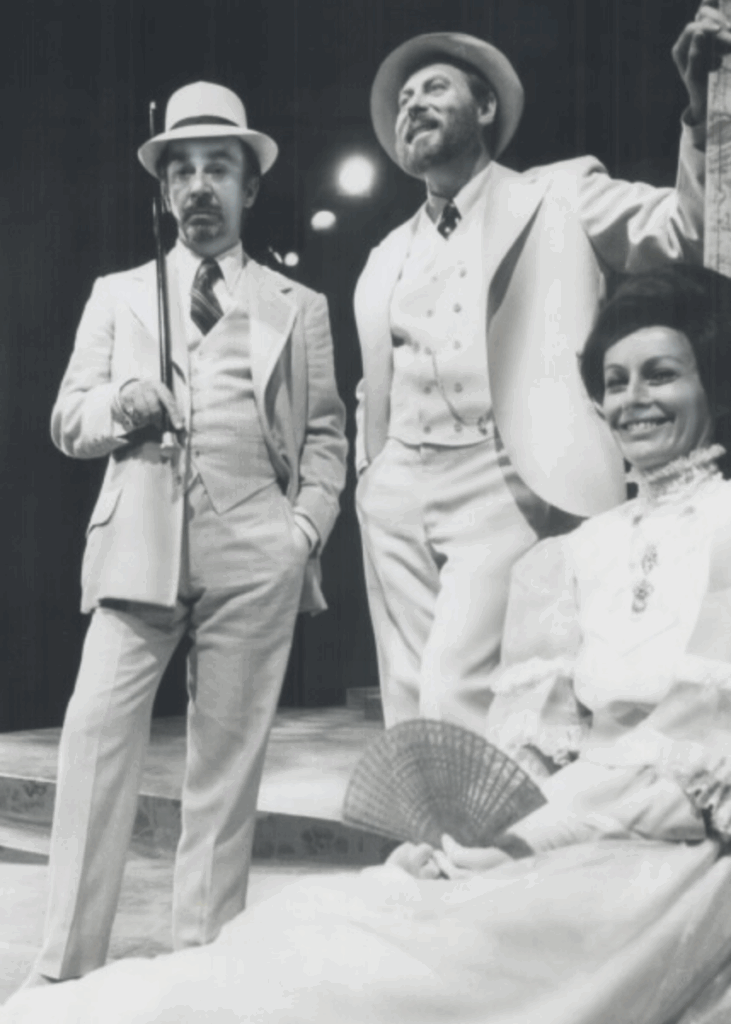
Eric House, David Gardner and Meg Hogarth in a performance of The Cherry Orchard at Hart House in Toronto, 1977
An actor, former president of the Canadian performers’ union, and one-time provincial NDP candidate, Meg modelled what was, for me, an inspiring marriage of activism and art, pragmatism and persuasion. She was bright and energetic, confident and fun.
And she managed to convince me in short order that the conclusion I was drawing to quit the board was entirely wrong; instead of jumping ship, she advised, I should be at its helm. The term of the current president was up and given the leadership I’d already shown — writing op eds, giving public talks and media interviews — she was certain others would be happy to cede the floor to me. (This is one source of the quip I often make in talks: there are no glass ceilings in under-funded women’s organizations.)
That conversation with Meg, which took place 30 years ago, changed the course of my life. Although I’ve done many other things during and after my ten years as chair of that board, three decades later, I remain integrally involved in advocacy work related to the persistent under-representation of women in media.
MediaWatch has morphed into Informed Opinions, and I continue to build on research we did together… share stories about interviews I gave during those years… fuel my commitment with the recognition that while women’s equality has seen extraordinary gains in many arenas, we are still being interviewed, quoted and featured less than a third of the time.
During the period of our collaboration, Meg was generous in passing speaking opportunities and media interviews to me. She would coach me on the phone, offering feedback and sharing ideas that made me a more interesting source and more effective advocate.
Her own commitment to the cause was best illustrated by a meeting she secured with Ted Rogers, founder of the Rogers media empire. As funding cuts in the 1990s began to erode MediaWatch’s ability to deliver programming, conduct research and lobby media, she sought an audience with the empire builder, whom she’d briefly dated many decades before. Even though they hadn’t been in touch for years, and he had no evident history of sharing company profits with women’s organizations, he ran a media empire, and he agreed to see her.
I don’t recall any details of the meeting, only the optics of the encounter as she described them: both of them in their sixties, but Meg dressed in her rag-tag bohemian non-profit aesthetic, having arrived by bike at Rogers’ well-appointed corporate headquarters to meet the business-suited billionaire.
I believe the audience was both perfunctory and fruitless, but I loved her for having had the humility to request it, the strength of character to show up as herself, and the sense of humour necessary to turn the incident into a good story.
Meg Hogarth died last month at 84. Her passing was marked with an obit in The Globe and Mail, which failed to include a photograph. Given her work helping to make women more visible, this was a cruel irony.
Meg had arguably a greater impact on the course of my life and the advocacy I’m still doing than almost anybody. I told her that the last time I saw her in 2016… confessed that I was more invigorated by what had become my life’s work than I ever could have imagined… thanked her for closing the door behind me back in 1990 and painting a leadership vision that I hadn’t previously aspired to assume.
I don’t know how much of what I said was understood. By then her communication abilities were limited by the impact of both Parkinson’s and several strokes. I regret not having made a point to tell her sooner. That’s why I’m telling you.
Without Meg Hogarth, executive director of MediaWatch, no Shari Graydon, catalyst of Informed Opinions. Indeed, no Informed Opinions.
The next donation I make to the organization’s future will be in her honour.
The pandemic lock-down has also given me permission to double my chocolate intake, consume cookies at breakfast and microwave chunks of cheese on a plate so I can scrape the stuff into my mouth with a fork. The grapes have become mere garnish, and I don’t even try to find a 5 pm Zoom date to pretend I’m not drinking alone.
I’m not proud of this behaviour, and the fact that I have the luxury of doing it without being criticized or even interrupted at any hour of the day or night is not lost on me. I know others are negotiating divorces over lesser offences committed in too-close quarters. And some are contributing to the tragically skyrocketing calls to women’s shelters.
Reading others’ coronavirus coping mechanisms inspires or depresses me, depending on how ambitious they are and where I am on the popcorn/chocolate/cheese self-loathing cycle. But in case you’re in need of new ideas, here’s what I — and some of Informed Ops’ experts — have found helpful:
Phone calls: I’m old enough to have spent the first part of my career unencumbered by email’s demands. And yet like almost everyone else, I’ve allowed online communication to supersede the phone. Now, however, exhausted by the cognitive dissonance of virtual Zoom meetings (the video tricks your brain into believing you’re with others, but your body knows better and the impact is wearing), I often dial a contact or friend without (gasp!) emailing them to secure an appointment first.
The intimacy of voice-only calls made while wandering around my apartment, sitting on the couch or lying on the floor feels both liberating and deeply human.
Performance metrics: At my first non-service-industry job post-university I had to keep a time-sheet, recording my hours against the clients on whose behalf I was securing media exposure. Although I left the job after three years, three decades later, I’m still logging my hours.
At Informed Opinions, the resulting data is complemented by other measures. These include both productivity metrics — how many workshops we deliver, women we train, experts we recruit to our online database — and evidence of impact — how many op eds they publish, interview requests they receive, and journalists we engage.
Pandemic fears have increased some of these metrics but seriously eroded others. And when every day feels the same, and there’s no clear end in sight, being able to note even small accomplishments helps boost my mood. This means I now keep a manual spreadsheet to track the days I complete my self-imposed routine of pushups, lunges, supported shoulder stands and a dozen other stretch and strength exercises. And I check my Fitbit data more than ever. Where before I paid attention primarily to my step count, now I’ve become manic about minutes of activity and number of hours I’m moving. (On balance, given my consumption confessions above, I think this qualifies as a healthy tech addiction.)
Romantic comedies: Movies I previously turned my nose up at because of their predictability (plucky heroine! deal-breaking secret! happy ending!) I now seek out precisely because the characters’ arcs are so familiar and a satisfying resolution is guaranteed to arrive within two hours (as opposed to, say, 18 months).
Last weekend alone I watched both Maid in Manhattan and The Wedding Planner. I did find the retro Cinderella story vibe of the former and the excessive consumption ethos of the latter grating, but I also loved the warm embrace of the hotel staff sisterhood and geriatric scrabble players who had Lopez’s back in the two films.
Also, and not incidentally, because I’m currently watching Ozark with my partner long-distance, the rom-coms provide a necessary break from the thrumming undertone of threatened — and sometimes graphically realized — violence in the much more sophisticated and satisfying-in-other-ways programming.
Writing: Despite having ample time to complete a still unfinished funding application, I have repeatedly stepped away from my computer to mop my kitchen floor, watch origami videos and make massive vats (yes, plural) of my favourite pasta sauce.
But writing that gives me an opportunity to express how I feel? That I make time for. Last week I discovered that Toronto-based poet Dwayne Morgan was offering an online session that night for a $10 contribution. Tough call: finish tallying my 2019 receipts so I could finally submit my tax return, or hang out with Dwayne? His gentle prompts helped me translate a little of my own sadness into something that might be relatable to others.
Many of the experts profiled in our database are being called upon to share their insights on Covid-related issues, and a number have offered their own coping advice:
In the 10 years since Informed Opinions began training women across sectors and fields to share their insights and analysis with the media, we’ve delivered almost 250 workshops to more than 3500 participants. More than half of those sessions have focused on a five-step process designed to support subject matter experts in translating their knowledge on important issues into timely, accessible and engaging opinion pieces.
Although we’re not able to reliably keep track of all outcomes, we do know that more than 1000 op-eds written by our “grads” have been published across a wide range of Canadian print and online news platforms. (The term “op ed” is a throwback to print newspapers when the opinion page in most papers appeared opposite the editorial page. For decades, opinion pages have provided an opportunity for members of the community with knowledge about a particular issue to submit argumentative pieces for publication.)
Curious to see if our training impact was translating into moving the needle in an aggregate way, last November, Informed Opinions’ board chair, Nobina Robinson, and advisory committee member, June Webber undertook a month-long content analysis study of the online comment hubs of three daily newspapers. (These typically feature more content than their print counterparts, because space is not at such a premium. Recognizing that more and more people are now consuming their news online, we chose to focus there, rather than the more restricted print.)
The coding efforts captured the author, gender, topic, title and affiliation of every opinion piece by both regular columnists and op ed contributors at The Globe and Mail, The Ottawa Citizen and The Toronto Star for the entire month.
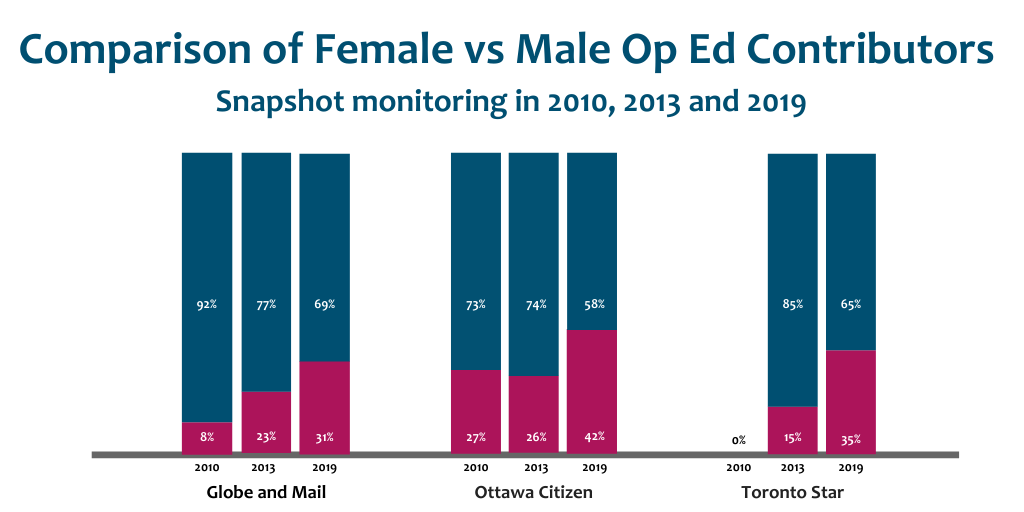
The results — when compared with similar research we did in Spring of 2010 and February-March of 2013 — show that we are, indeed, making progress. Here’s what we found:
Over the past ten years, all three papers improved the representation of female contributors to their opinion sections, increasing commentary by women by at least eight per cent, and as much as 16%. And some of the women published in each paper are, indeed, women who’ve participated in our training and/or who are featured in our database.
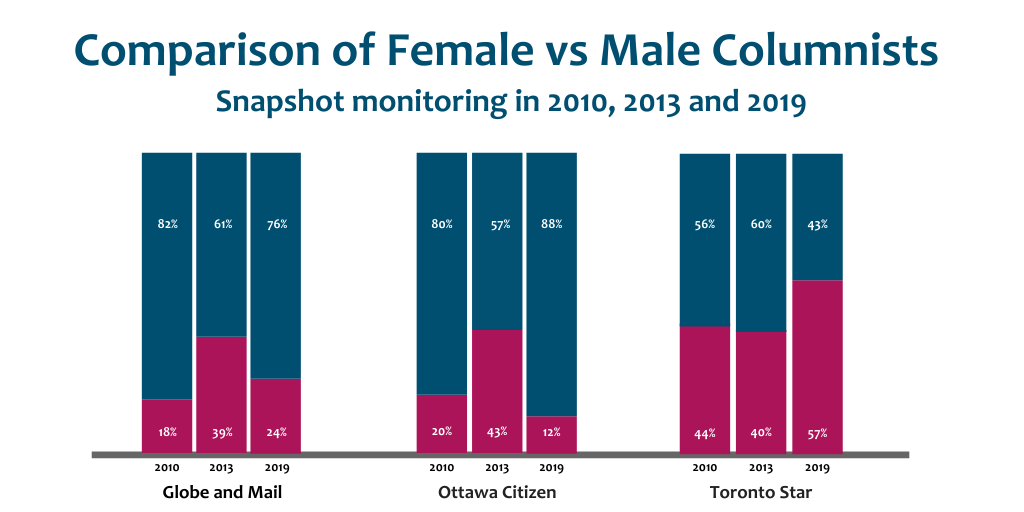
The data on female columnists (staff or freelance writers who are given a regular platform by the news outlet) revealed a more complicated picture. During the month of November, 57% of the published commentaries in the Toronto Star written by regular contributors were penned by women, up from an already impressive 40% in 2013. In contrast, the percentage of female columnists at both the Ottawa Citizen and the Globe and Mail declined in the same period. From a high of 43% in 2013, the Citizen dropped to 12%. Meanwhile, female columnists in the Globe dropped from 39% seven years ago to 24% last fall.
We reached out to the comment section editors of all three papers to share our findings, gain a better understanding of the editors’ goals, and explore what, if anything, we might be able to do to support a more equitable representation of perspectives.
Scott Colby at the Toronto Star responded immediately, offering candid feedback on his process and priorities. Looking at the print version of his paper, he says, makes clear how well the Star is doing in featuring women’s perspectives. Columnists’ bylines are accompanied by thumbnail photos, making it easy to see the gender breakdown. But, he says, he still receives many, many more op ed submissions from men than women, and — given the diversity of Toronto’s population — he’s especially focused on making sure the op eds he publishes reflect the voices of people of colour.
Although Colby sometimes commissions opinion pieces, he says he often finds it especially difficult to recruit female contributors able and willing to comment on Canadian politics, international affairs and financial issues.
Like Colby, Ottawa Citizen comment page editor, Christina Spencer, receives many more unsolicited op ed submissions from men than women, but says that when she’s able to commission pieces — seeking commentary on an emerging issue or breaking story — the women she approaches are as likely to say yes as their male counterparts. But Spencer acknowledges that as part of the Post Media chain of papers, The Citizen inherits many of its columnists from The National Post, the vast majority of whom are male.
Although we didn’t receive a response to our query from the Globe, the reduction in female voices on the columnist side may be partly a function of the recent retirement of Margaret Wente, who previously wrote three times a week. (In our 2010 research, her views made up 40% of the female perspective published on the paper’s comment pages.)
The splintering of news audiences means that legacy news media exert less sway over public discourse today than they did a decade ago. However, comment pages and online hubs remain influential. Politicians and policy-makers pay attention to the ideas shared and positions advocated, and broadcast journalists seeking authoritative guests able to provide context for and analysis on timely issues also turn to opinion spaces.
We have argued elsewhere for the importance of ensuring that such spaces — and news coverage more broadly — provide a diversity of perspectives more generally, and better reflect women’s perspectives in particular. It’s encouraging to see the progress reflected in this most recent research.
This article was originally published in TheToronto Star
Could the incentivizing power of a fitness tracker be adapted to help achieve gender equality in the media, enhancing Canadian democracy in the process? After a year of collaboration with a team of big data scientists, we’re about to find out.
Despite the increasing attention paid to the importance of women’s voices, in news media coverage — both in Canada and around the world — male perspectives continue to dominate by a ratio of more than two or three to one. In the days when few women earned graduate degrees, led organizations or were elected to public office, that dominance was understandable. But today? Not so much.
The disparity in representation now makes headlines. In 2012, the BBC convened an all – male panel to discuss breast cancer and teen contraception. The outrage was as swift as it was predictable. But humiliation can sometimes be a galvanizing force: Britain’s national broadcaster has since offered hundreds of expert women free media interview skills training. And last year, it explicitly committed to meeting a 50:50 challenge, aiming to ensure the equitable representation of male and female sources by 2020. Some programs have already achieved the milestone two years ahead of schedule.
In fact, doing so isn’t that difficult. Matthieu Dugal, host of Radio Canada’s La Sphere, reported more than two years ago that his program had featured as many female guests as male — despite its focus on technology. Similarly, Bloomberg has been actively seeking gender balance among its business news sources for several years.
Going beyond established contacts to achieve such diversity takes effort. In addition to searching for new sources, journalists have to actively record and tally their metrics. Several journalists at The Atlantic have written about their own commitment to doing this, and science reporter Ed Yong estimates that achieving gender parity requires an extra hour a week. He calls his monitoring spreadsheet “a vaccination against self delusion.”
In an age of the perpetual news cycle, when many reporters, editors and producers are doing the job of three people, we understand why this might be unappealing. But there are upsides to the vaccination discipline.
La Sphere’s gender parity achievement was accompanied by an increase in the program’s audience share. And The Financial Times recently discovered that reframing one of its electronic newsletters to actively engage female readers inspired higher open rates in male readers as well.
Given social media’s disruption of news gathering revenue models and the need to sustain trust among news consumers, all news organizations should be paying attention to these experiments. Indeed, a collaboration between the World Economic Forum and Internews, a U.S.-based global non-profit, is explicitly aimed at ensuring more women’s voices are included in news coverage, in pursuit of increasing community trust in news.
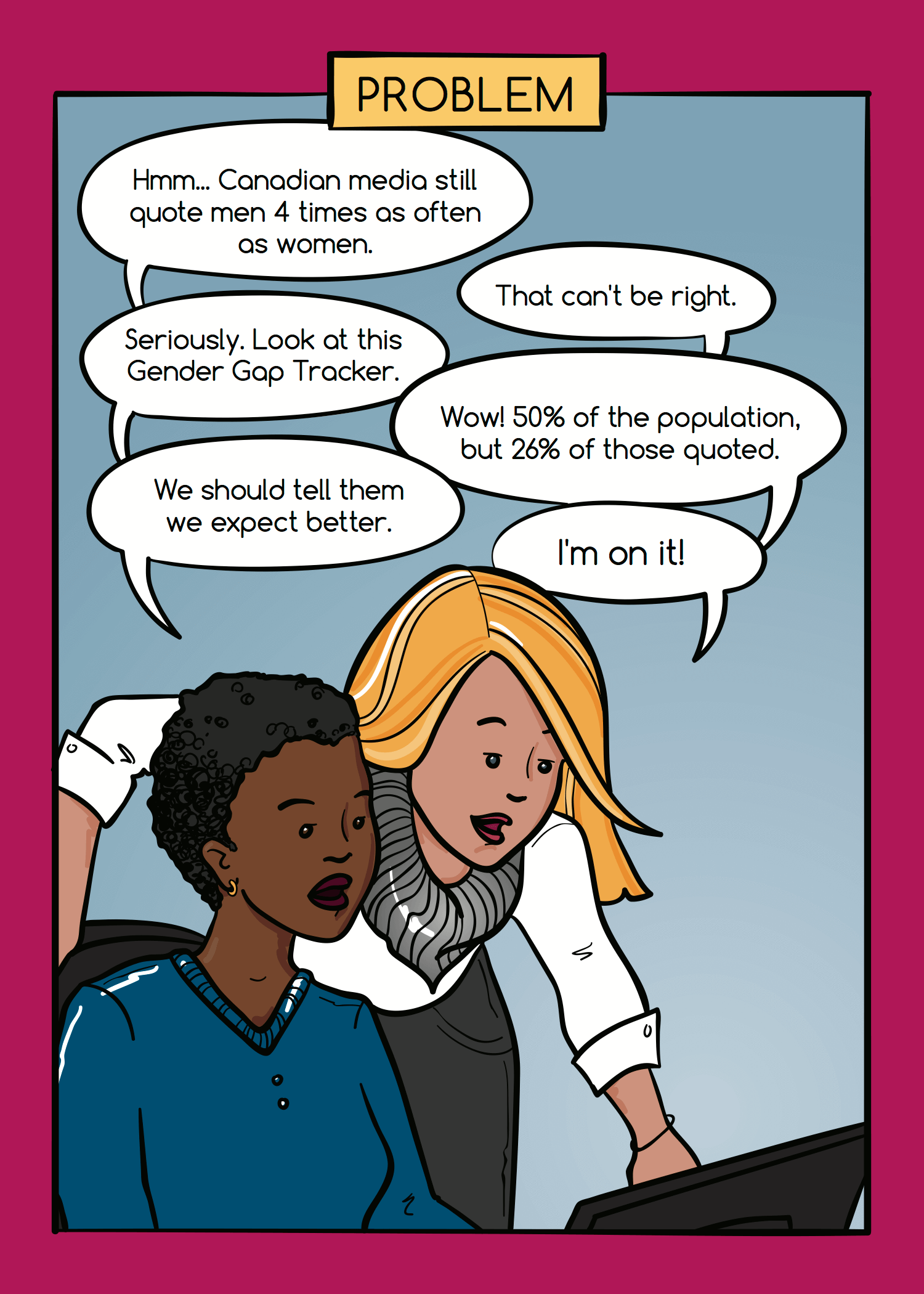
That’s why Informed Opinions has been working with researchers at Simon Fraser University to put big data to work in the service of democracy. Over the past year, we’ve built the Gender Gap Tracker, an online digital tool that monitors the ratio of male to female sources quoted in Canada’s most influential news media. It features easy-to-read graphs updated on a daily basis reflecting both the performance of individual newsrooms, and the aggregate ratio of them all.
The tool captures only the sources cited on each news outlet’s website; it’s unable to quantify those who might appear in broadcast interviews, but aren’t referenced online. Yet so far, its results mirror the ratios found in previous research done manually. The goal of the Gender Gap Tracker is to celebrate news organizations that lead by example, and motivate those who lag behind. And it offers news consumers and media organizations alike a daily reminder of the remaining gap.
Improving this metric is important for all of us. Good journalism is fundamental to democracy, and the persistent underrepresentation of women’s perspectives denies Canada access to the analysis and ideas of many of its best and brightest. It also undermines policy decisions. Many issues affect women differently; solving complex social, economic and environmental problems requires us to more equitably integrate their experiences and insights.
Diverse, qualified women exist in virtually every field, and for the past nine years, Informed Opinions has been motivating and delivering media skills training to thousands of them across the country. Our free online database of diverse experts committed to responding to interview requests quickly now features more than 800 female sources.
We’re looking for Canadians to join us in reminding journalists that it’s no longer necessary (or defensible) to declare, “But I couldn’t find a qualified woman.”
We recently surveyed hundreds of women who’ve participated in our workshops and remained on our mailing list. Email overflow and work-life demands being what they are, we were happy to log 57 responses from women in 16 cities across the country. They gave us insight into what use they’ve made of the training we deliver, and how else we might be able to support them in continuing to amplify their voices.
Positioning yourself for impact
I recall hearing advice growing up that “it’s not what you know but who” that makes a difference to your career. But actually, it’s who knows you that’s more important. And visibility allows you to be seen, and your potential to contribute to be recognized. That dynamic is central to what we do and why.
That’s why we were very gratified by the responses women gave to the question:
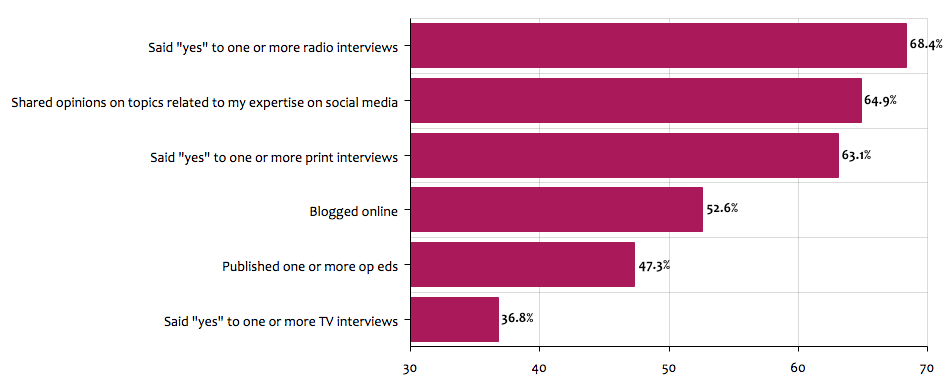
What kind of engagement with media have you had in the past 7 years?
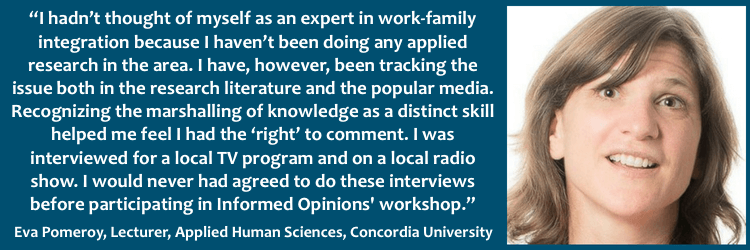
Eva Pomeroy published five op eds in 2015, three in print media and two online, and did two radio interviews. She says the idea of going to the media would never have occurred to her, but she now appreciates the impact she’s able to have addressing issues she knows and cares about.
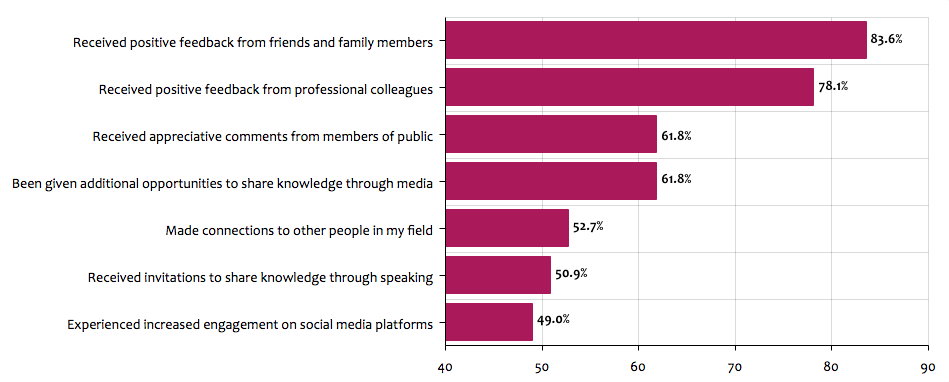
We also asked what kind of feedback or sense of impact women had experienced as a result of their increased profile. Here’s what they said:
Not all the news was good. Predictably, 29% of women received negative feedback from trolls or haters online, and 13% were criticized by colleagues. Although neither of those experiences are pleasant, on balance, the positive results of increased exposure far outweighed the negatives.
Indeed, in a response to a more general question about what impact, if any, attending our programming or engaging with media had had,
“82% cited increased confidence and/or sense of agency; 56% cited increased recognition, visibility and credibility.”
If she can’t see you, she can’t be you
The enhanced professional opportunities that flow from increased visibility constitute individual benefits. But the global impact of more diverse and visible female role models is also profound.
When Adrienne Clarkson was Governor General, she was often approached by Asian Canadian girls who were wide-eyed with the suddenly expanded possible futures they could imagine for themselves as a result of seeing someone who looked like them in the prestigious and influential role of Vice Regal.
Your visibility – as a politician or CEO, chemical engineer or doula, mining executive or chiropractor – makes it easier for girls and young women to envision themselves in a similar role. And most of those your role modelling inspires won’t ever have the chance to tell you. But the absence of that communication in no way lessens your impact.
We also asked members of our network to weigh in on what kinds of support from Informed Opinions they continue to value, or would like to see us take on in the future.
Almost three-quarters (74%) expressed interest in the kind of media engagement tips and tools that we deliver in our workshops, and share through this blog and on social media. (If you’re not already receiving notice of new blog posts by email, you can join our Linkedin Group or sign up for our blog.) Another 72% requested additional training workshops to help build and refine skills.
Many said they appreciated the work my colleague Samantha oversees in promoting their expert profiles or media commentaries to journalists (63% and 58% respectively). And well over half (58%) encouraged us to convene events that would permit them to connect with other media-engaged expert women. Slightly under half (46%) expressed interest in free webinars that would permit them to get answers to specific questions related to their media engagement.
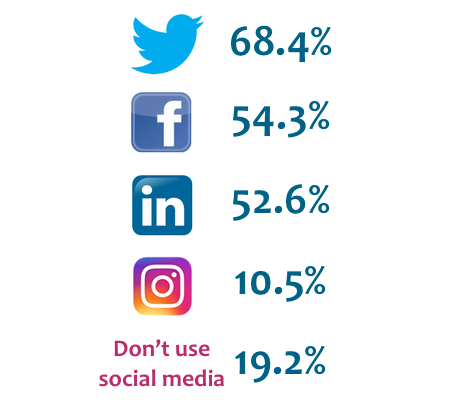
Where Do Our Experts Engage Online?
How We’re Going to Bridge the Gender Gap by 2025
Last fall we announced What Gets Measured Gets Done – a new initiative that tracks the data to measure the male and female voices being quoted and featured in Canada’s most influential news media. Our explicit goal is to achieve gender parity by 2025 by celebrating the leaders and encouraging the laggards to do better. Almost two-thirds of our grads (63%) expressed interest in supporting this endeavor, so we’ll be looking to them to share the data we collect with their networks.
Survival Guide for Women in the Workplace
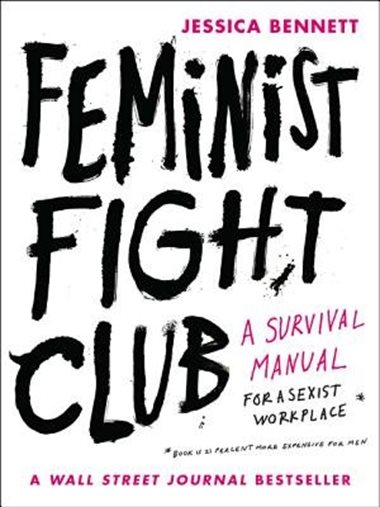
Finally, 53% of our network expressed interest in a “Surviving & Thriving in the Workplace Guide for Expert Women”. Although I relished the idea of writing this book, anticipating its enormous audience, it turns out Jessica Bennett has already written it.
She called it Feminist Fight Club – A Survival Manual (For a Sexist Workplace), and it’s a gem: funny, deeply resonant and chock-full of practical advice. She drew on both her own daily office experiences as well as those of a small group of smart, articulate and ambitious women. Together they offer an arsenal of strategies that include snappy comebacks, encouraging pep talks and strategically smart action steps.
If 2017 goes down in history as a year of resolve, what will we say about 2018? That we built on the momentum to make lasting change, or that we let the energy dissipate into nothingness?
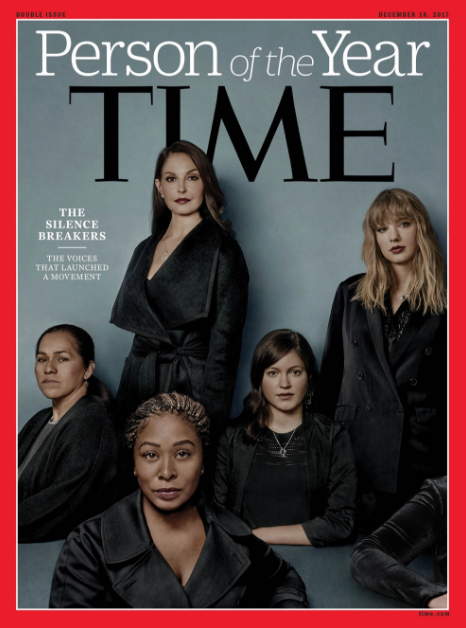
From women’s marches around the world to the #MeToo movement, many people took not just to social media, but to the streets, speaking up against hate, inequality and violence.
Women, in particular, shared their realities in ways and in numbers that got global attention and sent shock waves through a host of industries, from Hollywood and high tech to policing and restaurants.
But genuine revolution requires persistence: we need to continue challenging unconscious biases, dismantling entrenched systems, and redistributing power. We need to translate last year’s manifestations of resolve into actual resolutions – and then act on them. And we need leaders who are willing to take a stand and publicly spearhead this revolution.
Is that you? Someone you work with — or for?
Here are 5 suggestions for how to keep amplifying women’s voices for change in 2018:
Publicly announce your commitment to support gender equality in the media and donate $1,000 for a tax receipt in support of “What Gets Measured Gets Done”, the high tech dashboard we’re building to track women’s voices in the media;
Ask women in your workplace what’s needed to overcome the barriers to their advancement, and then commit to implementing meaningful measures that will benefit them and your bottom line;
Nominate qualified women from your organization or network who are able to speak to media for inclusion in ExpertWomen, our online database designed to make it easier for journalists and conference programmers to feature smart women;
Talk to us to explore how we might partner with you to amplify women’s voices in Canada and raise awareness at corporate events;
Book a Finding Your Voice, or Building Allies for Change keynote or workshop combining research insights and concrete take-aways with storytelling and humour to engage and motivate your colleagues.
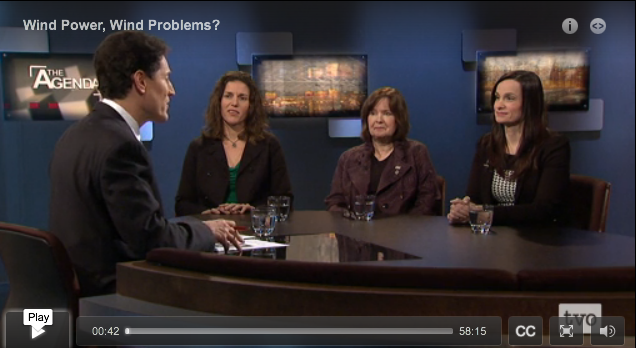
A year ago, when veteran journalist and host of TVO’s The Agenda blogged, “Where, oh where, are all the women?” he ignited a firestorm of protest.
Ironically, Steve Paikin’s show already had a much higher percentage of female guests than any other broadcast program studied by Informed Opinions over the past five years. (When we monitored the Agenda in January-February 2011, we found that 38% of the experts featured were women. This contrasted with CBC Radio’s The Current, featuring 31% female guests, and CTV’s Power Play, which included only one woman out of 27 guests during the two-week period in which we watched all three programs.)
So TVO’s The Agenda was already ahead of the pack. But as a result of the controversy that greeted Paikin’s online comments about some of the reasons women decline interview requests, the good people at TVO’s flagship show made a concerted effort to do better. And they’ve succeeded.
When I ran into Paikin at a recent Canadian Journalism Foundation event in Toronto, he told me that he and his colleagues were tracking the number of women guests and had topped 45%. Indeed, data provided by broadcast series producer Stacey Dunseath for the program’s last six months revealed a peak of 48% in January, and an average of more than 43% female guests since September. And this, Dunseath says, occurred without deliberately shifting the subject focus.
“The Agenda’s feat offers a reminder to producers elsewhere: it’s possible to deliver good programming that draws on qualified experts without excluding half the population. “
In fact, Dunseath spoke enthusiastically about a couple of recent female guests who’d never done TV interviews before, and were, like many of the women we’ve trained, initially reticent to to appear. But, she said, both of them “brought incredible context, gave thoughtful answers,” and “knocked it out of the park”.
Which is not to deny that achieving better gender balance requires effort. The Agenda’s strategies have included:
Soliciting advice from female “friends” of the show (including me) regarding strategies that would help TVO connect with expert women in a range of fields;
Deputizing guests to identify women in their circles who could contribute;
Sending producers to business and social events to network with and recruit previously unknown experts;
Making a point of mentioning the availability of hair and make-up support for those concerned about not being camera-ready on the day they’re called;
Reinforcing to new guests the value their perspective adds; and
Telling everyone who pitches the show on a program topic that including women’s perspectives is a priority.
Paikin himself deserves some credit for immediately embracing his critics last year, inviting half a dozen of us on air for a lively discussion of how chronically under-represented female voices are in public discourse generally. Dunseath believes that women who became aware of the issue as a result felt an obligation to step up in a way they hadn’t previously;
She also said that she and her producer colleagues have employed a handy tool that Informed Opinions developed a few years ago.
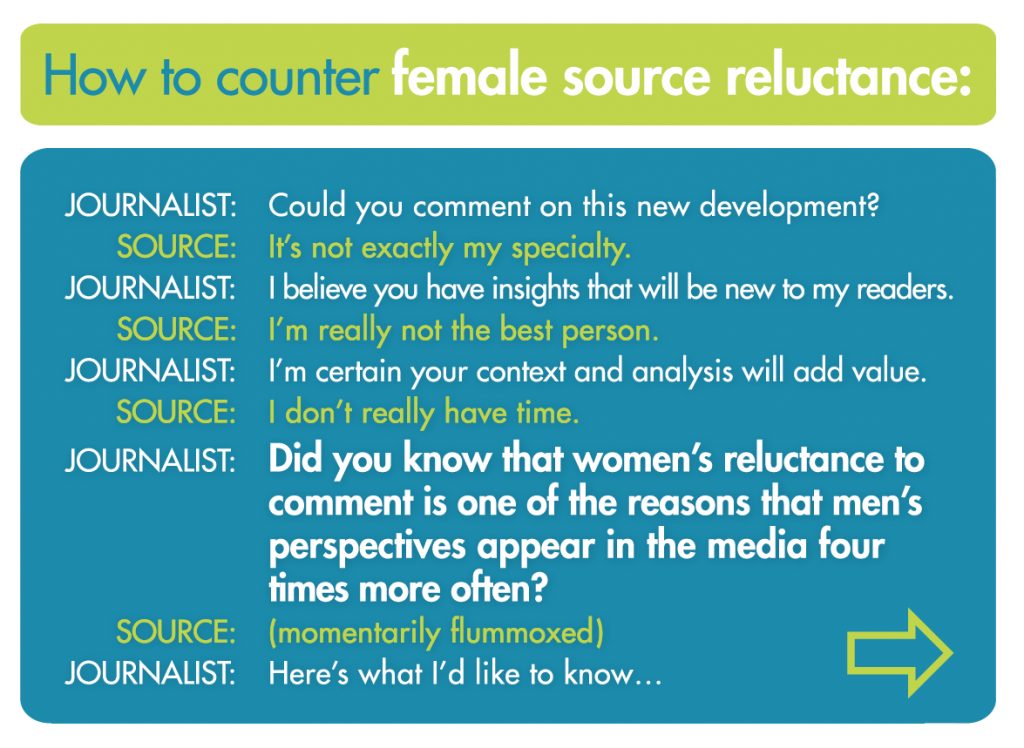
It’s a postcard we jokingly called “Countering Female Source Reluctance”, and it features a sample conversation between a journalist and a potential source:
TVO producers have this Informed Opinions’ postcard useful in recruiting female guests. The flip side refers journalists to our experts database, soon to be significantly upgraded to a new platform at ExpertWomen.ca
Dunseath says that drawing on our tips has proven to be very effective at encouraging women to reconsider their “thanks, but no thanks” response.
And we all benefit from that. The more diverse the perspectives informing our public conversations, the richer and more fruitful they will be. A growing body of research in business and science makes this clear: the inclusion of women’s voices increases profits, ethical performance, scientific innovation and the quality of workplaces themselves.
In an increasingly competitive global society, we can’t afford not to take advantage of such advantages in every arena.
Stay tuned for news about ExpertWomen.ca/Femmes Expertes.ca, our plan to significantly upgrade our existing Experts Database in the coming weeks.