Tell your mentors how much you appreciate their impact while you can

Meg moved quickly behind me to close the door to her office not wanting her staff to overhear. 

I had showed up in advance of the MediaWatch board meeting in 1990 to let her know that even though I’d only joined the board six months previously, I would be resigning at this, my second meeting. 

When pressed, I confessed my disappointment that some of the other members didn’t seem that engaged. At my first meeting, we’d gone around the table to share what we’d been up to on behalf of the then 10-year-old feminist organization advocating to improve how women were represented in media. More than half of my new colleagues had nothing to say. 

Wrapped in my new-convert-to-the-cause fervour, I was appalled. What I saw as both a privilege and pressing responsibility, they seemed to view as a governance obligation to be executed three times a year in exchange for take-out pizza and — if they lived elsewhere — economy class travel to Toronto. 

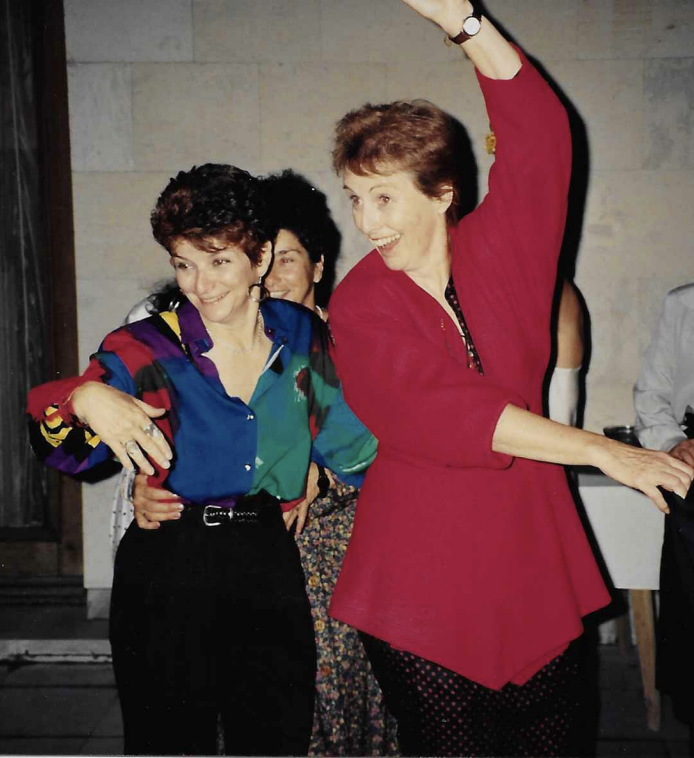
Meg, who’s ballet-master-posture and long patrician face made her seem even taller than the six feet she’d inherited, was also new to her job as Executive Director. She’d taken on the role when the board had moved the organization’s office from Vancouver to Canada’s media centre to better influence the business practices of advertisers, broadcasters and news organizations. 
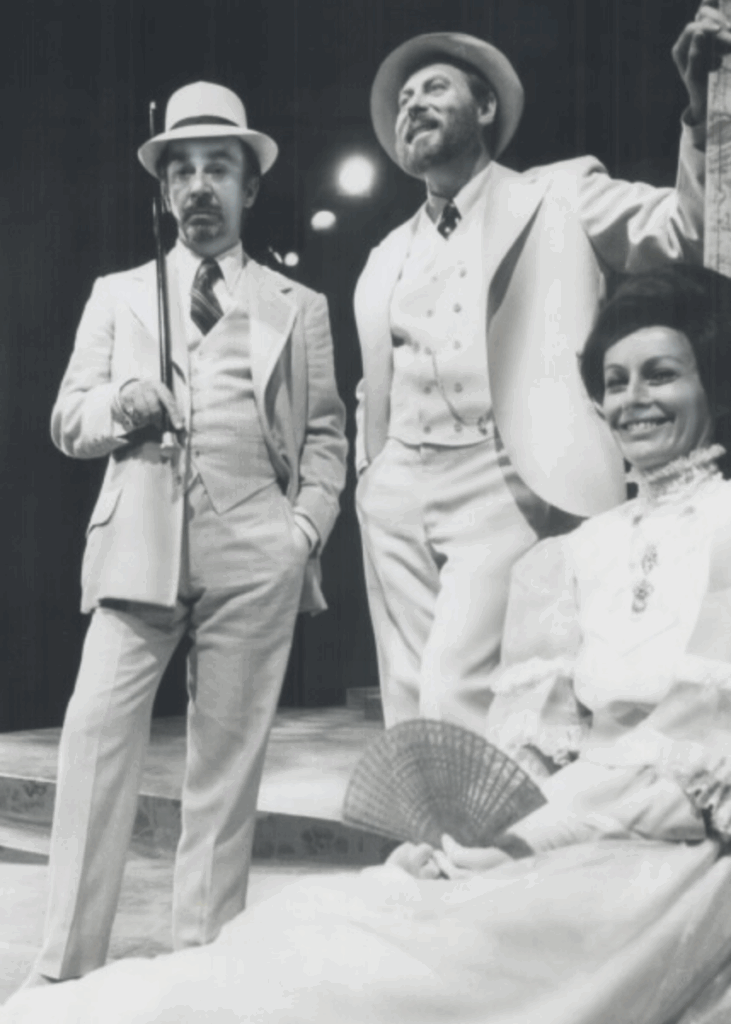
Eric House, David Gardner and Meg Hogarth in a performance of The Cherry Orchard at Hart House in Toronto, 1977

An actor, former president of the Canadian performers’ union, and one-time provincial NDP candidate, Meg modelled what was, for me, an inspiring marriage of activism and art, pragmatism and persuasion. She was bright and energetic, confident and fun. 

And she managed to convince me in short order that the conclusion I was drawing to quit the board was entirely wrong; instead of jumping ship, she advised, I should be at its helm. The term of the current president was up and given the leadership I’d already shown — writing op eds, giving public talks and media interviews — she was certain others would be happy to cede the floor to me. (This is one source of the quip I often make in talks: there are no glass ceilings in under-funded women’s organizations.)

That conversation with Meg, which took place 30 years ago, changed the course of my life. Although I’ve done many other things during and after my ten years as chair of that board, three decades later, I remain integrally involved in advocacy work related to the persistent under-representation of women in media. 

MediaWatch has morphed into Informed Opinions, and I continue to build on research we did together… share stories about interviews I gave during those years… fuel my commitment with the recognition that while women’s equality has seen extraordinary gains in many arenas, we are still being interviewed, quoted and featured less than a third of the time. 

During the period of our collaboration, Meg was generous in passing speaking opportunities and media interviews to me. She would coach me on the phone, offering feedback and sharing ideas that made me a more interesting source and more effective advocate. 

Her own commitment to the cause was best illustrated by a meeting she secured with Ted Rogers, founder of the Rogers media empire. As funding cuts in the 1990s began to erode MediaWatch’s ability to deliver programming, conduct research and lobby media, she sought an audience with the empire builder, whom she’d briefly dated many decades before. Even though they hadn’t been in touch for years, and he had no evident history of sharing company profits with women’s organizations, he ran a media empire, and he agreed to see her.

I don’t recall any details of the meeting, only the optics of the encounter as she described them: both of them in their sixties, but Meg dressed in her rag-tag bohemian non-profit aesthetic, having arrived by bike at Rogers’ well-appointed corporate headquarters to meet the business-suited billionaire. 

I believe the audience was both perfunctory and fruitless, but I loved her for having had the humility to request it, the strength of character to show up as herself, and the sense of humour necessary to turn the incident into a good story.

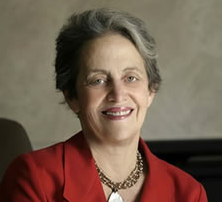
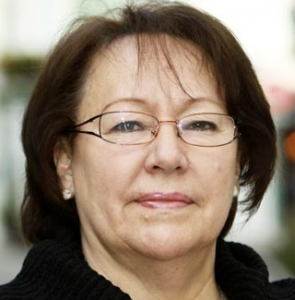
Meg Hogarth died last month at 84. Her passing was marked with an obit in The Globe and Mail, which failed to include a photograph. Given her work helping to make women more visible, this was a cruel irony.

Meg had arguably a greater impact on the course of my life and the advocacy I’m still doing than almost anybody. I told her that the last time I saw her in 2016… confessed that I was more invigorated by what had become my life’s work than I ever could have imagined… thanked her for closing the door behind me back in 1990 and painting a leadership vision that I hadn’t previously aspired to assume. 

I don’t know how much of what I said was understood. By then her communication abilities were limited by the impact of both Parkinson’s and several strokes. I regret not having made a point to tell her sooner. That’s why I’m telling you. 

Without Meg Hogarth, executive director of MediaWatch, no Shari Graydon, catalyst of Informed Opinions. Indeed, no Informed Opinions. 

The next donation I make to the organization’s future will be in her honour.
How do you respond to charges of being too aggressive or sensitive?

Let’s say you’re an intelligent, confident and assertive woman who doesn’t shy away from expressing your opinion: chances are that at one time or another, a colleague may have decided you were “too aggressive.”

Or maybe, by politely objecting to sexist behaviour in your workplace – the kind that expects the women present to  serve the coffee, tolerate derogatory comments, or delight in remarks about their appearance – you’ve been accused of being “over-sensitive”.

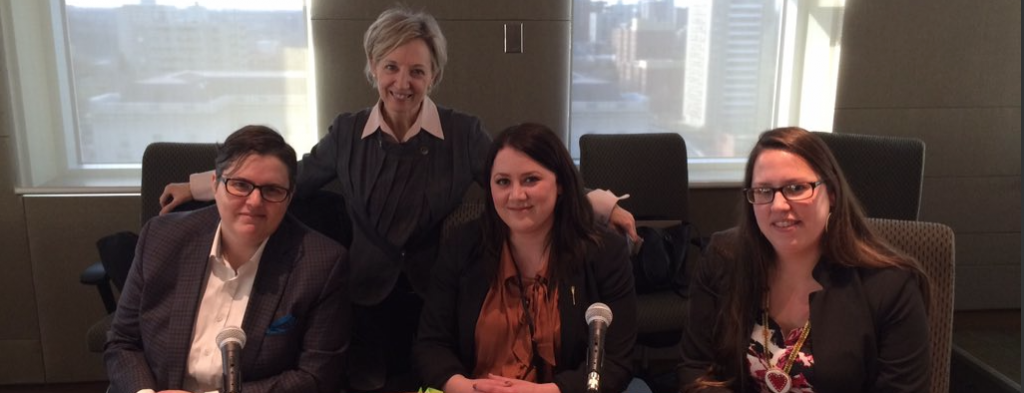
Last week at an Unbitten Tongues* forum with three fearless panelists and about 65 engaged civil servants in Alberta, both of these examples came up.

How, really, women asked, does one overcome the momentary disbelief or flash of irritation to respond to such comments effectively?

Dana DiTomaso, a digital marketing expert, CBC technology columnist and partner at Kick Point, observed that ever since she started dressing in men’s clothing, she’s no longer on the receiving end of such patronizing remarks.

But for those not willing to sacrifice their style preferences in order to be treated with respect, she offered the following comeback strategy:

Rather than try to respond to a comment or accusation that puts you on the defensive, she suggested, try shifting the onus onto the accuser by asking:

“How so?”

I think the strategy is inspired.

Because whether or not people offering such criticism are consciously trying to shut you down, by expecting them to explain or defend their comments, you’re both implicitly rejecting the premise of the dismissal, and requiring your accuser to articulate the value judgments that informed the comments. Their efforts to do so are likely to reveal more about their attitudes and assumptions than about your behaviour or emotional state.

The two other Edmonton panelists, recruited by the government of Alberta’s Ministry of the Status of Women, were equally thoughtful. Recently elected MLA Deborah Drever has been volunteering in her community since the age of eight, and is completing a degree in sociology at Mount Royal University. And Miranda Jimmy is a member of Thunderchild First Nation who sits on the Edmonton Public Library board and co-founded RISE – Reconciliation in Solidarity Edmonton – to support reconciliation in words and actions.

The participation of the three women in the Unbitten Tongues forum gave those present an opportunity to hear from, ask questions of and be inspired by role models who are speaking up in pursuit of making change in business, in government and in the non-profit sector.

For so many women who are working in arenas that are led and/or dominated by male colleagues, the opportunity to engage in frank conversations in a safe, women-only space is revelatory and invigorating.

That’s why, over the next year, in conjunction with the launch of my new book, OMG! What if I really AM the best person? I’ll be looking to convene similar panels in cities across Canada.

If you’re interested in engaging, motivating and supporting women in your network or community to speak up for change, please let us know. We would love to collaborate with you.

*Unbitten Tongues – In recognition of the difference women can make when they speak up — despite the many internal and external barriers to doing so — Informed Opinions offers opening remarks and facilitates panel discussions aimed at encouraging more women to share their knowledge and speak their truth.  

The Agenda producers prove gender parity is possible

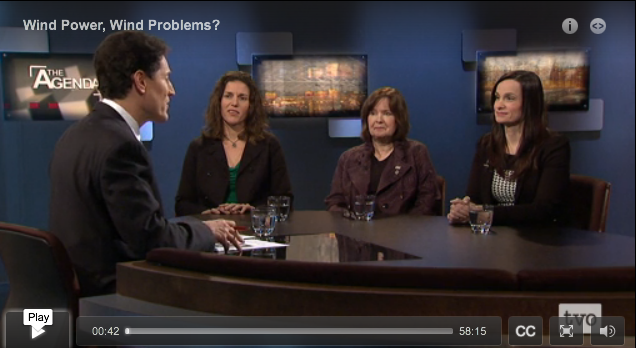
A year ago, when veteran journalist and host of TVO’s The Agenda blogged, “Where, oh where, are all the women?” he ignited a firestorm of protest.

Ironically, Steve Paikin’s show already had a much higher percentage of female guests than any other broadcast program studied by Informed Opinions over the past five years. (When we monitored the Agenda in January-February 2011, we found that 38% of the experts featured were women. This contrasted with CBC Radio’s The Current, featuring 31% female guests, and CTV’s Power Play, which included only one woman out of 27 guests during the two-week period in which we watched all three programs.)

So TVO’s The Agenda was already ahead of the pack. But as a result of the controversy that greeted Paikin’s online comments about some of the reasons women decline interview requests, the good people at TVO’s flagship show made a concerted effort to do better. And they’ve succeeded.

When I ran into Paikin at a recent Canadian Journalism Foundation event in Toronto, he told me that he and his colleagues were tracking the number of women guests and had topped 45%. Indeed, data provided by broadcast series producer Stacey Dunseath for the program’s last six months revealed a peak of 48% in January, and an average of more than 43% female guests since September. And this, Dunseath says, occurred without deliberately shifting the subject focus.

“The Agenda’s feat offers a reminder to producers elsewhere:
it’s possible to deliver good programming that draws on qualified experts without excluding half the population. “

In fact, Dunseath spoke enthusiastically about a couple of recent female guests who’d never done TV interviews before, and were, like many of the women we’ve trained, initially reticent to to appear. But, she said, both of them “brought incredible context, gave thoughtful answers,” and “knocked it out of the park”.

Which is not to deny that achieving better gender balance requires effort. The Agenda’s strategies have included:

  • Soliciting advice from female “friends” of the show (including me) regarding strategies that would help TVO connect with expert women in a range of fields;
  • Deputizing guests to identify women in their circles who could contribute;
  • Sending producers to business and social events to network with and recruit previously unknown experts;
  • Making a point of mentioning the availability of hair and make-up support for those concerned about not being camera-ready on the day they’re called;
  • Reinforcing to new guests the value their perspective adds; and
  • Telling everyone who pitches the show on a program topic that including women’s perspectives is a priority.

Paikin himself deserves some credit for immediately embracing his critics last year, inviting half a dozen of us on air for a lively discussion of how chronically under-represented female voices are in public discourse generally. Dunseath believes that women who became aware of the issue as a result felt an obligation to step up in a way they hadn’t previously;

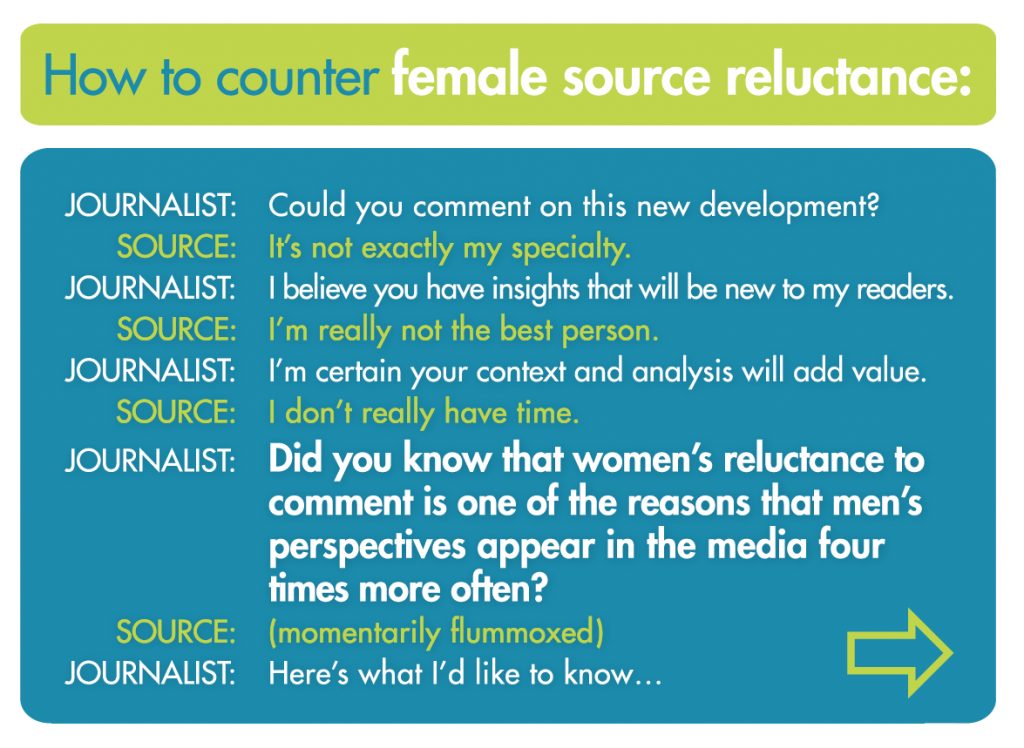
She also said that she and her producer colleagues have employed a handy tool that Informed Opinions developed a few years ago.

It’s a postcard we jokingly called “Countering Female Source Reluctance”, and it features a sample conversation between a journalist and a potential source:

TVO producers have this Informed Opinions’ postcard useful in recruiting female guests. The flip side refers journalists to our experts database, soon to be significantly upgraded to a new platform at ExpertWomen.ca

Dunseath says that drawing on our tips has proven to be very effective at encouraging women to reconsider their “thanks, but no thanks” response.

And we all benefit from that. The more diverse the perspectives informing our public conversations, the richer and more fruitful they will be. A growing body of research in business and science makes this clear: the inclusion of women’s voices increases profits, ethical performance, scientific innovation and the quality of workplaces themselves.

In an increasingly competitive global society, we can’t afford not to take advantage of such advantages in every arena.

Stay tuned for news about ExpertWomen.ca/Femmes Expertes.ca, our plan to significantly upgrade our existing Experts Database in the coming weeks.

Should Smart Women Strive to be Public Intellectuals?

You know you’ve done your job as a conference planner when delegates depart complaining of not having slept since they arrived, thanks to an excess of intellectual stimulation provided by the presenters and programming you’ve so expertly curated. But I’m guessing that conveners Christl Verduyn (Mount Allison) and Aritha van Herk (University of Calgary) both knew they had a winner on their hands from the first panel.

When they told me they’d chosen “Women as Public Intellectuals” to define the focus of Discourse & Dynamics, the exceptional gathering they convened in Sackville in October, I saluted both the initiative and the subtitle. But a significant number of the brilliant, articulate, diverse women who participated in panel discussions critiqued or disavowed the term.

Janice Stein, Director,               Munk School of Global Affairs

For her part, former University President, Lorna Marsden suggested that “being called a public intellectual in a Tim Hortons culture can be seen as a bit of a put-down.” And internationally recognized scholar Janice Stein – the woman whose name is most often mentioned when I ask people to identify a prominent Canadian female public intellectual – joined others in pronouncing the term deeply problematic. She observed:

“When academics speak in the media, they often use exclusionary language.”

(And clearly, that defeats the purpose of going public with your intellect in the first place!)

However, having now worked with more than a thousand expert women across Canada, I have a deep appreciation for how challenging it is for those immersed in the complex terminology of their discipline, industry or cause to translate stuff like “Perceptual Fluency and Judgments of Vocal Aesthetics and Stereotypicality”* into something that everyone else can understand.

Lawyer and equality activist       Mary Eberts

By way of instructive contrast, Mary Eberts also told a story about a colleague who described the communication styles of two other lawyers: “When X has finished speaking, everybody knows that X understands his stuff. When Y has finished speaking, I really feel that I understand his stuff.”

Eberts further underlined where the responsibility lies when it comes to communicating in a way that matters with another anecdote. She confessed to complaining to her mother one day about the lack of conversation between them. Her mother – who grew up in a coal mining town in Wales – responded,

“Well, you’re the smart one; you figure out how to talk to me!”

This insistence places responsibility for the task firmly where it belongs, and is indisputably fine advice for any of us with specialized knowledge that we think worthy of being more broadly understood. Command of technical language and insider jargon is critical to establish your credibility among peers, but it’s a huge barrier to communicating with anyone else.

And considering that the value of knowledge grows through dissemination, both stories encapsulate a profound insight into the roles that intellectuals can play. In Eberts’ first example, X may impress, but Y is likely to have more impact. And what, at the end of the day, is more important?

Rocket scientist
Natalie Panek

Rocket scientist Natalie Panek said she definitely wasn’t in the category and political scientist Lori Turnbull related more to “public citizen”. Celebrated legal advocate Mary Eberts acknowledged the power of “public intellectual” to evoke “imposter syndrome”, while noting that she didn’t seek the label. (And yes, I did have a stack of OMG cards on hand to challenge all of these responses!)

In her remarks, Natalie Panek offered a concrete example of the kind of translation necessary in her field. Instead of describing her work on the “self-supporting IG robotic manipulator for orbital replacements”, she instead tells people she works on “a robotic arm to repair satellites in orbit.” (At our request, she generously recorded a 3-minute Youtube video expanding on her views about the importance of women speaking up.)

Although still in her 20s, Panek more than held her own in conversation with notoriously hard-to-pin down literary icon Margaret Atwood. When the renowned author was asked about her role as a public intellectual, she demonstrated a classic bridging technique to segue to a story she wanted to tell.

“Let’s talk about my public performance, instead,” she said; “that’s a lot more fun.” (In the process, she channeled former US Secretary of State, Henry Kissinger, who famously began his press conferences by announcing, “Ladies and gentlemen, I hope you have questions for my answers,” signaling who would be controlling the topics to be discussed.)But Atwood returned to the subject of public intellectuals, pointing out that,

“Writers and artists get asked, and do speak out, because they don’t have employers who might fire them. That’s why when dictators take over, they usually shoot the writers and artists and academics who feel free to criticize them.”

In the context of Informed Opinions’ work to support more women in all spheres to speak up more often, I appreciated the reinforcement of a message we deliver frequently: if Canadian women – educated, employed and protected by more robust gender equity laws than exist in most of the world – are unwilling to comment publicly and share their experience-informed perspectives on important issues, who will?

(Whenever my own brain automatically furnishes up a few fretful reasons to bite my tongue, I just picture Malala Yousefzi, shot in the head for having lobbied for girls’ right to be schooled. My disincentives pale in comparison.)

Inuit Activist Sheila Watt Cloutier

For internationally recognized Inuit activist Sheila Watt Cloutier, the consequences of not speaking up are life-threatening. And she demonstrates a deep grasp of the value of communicating in clear terms. At the conference, she used simple, concrete language to relay what’s at stake for her people in vivid and memorable ways. Talking about the change she’s witnessed in her lifetime, she said, “I can remember driving my dog team when there was no suicide and no toxins in our communities.” And she defined her people as innovative and resilient, explaining, “We have ingenuity in our core; we built houses out of ice to keep our children warm.”

Watt-Cloutier is deeply strategic in her clarity, and reinforced the value of being accessible to others. “It’s important to focus on making issues relatable to the broader collectivity to ensure that connections between the issues are understood. The news media and governments often separate them, treating them as if they’re distinct.” Her own words demonstrated such linking in action:

“If you protect the arctic, you save the planet.”

Conveners Christl Verduyn and Aritha van Herk are organizing a second iteration of “Discourse & Dynamics” to take place in Calgary in 2016. I’m already looking forward to another sleepless weekend.

* University of BC linguistics professor, Molly Babel, recently appeared on CBC Radio’s The 180, offering fascinating insights into the way we judge people based on their voices. Because she spoke in very accessible terms, I asked her if she’d published anything on a related issue we might share with Informed Opinions’ network. She kindly sent me the article she had co-authored under this title for an academic journal. It looks as potentially fascinating as her remarks, but trying to translate the executive summary into plain English for a lay audience made my head hurt.

When age is a valued credential

The moment was both painful and telling. As the MC introduced me to the 250 teenagers assembled to engage in a discussion about the importance of media literacy in an image-dominated age, I watched every kid’s eyes glaze-over.

It wasn’t the reference to my two award-winning books for youth, or my ten years as president of Media Action. No, the offending piece of information was my status as a grandmother.

Sam, a source of pure unadulterated joy in the lives of everyone he meets.

I am delighted enough with this designation that the screensaver on my smart phone features a picture of Sam, a more adorable boy than you could possibly imagine. That’s how the MC came to learn of his existence. But by using the relationship as a descriptor during my introduction, she had inadvertently made me irrelevant to the kids in the hall.

I was reminded of this incident last week while participating in another panel convened by the Great Canadian Theatre Company. The occasion was a discussion on women and aging held in advance of a matinee performance of Mary Walsh’s Dancing With Rage. Considering the focus of the panel, and the 75 mostly-over-50 women assembled, my grandmother status might have been relevant. (In this context, the youthfulness of the other panelists – 32 and 27 – was striking.)

Royalties from book sales support Informed Opinions’s work amplifying women’s voices

However, my claim to legitimacy came from having had the wisdom to invite 40 other women of a certain age to contribute to the collection, I Feel Great About My Hands back in 2010Shortly after the book came out, I was speaking with Marion, a scientist in her 80s. When I told her that the collection’s subtitle was “and other unexpected joys of aging”, there was a pause on her end of the line. And then Marion asked me, not unkindly,

And what would you know about aging, Shari?”

I felt appropriately humbled. Relatively speaking, a 50-something year-old knows almost nothing about aging. And — having witnessed up close the plethora of health and mobility issues affecting my beloved former in-laws and own cherished parents — it’s not like I don’t appreciate the difference.

At the GCTC last week, I was also humbled by the observations and inspirations elicited from members of the audience, many of whom might have been even better choices for the panel than the three of us who had been invited to speak.

The voices missing in Canadian public discourse are not just those of women, but those of women of diverse ages and experiences, and of wider ranging ethnic and cultural backgrounds. Not to mention those who are living with disabilities, and/or battling unconscious discrimination based on a range of identities, including having entered the “m’am” stage of life.

As members of the audience pointed out, nothing quite prepares you for being rendered invisible at precisely the moment when you really have your act together. Or being spoken to as if you have already entered a state of catatonic dementia.  We laughed about the suggestion that substituting “vintage” for “old” might increase our appeal, but the cost to society of marginalizing an entire generation of people remains a serious one.

Aboriginal communities have many things to teach us, but appreciation for elders – the insights offered by lives lived and lessons learned – is certainly among them.

In my more optimistic moments, I fantasize that the combination of the baby boomers’ demographic bulge and the continuing need for skilled workers will help to transform individual and collective attitudes to grey hair and wrinkles when they come paired with a woman’s face.

The more willing we are to wear our age, and the more visible we remain, engaged in and commenting on the world around us, the easier it will for us to collectively counter the stereotypes perpetuated by a youth-obsessed culture.

Last weekend the GCTC lobby was overflowing with women whose experience and expertise could add enormous value to public discourse. I wish I’d had the forethought to have offered a copy of I Feel Great About My Hands as a door prize. If I’d passed a hat for business cards, I could have followed up with all those present, encouraging them to visit the Resources page on our website, or attend one of our workshops.

Their voices are needed.

Pro Bono Expertise Transforms Digital Real Estate

“You’re not making the best use of your prime real estate,” Chamika Ailapperuma told us. (Which was news to us: we didn’t even know we HAD real estate!)

An experienced digital strategist, Chamika attended an Informed Opinions’ op ed writing workshop last spring, and shared some valuable insights during the session. Afterwards, we approached her for some help in assessing our website traffic. She provided that – and much, much more.

With the help of three generous professionals, Informed Opinions has updated our online presence to make our resources easier to find.

After reviewing our Google analytics data, she walked us through our existing website, gently pointing out how we could both take more advantage of the most prominent space on our home page and increase visitor engagement by better integrating our social media with the site. She also had ideas about how to make the site easier to navigate.

Our excitement at the vision she painted of how much better our online presence could be was tempered by our concern about our inability to realize it. As a small, self-sustaining social enterprise, we employ two women part-time primarily on the revenues we generate from workshops and speaking engagements. We couldn’t conceive of how we would be able to implement the great suggestions she was offering, which included changing platforms from Drupal to WordPress – a move that might save us money in the long run, but would require professional help up front.

But Chamika’s strategic insight about how to better showcase our services and impact comes packaged with resourcefulness and the ability to persuade others to volunteer their time, too. As a result, over the past few months, we’ve benefited from the work of three extremely generous women have worked long hours to support us in establishing a more effective, fresher, website.

She kindly introduced us to the fabulous Robyn Paton, an Ottawa-based marketing strategist whose support was invaluable. Her ability to navigate WordPress was essential to shaping the new framework. She successfully transformed multiple requests into useable features, and we really appreciated her after-hours availability and quick response time.

Robyn, in turn, recruited Sarah Green, an incredibly talented web developer from Kanata-based SiLK Web Solutions. Sarah completed our website team trifecta, managing the initial build of the website frame and polishing the final touches. We are so grateful for her time, which was crucial to bringing the new site to life.

Finally, Ashley Armstrong, who we’ve been lucky enough to have supporting us with her communications expertise since last April, when Claire went on maternity leave, also invested hundreds of hours — paid AND unpaid — in shepherding the revamp and finessing a multitude of details both before and since the new site launched. She also created our O Canada campaign video and a great infographic describing Informed Opinions’ impact. We’re very sorry to lose her, but thrilled that she’s landed a full-time contract with the Nobel Women’s Initiative, who already know what an asset she is.

You can judge the results for yourself: The refreshed Informed Opinions website offers visitors an easy-to-navigate drop down menu, accessible information on upcoming workshops, and easy-to-find resources. It retains our showcase of the published commentaries written by Informed Opinions grads’, which makes clear the impact we’re having in helping to bridge the gender gap in public discourse.

For the record, what we can’t offer in financial compensation, Informed Opinions makes up for in other ways. We reward our volunteers with focused, meaningful work, heart-felt (and public!) expressions of gratitude, Cocoa Camino chocolate, and best-selling books. We’d love to speak with you to explore whether or not your skill set or interests can make a contribution to advancing our mandate.

7 Ways to disable gender stereotypes for your daughter

Screen Shot 2014-01-27 at 12.54.01 PM

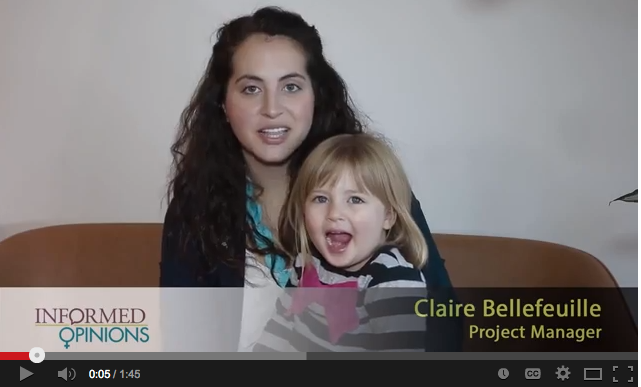
Last month, Informed Opinions’ Project Manager, Claire Bellefeuille published an op ed in the Ottawa Citizen expressing the wish that people would stop telling her daughter, Lily, how beautiful she is. She confessed that,

“…receiving constant accolades about her physical appearance gives my daughter the impression that her value is predicated on how she looks.”

And then she explained that Lily was refusing to wear jeans in cold weather because she’d already learned that she got more compliments when dressed in frilly dresses. We turned our discouragement over the fact that Lily had discerned this even though she was barely out of diapers into a 2-minute video campaign to reinforce the importance of strong and visible female role models who are celebrated for the brains, rather than beauty.

All sorts of research backs up why our tendency to focus girls’ attention on stereotypically feminine traits and behaviours undermines our aspirations for them to have access to every career and achievement opportunity available to boys.

Kids start to understand gender roles before they’ve reached their third birthday. And pre-school is where they begin developing social prejudices, including those based on gender.

Many of the things we do to reinforce gender roles are unconscious and reinforced by years of living in societies that still value men and women differently. The following advice reframes a list of “don’ts” I came across recently to focus on the kinds of positive choices we can all make around the girls and young women in our lives.

1. PRAISE HER INTELLIGENCE, COURAGE, SKILL…

Claire did a great job of making this point, encouraging us all to bite our tongues when moved to comment on superficials, and look for other qualities to praise, instead:

… tell a child or a teen how much you appreciate their thoughtfulness or generosity… In the spirit of the season, give them a reason to glow from the inside out.

2. LET HER BE BOISTEROUS

Encouraging girls to be quiet and polite, while allowing boys to be rambunctious, sets up a behavior pattern that ultimately reinforces the women as “pleaser” trap. And the desire to be likeable and accommodating can inspire women to avoid conflict and refrain from challenging the status quo, neither of which will serve those who aspire to leadership roles.

3. ABANDON PINK TOYS

Much hand-writing has already occurred over the unfortunate tendency of marketers to paint everything meant for girls a perky bubble-gum pink. Despite innate differences between males and females, much research suggests that the way we socialize kids has more to do with their preferences than genetic predispositions.

Many toys targeted to girls are appearance-based, while those aimed at boys are more likely to encourage the kinds of exploration and problem-solving skills that will be useful at work and in leadership capacities.

4. REDEFINE PRINCESS

It’s almost impossible to prevent girls growing up in our world from being exposed to the princess mania, but that doesn’t mean that you have to let the Disney definition – “Rescue my hourglass figure from harm so I can live happily ever after!” – prevail.

Contemporary real-life princesses are often highly educated, multi-lingual and engaged in advocacy.  Other cultural references – The Paper Bag Princess by Robert Munsch, the TV show Xenia the Warrior Princess, and the animated film, Tangled – also offer alternative models.

5. MODEL & PROMOTE PHYSICAL PROWESS

I know for a fact that the hard jobs in Claire’s household don’t always get relegated to her husband. Just this weekend she was captured on film scaling a 12-foot high rope, and she’s also been known to compete in gruelling tests of strength and endurance!

Claire and her husband Pierre after having completed the Spartan Race. (I know: crazy!)

But there are easier ways to address this issue: make sure your daughter gets to see you wield a hammer or push a lawnmower now and then, encourage her to take out the garbage, and show her how to open the new jar of peanut butter by banging the edge of the top on the counter first.

6. GIVE HER A CHANCE TO INTERACT WITH BOYS

All-girls’ schools have for years trumpeted the advantages available to those attend them. New research questions that. Regardless of who they’re surrounded by in the classroom, it’s useful for girls to have the opportunity to develop the social skills necessary to interact with boys.

Studies have found that single-sex segregation influences what kinds of social skills, styles and expectations develop, and the lack of exposure to boys is likely to make it harder for girls to integrate into male-dominated fields or workplaces later on.

7. ABANDON BODY CRITICISM

In an age sensitive to the impact of anorexic-looking models and the devastation of social media assaults, this should be a no-brainer. But so much of our culture perpetuates the constant critique; standing at a check-out counter in the supermarket alone makes it hard to avoid the “Crimes against bikinis” and “who wore it better” features.

At very least, we can control the things we say in the presence of girls: we can avoid commenting on the bodies of celebrities, confessing to our own physical insecurities, or focusing undue attention (pro or con) on anyone’s physical parts. It’s possible to promote healthy eating and regular exercise without the relentless appraisal attached to the practice by the body image police.

Given the cultural onslaught we’re up against, our work amplifying women’s voices has to start early — by encouraging girls to play big.

Of privilege and prostitution

For a few years in the 1990s I had the enormous privilege of a regular column in the Vancouver Sun. Every week, I’d write 750 words on pretty much any topic I wanted, and the Sun (a broadsheet not affiliated with the tabloid chain) would disseminate it to hundreds of thousands of readers.

That’s where the privilege came in. Pre-Facebook, Twitter and widespread Internet use, having a newspaper column gave you a singularly influential platform.

After three years, a new editor-in-chief decided to replace my overtly feminist voice with that of another more conservative-minded woman whose opinions more often aligned with those of the new owner (and yes, his name was Conrad Black).  I doubt that my views ever registered on Mr. Black’s consciousness, but from the day he became the major shareholder of the paper, my own editor began second-guessing my commentary, calling me up to inquire, “Are you sure you want to (write about breast feeding, contradict yesterday’s editorial about same-sex parents, or encourage police to do a better job of investigating the disappearance of aboriginal women on the Downtown Eastside)?”

(This was years before the Port Coquitlam pig farmer was finally identified as the man behind those disappearances, and I continue to regret that I only devoted one column to the topic, instead of 5, or 10.)

Yesterday, the Ottawa Citizen gave me space to write about some of the issues currently being considered by the Supreme Court regarding the decriminalization of prostitution. The debate over the wisdom of what’s being advocated by Bedford and company is one that divides feminists, and I respect the perspectives of those who take a different view on the matter.

But I’m siding with Aboriginal women on this one. The Native Women’s Association of Canada is one of seven organizations that make up the Women’s Coalition for the Abolition of Prostitution. The Coalition used its intervener status at this week’s Supreme Court hearing to advocate for the decriminalization of prostituted women, but not the legalization of brothels or pimping. (You can read the full column here.)

Although mainstream newspaper columns don’t have quite the same dominance as they once did, being able to focus thousands of readers’ attention on an issue you think is important remains a privilege. I appreciate it every time I’m given the opportunity.

And I am genuinely thrilled every time a woman who has attended an Informed Opinions workshop, or heard me speak, takes advantage of a similar forum to amplify her voice on a topic she knows and cares about.

Our site now features more than 100 of these interventions, with many more to come… 

Deferring to Jay Smooth on trolls

Don’t take my word for it… On the retrograde troll front, I defer to hip hop DJ and vlogger, Jay Smooth, who recently weighed in on the classic, cautionary Internet story involving media critic, Anita SarkeesianHe offers a compelling and persuasive analysis of an issue I’ve tackled before— but does so from a distinctly male gamer perspective.

My favourite line — and the one most relevant to Informed Opinions — is this: 

“When you bully and harass a woman for speaking her mind, all you do is show us that you’re afraid of that woman’s voice and you don’t think you can beat her intellectually without using a cheat code.

A videoblogger herself, Sarkeesian had launched a Kickstarter campaign in May to raise money for a new series of videos about sexist stereotyping in video games (a subject ripe for critique, if there ever was one).

Predictably, the anti-women troll community (many of them avid gamers) went into overdrive, responding with the kind of hate and vitriol now familiar to anyone who spends time in comment sections inspired by articles, commentary or, apparently, funding appeals by women with opinions.

The irony — and we’re really celebrating this — is that the misogynist spewing fueled an astonishingly supportive backlash. Although Sarkeesian asked for only $6,000 worth of funding, she ended up with $158,922!

Now if only there were a way for other progressive writers and media makers, male and female, to harness that same energy.

Jesse Brown, who blogs on technology for Maclean’s, summed up the good news/bad news nature of this event in How misogynist trolls accidentally funded feminism, also worth a look.

Calgary Herald Editorial Page Analysis – More Women’s Opinions Needed

Readers often overlook the byline of a story indicating the writer’s name, and although reading an article without knowing who wrote it will still leave you informed, when it comes to commentary, bylines can provide insights into what kind of world view or life experiences have influenced the opinions being expressed.

As part of  Informed Opinions’ mandate to help bridge the gender gap in public discourse, we’ve been conducting content analysis studies of the op ed pages of prominent major market daily newspapers. Most recently we looked at the Calgary Herald.

Encouragingly, the paper features a significant number of female columnists on its opinion pages, including the Editorial Page editor herself. However, of the 30 outside commentaries published during the period of our 3-week analysis, only three (10%) were written by women.

In contrast, 43% of the Herald’s columns reflected women’s perspectives.

So our study of the Herald demonstrated that, while there are many women writing opinion commentary, not enough female op ed writers are being published.

An increasing number of Informed Opinions’ grads submitting timely and relevant analysis to, and being published in papers across the country are starting to change that.

In the meantime, we all have a role to play: If you read a great opinion piece by a woman, please share it with us and your network. And if your own informed opinion can add value and context to an important story, we encourage you to put it to paper. Our commentary writing resources, designed to help women craft compelling, publishable analysis, may be of use.