Decades of research make clear that ensuring women’s voices are integrated into decision-making in every arena delivers better outcomes.
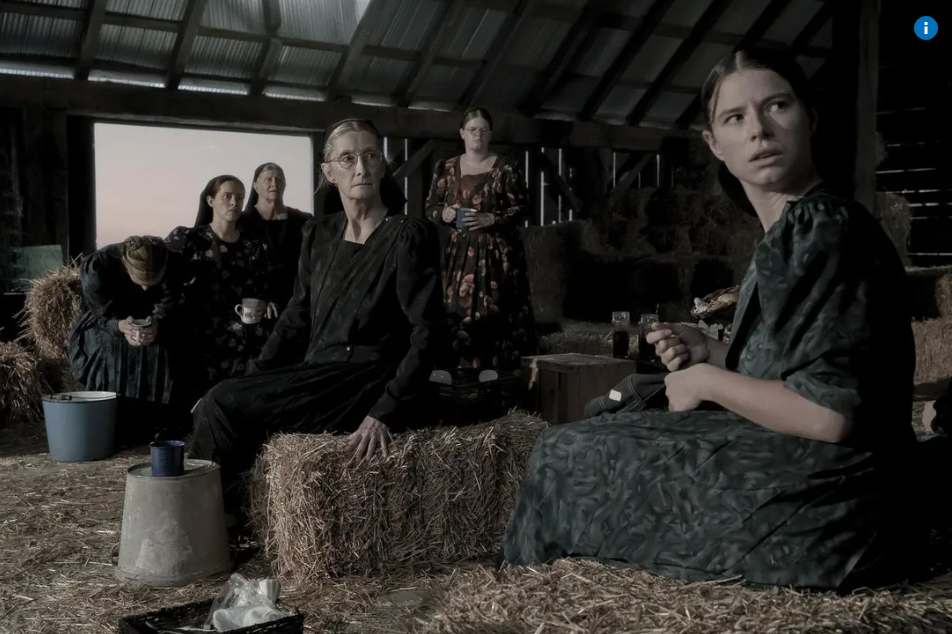
Women are being silenced, violated and gaslit. And not just in Sarah Polley’s brilliant, Oscar-nominated film, “Women Talking.”
In recent weeks, New Zealand Prime Minister Jacinda Ardern and Scotland First Minister Nicola Sturgeon announced their resignations, citing, in part, the toll that being viciously trolled and attacked was taking on their lives.
Here at home, Gov.-Gen. Mary Simon’s office announced the closing of all comments on her social media accounts due to an increase in abusive, racist and violent threats. And BC MLA Melanie Mark cited similar treatment in her decision to resign.
Like the dilemma faced by the women on whom Polley’s film and Miriam Toews’ equally powerful book was based, the decisions these women are making are not free choices: they are lesser-evils necessitated by self-preservation.
Watching the film, it’s crystal clear that the women being driven from their homes by abuse do not enjoy basic democratic privileges. But we need to understand the continuing exodus of women from public life in Canada as a threat to our own democracy.
Decades of research make clear that ensuring women’s voices are integrated into decision-making in every arena — from science to business to policy-making — delivers better outcomes.
“Women Talking” complements that research with rich emotional context. Although the story reflects the particular circumstances faced by a colony of isolated and illiterate Mennonite women, its message — demonstrating the heartbreaking consequences of being denied influence and autonomy — is universal.
At a time when violence against women, both online and off, is rising, the story’s broader relevance is impossible to miss. And the power of this explicit “act of female imagination,” as both Polley and Toews labelled it, comes from privileging women’s perspectives in every frame.
Many of the vivid scenes of sexual assaultor domestic abuse written and shot by men reinforce and normalize the violation of women’s bodies. But this film’s depiction is completely centred on the women’s emotional sense-making and the consequences they’re trying to survive.
The violence is evoked solely through aftermath: footage of women and girls shot from above, awakening in their beds bruised, bleeding and disoriented, calling out to, and then being comforted by one another. And it’s utterly devastating.
Some viewers raised on a diet of action flicks may spurn a movie so-up-front about its focus on talking. But they would be wrong to conclude that watching a group of oppressed women discussing, debating and coming to consensus by envisioning a shared future would merit a pass. Because the film is, in fact, a riveting and emotionally gripping roller-coaster.
In contrast to the world it depicts, women in Canada do have a voice. But we still hold less than a third of the seats in Parliament. And we’ve had to march in the streets, to demand every bit of equality: to be able to vote … to own, versus be, property … to be paid what we’re worth … to be protected from sexual harassment or assault, whether we work in mining or the military, health care or high-tech.
As recent events make clear, we’re not remotely there yet.
Canada currently lags dozens of other countries for women’s representation in elected office. We rank 61st in the world because governments from Sweden to Mexico have taken deliberate measures to ensure women hold a balance of power.
Informed Opinions, the organization I lead, recently conducted research to document the paths they’ve taken to achieve parity. It’s not rocket science; the steps are clear and replicable. What’s required is political will.
“Women Talking” surfaces issues we should all not only be talking about, but acting on. We need a balance of power in this country. And to achieve that, politicians need to adopt measures that will deliver meaningful change.
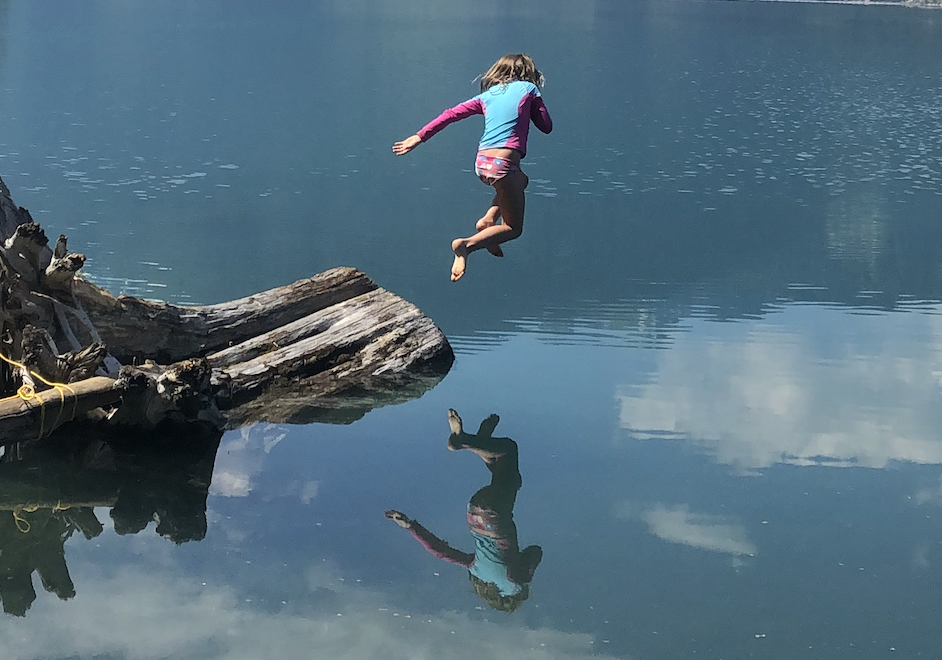
Charlotte, light of my life, is 7. Her fearless physicality, fierce devotion to her brothers, and clarity about her artist’s soul… these are just three of the things that make my heart ache when I think about the many ways the world she is inheriting will fail to deliver what she deserves.
But one of those likely or inevitable failures is fixable. And you can help (especially if you act now — see below)!
At the turn of the millennium, Canada ranked 27th in the world for women’s representation in parliament. Now we’re 59th.
Let that sink in. Canada, a beacon of democracy, has been outpaced on this metric by 58 other nations.
Representation is a prerequisite for democracy — but we don’t offer it to women and girls in this country.
Despite the good work of Equal Voice, which has been advocating for parity in politics for two decades, we’ve only gained 10 points in the past 20 years. At this rate, we’ll be lucky to reach parity by 2062.
Charlotte will be pushing 50 by then, and I probably won’t be alive to see it.
While we were feeling smug about the appointment of a gender-balanced federal cabinet, other countries recognized the cost of not ensuring women have an equal say across government. Dozens of them decided that “natural evolution” (aka “incremental change”) wasn’t cutting it. And so they adopted laws.
Mexico is among them. This deeply Catholic country wrestled its culture of machismo to the ground and achieved parity in politics in 2018.
If they can do it, so can we.
But change doesn’t just happen; it’s made to happen. Especially when the change involved requires some people with power to dismantle the structural barriers that keep other people from accessing it.
Political parties have the power to fix this. The status quo exists because they haven’t prioritized women’s equality as dozens of other countries have. And we haven’t insisted. So we can start to do that, now.
Canadians who want our democracy to live up to its promise can say “no” to the status quo. They can sign an online petition calling on our elected MPs to ensure it is read aloud in the House of Commons. The deadline to make this happen is September 17th.
Together we can create the circumstances that all the Charlottes in our lives grow up in a country that demonstrates its respect for women’s rights by giving them access to an equal voice in government.
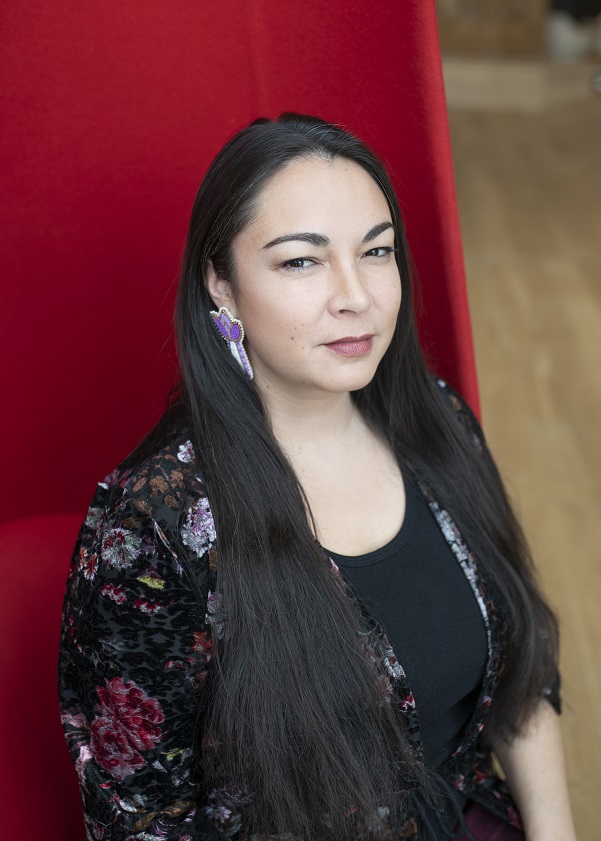
andAmy Ede.In the context of our collaboration to engage and support more Indigenous women and gender diverse people in being heard through the media, the two recently sat down (virtually) to discuss related ideas.
SHARI: I’m embarrassed to admit that when we started Informed Opinions in 2010, I seriously under-estimated the obstacles to bridging the gender gap in Canadian media. Blinded by my own, relatively benign experience, I thought “if I just show women how under-represented our voices are; teach them how to translate their knowledge into publishable op eds, or become more comfortable and effective in media interviews; and then make it easy for journalists to find them, that will do it.”
I failed to realize how reluctant many women are, especially if they work in sectors where they’re constantly being reminded in subtle or explicit ways that they don’t belong. As a woman who never had kids of my own, I also didn’t appreciate just how challenging it is to make time for unpaid media engagement while holding down a job and raising a family.
And even though I’ve been getting hate mail since the days when trolls had to address and stamp an actual envelope, my privilege blinded me to how much worse the backlash directed to BIPOC women is, especially when facilitated by toxic social media culture.
AMY: Yes,doxxing (the public broadcasting of personal details about how to find a person offline) is a terrifying form of oppression and the violence in real life and on social media is omnipresent and magnified for Indigenous women. Every interaction presents a choice to face violence or be silent. Real life danger looms large as we know that white men may rape and murder Indigenous women, girls, Two-Spirt and LGBTQQIA people with impunity. The cases of Missing and Murdered Indigenous Women and Girls, including Cindy Gladue and Tina Fontaine, show a justice system that dehumanizes us and robs us of our dignity just as the perpetrators have.
Encouraging us to step up is asking us to engage with systems that have ignored, pressured, manipulated, or exploited us. We have been consulted but our input has not been honoured. In addition, demands for unpaid labour, rationalized by community good or awareness, have exhausted us. We are asked to be experts on Indigenous culture or history, educating journalists, interviewers and consultants about basic things that should have been taught in schools.
I share a great deal of myself through the news media and on social media because I want to be seen and understood in a system that erases, displaces and misrepresents me. I have experienced the hurt and humiliation of opening an article about an Indigenous woman advocate I look up to and being thrown into the horrifying details of her childhood abuse in the opening paragraphs.
I know that there is always a possibility of harm to myself and others when I lend my voice to a medium I can’t control. The best I can do is equip myself with the tools I need to advocate for strength-based, solution-focused, and trauma-informed communications and go the extra mile to educate others. It’s a privilege that I have the support systems and conviction that I need to do this and that trailblazers like Ellen Gabriel and Pam Palmater have normalized being outspoken.
SHARI: The sobering context you share echoes the perspectives we heard this summer during a roundtable we convened with BIPOC women who are featured in our database of expert sources. White journalists and sources need to better understand how fraught the terrain is for those who don’t enjoy privileges we take for granted.
At the same time, we remind women with critically valuable insights that if they decline interview opportunities, counting themselves out because they’re not “the best” person, this is as much of a problem as journalists failing to seek their perspectives in the first place. The journalist will simply go to the next available source, who’s likely to be male, and unlikely to be fettered by the self-expectation that he has to know everything.
That’s why we encourage women to focus on their ability to “add value”. And because they have relevant experience — or they wouldn’t have been contacted in the first place — they can almost always clear that bar.
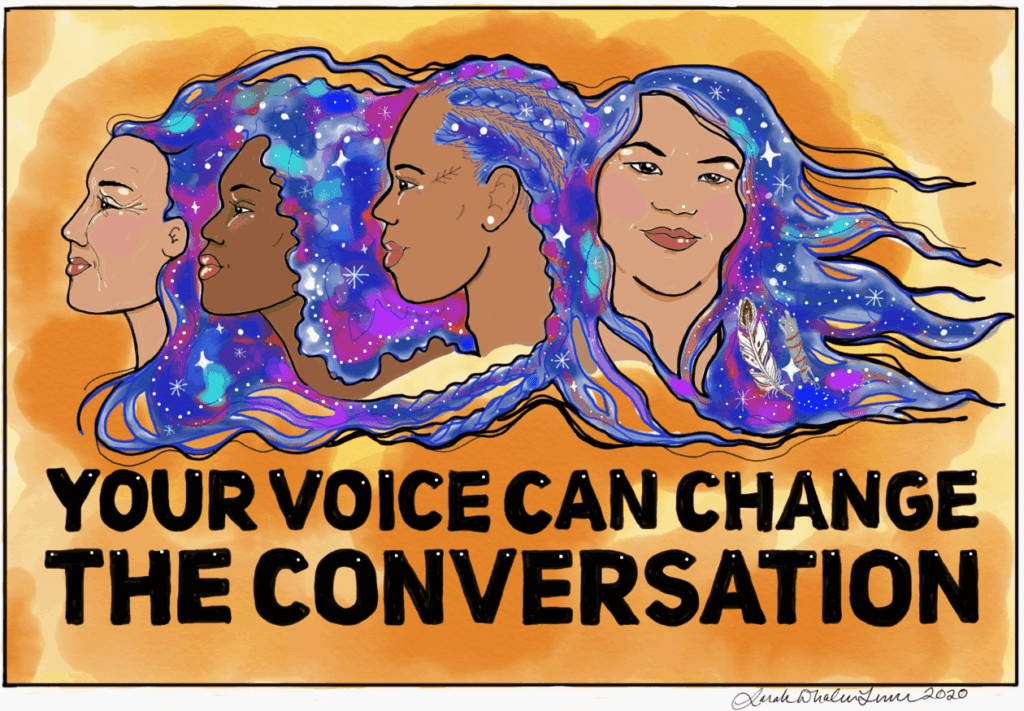
“The galactic imagery in this work suggests the infinite knowledge that lives within us. The lived experience of these four women is valid and theirs to share.” – Sarah Ayaqi Whalen-Lunn (she/her) is an Inuk artist based out of Anchorage
AMY: I see Indigenous women on Twitter who are experts on traditional Indigenous governance structures, relational worldviews, and artistic practices posting brilliant statements in the public domain, for free. A decolonized perspective on holding knowledge recognizes that job titles and institutional credentials are irrelevant to the value of a person, their ideas, and the level of respect we show them. We need to change not only how we listen, but who we listen to, facilitating the amplification of these perspectives.
SHARI: The absence of financial compensation for one’s hard-won insights compounds the problems of invisibility. The deck is stacked against those who are already challenged by racist structures and don’t have the time to invest in labour that’s not only risky but unpaid.
Another challenge is that dominant media practices have created the perception that you have to look or sound a certain way to be considered credible. The image of authority that’s been reinforced by news media for centuries is that of a middle-age white male dressed in business attire. And so anyone outside of that frame is more likely to feel undermined before they even open their mouths.
AMY: Some women are resisting constructs of appropriate ways to express themselves and exercising our right to be angry. Black and Indigenous women have led the way in challenging the notion that we need to be polite, approachable, and smile in order to be heard; that we don’t have to create a safe space for others to witness our outrage. When Minister Hadju was on CBC’s Power & Politics in a leather flight jacket, an Indigenous woman leader expressed that this was how she wanted to dress for interviews. We need to dress in ways that make us feel powerful and ourselves.
I was approached to speak on an Ask Women Anything panel in Ottawa back in 2018, when I’d recently departed my position as Director of Communications at the Native Women’s Association of Canada. I wrote speeches and presentations for others but I didn’t see how I had a voice that mattered.
Participating convinced me that I’m an expert in my own personal experience. The act of voicing my truth legitimizes shared experiences of violence, racism, and erasure and helps others better understand the barriers to the health and wellbeing facing many Indigenous women, Black women, and Women of Colour.
SHARI: I’d forgotten that connection! Ask Women Anything is an Ottawa-based grassroots amplification initiative that was created by Informed Opinions’ previous board Chair, Amanda Parriag as a project of Informed Opinions. It became such a powerful platform for voices and perspectives that have been traditionally marginalized that Amanda is now leading it as a stand-alone entity.
AMY: After the panel, Amanda offered to co-write an op-ed with me for a national publication. The piece we wrote lamenting that “progress” had become a dirty word was published in The Toronto Star, and generated a lot of reader engagement. The next time I felt that I had a perspective that needed to be heard, I had the confidence and experience to be published on my own. It’s our responsibility not only to speak out, but to encourage and lend capacity and resources to others who are finding their own voice in media.
I’m experienced in advocacy, I’m engaged with my community, and I spend a lot of time learning and writing about Indigenous priorities. Who I am and what I do has made me artful in the communication of difficult truths. I know that my voice can change the conversation and I put in extra work to be heard on my own terms.
AMY: This was a success for me in many ways. I fear backlash from the Indigenous community the most and was shocked not to be called in or called out on something egregious. My tweet about the article received over 100 retweets from accounts including 1492 LandBackLane, so I hope that land and water defenders knew it was a love letter to them and their work and that Indigenous readers knew I wasn’t trying to speak on their behalf. Non-Indigenous readers told me that they felt informed and that was also a goal; to stomp out confusion and build understanding that I hope will turn into support.
SHARI: We’ve seen so many examples of women creating demonstrated impact by sharing experiences and perceptions that were previously under-reported or missing entirely.
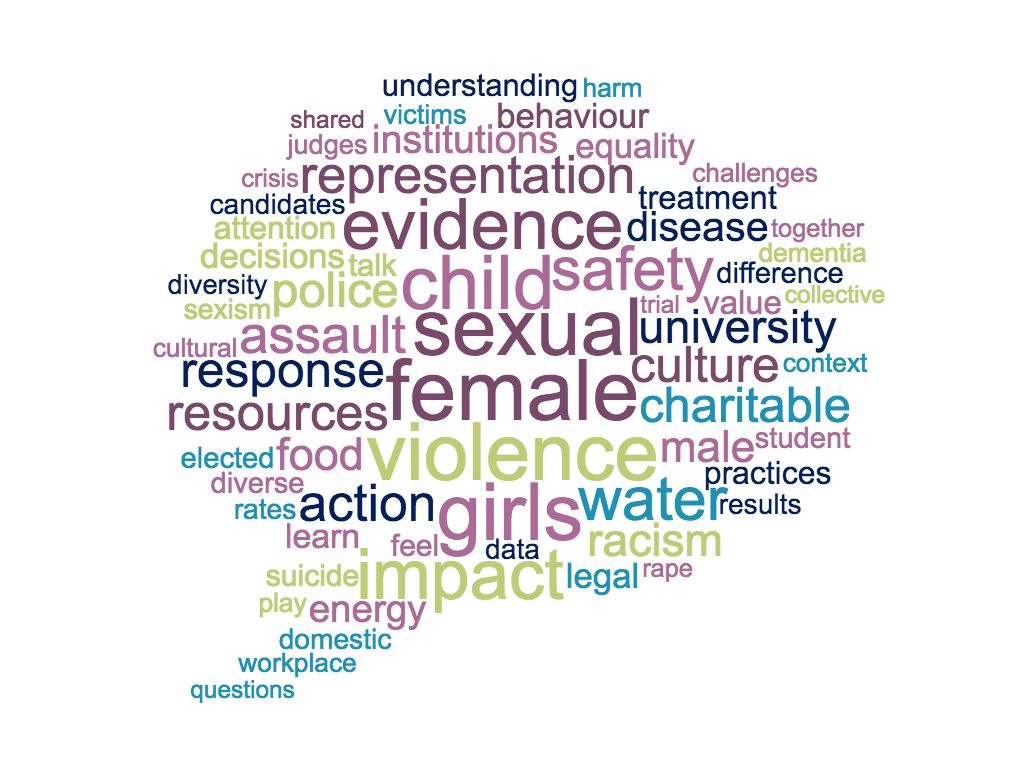
It’s impossible to predict what difference it would make if women were quoted 50% of the time (instead of 30%, as our Gender Gap Tracker is currently showing). But we experimented by taking 100 op eds written by women we’d trained that were published in influential daily newspapers. We created a word cloud to see what issues came up most often. Then we created a comparable word cloud with a random sample of 100 op eds written by men during the same period of time. Finally, we deducted the words that were common to both samples to end up with the issues that only gained prominence when women’s voices were featured.
It was a heartbreaking exercise. Some words were completely predictable: women, girls, sexual, assault. But many others were not, like food and water, evidence and impact, racism and police! What’s interesting is that we did this experiment in 2016, before the #MeToo movement and #BlackLivesMatter — though interestingly after #IdleNoMore. It’s deeply concerning to think of the issues that are not getting attention because we chronically under-represent the people — women, Indigenous people, people of colour, people living with a disability, LGBTQQIA — who are most affected by them.
AMY: I agree that the more we expand representation in media to include people who identify as Two-Spirit and non-binary, women of diverse faiths, women experiencing incarceration, women who live in rural, remote, and northern areas, working-class women, women experiencing poverty, and women who are street associated, the better we will be able to see the landscape as it is.
It interests me that evidence and impact are included in the word cloud. Indigenous women are trained to give evidence beyond our lived experiences because we are not believed. With better awareness of our lived experiences and understanding of our priorities, it may be possible to speak without first quantifying how we have been silenced, why our knowledge is valuable, and why our voices are deserving of respect.
Informed Opinions is actively focused on including voices more representative of the population in the Circle of Experts. We’re seeking Indigenous women and gender diverse people across industries and with professional and personal expertise to join. There’s no limit to the number of rich perspectives needed from First Nations, Inuit, and Métis women, as well as others with a story to tell.
Shari Graydon is the Catalyst of Informed Opinions, a non-profit working to amplify women and gender diverse individuals’ voices and ensure they have as much influence in public conversations as men’s.
Meg moved quickly behind me to close the door to her office not wanting her staff to overhear.
I had showed up in advance of the MediaWatch board meeting in 1990 to let her know that even though I’d only joined the board six months previously, I would be resigning at this, my second meeting.
When pressed, I confessed my disappointment that some of the other members didn’t seem that engaged. At my first meeting, we’d gone around the table to share what we’d been up to on behalf of the then 10-year-old feminist organization advocating to improve how women were represented in media. More than half of my new colleagues had nothing to say.
Wrapped in my new-convert-to-the-cause fervour, I was appalled. What I saw as both a privilege and pressing responsibility, they seemed to view as a governance obligation to be executed three times a year in exchange for take-out pizza and — if they lived elsewhere — economy class travel to Toronto.
Meg, who’s ballet-master-posture and long patrician face made her seem even taller than the six feet she’d inherited, was also new to her job as Executive Director. She’d taken on the role when the board had moved the organization’s office from Vancouver to Canada’s media centre to better influence the business practices of advertisers, broadcasters and news organizations.
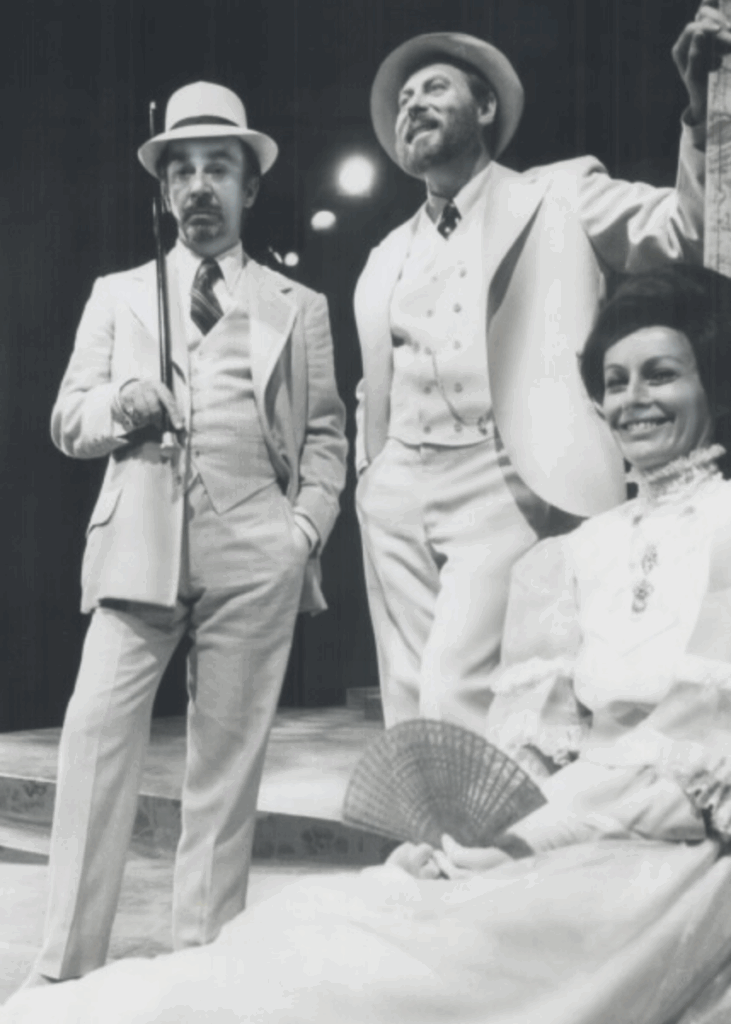
Eric House, David Gardner and Meg Hogarth in a performance of The Cherry Orchard at Hart House in Toronto, 1977
An actor, former president of the Canadian performers’ union, and one-time provincial NDP candidate, Meg modelled what was, for me, an inspiring marriage of activism and art, pragmatism and persuasion. She was bright and energetic, confident and fun.
And she managed to convince me in short order that the conclusion I was drawing to quit the board was entirely wrong; instead of jumping ship, she advised, I should be at its helm. The term of the current president was up and given the leadership I’d already shown — writing op eds, giving public talks and media interviews — she was certain others would be happy to cede the floor to me. (This is one source of the quip I often make in talks: there are no glass ceilings in under-funded women’s organizations.)
That conversation with Meg, which took place 30 years ago, changed the course of my life. Although I’ve done many other things during and after my ten years as chair of that board, three decades later, I remain integrally involved in advocacy work related to the persistent under-representation of women in media.
MediaWatch has morphed into Informed Opinions, and I continue to build on research we did together… share stories about interviews I gave during those years… fuel my commitment with the recognition that while women’s equality has seen extraordinary gains in many arenas, we are still being interviewed, quoted and featured less than a third of the time.
During the period of our collaboration, Meg was generous in passing speaking opportunities and media interviews to me. She would coach me on the phone, offering feedback and sharing ideas that made me a more interesting source and more effective advocate.
Her own commitment to the cause was best illustrated by a meeting she secured with Ted Rogers, founder of the Rogers media empire. As funding cuts in the 1990s began to erode MediaWatch’s ability to deliver programming, conduct research and lobby media, she sought an audience with the empire builder, whom she’d briefly dated many decades before. Even though they hadn’t been in touch for years, and he had no evident history of sharing company profits with women’s organizations, he ran a media empire, and he agreed to see her.
I don’t recall any details of the meeting, only the optics of the encounter as she described them: both of them in their sixties, but Meg dressed in her rag-tag bohemian non-profit aesthetic, having arrived by bike at Rogers’ well-appointed corporate headquarters to meet the business-suited billionaire.
I believe the audience was both perfunctory and fruitless, but I loved her for having had the humility to request it, the strength of character to show up as herself, and the sense of humour necessary to turn the incident into a good story.
Meg Hogarth died last month at 84. Her passing was marked with an obit in The Globe and Mail, which failed to include a photograph. Given her work helping to make women more visible, this was a cruel irony.
Meg had arguably a greater impact on the course of my life and the advocacy I’m still doing than almost anybody. I told her that the last time I saw her in 2016… confessed that I was more invigorated by what had become my life’s work than I ever could have imagined… thanked her for closing the door behind me back in 1990 and painting a leadership vision that I hadn’t previously aspired to assume.
I don’t know how much of what I said was understood. By then her communication abilities were limited by the impact of both Parkinson’s and several strokes. I regret not having made a point to tell her sooner. That’s why I’m telling you.
Without Meg Hogarth, executive director of MediaWatch, no Shari Graydon, catalyst of Informed Opinions. Indeed, no Informed Opinions.
The next donation I make to the organization’s future will be in her honour.
I’m embarrassed to confess how long it’s taken me to wake up to this revelation.
I ask women every day to step out of their comfort zones and speak up about things they know to be important — to share their insights, challenge ignorance, and make change. But recently it occurred to me that I have been unwilling to step outside my own comfort zone.
I speak up all the time in my advocacy work. But I’ve been doing that for 30 years; it’s easy for me. What’s not easy for me is asking other people to help fund that work. And so mostly I haven’t.
Since founding Informed Opinions ten years ago, I’ve asked three established feminist philanthropists for contributions to our work, and been so gratified by their support. And as Christmas approaches every year, we’ve pulled together an email or two inviting people on our contacts list to make us part of their end-of-the-year giving plans. Many have, and we so value their donations.
But these efforts have always made me enormously uncomfortable. As a result, I’ve focused almost all of my revenue-generating efforts on developing, promoting and delivering our programming.
Over the past decade, we’ve essentially leveraged the few government and foundation grants we’ve received to build a social enterprise. We’ve cultivated relationships with universities and non-profits, and created a suite of practical workshops that help executives, scholars and advocates draw attention to the issues they know and care about. In the process, we’ve generated close to a million dollars in fee-for-service revenues. Those funds have been crucial to the impact we’ve had. They’ve supported our online resources and the ongoing expansion and promotion of our database of experts. I’m enormously proud of that.
But the diligent members of my board have done the math that I’ve been avoiding. They’ve pointed out that just because Samantha and I are willing to work long hours for considerably less than market value because we “love the work and are committed to the mission” (and yes, I DO appreciate that this is one of the many ways women keep ourselves small and undervalued), doesn’t mean that doing so is a defensible position or recipe for sustainability.
So this year I am focusing my attention on leveraging both our demonstrated impact and the unique cultural moment we’re in. I am actively seeking the resources necessary to scale up our work and deliver on our promise.
I’m often in rooms full of smart, knowledgeable and articulate women. Invariably some of them express reluctance about having a public voice, knowing that it may open them up to criticism. I understand that. But here’s what I ask them:
“Do you believe the work you do is important? That it’s getting the attention it deserves? That it’s worthy of support?”
And then I remind them that if, despite their knowledge and commitment, they’re not willing to speak up, perhaps no one will. And all the research, insight and brilliance in the world is only valuable when it’s shared.
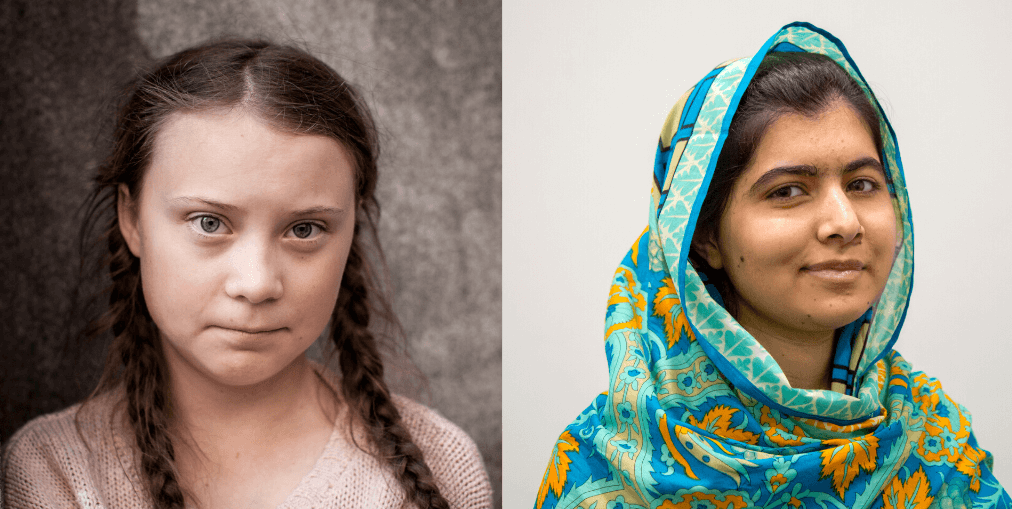
Malala Yousafzai and Greta Thunberg have made the world stand up and take notice of the causes they champion as teenagers. And as a result of speaking up, they’ve been shot in the head or publicly condemned by the President of the United States. But that hasn’t stopped them.
Founder of the Op Ed Project, Katie Orenstein, also acknowledges that speaking up has consequences. But she points out that the alternative is to be inconsequential. Failing to capitalize on the potential we have to make a difference is likely to keep us on the wrong end of the consequential-inconsequential continuum.
Last fall, I asked Barbara Grantham, then President of the Vancouver Hospital Foundation and now incoming CEO of Care Canada and a member of Informed Opinions’ advisory committee member, for fundraising advice. Among her many insights was this:
“Philanthropy is an opportunity for people to be their best selves.”
Even though my own giving capacity is limited, I understand that. When I donate to a food bank or woman’s shelter, I feel an expanded sense of my own humanity. And now I’m working to embrace the capacity Informed Opinions has to offer others a similar experience.
We’re collaborating with a wonderful team of women at capitalW, an initiative launched last year by Kathryn Babcock. When I first met Kathryn to explore whether or not we might work together to raise funds for Informed Opinions, almost the first sentence out of her mouth was:
“I’m fascinated by money.”
I was genuinely shocked by this admission. I’ve been an advocate for 30 years, saw her as a sister in the trenches, and was still deep into my denial of the centrality of resources to make change happen. I’d spent years taking pride in my relentless focus on the work, not the infrastructure; I regularly told others I wasn’t looking to build an empire, I just wanted to make change. And that meant, in my naive and unquestioning mind, not thinking about money. So to hear a fierce feminist flat-out confess to being preoccupied by it was startling.
But Kathryn’s sophisticated analysis of the flow of money in a capitalistic society and vision of how we should be leveraging the untapped potential of women’s consumer spending for equality challenged me to think differently about my own relationship with money. Within moments of meeting her, I found myself saying, “What can I do to help you?”
So six months later, Informed Opinions has embarked on a concerted campaign to scale up the critically important and potentially far-reaching work we’re doing. I’m still often deeply uncomfortable speaking the words, “Would you consider making a contribution…” But in doing so, I feel a new connection to the women who email us every week or so to say something like:
“A journalist called wanting me to comment on national TV and I was going to say ‘no, I’m not the best person’, but I heard your voice in my head and so I said yes. I did the interview — without throwing up! — and I’ve had great feedback. Thank you so much!”
If you’re already donating to Informed Opinions, I thank you from the bottom of my heart. If you’re not, but want to know more about the impact we’ve had, what we’re aiming to do next, and how you or your organization or network can help, click here.
Even if you live in Ottawa, a city that removes snow from its downtown core with military precision, you’ve probably never asked yourself that. Until I read Caroline Criado Perez’s Invisible Women – Data Bias in a World Designed for Men, it had never occurred to me to pose the question either.
But it matters that the answer is yes. And this is just one of a thousand reasons that our democracy needs to elect sufficient numbers of women to erase our chronic under-representation in the halls of power.
When you grow up in a world dominated by male decision-makers, the default assumption is that’s the way it is. And many of the stories we tell ourselves – “men are bigger risk takers”, “men have more confidence”, “it’s easier for men to raise money” – reinforce our willingness to accept that status quo.
But many other countries – some of them with much younger democracies and much less advanced economies – do better. Despite significant gains women have made in every realm, Canada ranks a shocking 61st worldwide in terms of women’s political representation. And our failure to draw on women’s talents and insights has huge implications for every aspect of our lives.
We intuitively grasp how ridiculous it would be if parents were largely left out of policy decisions that affected families… If people living with disabilities had little to no voice when it came to making cities and technology accessible. And yet even though it’s 2019, women still occupy only 27% of the seats in our federal parliament. That’s indefensible.
Women’s voices in the news media are similarly under-represented, so over the past ten years, Informed Opinions has trained women all over the country to translate their knowledge and experience across many fields and sectors into news commentary. We motivate and support women in helping the broader public understand issues important to our lives. More than a thousand of them have done so.
In an effort to understand what stories are missing when women’s voices are absent, we created a word cloud from 100 published op eds penned by women we’d trained. By removing words that also commonly appeared in op eds written by men, we were able to identify which topics and concerns get significantly less attention if women aren’t consulted.
Some of the issues on the list are heartbreakingly predictable. Even before the #MeToo movement, the words “sexual” and “assault”, “violence” and “female” were prominent. But many other words point to essential survival matters for all human beings, such as “food” and “water”, “evidence” and “safety”, “disease” and “treatment”.
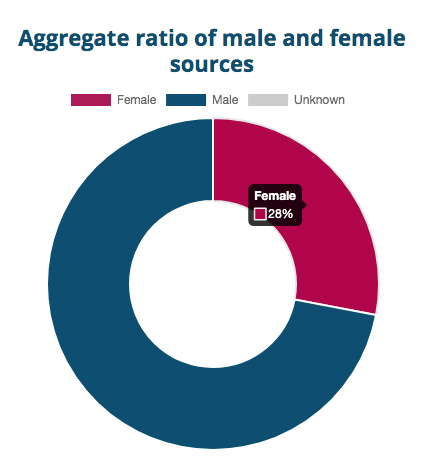
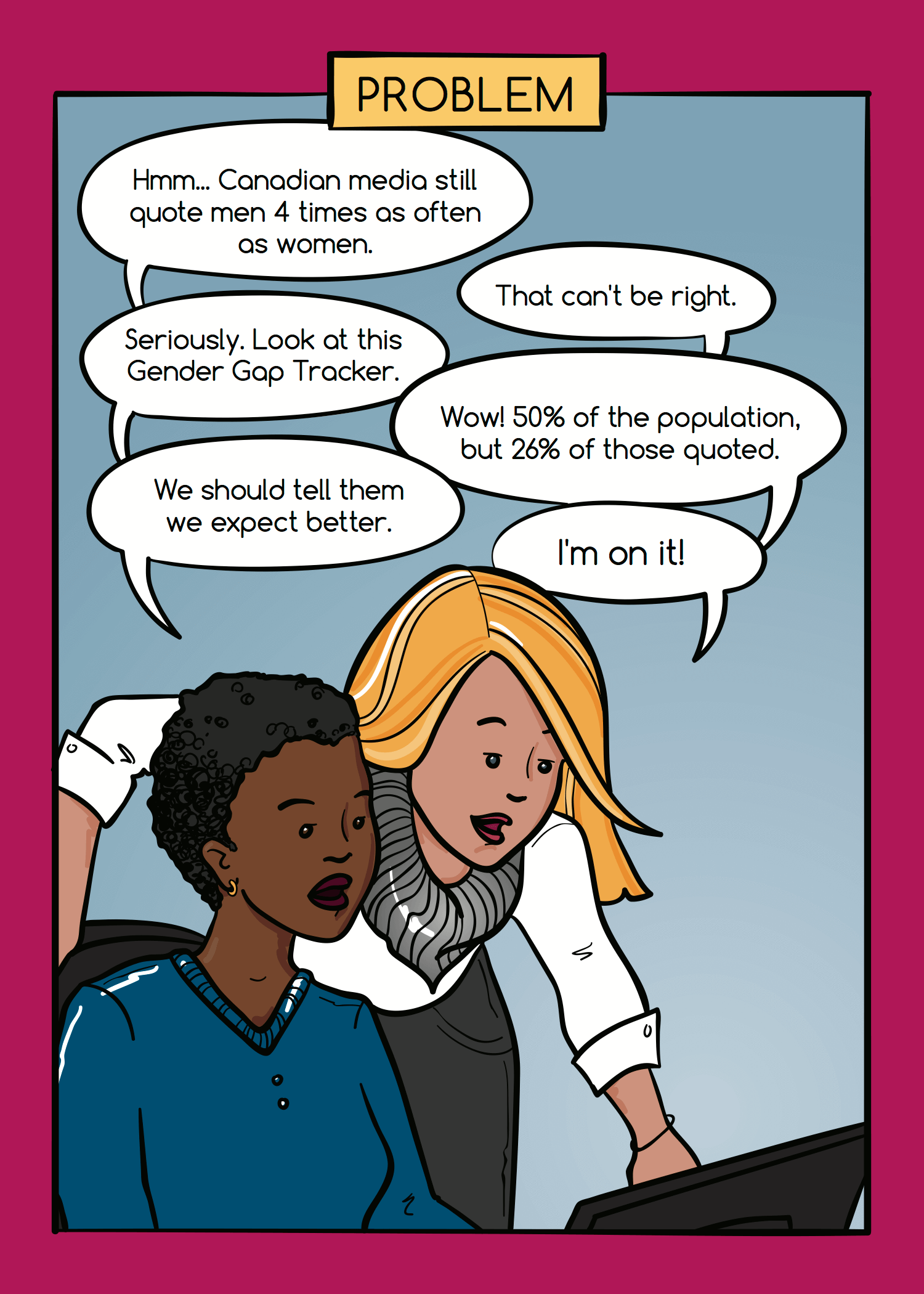
We also recently launched an online digital tool that measures in real time the percentage of women and men being quoted in influential news media. Our Gender Gap Tracker makes clear that men’s voices in public discourse dominate by more than two to one. It also tells us that 60% of the people quoted most often are politicians. That’s why it’s so important when party leaders appoint gender-balanced cabinets. Our equitable representation in one arena helps to eliminate our absence in the other.
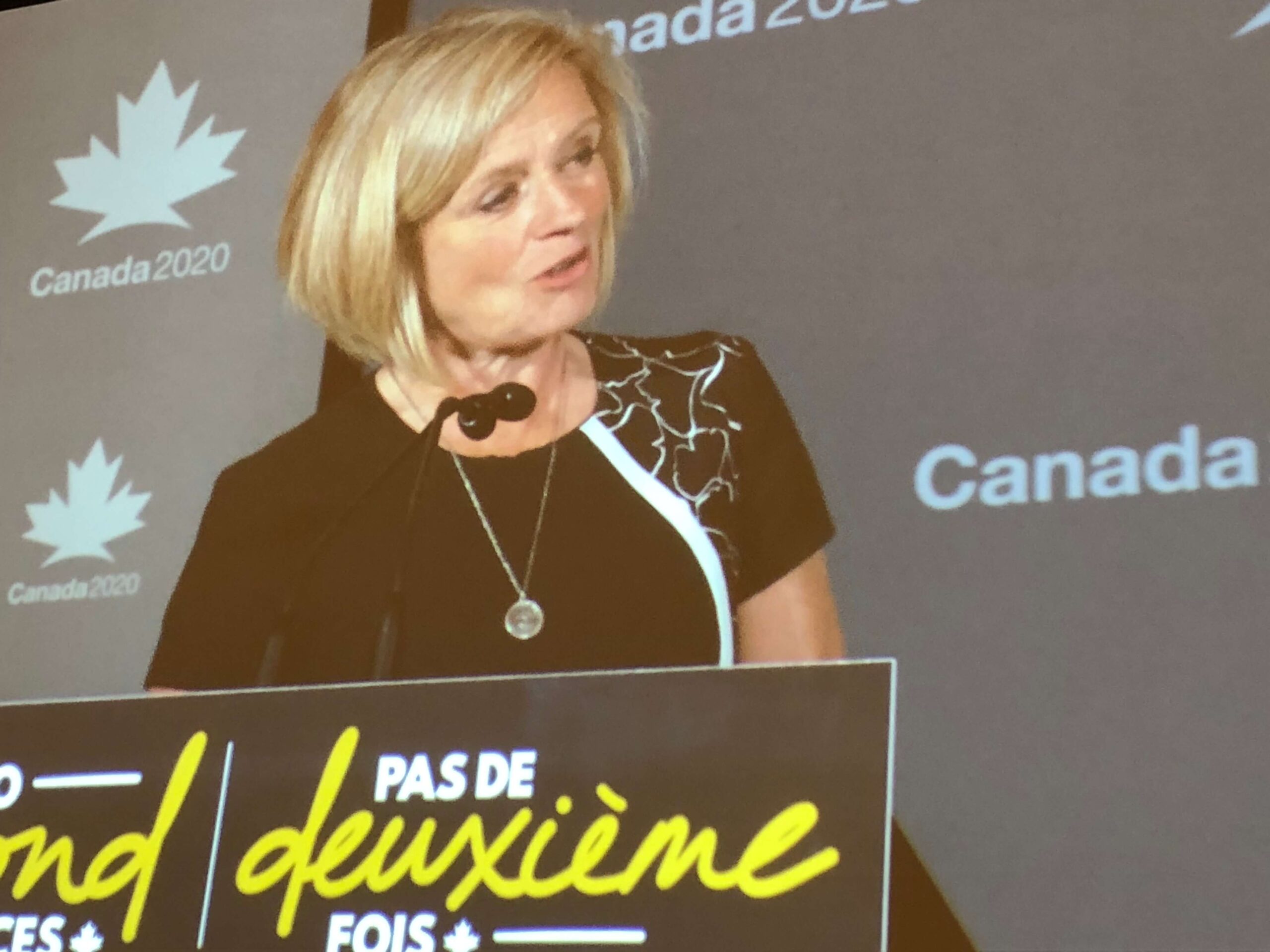
When Rachel Notley became leader of the Alberta NDP, she told her team: “Don’t even think about bringing me a slate of candidates that’s not gender balanced.”* That needs to be every leader’s default. And between now and the next election, Informed Opinions will be collaborating with organizations working to get more women into politics to encourage all political parties to adopt this gender equity principle. Because it’s fundamental to representation.
As for the sexism of snow-plowing, here’s the deal:
The order of priority in which streets are plowed can have significant consequences for women’s lives. Not only that, but those consequences can end up costing taxpayers in health care costs.
The short story is that clearing pedestrian and public transit routes first, as opposed to main arteries, results in fewer accidents and hospital visits, most of them involving women. Because while most men travel alone, many women travel encumbered by shopping bags, strollers or older relatives. Women also generally walk further than men, in part because they tend to be poorer.
You can read Invisible Women yourself to identify the myriad other reasons. These include the fact that male-biased voice recognition software endangers women’s lives and male-biased performance evaluations stunt our careers. Elected officials aren’t the only people responsible for fixing those problems, but because their contracts are up for renewal every four years, it’s easier to ensure gender parity in their ranks.
So, this federal election, if you’re not running for office yourself, support a woman who is, whose values and priorities you share. Knock on doors for her, donate to her campaign, or invite your neighbours to meet and support her, too.
Snow removal is a mere drip off the pointy end of a massive icicle of policy gaps, and so much more needs to be done to make Canada genuinely democratic, and as fair, healthy and prosperous as it can be.
*Rachel Notley spoke about this in Kate Graham’s fabulous “No Second Chances” podcast. Every one of the 12 episodes offers context, inspiration and enlightenment about the critical importance of women in politics.
What would happen if news media struggling to survive applied the productivity mantra “What gets measured gets done” to the sources they quote?
Business research, Hollywood sales data and anecdotal evidence from the news industry itself all suggest it’s worth a try.
In many western democracies — the United States, the United Kingdom and Canada included — most major news organizations continue to feature three or four times as many men as experts or sources as they do women.
This might have been more defensible a generation ago. Male CEOs, politicians and professionals were the norm, and we weren’t so clear about the costs of failing to consider how profoundly different men’s and women’s bodies and lives are when developing drugs, policies or programs.
But reams of respected business research has since found that when organizations draw on the talents of women, they make more informed decisions, better serve their customers and are ultimately more profitable. And continuing to rely primarily on a white, male subsection of the population to offer commentary and analysis when you’re trying to engage culturally diverse audiences that are 50% female? That hasn’t made sense for decades.
Nor is it good journalism. Diverse sources are a hallmark of responsible reporting. For news to effectively fulfill its democratic obligations, it needs to reflect the diverse perspectives of the citizens it purports to serve. Doing so is likely to engage more of them.
Entertainment box office figures are instructive. TV and film executives once believed that female audiences would watch programs aimed at men, but the reverse was not true. That rationale helped to justify decades of male-centric movies.
But a 2018 study found that on average, female-led films earned higher revenues than male-led films released in the same year. In an age of on-demand programming from a multitude of providers, the tastes of teenage boys no longer rule. Audiences want good storytelling and to see their realities reflected on large and small screens alike.
Good journalists understand this and many are already attempting to capitalize on a similar dynamic in terms of how they report and who they feature. Senior staff at Bloomberg and The Atlantic have been leading this charge for years. And in 2018, the BBC explicitly committed to meeting a 50:50 challenge, ensuring the equitable representation of male and female sources by this coming April.
Anecdotally, some media are discovering that such attention pays off. The producers of La sphére, a Radio Canada program that covered technology, noticed that efforts to achieve gender parity among guests corresponded with an increase in listeners. And The Financial Times determined that reframing one of its electronic newsletters to engage female readers inspired higher “open” rates among male readers as well.
Informed Opinions, the non-profit I lead, is looking to inspire others to mimic these experiments. We recently collaborated with scientists at Simon Fraser University to adapt the incentivizing power of a fitness tracker to this challenge. Leveraging the technology behind voice-activated assistants like Siri and Alexa, we created a tool designed to motivate journalists to pay more attention to the gender ratio of their sources.
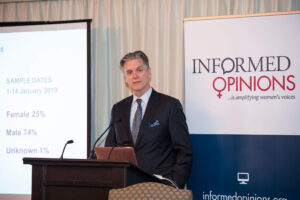
Using big data analytics, our Gender Gap Tracker monitors the ratio of male to female sources quoted in Canada’s most influential news media. Its easy-to-read graphs are updated on a daily basis and reflect both the performance of individual newsrooms, and aggregate data from them all. From October through January, women’s voices remained steady at about 25 percent.
Most journalists know that doesn’t reflect well on either their journalism, or their audience engagement prospects. Beleaguered by industry disruptions, and competitive by nature, many are eager to improve. In fact, since we launched the Tracker on Feb. 4, women’s voices have increased by 4 percent.
This improvement has been aided by a number of grassroots women’s groups that have created databases of expert women across a wide range of fields. Our collective goal is to make it easier for journalists to find female sources who are both qualified and eager to share their insights.
Anyone familiar with the incentivizing power of a fitness tracker understands that what gets measured is more likely to get done. Like the 10,000-step crowd, news media may discover that the quantification leads to life-sustaining health benefits.
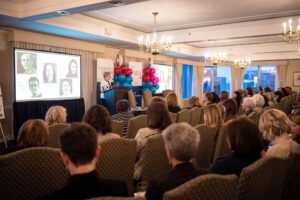
Business people, bureaucrats and board members, researchers, equality advocates and journalists — that’s who showed up on February 4th at Ottawa’s Rideau Club for the launch of the Gender Gap Tracker.
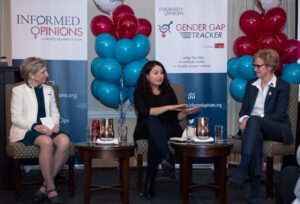
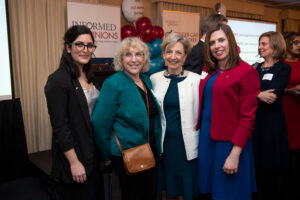
Left to right: Shari Graydon, The Honourable Maryam Monsef and Joy Johnson
They came to celebrate the application of big data analytics to achieving gender equality in public discourse. And they stayed to watch an Informed Conversation between Minister for Women and Gender Equality, Maryam Monsef, and Joy Johnson, Vice President, Research at Simon Fraser University. The two leaders’ thoughtful exchange — which you can watch in its entirety here — included equality strategies and candid confessions about professional failures, and how they view those now.
You can read more about the Gender Gap Tracker (what it is, and why it’s necessary) here and here. But the short story is, for four months before launch, from October 1st to February 4th, women’s voices never edged above 26% of all those quoted or interviewed. Since then, we’ve seen brief spikes of 29 or 31%. Visit the site yourself, see how well the news media you rely on are doing, and then click on the media logos to let them know if you’re satisfied or disappointed.
In the meantime, here’s what a few of our board members in attendance had to say about the launch itself the following day:
Editor in Chief of the Conversation Canada, Scott White, offered a veteran journalist’s perspective on the stats
The event was superbly executed, had a strong turnout of folks committed to gender action in different domains, and featured a stellar and authentic conversation between Minister Monsef and SFU’s Joy Johnson…. It’s great to see the buzz on Twitter and the ease with which the tracker works. –Nobina Robinson
I’ve been blissed out since I got home last night. The Gender Gap Tracker is helping us move the conversation in this country in a much-needed, positive direction! – Amanda Parriag
The event was terrific, the room was great, and you succeeded in elevating the work of Informed Opinions. It was an inspiring event. – Evelyne Guindon
The event was spectacular, it’s wonderful to see media and government engagement, and the spoken-word poetry summary at the end was brilliant! – Scott White
It took a diverse team of seriously brainy people to build the GGT
The event also gave us the opportunity to publicly recognize:
Kelly Nolan of Talent Strategy, who first proposed the idea of a big data analytics tool
John Simpson, University of Alberta physicist and digital humanities expert
Maite Taboada, Computational Linguistics professor at Simon Fraser University
Fatemah Torabi Asr, Software Engineer, Computational Linguist, Simon Fraser University
Mohammad Mazraeh, Big Data Engineer, Simon Fraser University
Alex Lopes, Big Data Analyst, Simon Fraser University
Simon Fraser University itself, for investing hundreds of thousands of dollars in developing the research
Roslyn Bern of Leacross Foundation, our most appreciated champion and supporter
Our valued corporate sponsors, who share our gender equality commitment:
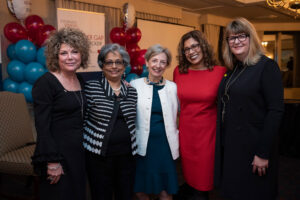
Kelly Nolan, Joy Johnson and Maite Taboada all earned their front row seatsInformed Opinions core team and valued patron: from left: Zeba Tasci, Roslyn Bern, Shari Graydon, Samantha LuchukSome of Informed Opinions’ board members, from left to right: Jennifer Laidlaw, Nobina Robinson, Shari Graydon, Amanda Parriag and Evelyne Guindon
This article was originally published in TheToronto Star
Could the incentivizing power of a fitness tracker be adapted to help achieve gender equality in the media, enhancing Canadian democracy in the process? After a year of collaboration with a team of big data scientists, we’re about to find out.
Despite the increasing attention paid to the importance of women’s voices, in news media coverage — both in Canada and around the world — male perspectives continue to dominate by a ratio of more than two or three to one. In the days when few women earned graduate degrees, led organizations or were elected to public office, that dominance was understandable. But today? Not so much.
The disparity in representation now makes headlines. In 2012, the BBC convened an all – male panel to discuss breast cancer and teen contraception. The outrage was as swift as it was predictable. But humiliation can sometimes be a galvanizing force: Britain’s national broadcaster has since offered hundreds of expert women free media interview skills training. And last year, it explicitly committed to meeting a 50:50 challenge, aiming to ensure the equitable representation of male and female sources by 2020. Some programs have already achieved the milestone two years ahead of schedule.
In fact, doing so isn’t that difficult. Matthieu Dugal, host of Radio Canada’s La Sphere, reported more than two years ago that his program had featured as many female guests as male — despite its focus on technology. Similarly, Bloomberg has been actively seeking gender balance among its business news sources for several years.
Going beyond established contacts to achieve such diversity takes effort. In addition to searching for new sources, journalists have to actively record and tally their metrics. Several journalists at The Atlantic have written about their own commitment to doing this, and science reporter Ed Yong estimates that achieving gender parity requires an extra hour a week. He calls his monitoring spreadsheet “a vaccination against self delusion.”
In an age of the perpetual news cycle, when many reporters, editors and producers are doing the job of three people, we understand why this might be unappealing. But there are upsides to the vaccination discipline.
La Sphere’s gender parity achievement was accompanied by an increase in the program’s audience share. And The Financial Times recently discovered that reframing one of its electronic newsletters to actively engage female readers inspired higher open rates in male readers as well.
Given social media’s disruption of news gathering revenue models and the need to sustain trust among news consumers, all news organizations should be paying attention to these experiments. Indeed, a collaboration between the World Economic Forum and Internews, a U.S.-based global non-profit, is explicitly aimed at ensuring more women’s voices are included in news coverage, in pursuit of increasing community trust in news.
That’s why Informed Opinions has been working with researchers at Simon Fraser University to put big data to work in the service of democracy. Over the past year, we’ve built the Gender Gap Tracker, an online digital tool that monitors the ratio of male to female sources quoted in Canada’s most influential news media. It features easy-to-read graphs updated on a daily basis reflecting both the performance of individual newsrooms, and the aggregate ratio of them all.
The tool captures only the sources cited on each news outlet’s website; it’s unable to quantify those who might appear in broadcast interviews, but aren’t referenced online. Yet so far, its results mirror the ratios found in previous research done manually. The goal of the Gender Gap Tracker is to celebrate news organizations that lead by example, and motivate those who lag behind. And it offers news consumers and media organizations alike a daily reminder of the remaining gap.
Improving this metric is important for all of us. Good journalism is fundamental to democracy, and the persistent underrepresentation of women’s perspectives denies Canada access to the analysis and ideas of many of its best and brightest. It also undermines policy decisions. Many issues affect women differently; solving complex social, economic and environmental problems requires us to more equitably integrate their experiences and insights.
Diverse, qualified women exist in virtually every field, and for the past nine years, Informed Opinions has been motivating and delivering media skills training to thousands of them across the country. Our free online database of diverse experts committed to responding to interview requests quickly now features more than 800 female sources.
We’re looking for Canadians to join us in reminding journalists that it’s no longer necessary (or defensible) to declare, “But I couldn’t find a qualified woman.”
If 2017 goes down in history as a year of resolve, what will we say about 2018? That we built on the momentum to make lasting change, or that we let the energy dissipate into nothingness?
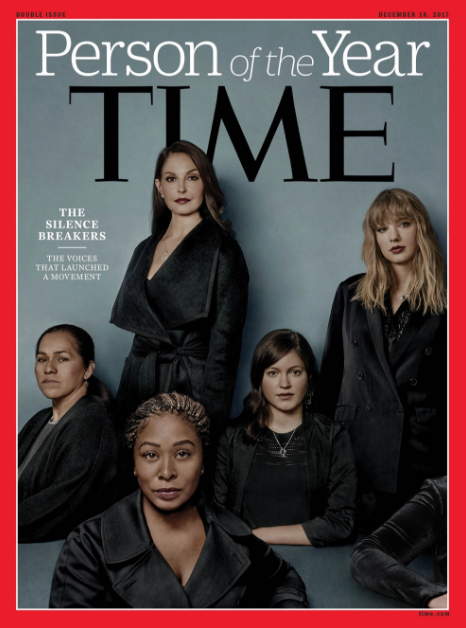
From women’s marches around the world to the #MeToo movement, many people took not just to social media, but to the streets, speaking up against hate, inequality and violence.
Women, in particular, shared their realities in ways and in numbers that got global attention and sent shock waves through a host of industries, from Hollywood and high tech to policing and restaurants.
But genuine revolution requires persistence: we need to continue challenging unconscious biases, dismantling entrenched systems, and redistributing power. We need to translate last year’s manifestations of resolve into actual resolutions – and then act on them. And we need leaders who are willing to take a stand and publicly spearhead this revolution.
Is that you? Someone you work with — or for?
Here are 5 suggestions for how to keep amplifying women’s voices for change in 2018:
Publicly announce your commitment to support gender equality in the media and donate $1,000 for a tax receipt in support of “What Gets Measured Gets Done”, the high tech dashboard we’re building to track women’s voices in the media;
Ask women in your workplace what’s needed to overcome the barriers to their advancement, and then commit to implementing meaningful measures that will benefit them and your bottom line;
Nominate qualified women from your organization or network who are able to speak to media for inclusion in ExpertWomen, our online database designed to make it easier for journalists and conference programmers to feature smart women;
Talk to us to explore how we might partner with you to amplify women’s voices in Canada and raise awareness at corporate events;
Book a Finding Your Voice, or Building Allies for Change keynote or workshop combining research insights and concrete take-aways with storytelling and humour to engage and motivate your colleagues.