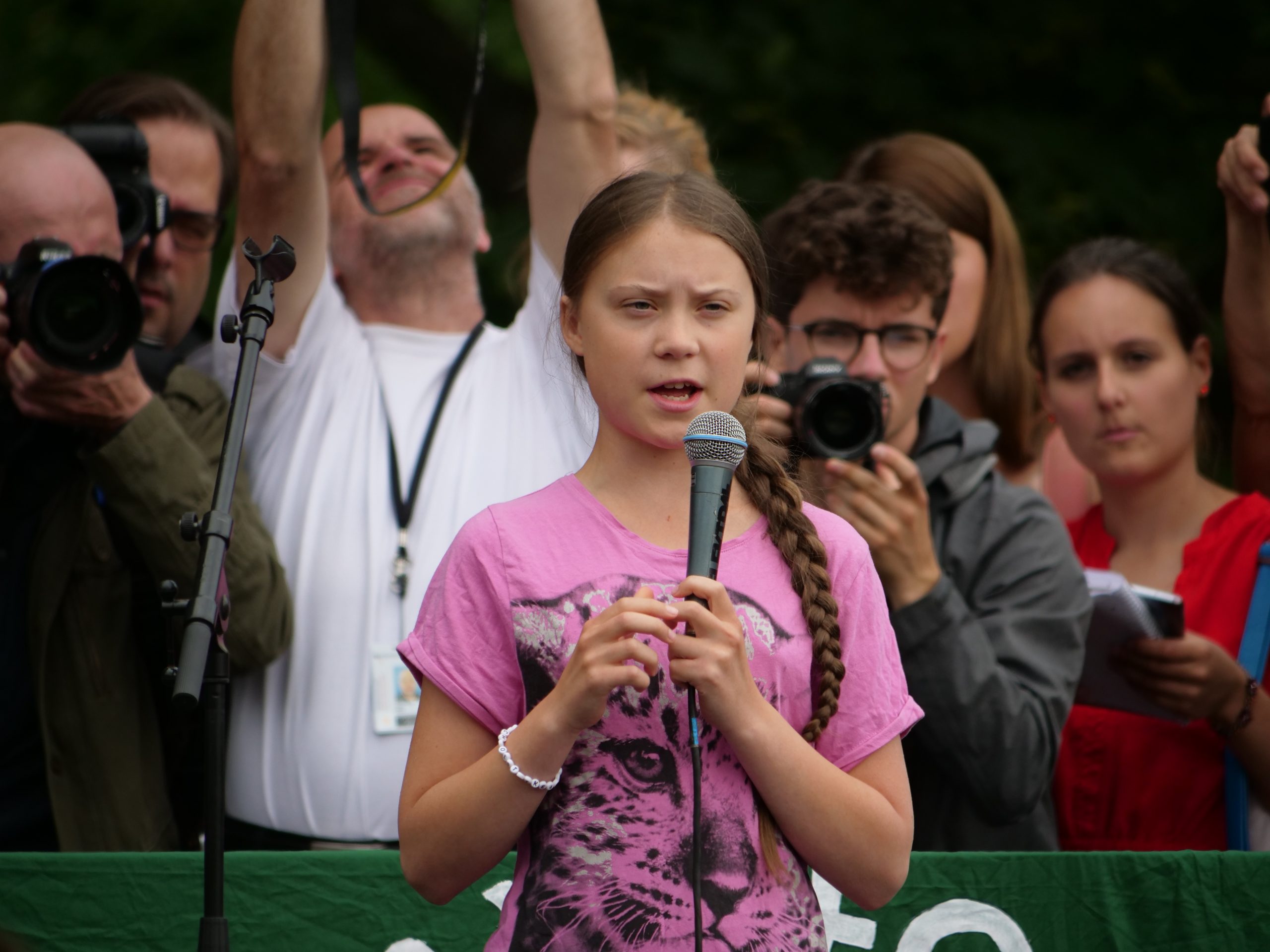
Young women make waves – and inspire their mentoring peers in the process

Greta Thunberg, in just 3 years, has shown the world a new way of doing things, of speaking up, of making a difference. She did what no one was able to do before: at 16 years old, she got the world to talk seriously about the climate crisis. 

Just weeks after Greta started her Fridays for Future climate strikes, my 17-year-old daughter and I gathered a small group of high school girls and adult women to create Making Waves, an intergenerational community focused on advancing gender equality. 

It was born of equal measures of inspiration, frustration and anger. Inspiration from Shari Graydon and Informed Opinions’ mission to close the gender gap in public discourse by encouraging women to speak up and take the mic. Frustration that very little had changed for young women going into science and engineering programs at university. And anger that rape culture seems more firmly implanted in university life than 30 years ago when the ‘No Means No” campaign started.

Looking around, we saw there was no organization that connected the sophistication and energy of young women in high school and university, with adult women who cared profoundly about gender equality and were willing to share their skills and knowledge, and invest in young women. We wanted to bring them together to learn, practice speaking up, and support each other both inside the safe space we create, and outside in the broader world.  

Through the pandemic, we’ve continued to find ways to connect, grow, build community, and most importantly to speak up. We’ve built on the annual workshop, adding an online book club featuring expert guests who facilitate rich discussions about important topics…  The Reality Bubble: How Science Reveals the Hidden Truths that Shape our World by Ziya Tong and Seven Fallen Feathers: Racism, Death and Hard Truths in a Northern City by Tanya Talaga have inspired lively and informative sessions. 

While our primary purpose is to encourage young women to speak up about their experiences and what matters to them, something unexpected has happened. The intergenerational synergy has inspired the adult women of Making Waves to make more change, to make bigger waves. 

“I want to grow up to be like 17-year-old Sarah,” texted one of the adults after an animated intergenerational panel.  

Young women aren’t waiting for us to start doing the work. They are just making it happen, demanding change. 

However, they appreciate being given opportunities and being mindfully mentored. When the voices and contributions of young women are truly valued, listened to, and responded to, the results are powerful. We just need to be open enough to see the world through their eyes, and be willing to join them in making change. 

We are just weeks away from our 4th Annual Making Waves Workshop, on May 1st 2022. If you know of a young woman who cares about gender equality and wants to make connections, hone her skills, and practice speaking up, invite her to join us. We welcome all self-identifying women, non-binary and gender non-conforming individuals who feel they would benefit from our conversations. 

And if investing in young women is important to you and you enjoy making waves to make a positive impact, please join us yourself! Everything we do is created with, by and for young women; there are no auditions, no waitlists and no cost.

And if investing in young women is important to you and you enjoy making waves to make a positive impact, please join us yourself! Everything we do is created with, by and for young women; there are no auditions, no waitlists and no cost.

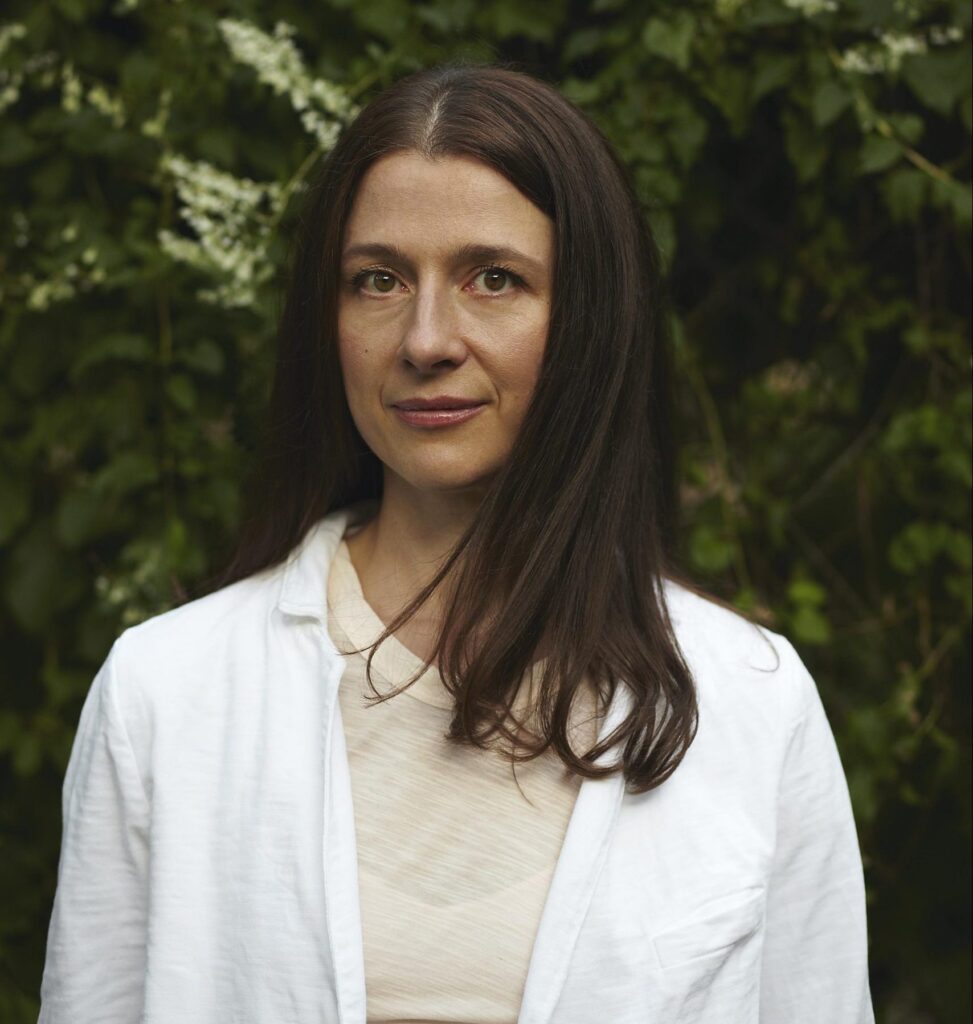
Hanita Simard is the instigator and manager of Making Waves, a cross-generational initiative to mobilize young women to embrace their own power.
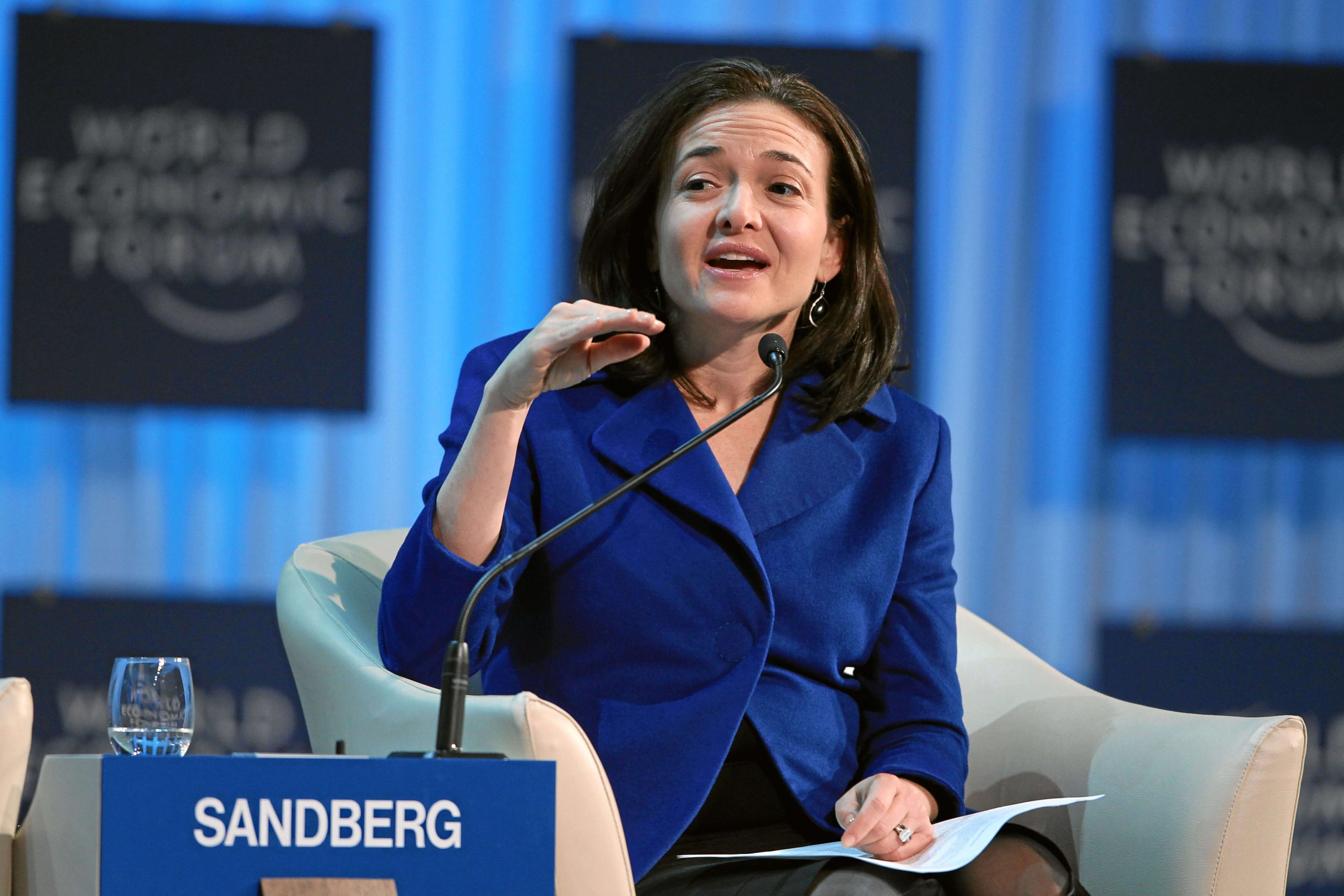
Dear Sheryl Sandberg: You can stop online abuse

Dear Sheryl,

May I call you that? In your books and your TED talks, you come across as warm, accessible, and aligned with some of the values I hold dear. Your advocacy for women positioned you as a comrade-in-arms. Just like the legions of women who signed up for your lean-in circles, I feel I know you.

Many of us related to your professional experiences: super-competent woman motivated by burning desire to have an impact passed over for promotion while under-performing male colleagues advance.

And we keep seeing your sisters in struggle go down in flames for exposing the tech industry’s morally challenged behaviour: from Susan Fowler blowing open the systemic sexism at Uber to Timnit Gebru being forced out of Google for calling out the racist limitations of its AI and emptiness of its diversity initiatives.  

Meanwhile, many of the women you sought to inspire are hurting as a result of Facebook’s own algorithms. “Leaning in” on social media – especially if they’re Black, Latina, Muslim or Indigenous – just puts a bigger target on their back.

And where to start with the staggering news coverage of your company’s role in a series of devastating events that continue to have catastrophic consequences for the US? Disregarding Russian interference in the 2016 election? Fake news about vaccines

Then there were the revelations that not only did Facebook look the other way while Myanmar Rohingya were systematically massacred, the company’s programming algorithms are actually working as designed when they privilege hate speech and sensationalist content.

These blows to Facebook’s reputation have profoundly tarnished the credibility you’d built up as a champion for women. And you can’t compensate for your boss’ inability to accept responsibility for the company’s role by fuming in private, and then pivoting to “but look at the problems we’ve already fixed!” in public. 

No one really expects the man who proclaims “Company over country!” behind closed doors to do better. But you’ve written about human vulnerabilities, acknowledged moral dilemmas, and demonstrated a more emotionally-nuanced appreciation of complex issues. So the disappointment about Facebook’s repeated failure to retool its algorithms, shut down conspiracy theorists, and stop fuelling violence, is deeply troubling.

From the outside, it looks like either you don’t care, or you’re not able to exert the kind of power and influence your title suggests you should. So it’s no wonder you’re worried about your legacy. Katie Couric’s 2019 public grilling about bullying on your platforms must have been a brutal reminder of how those outside of Facebook view many of the justifications offered. And details about your inability to counter to Zuckerberg’s world-domination-at-all-costs mindset in The Ugly Truth, by Sheera Frankel and Cecilia Kang must have been humiliating.

Then came Frances Haugen’s well-documented and damning testimony before Congress. You can imagine how so many of us who once admired you from afar are now asking ourselves who IS Sheryl Sandberg, and why is she still there?

Your brilliant track record at both Google and Facebook make it clear how seriously, and with what success, you’ve pursued what you felt was your calling “to scale organizations.” But now that you’ve demonstrated your capacity to do that, wouldn’t it be fabulous if you refocused your unique abilities on helping to clean up the mess? To take responsibility for and learn from the unintended consequences unleashed? To devote yourself to projects that lie a little closer to your heart? 

Then again, maybe those of us who identified with a small part of you are reading too much sincerity into that heart – the one that seemed to underlie your books about equality of opportunity and resilience.

Because as much as you or your boss protest otherwise, the extent of the damage Facebook, Instagram and other social media giants are doing – to democracy and truth, social cohesion and mental health – is crystal clear.

We can’t fathom how you reconcile a pursuit of profits that depends on your willingness to reinforce disordered eating and social anxiety among teenagers. We’re asking how you connect with a sisterhood being slammed by misogynist messaging on your network, a network that is, itself, protecting the perpetrators of the abuse?

Continuing to defend practices that have inspired many of your former colleagues to quit underlines a stratospheric detachment from the realities faced by the rest of us. Come back to earth Sheryl, while you still can. 

Sincerely,

Signature

Shari Graydon

Shari Graydon is the Catalyst of Informed Opinions, a non-profit amplifying the voices of women and gender-diverse people and combatting the #ToxicHush of online hate that is silencing voices that are already discouragingly under-represented.

Should journalists quote women as often as men?

Do you think journalists should be compelled to quote women as often as they quote men? The proposition sounded a bit radical, even to me, back in 2014 when Edelman CEO Lisa Kimmel invited me to defend it in a public debate

Seven years on, it’s no longer a radical idea. Journalists and newsrooms across this country and around the world are now actively monitoring the sources they interview and the guests they feature in a bid to better reflect the realities of the populations they serve.

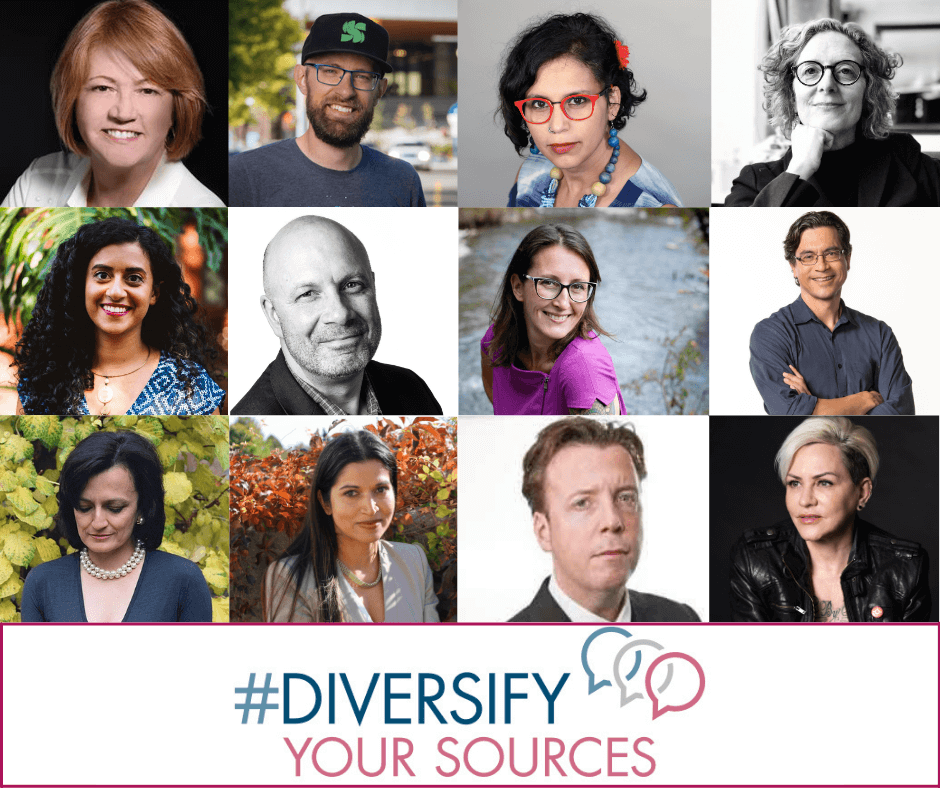
Last week with the help of media strategist and co-founder of Canadian Journalists of Colour, Anita Li, we launched #DiversifyYourSources — a campaign to encourage members of Canada’s news media to publicly pledge to track the gender of their sources to bridge the current, lamentable gap. And we’ve created a simple downloadable spreadsheet that makes it easy for them to monitor other dimensions of diversity, too.  

Many individual reporters have signed up, and more than a dozen editors-in-chief pledged on behalf of their entire newsrooms. These included Irene Gentle at the Toronto Star, Andrew Yates at HuffPost, and Steve Bartlett of Saltwater Press. 

Said Bartlett, “Media outlets must do a better job of reflecting the audiences and communities they serve. That cannot happen without diversifying the voices in their coverage. Our newsrooms are committing to do this. As a result, they’ll make an even greater difference by engaging and informing more people.”

The Toronto Star’s Irene Gentle cited “better journalism and a better society” when declaring her paper’s commitment to measuring, which predates our campaign. As her colleague, senior editor Julie Carl, noted, “We already embrace this principle, but it is always good to say these things out loud and proud.” 

Those who have pledged work in a wide variety of news formats, from online sites and multi-platform magazines to TV newsrooms and wire services. They include publishers and political correspondents, radio hosts and columnists. 

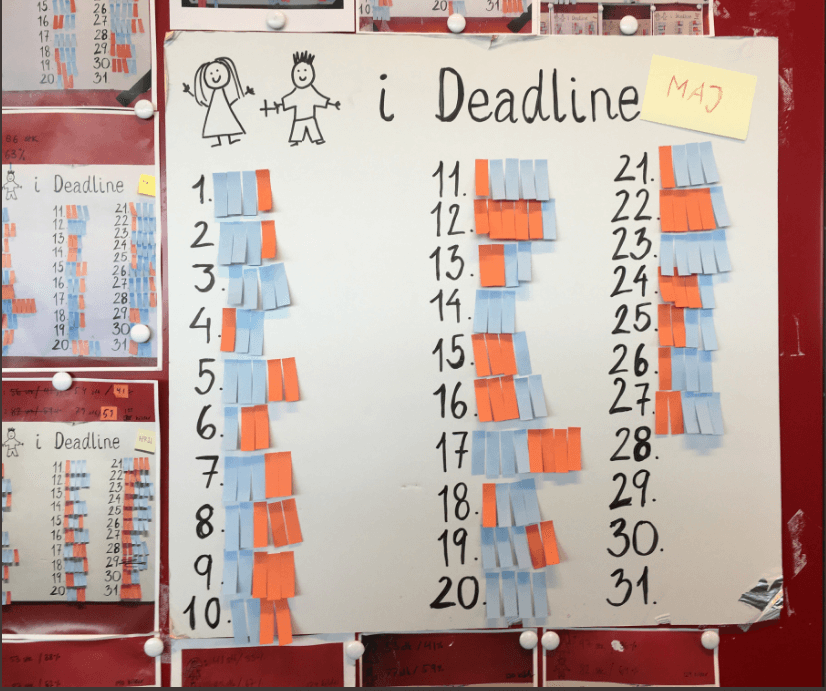
In the context of perpetual deadlines and dwindling resources, time-strapped reporters and producers aren’t really looking to add to their to-do list.  And as CBC radio host Duncan McCue notes, there’s no denying that “Diversifying your sources takes more time.” He acknowledges that “It’s not easy building relationships with vulnerable groups who have been historically left out of media. But hard work pays off, resulting in richer journalism and broader audiences.”

Our #DiversifyYourSources campaign doesn’t require those who pledge to commit to meeting a 50:50 ratio — though having news reporting and programming in all media reflect gender parity is our ultimate goal. But the tracking commitment is predicated on the recognition that “what gets measured gets done.” 

We know that for journalists who see their work as fundamental to the maintenance of democracy,  discovering from their own data that they’re seeking insight and context primarily from a small subsection of the population tends to inspire a change in practice. Adrienne Lafrance and Ed Yong of The Atlantic have both written about their experiences on this front. 

Meanwhile, a number of Canadian media organizations, large and small, have been quietly monitoring, improving and sharing their numbers for some time. 

A few years ago we publicly recognized the team behind TVO’s The Agenda for their explicit commitment to featuring as many women guests as men. And Scott White, the Editor-in-Chief of The Conversation and a board member of Informed Opinions has also led his colleagues in tracking their numbers to achieve equitable representation. 

“Calling all Canadian journalists: Join @Scott_White, editor-in-chief of @ConversationCA, and #DiversifyYourSources!

It takes less than 60 seconds to make this crucial commitment. Sign up and share today: https://t.co/zSRaF8qE1l #cdnmedia pic.twitter.com/L9aivmynO5

— Informed Opinions (@InformedOps) February 8, 2021

In her pledge, Jennifer Ditchburn, Editor-in-Chief of Policy Options, who also serves on our board, said that 46.7% of authors contributing to her publication last year were women. Moreover, she noted, “We are also working to ensure our magazine reflects the overall diversity of Canadian society.” 

The coronavirus pandemic has likely helped increase many people’s appreciation of why these commitments are important.  Many studies and news reports have pointed out the disproportionate impact of the pandemic on women — especially Black, Indigenous, and immigrant women, as well as those living in poverty, or with a disability, or with an abuser.

How can you cover a global virus that has put hospital nurses, grocery store check-out clerks and long-term care home support workers on the front lines of the battle if you’re only interviewing men? 

In fact, the over-representation of women in public health and the exceptional communication skills of Drs. Teresa Tam, Deena Hinshaw and Bonnie Henry have contributed to the increased amount of air time women sources have gotten over the past six months. The shut-down or curtailment of many professional sports leagues has also led to a corresponding dip in coverage that typically quotes women a paltry 4% of the time

But what happens when the pandemic ends? 

Informed Opinions’ goal is to encourage consciousness now so that in the months ahead, the monitoring habit and resulting behaviour shift cements a new normal.

As I wrote in a piece published earlier this week by Policy Options,

Journalists regularly cite as inspiration for their work the goal of “afflicting the comfortable and comforting the afflicted.” Doing that requires much more attention to who’s being quoted, and measurement is necessary. So as part of our pledge campaign, we’ve created an electronic spreadsheet to facilitate the kind of self-monitoring that science journalist Ed Yong calls “a vaccine against self-delusion.” 

“This pandemic demands both kinds of vaccines. And our aim in encouraging journalists to embrace the responsibility they have to reflect the realities of all the citizens they serve, is a better, safer, more equitable world for all. “

We all have a stake in that.

If you’re a journalist, please sign the pledge. And if you’re not, please urge the journalists in your networks to do so.

5 Resolutions to maintain 2017’s momentum

If 2017 goes down in history as a year of resolve, what will we say about 2018? That we built on the momentum to make lasting change, or that we let the energy dissipate into nothingness?

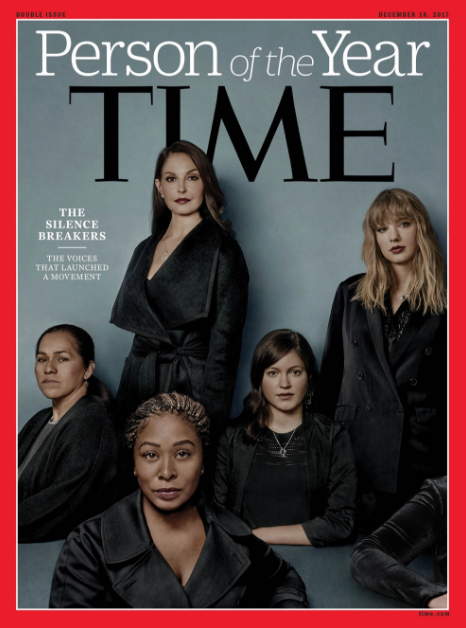
From women’s marches around the world to the #MeToo movement, many people took not just to social media, but to the streets, speaking up against hate, inequality and violence.

Women, in particular, shared their realities in ways and in numbers that got global attention and sent shock waves through a host of industries, from Hollywood and high tech to policing and restaurants.

But genuine revolution requires persistence: we need to continue challenging unconscious biases, dismantling entrenched systems, and redistributing power. We need to translate last year’s manifestations of resolve into actual resolutions – and then act on them. And we need leaders who are willing to take a stand and publicly spearhead this revolution.

Is that you? Someone you work with — or for?

Here are 5 suggestions for how to keep amplifying women’s voices for change in 2018:

  1. Publicly announce your commitment to support gender equality in the media and donate $1,000 for a tax receipt in support of “What Gets Measured Gets Done”, the high tech dashboard we’re building to track women’s voices in the media;
  2. Ask women in your workplace what’s needed to overcome the barriers to their advancement, and then commit to implementing meaningful measures that will benefit them and your bottom line;
  3. Nominate qualified women from your organization or network who are able to speak to media for inclusion in ExpertWomen, our online database designed to make it easier for journalists and conference programmers to feature smart women;
  4. Talk to us to explore how we might partner with you to amplify women’s voices in Canada and raise awareness at corporate events;
  5. Book a Finding Your Voice, or Building Allies for Change keynote or workshop combining research insights and concrete take-aways with storytelling and humour to engage and motivate your colleagues.

Why we’re celebrating the addition of Viola Desmond to the $10 bill

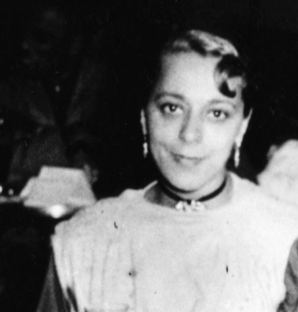
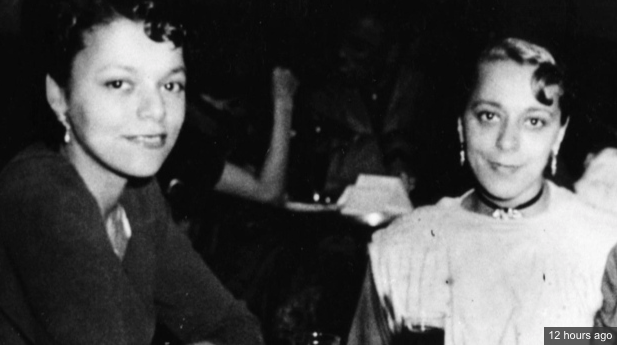
Viola Desmond (right) pictured with her sister, Wanda Robson who helped keep her story alive.

Is putting Viola Desmond on the Canadian $10 bill crass symbolism or a significant step forward?

Just ask Adrienne Clarkson. When she served as Governor General, Chinese Canadian girls across the country suddenly experienced a future of expanded possibilities. A refugee who looked like them serving as the head of state suggested there might be a lot more open doors than previous optics implied.

Symbols matter. A country’s institutions — its parliaments and ministers, its anthem and currency – send powerful messages about what and who is valued and important.

Photographs of all-white, all-male, able-bodied political leaders used to paint a picture of power that probably didn’t feel excusive to those who felt reflected by it.

But for others, merely witnessing a swearing-in ceremony that confers authority on men wearing turbans or traveling in wheelchairs, and women of Asian or indigenous descent, feels positively transformational.

The stories we tell about ourselves shape who we are and what we believe in profound ways. When history books and kids’ cartoons alike focus attention primarily on the perspectives of male players, the erasure of women’s experience is subtle but devastating.

Growing up on the west coast, I was in my 40s before I’d ever heard of Viola Desmond and the quiet courage that saw her fight for basic human rights – and lose on appeal to the Nova Scotia Supreme Court.

But that wasn’t merely a matter of geography, because my tax-payer funded education also failed to teach me about the shameful episode of the Komagata Maru, when Canada denied entry to 376 British subjects from Punjab stuck on a ship in Vancouver’s harbour in 1914.

As a result, like many white citizens, I grew up naively believing racism was not an issue in my proudly multicultural country. My ignorance has been challenged often since: Learning in the 1990s about the disproportionate rates at which aboriginal women went missing or were murdered in BC… Reading about the dramatically different sentencing patterns given to white and black defendants in Toronto…

And just this week, a brown-skinned colleague in Toronto spoke about being mistaken for a member of the cleaning staff when she sat behind her new desk in the Vice Principal’s office for the first time. She told me that this and other common experiences mean that she never wears jeans on casual Friday, and she consciously adopts a smile to ensure her resting face doesn’t inspire people she doesn’t know to label her “aggressive” or “angry”.

Canadians who belong to a racial minority experienced a daily reality qualitatively different from mine even before the now US President-elect made denigrating women and insulting Hispanics prominent features of his campaign. But since the election, the increase in reported incidents of racism on this side of the border should give us all pause.

Putting Viola Desmond on our currency may seem like a small and insignificant act, not remotely up to the task of reversing centuries of discrimination. But it still sends a critically important message about who belongs in this country, and who is worth celebrating.

Viola Desmond is a role model for our time. Let’s hope her face on the $10 bill, her story in our schools, and her example in our consciousness inspires countless future acts of speaking up for human rights and social justice.

This commentary was originally published in the Ottawa Citizen.

Do feminists have an obligation to “out” themselves?

Last week Rick Mercer inspired a welcome debate about whether or not gays and lesbians who survived the hell that high school often is for them to become successful leaders in their field have an obligation to own their sexual orientation in a public way.  Although sympathetic to queer teachers and politicians, business leaders and entertainers, who just want to be known for their capabilities and actions, rather than their sex lives, I deeply admire those who do come out of the closet. Their willingness to publicly claim this aspect of their identity helps counter reductive stereotypes, challenge prejudices and make the world an easier, safer place for gays and lesbians of all ages.

Then yesterday, ForbesWoman contributor, Victoria Pynchon blogged about a related dilemma. In her post, “Will Feminism Hurt Your Career?” she makes a compelling case for why this, too, is a critically important act. Responding to a reader wanting to know if her aspirations as a lawyer would be negatively affected if she applied the “f” word to herself, Pynchon wrote:

“If you have something important to say about the status of women in the law and you don’t say it, it might not get said. And women who need support, whose spirits are flagging because they don’t hear your voice in the desert, might suffer a spiritual death from thirst.

She went on to remind readers that:

“I grew up in a culture that actively discouraged and permissibly discriminated against women in the labor force. Then women raised their voices up on their own behalves and everything changed. The language changed. Women entered the professions and the police forces and fire departments, the skilled trades, journalism, politics, sports! in droves.

We changed the world and our place in it. Once there, many of us stifled ourselves like Archie Bunker famously told his T.V. wife Edith to do… It was a joke but we were stifling ourselves. And our participation in the higher ranks of American business, politics, religious life, and the professions remains depressingly, intractably, unacceptably low.”

In addition to being effective in the relatively small world of our jobs, don’t most of us also want to be effective and made a difference in the broader world of our society? — the arena that determines not just whether we succeed, but whether those without our privileges have the opportunity to as well?

Claiming yourself as a feminist — male or female — does come with risks. Notwithstanding the definition of the word as one who supports gender equality, it has baggage, it’s negatively viewed by many. But as long as 300 gay teens are committing suicide in this country, skilled immigrants are wasting their education driving taxis, and date rape remains a problem, speaking up for equitable treatment — not just of women, but of gays and lesbians, racialized and religious minorities, Aboriginal peoples, those living with mental and physical disabilities — remains necessary.