For Charlotte’s sake, say NO to the status quo

Charlotte, light of my life, is 7. Her fearless physicality, fierce devotion to her brothers, and clarity about her artist’s soul… these are just three of the things that make my heart ache when I think about the many ways the world she is inheriting will fail to deliver what she deserves. 

But one of those likely or inevitable failures is fixable. And you can help (especially if you act now — see below)!

At the turn of the millennium, Canada ranked 27th in the world for women’s representation in parliament. Now we’re 59th. 

Let that sink in. Canada, a beacon of democracy, has been outpaced on this metric by 58 other nations.

Representation is a prerequisite for democracy — but we don’t offer it to women and girls in this country. 

Despite the good work of Equal Voice, which has been advocating for parity in politics for two decades, we’ve only gained 10 points in the past 20 years. At this rate, we’ll be lucky to reach parity by 2062

Charlotte will be pushing 50 by then, and I probably won’t be alive to see it. 

While we were feeling smug about the appointment of a gender-balanced federal cabinet, other countries recognized the cost of not ensuring women have an equal say across government. Dozens of them decided that “natural evolution” (aka “incremental change”) wasn’t cutting it. And so they adopted laws.

Mexico is among them. This deeply Catholic country wrestled its culture of machismo to the ground and achieved parity in politics in 2018. 

If they can do it, so can we.

But change doesn’t just happen; it’s made to happen. Especially when the change involved requires some people with power to dismantle the structural barriers that keep other people from accessing it.

Political parties have the power to fix this. The status quo exists because they haven’t prioritized women’s equality as dozens of other countries have. And we haven’t insisted. So we can start to do that, now.

Canadians who want our democracy to live up to its promise can say “no” to the status quo. They can sign an online petition calling on our elected MPs to ensure it is read aloud in the House of Commons. The deadline to make this happen is September 17th. 

Parity in politics? It’s only fair. 

Share the petition with others, follow us on Twitter @59_WTF, watch this space for other ways you can help, or sign up to receive email notifications from Informed Opinions. 

Together we can create the circumstances that all the Charlottes in our lives grow up in a country that demonstrates its respect for women’s rights by giving them access to an equal voice in government.

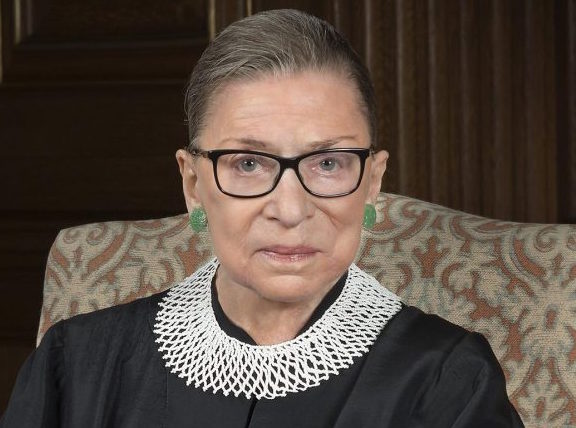
Four Lessons from the Life and Advocacy of Ruth Bader Ginsburg

One of the wonderful things about truly inspiring people is that their influence outlasts them. The power of their actions and words can continue to change minds and motivate choices well beyond their time among us. It requires no prescience to predict that this will be true of the just-passed Ruth Bader Ginsberg. 

Yes, the US Supreme Court has lost a giant of jurisprudence, and now millions of progressive-minded American voters and law-makers are properly outraged by the hypocritical intentions of Mitch McConnell. He has pledged to replace RBG before the upcoming November elections, despite his unwillingness to permit Barack Obama to appoint his own nominee leading up to the 2016 elections. 

How that drama will play out remains to be seen. But regardless, the rest of us can continue to benefit from the many lessons the “Notorious RBG” taught us, both explicitly and by example. Here are just a few…

While attending Columbia law school, Ruth Bader Ginsburg was invited to dinner by the dean along with the seven other female students (out of a class of 500). He asked each of them how they justified taking up a spot that should have rightly gone to a male student. RBG responded that she wanted to understand and be able to support her husband in his legal career. 

A worthy goal, but hardly one that foretold her eventual impact on women’s equality. 

In the early 1960s, however, she traveled to Sweden to do research for a book on the Swedish civil justice system. Attending a trial, she observed that not only was the presiding judge a woman, but she was noticeably pregnant. (In the US at the time, there were virtually no female judges and teachers were taken out of the classroom the minute their pregnancies began to show.)

1. Your visibility as a role model — in media and elsewhere — matters

The encounter caused her to question the roadblocks she had faced in her own career. And it’s worth remarking on what a difference it makes to witness a woman exercising power, publicly demonstrating her intellectual gifts.

When we are denied access to such examples, it’s easy to see the obstacles as inevitable. Physically confronting an alternative reality challenges that willingness to accept an unfair status quo. That’s why at Informed Opinions we regularly encourage women to seek visibility: for the benefits it contributes to others.

RBG also recalled coming across this quote in a Swedish magazine:

“Men and women have one principle role. That is being people.” 

She said that it became foundational to how she approached her litigation work, much of it performed on behalf of the American Civil Liberties Association. One of her cases involved a plaintiff whose wife had died in childbirth. He wanted to be able to quit his job in order to raise his child. But at the time, survivor benefits were not awarded to male parents.  

2. Advocating for broad equality is strategic as well as right

RBG successfully argued this case in front of nine male justices, and in doing so, established a precedent that she built on decades later to help inspire landmark equal pay legislation for women. You can read more about her dissenting opinion in the Lily Ledbetter case here, when she challenged Congress to rectify the error in judgment her colleagues were making.

A few years later, President Barack Obama signed the Lily Ledbetter Fair Pay Act into law to do just that. Clearly, Ruth Bader Ginsburg had vision, and she played the long game. 

Moreover, even though her dissenting opinion — read aloud in court at a time when that was almost never done — was described as “scathing”, she was known to have very cordial relationships with all of her colleagues.

She and conservative standard bearer, the late Supreme Court Justice Antonin Scalia (who categorically opposed reading the Constitution through a lens that evolved with the times), were, in her own words, “best buddies”.  

Their bond, cultivated over many years, survived many profound differences of opinion on legal and social issues that were publicly negotiated. No doubt a tribute to both individuals, it certainly reflected the sentiment RBG herself expressed in encouraging those who looked up to her:

 3. “Fight for the things that you care about, but do it in a way that will lead others to join you.”

Given the deep political divisions within the US, and the appetite its current President has for fanning partisan flames despite the demonstrable demand of our times for cooperation, this counsel remains especially timely.

Finally, in the context of the work Informed Opinions does, seeking to expand the space for women’s perspectives in Canadian public conversations, I leave you with this final piece of advice from one of the most diminutive but influential rock stars the legal world has ever known:

4. “Speak your mind, even if your voice shakes.”

Appreciating all the reasons that women have to avoid putting themselves in the line of fire by speaking their truth in public, this directive is especially relevant. At a recent roundtable Informed Opinions convened with 16 women from diverse backgrounds featured in our database, we were reminded of the virulence of the abuse levelled at Black, Indigenous and women of colour.

With their encouragement and advice, we are now developing a psychological care kit and peer support network to make it easier for women to act on the late great justice’s advice. 

The tributes to Ruth Bader Ginsburg’s accomplishments abound and make for inspiring reading. Much of the above context was informed by a conversation featured on the New York Times’ The Daily podcast between Michael Barbero and longtime Supreme Court reporter, Linda Greenhouse.

Shari Graydon is the Catalyst of Informed Opinions, a non-profit working to amplify women’s voices and ensure they have as much influence in Canada’s public conversations as men’s.

We train smart women to speak up more often and more effectively.

We make them easier for journalists to find.

And we issue charitable receipts to those who support our equity-focused work

Democracy needs women; snowplowing policy proves it

Can snowplowing be sexist?

Even if you live in Ottawa, a city that removes snow from its downtown core with military precision, you’ve probably never asked yourself that. Until I read Caroline Criado Perez’s Invisible Women – Data Bias in a World Designed for Men, it had never occurred to me to pose the question either.

But it matters that the answer is yes. And this is just one of a thousand reasons that our democracy needs to elect sufficient numbers of women to erase our chronic under-representation in the halls of power.

When you grow up in a world dominated by male decision-makers, the default assumption is that’s the way it is. And many of the stories we tell ourselves – “men are bigger risk takers”, “men have more confidence”, “it’s easier for men to raise money” – reinforce our willingness to accept that status quo.

But many other countries – some of them with much younger democracies and much less advanced economies – do better.  Despite significant gains women have made in every realm, Canada ranks a shocking 61st worldwide in terms of women’s political representation. And our failure to draw on women’s talents and insights has huge implications for every aspect of our lives.

We intuitively grasp how ridiculous it would be if parents were largely left out of policy decisions that affected families… If people living with disabilities had little to no voice when it came to making cities and technology accessible. And yet even though it’s 2019, women still occupy only 27% of the seats in our federal parliament. That’s indefensible.

Women’s voices in the news media are similarly under-represented, so over the past ten years, Informed Opinions has trained women all over the country to translate their knowledge and experience across many fields and sectors into news commentary. We motivate and support women in helping the broader public understand issues important to our lives. More than a thousand of them have done so.

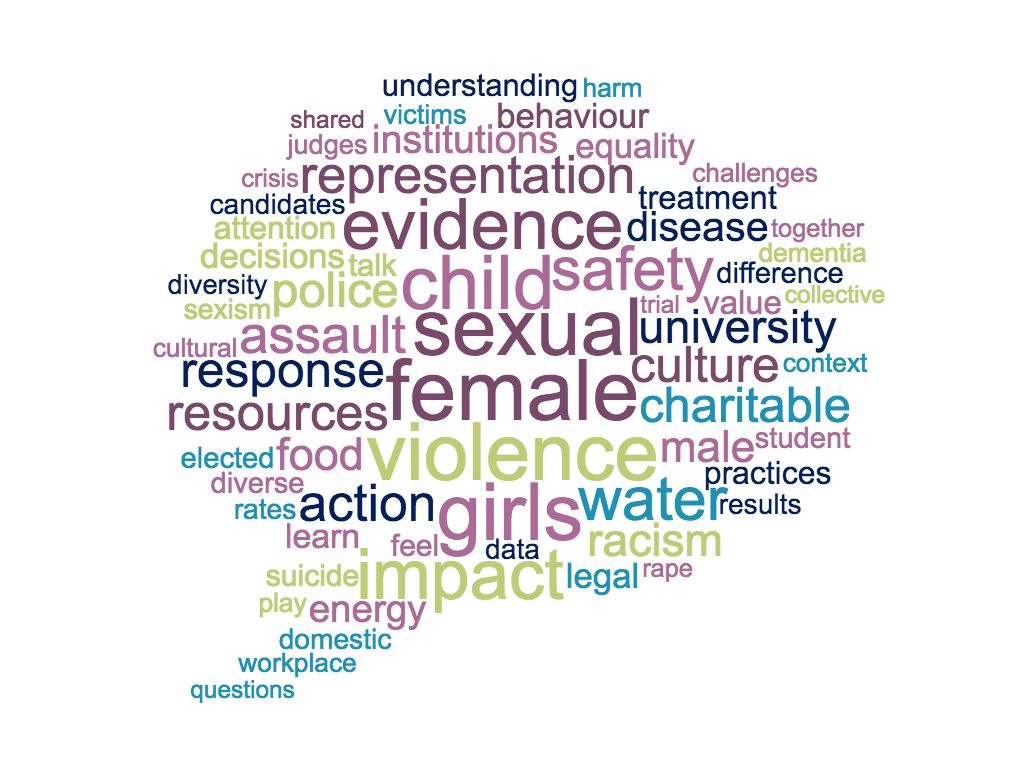
In an effort to understand what stories are missing when women’s voices are absent, we created a word cloud from 100 published op eds penned by women we’d trained. By removing words that also commonly appeared in op eds written by men, we were able to identify which topics and concerns get significantly less attention if women aren’t consulted.

Some of the issues on the list are heartbreakingly predictable. Even before the #MeToo movement, the words “sexual” and “assault”, “violence” and “female” were prominent. But many other words point to essential survival matters for all human beings, such as “food” and “water”, “evidence” and “safety”, “disease” and “treatment”.

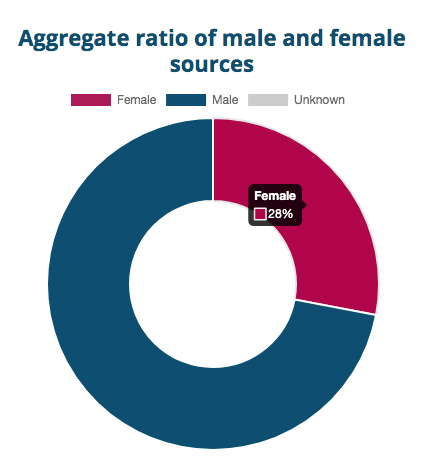
We also recently launched an online digital tool that measures in real time the percentage of women and men being quoted in influential news media. Our Gender Gap Tracker makes clear that men’s voices in public discourse dominate by more than two to one. It also tells us that 60% of the people quoted most often are politicians. That’s why it’s so important when party leaders appoint gender-balanced cabinets. Our equitable representation in one arena helps to eliminate our absence in the other.

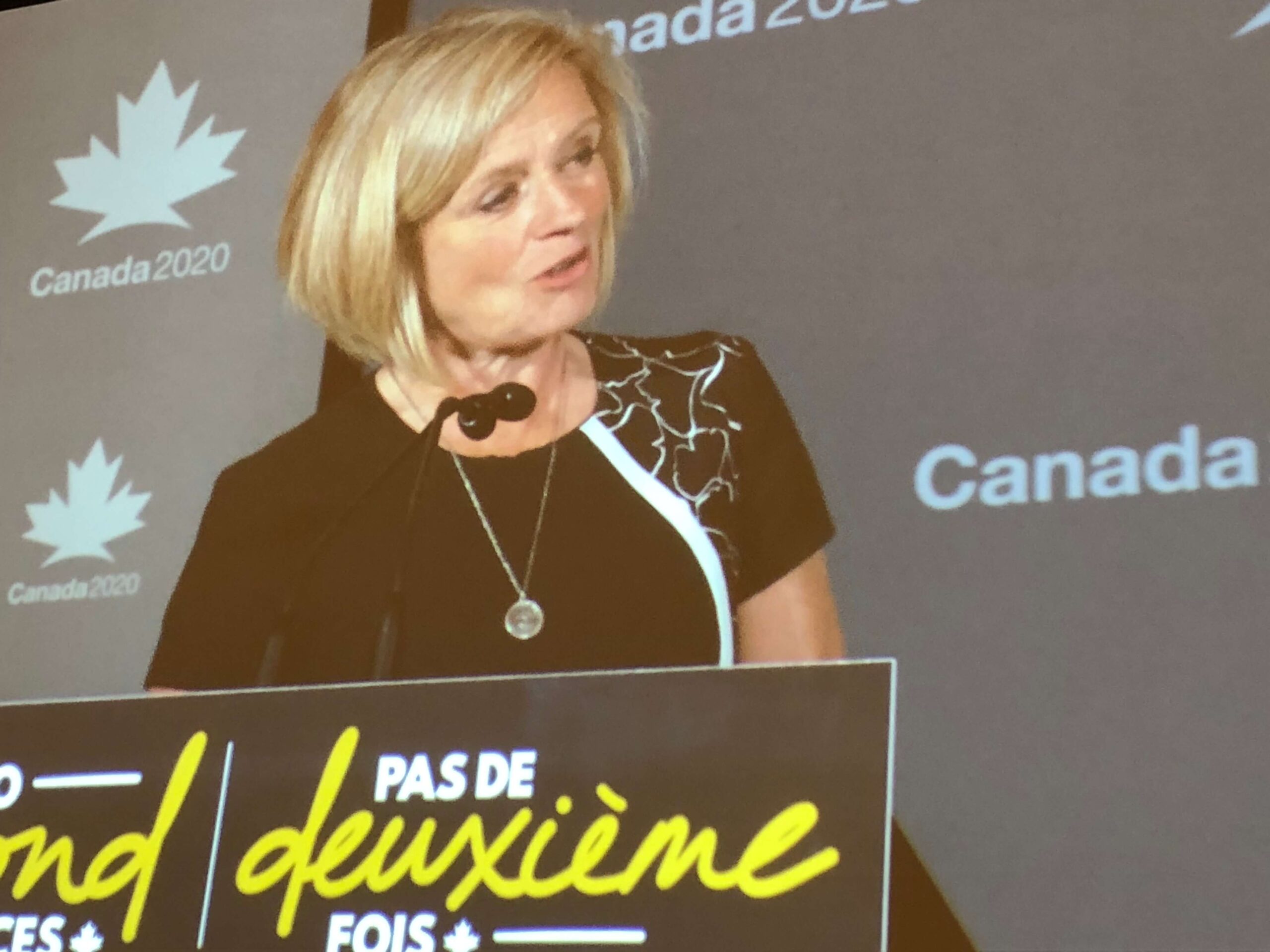
When Rachel Notley became leader of the Alberta NDP, she told her team: “Don’t even think about bringing me a slate of candidates that’s not gender balanced.”* That needs to be every leader’s default. And between now and the next election, Informed Opinions will be collaborating with organizations working to get more women into politics to encourage all political parties to adopt this gender equity principle. Because it’s fundamental to representation.

As for the sexism of snow-plowing, here’s the deal:

The order of priority in which streets are plowed can have significant consequences for women’s lives. Not only that, but those consequences can end up costing taxpayers in health care costs.

The short story is that clearing pedestrian and public transit routes first, as opposed to main arteries, results in fewer accidents and hospital visits, most of them involving women. Because while most men travel alone, many women travel encumbered by shopping bags, strollers or older relatives. Women also generally walk further than men, in part because they tend to be poorer.

You can read Invisible Women yourself to identify the myriad other reasons. These include the fact that male-biased voice recognition software endangers women’s lives and male-biased performance evaluations stunt our careers. Elected officials aren’t the only people responsible for fixing those problems, but because their contracts are up for renewal every four years, it’s easier to ensure gender parity in their ranks.

So, this federal election, if you’re not running for office yourself, support a woman who is, whose values and priorities you share. Knock on doors for her, donate to her campaign, or invite your neighbours to meet and support her, too.

Snow removal is a mere drip off the pointy end of a massive icicle of policy gaps, and so much more needs to be done to make Canada genuinely democratic, and as fair, healthy and prosperous as it can be. 

*Rachel Notley spoke about this in Kate Graham’s fabulous “No Second Chances” podcast. Every one of the 12 episodes offers context, inspiration and enlightenment about the critical importance of women in politics. 

5 Resolutions to maintain 2017’s momentum

If 2017 goes down in history as a year of resolve, what will we say about 2018? That we built on the momentum to make lasting change, or that we let the energy dissipate into nothingness?

From women’s marches around the world to the #MeToo movement, many people took not just to social media, but to the streets, speaking up against hate, inequality and violence.

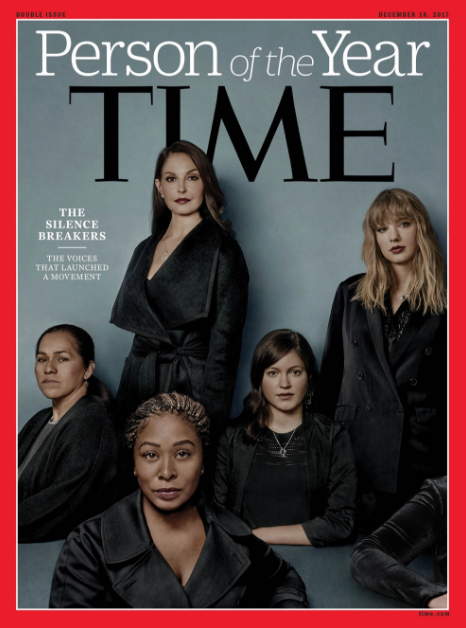
Women, in particular, shared their realities in ways and in numbers that got global attention and sent shock waves through a host of industries, from Hollywood and high tech to policing and restaurants.

But genuine revolution requires persistence: we need to continue challenging unconscious biases, dismantling entrenched systems, and redistributing power. We need to translate last year’s manifestations of resolve into actual resolutions – and then act on them. And we need leaders who are willing to take a stand and publicly spearhead this revolution.

Is that you? Someone you work with — or for?

Here are 5 suggestions for how to keep amplifying women’s voices for change in 2018:

  1. Publicly announce your commitment to support gender equality in the media and donate $1,000 for a tax receipt in support of “What Gets Measured Gets Done”, the high tech dashboard we’re building to track women’s voices in the media;
  2. Ask women in your workplace what’s needed to overcome the barriers to their advancement, and then commit to implementing meaningful measures that will benefit them and your bottom line;
  3. Nominate qualified women from your organization or network who are able to speak to media for inclusion in ExpertWomen, our online database designed to make it easier for journalists and conference programmers to feature smart women;
  4. Talk to us to explore how we might partner with you to amplify women’s voices in Canada and raise awareness at corporate events;
  5. Book a Finding Your Voice, or Building Allies for Change keynote or workshop combining research insights and concrete take-aways with storytelling and humour to engage and motivate your colleagues.

Brad Pitt’s 3-step program for #MaleAllies

Among the many feelings (fury, disgust, resignation) that surfaced for me upon learning the extent to which casting couch hell remains alive and well, was this thought:

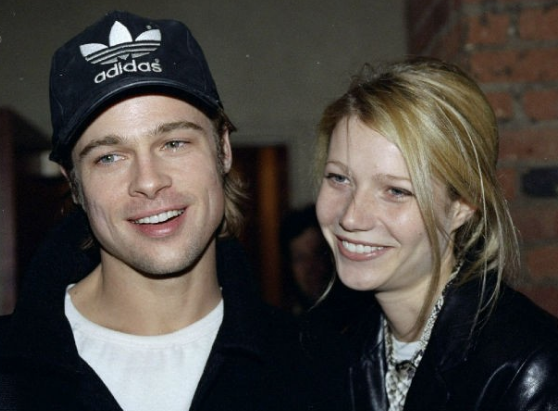
There are a lot of decent men in the world capable of doing what Brad Pitt did when he learned of the encounter his then girlfriend, Gwyneth Paltrow, had with the now disgraced movie mogul.

So guys, this is for you:

You don’t have to be Brad Pitt to stand up with women, demanding respect, and rejecting abuse.

We know you, too, feel disgust and anger about the Weinsteins, Trumps and Ailes of the world: men who give you all a bad name.

We know that most of you don’t behave this way. That you don’t need to have a daughter in order to recognize harassment and assault as loathsome and indefensible. That being a human being is enough.

So here’s a three-step process to out yourself as an ally, to align yourself as belonging to a different category of men in opposition to the bullies, the harassers, the predators.

  1. Speak to the people in your life, women AND men — your relatives, friends and colleagues — and tell them you’re angry and disgusted and you want to do something about this
  2. Pledge to be an ally: to listen to those who have been targeted, to believe them, to stand up with them — and against this kind of abuse
  3. Act on the pledge. Confront the perpetrators, encourage friends and colleagues to do the same. Stand up on social media and in the real world, every day, for women’s right to be treated with dignity and respect.

This may sometimes mean having uncomfortable conversations with other men. (Many women have some relevant experience; they can offer suggestions!)

It will require you to be strong and secure in your conviction that the behaviour is wrong, and to accept that you may be verbally ridiculed or denigrated (again, welcome to our world).

But the benefits of living in a society in which powerful men are held to account for despicable behaviour are worth it.

Because the abusers will eventually lose their power, and together women AND decent, respectful men will be able to create a better world for all of us — you, me, our daughters and our sons.

Women have been resisting and raging against this kind of behaviour for centuries. And not just in Hollywood, but in sports, the military and high tech, too. Your voices are needed to stop it.

#MaleAllies?  #ImWithHer?  #ImWithBradPitt? — choose whatever hashtag or platform you want, but choose to align yourself definitively, and publicly, with the human beings, not the abusers.

At Informed Opinions, we know from experience that you have no way of predicting the ripples you’ll create by speaking up.

by founder/catalyst Shari Graydon

Trump May Be The Women’s Movements’ Best Recruitment Tool Yet

 Originally published October 17 2016 on Huffington Post

Donald Trump may be the best recruitment tool the women’s movement has ever had.

That he remains standing as the Republican nominee for president, continuing to enjoy the support of millions of Americans, makes clear that the fight for women’s right to be respected and treated equally is far from over.

But the release of his 2005 boys-on-the-bus conversation offered a peek behind the seemingly impenetrable curtain woven from the combined threads of American celebrity, financial power and privilege. And it has rallied not only Hollywood royalty (thanks Robert De Niro and Tom Hanks), but also an unlikely alliance of professional athletes, conservative Christians and Republican power brokers to the cause.

And although Trump’s newest critics might not embrace the feminist label, and the moment feels like it’s been humiliatingly slow to arrive, it’s here, and should be exploited every bit as much as Trump himself exploited his inherited wealth and the influence and connections it bought him. Especially now that a number of women have dared to confirm that he was accurately describing his MO, as opposed to merely voicing his fantasies. (No one can convincingly characterize this as a case of “he said, she said;” it’s clearly a case of “he said, he DID.”)

So it is beyond galling that a woman widely recognized to be more qualified for presidential office than any other candidate in the history of her nation is still being expected to debate — as if he were her equal, or even a credible alternative — this man. Broadly acknowledged to be the least experienced candidate ever, he has matched her 30 years of public service with an unflagging commitment to increasing his own wealth and status, at the expense of his contractors, employees and the very taxpayers he’s seeking to lead.

Moreover, although the footage that captured him bragging about his penchant for serial sexual assault was released only a little while ago, his depraved attitudes towards women had been part of the public record decades before he began disparaging the looks of one primary opponent and the wife of another, and attempted to discredit a journalist with a crude reference to “blood coming out of her wherever.”

Trump’s legendary objectification of women had played out on the Howard Stern radio show over many years. On air, he regularly demonstrated his view of women as little more than a collection of body parts, describing how he’d have no problem “banging 24-year-olds” but when a woman hits 35, it’s “check-out time.”

It remains a teachable moment if there ever was one.

The man is a wolf in wolf’s clothing, a sexual predator with a sense of entitlement so vast and unconscious that he has repeatedly broadcast his attraction to his great “piece of ass” eldest daughter, and even found a number of occasions during the campaign to refer to his “impressive” penis.

And yet this blatant misogyny, although condemned in progressive circles and tsk-tsk’ed in polite society, remained sufficiently normalized to permit him to secure the nomination of one of his country’s two great political parties. It took undeniable evidence of him bragging about his prowess as a poster boy for rape culture to turn the tide decisively turn against him, and even then, the widespread rejection of his candidacy was as motivated by his free-falling polls and likely loser status.

However, it remains a teachable moment if there ever was one. Thoughtful and attentive people of all ages and affiliations now have chilling clarity about the depth of the double standard and breadth of unconscious bias and its impact on women — even those who have, in fact, worked twice as hard to be thought half as good.

Here’s a thought: as entire generations of decent men experience in a new way the sickened sensation their wives, daughters and mothers feel every time they’re rated, harassed or assaulted, we need to keep up the pressure. So that #yesallwomen, #everydaysexism and #whyIstayed are understood and re-tweeted by male allies. So that men continue to decry loudly and clearly Trump’s “locker room talk” defense, and reject his cowardly invective and pathetic version of masculinity as in no way representing their own.

It takes way more than a village to defeat such misogyny, and Hillary Clinton winning the U.S. election will be just the beginning.

Shari Graydon is the founder and catalyst of Informed Opinions, a non-profit project amplifying women’s voices for a more democratic Canada.

Women’s voices — on women’s issues — missing in action

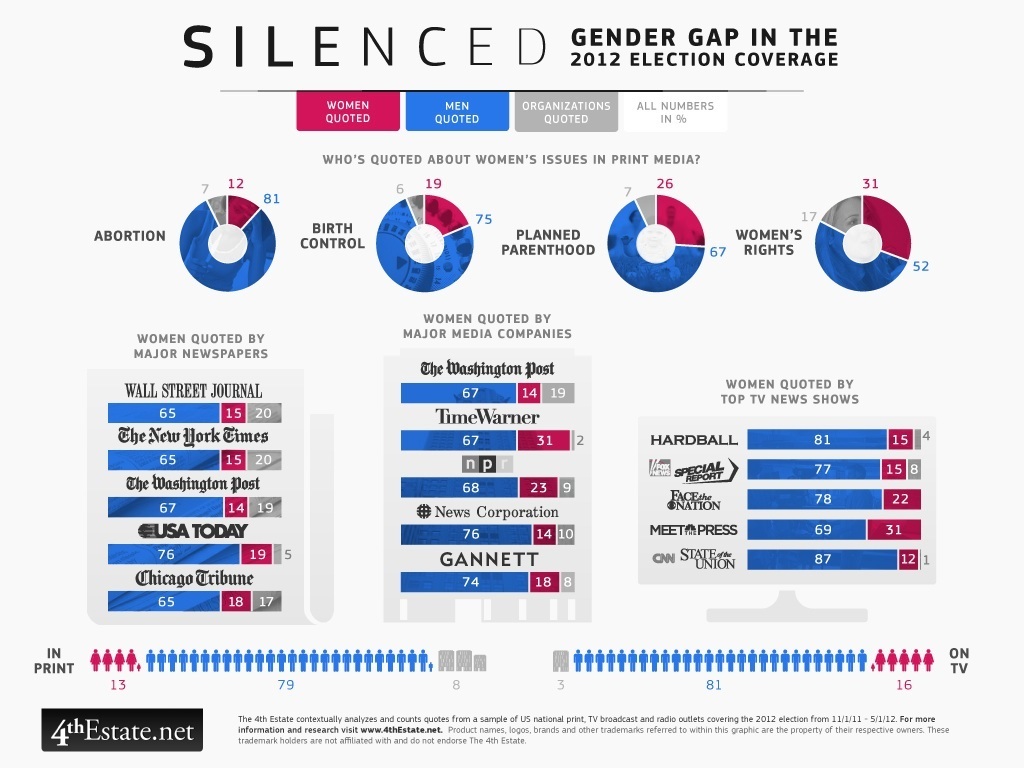
The infographic below is depressingly self-explanatory — on one level. It makes clear how entrenched the gender skew is when it comes to who gets quoted in North American media. And — as MediaWatch discovered 20 years ago when we conducted a comprehensive analysis of newsmakers (those quoted or reported on) in Canadian dailies — women’s voices are chronically under-represented as experts.

Some of the reasons for this are predictable — then and now: as long as male politicians and CEOs outnumber women, their voices will likely dominate on many issues. BUT how is it that even on issues that disproportionately affect women, such as abortion, birth control and women’s rights, the overwhelming majority of those whose opinions are quoted are male?

As Liz Sheehy, law professor at the University of Ottawa and a member of Informed Opinions’ advisory committee said in an email to me this morning, “More proof of the need for this important work!”