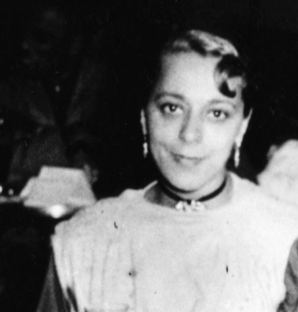
Why we’re celebrating the addition of Viola Desmond to the $10 bill

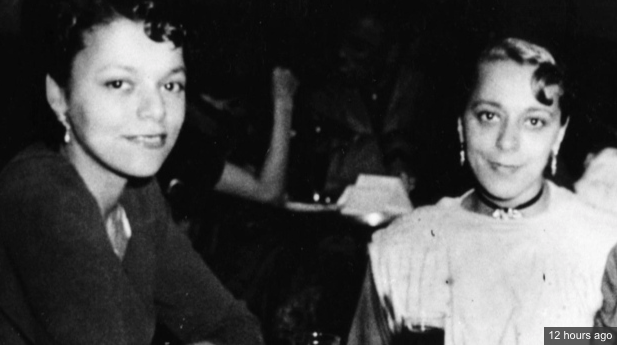
Viola Desmond (right) pictured with her sister, Wanda Robson who helped keep her story alive.

Is putting Viola Desmond on the Canadian $10 bill crass symbolism or a significant step forward?

Just ask Adrienne Clarkson. When she served as Governor General, Chinese Canadian girls across the country suddenly experienced a future of expanded possibilities. A refugee who looked like them serving as the head of state suggested there might be a lot more open doors than previous optics implied.

Symbols matter. A country’s institutions — its parliaments and ministers, its anthem and currency – send powerful messages about what and who is valued and important.

Photographs of all-white, all-male, able-bodied political leaders used to paint a picture of power that probably didn’t feel excusive to those who felt reflected by it.

But for others, merely witnessing a swearing-in ceremony that confers authority on men wearing turbans or traveling in wheelchairs, and women of Asian or indigenous descent, feels positively transformational.

The stories we tell about ourselves shape who we are and what we believe in profound ways. When history books and kids’ cartoons alike focus attention primarily on the perspectives of male players, the erasure of women’s experience is subtle but devastating.

Growing up on the west coast, I was in my 40s before I’d ever heard of Viola Desmond and the quiet courage that saw her fight for basic human rights – and lose on appeal to the Nova Scotia Supreme Court.

But that wasn’t merely a matter of geography, because my tax-payer funded education also failed to teach me about the shameful episode of the Komagata Maru, when Canada denied entry to 376 British subjects from Punjab stuck on a ship in Vancouver’s harbour in 1914.

As a result, like many white citizens, I grew up naively believing racism was not an issue in my proudly multicultural country. My ignorance has been challenged often since: Learning in the 1990s about the disproportionate rates at which aboriginal women went missing or were murdered in BC… Reading about the dramatically different sentencing patterns given to white and black defendants in Toronto…

And just this week, a brown-skinned colleague in Toronto spoke about being mistaken for a member of the cleaning staff when she sat behind her new desk in the Vice Principal’s office for the first time. She told me that this and other common experiences mean that she never wears jeans on casual Friday, and she consciously adopts a smile to ensure her resting face doesn’t inspire people she doesn’t know to label her “aggressive” or “angry”.

Canadians who belong to a racial minority experienced a daily reality qualitatively different from mine even before the now US President-elect made denigrating women and insulting Hispanics prominent features of his campaign. But since the election, the increase in reported incidents of racism on this side of the border should give us all pause.

Putting Viola Desmond on our currency may seem like a small and insignificant act, not remotely up to the task of reversing centuries of discrimination. But it still sends a critically important message about who belongs in this country, and who is worth celebrating.

Viola Desmond is a role model for our time. Let’s hope her face on the $10 bill, her story in our schools, and her example in our consciousness inspires countless future acts of speaking up for human rights and social justice.

This commentary was originally published in the Ottawa Citizen.
Some context on a favourite feminist philanthropist

On the rare occasions when I get slammed on Twitter or condemned by an anonymous troll, I sometimes console myself that at least the criticism isn’t splashed across every news website, broadcast and paper in the country.

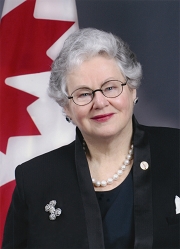
That’s why it pained me to see the unfortunate off-the-cuff remark Nancy Ruth made last week to a scrum of reporters feed a frenzy of national news coverage.

For decades, the woman has provided unprecedented leadership on advancing women’s equality. For the record, Informed Opinions benefits from her support, just like dozens of other equality-seeking organizations and initiatives.

Nancy Ruth is one of the founders of the Women’s Legal Education and Action Fund, and the Canadian Women’s Foundation, both of which have helped to improve the lives of millions of Canadian women. I am proud to call her a patron, and I admire her enormously: for her dedication to human rights; and for the countless hours she’s spent volunteering her time on boards such as the Economic Council of Canada, the Canadian Centre for Arms Control, and the International Institute of Concern for Public Health — to name just a few.

In the Senate, she has sponsored bills on physician-assisted death; fought for the hate speech provisions of the Criminal Code to include sex, age and disability; and pushed for national action plans on women, peace and security, and on violence against women. She also actively encourages government departments to implement the kind of gender-based analysis that’s been shown to make a difference to the fairness and effectiveness of public policy.

I’m willing to bet my mortgage that she’s given away far more of her own money than she’s earned or expensed as a senator.

Such generosity and commitment will never reap the kind of attention given last week’s quip, but they deserve that, and more. 

Mandatory High Heels and Facebook Feedback

EXPLOITING CELEBRITIES

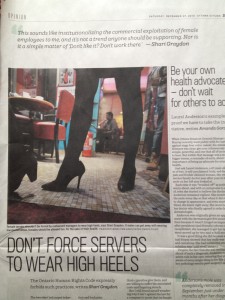
How do you draw public attention to rampant discrimination against women restaurant workers? I played the celebrity card, and heightened the drama by contrasting the red carpet behaviour of Hollywood A-listers, Sandra Bullock (rooted to the spot by her heels) and Hugh Jackman (bounding down Yonge Street posing for selfies with fans).

My recent op ed in the Ottawa Citizen and Montreal Gazette takes aim at the ubiquitous and indefensible imposition of high heels on female wait staff, which handicaps them — both figuratively  and literally.

HOLIDAY OPPORTUNITIES

Because columnists like to take time off at Christmas, there’s more space to fill in the newspaper. What this meant for my piece was that editor Kate Heartfield supplemented my words with a large format photograph and two pull-quotes, making it impossible to miss.

So I was disappointed to discover that it generated only two comments on the Citizen‘s website — and, even more disappointingly, both were from male readers who had a narrow and dismissive view of the issue.

FACEBOOK FEEDBACK

However, yesterday, a colleague mentioned he’d seen my piece on the Citizen‘s Facebook page, which it had never occurred to me to visit. There I discovered 43 comments (most of them thoughtful and supportive, and many of them from women), 426 “thumbs up”, and 89 shares.

Given that my goal in writing the op ed was to change an egregious policy, I was greatly encouraged by this response. And I’ll be printing off copies of the piece to share with the server I spoke with, as well as her manager.

LEVERAGING COMMENTARY TO CHANGE POLICY

If you’d like to help prevent women working in restaurants from being compelled to wear dangerous footwear and revealing clothes (also forbidden by human rights codes in Ontario, BC, Quebec and Alberta — the four provinces I checked), please share the commentary through your own social media media channels, and with exploited restaurant employees near you.

PUTTING TROLLS IN CONTEXT

In the meantime, don’t get disheartened if the news site where your analysis appears features comments only from people trashing your ideas (or attributing ideas to you that you didn’t actually express, or calling you names, or otherwise engaging in troll behaviour). Because they’re not representative. Here’s the image you want to call to mind in response:

I can typing