Blocking Online Abuse: Q&A with Toronto Star columnist Heather Mallick

In the context of Informed Opinions’ work to combat the #ToxicHush of online hate, we’re deeply conscious of how much abuse many outspoken women and gender-diverse journalists, bloggers and influencers receive. Noting a recent tweet by longtime feminist columnist, Heather Mallick about blocking words on Twitter, we reached out to learn more…

Do you remember the circumstances that led to you discovering the feature on Twitter that allows you to block words, not just users?

I started on Twitter in 2011, I think. Before that I’d get handwritten hate. I started using the filters when swarming began. (editor’s note: swarming is when a bunch of people target someone’s Twitter account all at once to overwhelm them with malicious content). It was just after Jon Ronson’s book, So You’ve Been Publicly Shamed. It occurred to me that tweeters could block the words they were being targeted for and never hear about it again.

To implement the filter, go to the “More” button at the bottom left hand side of your profile, then click on Settings and Privacy, then Privacy and Safety, then Mute and Block.

Can you share some of the words you block?

I block the c-word, and malice, plus racist stuff because I am biracial. Any words that are likely to be used by hateful people are blocked. 

Interestingly, people are calling me Hitler now because of a recent column on anti-vaxxers, but I don’t block “Hitler” because I’m interested in the man and don’t want to miss fascinating tweets about his history.

My list of blocked accounts is so long I don’t even think I would have the time to read it.

The list of Mute Notifications from People is the most helpful. You can officially mute people: ones you don’t follow, or who don’t follow you, who have a default profile photo, who haven’t confirmed their email, and who haven’t confirmed their phone number.

This means you can mute people who are concealing their identity, which is a danger sign right there.

Interestingly, if you get swarmed, Twitter will warn you and ask if you want to take precautions. Then the swarm vanishes.

How has being able to block specific words changed your experience of Twitter?

It’s so much nicer. It’s safer. I don’t live in Anxiety World. I feel I have control over what I see. Recently a sex killer (he tortured, raped and murdered an Indigenous woman many years ago) began emailing me and the IT people at the Star blocked him permanently. I also blocked him on Twitter.

If you look at who a dangerous person follows and who is following them, block them too. And never respond.

The greatest danger comes from obsessive men. I have had a man email me for decades, following me from job to job, sending me hate. One day I will ask a Star lawyer to call him and tell him to stop. But in the meantime, I have blocked him. He can’t reach me now.

As an unapologetically feminist columnist who frequently advocates for people and issues that make you a target, what other strategies do you recommend to those dealing with the backlash that results?

If you anger men, every aspect of your appearance will be judged. And yet you look wonderful, you truly do! Try to brush this aside because it is a hallmark of the backlash against feminism and will not end in our lifetime. Here’s a tip: look up your commenters online. You will laugh.

If you are being swarmed on social media, I believe you have to have defences already prepared. Try to have a life outside work. Have a means of distraction: friends or family, habits or interests.

You should not be alone because you will ruminate and that’s when the hurt becomes internal.

Find a therapist if you can. Try asking friends if they have a good one. That’s definitely helpful. Find a good female doctor. Medical science is your friend. Medication is a fine thing.

My greatest asset: a loving family. A Scottish mother who raised me to have no self-regard. “We are not put on this earth for pleasure,” she said. I was raised on boiled foods. Food is fuel; it’s not there to be enjoyed. Same with work: you do it for money. So I’m not easily hurt, really.

So, my advice is to go back in time and have a Scottish mother. Do that. You’ll expect the worst and you won’t be disappointed. None of this American wellness nonsense. Toughen up. Get a grip. (And yet I am not tough. I have little grip. But I’m a happy person, more or less.) Young women have much to fear and so much that is wonderful! I love them and admire them.

Which topics have you written about that received the most hate? 

I have a list of bandwagon topics I won’t write about, not any more, because they bring out noxious people.

  1. Attacking Sarah Palin at the Republican convention brought out the worst attacks in my entire life. Was that 2008? The American decline since then has been precipitous. Two weeks later, everyone realized that Palin was not up to the job, and dangerous to boot, but no one apologized.
  2. Abortion rights is consistently bad. Prepare yourself.
  3. #MeToo was horrific. I remembered things I had suppressed and it’s a shock to be assaulted for writing about that openly.

Notice that all these are women-related topics.

Has it gotten worse in recent years, and if so, to what do you attribute this? 

Yes, it’s worse because Americans are worse and their toxic hatred has floated north. It’s social media as invented by Americans and used planet-wide. There are actually very few appalling people, but when we give them oxygen, they grow.

NEVER UNDERESTIMATE HOW MUCH YOU ARE HATED. I always tell women this. It continues to be true and may become even more true. Nevertheless, we are half of humanity and we must work with good women and good men to make life better for all women.

We need all the strategies we can muster – personal, political, regulatory – to make it less tormenting for women to use their fine voices.

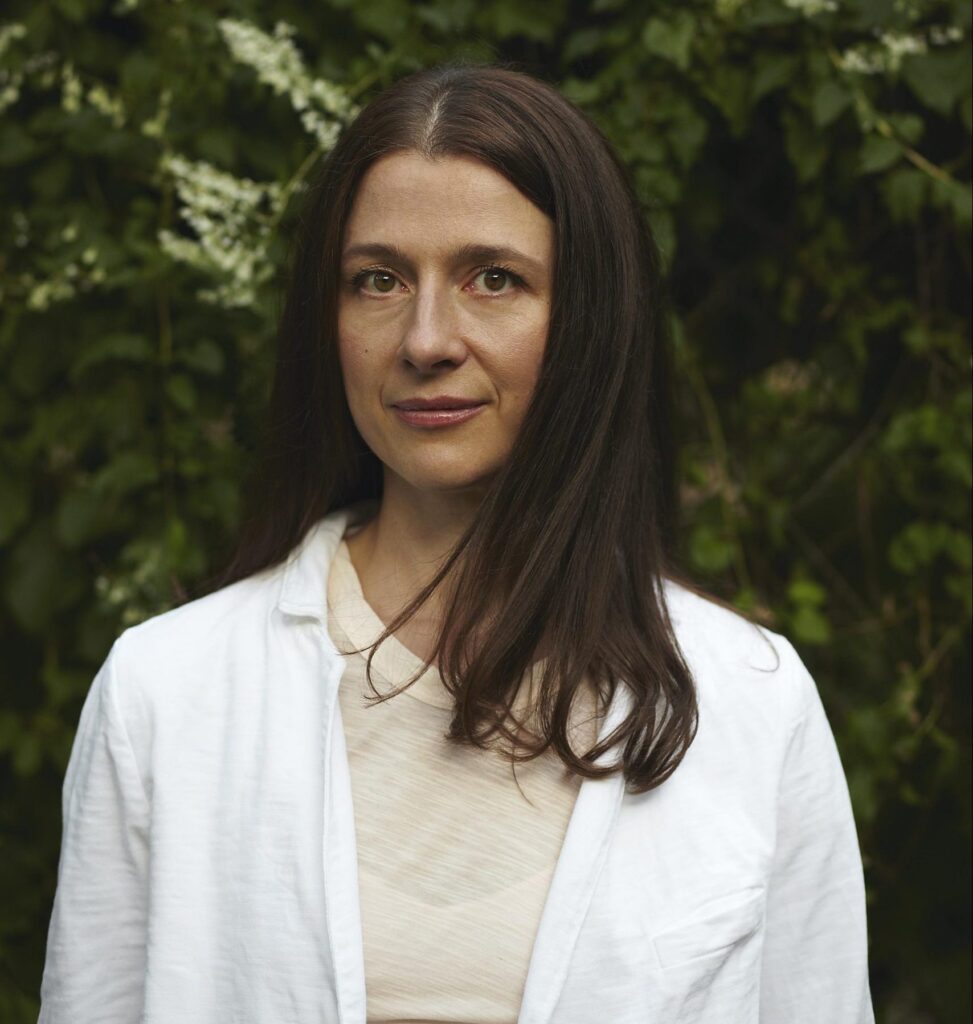
Heather Mallick is a columnist who writes about feminism, news and politics for the Toronto Star.@HeatherMallick
Should journalists quote women as often as men?

Do you think journalists should be compelled to quote women as often as they quote men? The proposition sounded a bit radical, even to me, back in 2014 when Edelman CEO Lisa Kimmel invited me to defend it in a public debate

Seven years on, it’s no longer a radical idea. Journalists and newsrooms across this country and around the world are now actively monitoring the sources they interview and the guests they feature in a bid to better reflect the realities of the populations they serve.

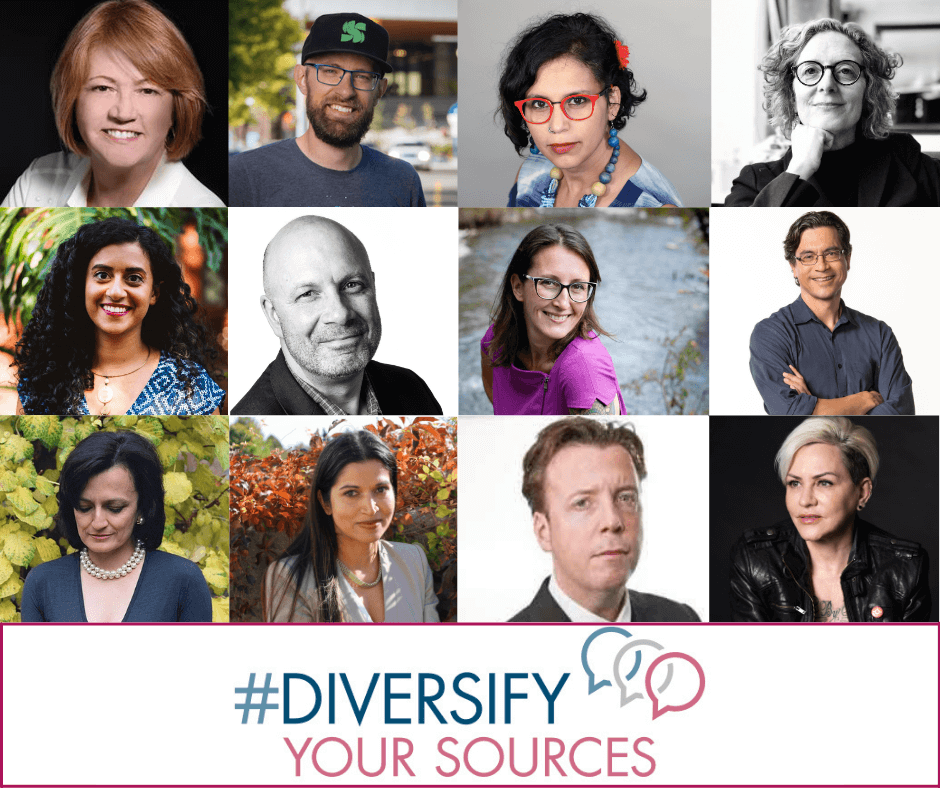
Last week with the help of media strategist and co-founder of Canadian Journalists of Colour, Anita Li, we launched #DiversifyYourSources — a campaign to encourage members of Canada’s news media to publicly pledge to track the gender of their sources to bridge the current, lamentable gap. And we’ve created a simple downloadable spreadsheet that makes it easy for them to monitor other dimensions of diversity, too.  

Many individual reporters have signed up, and more than a dozen editors-in-chief pledged on behalf of their entire newsrooms. These included Irene Gentle at the Toronto Star, Andrew Yates at HuffPost, and Steve Bartlett of Saltwater Press. 

Said Bartlett, “Media outlets must do a better job of reflecting the audiences and communities they serve. That cannot happen without diversifying the voices in their coverage. Our newsrooms are committing to do this. As a result, they’ll make an even greater difference by engaging and informing more people.”

The Toronto Star’s Irene Gentle cited “better journalism and a better society” when declaring her paper’s commitment to measuring, which predates our campaign. As her colleague, senior editor Julie Carl, noted, “We already embrace this principle, but it is always good to say these things out loud and proud.” 

Those who have pledged work in a wide variety of news formats, from online sites and multi-platform magazines to TV newsrooms and wire services. They include publishers and political correspondents, radio hosts and columnists. 

In the context of perpetual deadlines and dwindling resources, time-strapped reporters and producers aren’t really looking to add to their to-do list.  And as CBC radio host Duncan McCue notes, there’s no denying that “Diversifying your sources takes more time.” He acknowledges that “It’s not easy building relationships with vulnerable groups who have been historically left out of media. But hard work pays off, resulting in richer journalism and broader audiences.”

Our #DiversifyYourSources campaign doesn’t require those who pledge to commit to meeting a 50:50 ratio — though having news reporting and programming in all media reflect gender parity is our ultimate goal. But the tracking commitment is predicated on the recognition that “what gets measured gets done.” 

We know that for journalists who see their work as fundamental to the maintenance of democracy,  discovering from their own data that they’re seeking insight and context primarily from a small subsection of the population tends to inspire a change in practice. Adrienne Lafrance and Ed Yong of The Atlantic have both written about their experiences on this front. 

Meanwhile, a number of Canadian media organizations, large and small, have been quietly monitoring, improving and sharing their numbers for some time. 

A few years ago we publicly recognized the team behind TVO’s The Agenda for their explicit commitment to featuring as many women guests as men. And Scott White, the Editor-in-Chief of The Conversation and a board member of Informed Opinions has also led his colleagues in tracking their numbers to achieve equitable representation. 

“Calling all Canadian journalists: Join @Scott_White, editor-in-chief of @ConversationCA, and #DiversifyYourSources!

It takes less than 60 seconds to make this crucial commitment. Sign up and share today: https://t.co/zSRaF8qE1l #cdnmedia pic.twitter.com/L9aivmynO5

— Informed Opinions (@InformedOps) February 8, 2021

In her pledge, Jennifer Ditchburn, Editor-in-Chief of Policy Options, who also serves on our board, said that 46.7% of authors contributing to her publication last year were women. Moreover, she noted, “We are also working to ensure our magazine reflects the overall diversity of Canadian society.” 

The coronavirus pandemic has likely helped increase many people’s appreciation of why these commitments are important.  Many studies and news reports have pointed out the disproportionate impact of the pandemic on women — especially Black, Indigenous, and immigrant women, as well as those living in poverty, or with a disability, or with an abuser.

How can you cover a global virus that has put hospital nurses, grocery store check-out clerks and long-term care home support workers on the front lines of the battle if you’re only interviewing men? 

In fact, the over-representation of women in public health and the exceptional communication skills of Drs. Teresa Tam, Deena Hinshaw and Bonnie Henry have contributed to the increased amount of air time women sources have gotten over the past six months. The shut-down or curtailment of many professional sports leagues has also led to a corresponding dip in coverage that typically quotes women a paltry 4% of the time

But what happens when the pandemic ends? 

Informed Opinions’ goal is to encourage consciousness now so that in the months ahead, the monitoring habit and resulting behaviour shift cements a new normal.

As I wrote in a piece published earlier this week by Policy Options,

Journalists regularly cite as inspiration for their work the goal of “afflicting the comfortable and comforting the afflicted.” Doing that requires much more attention to who’s being quoted, and measurement is necessary. So as part of our pledge campaign, we’ve created an electronic spreadsheet to facilitate the kind of self-monitoring that science journalist Ed Yong calls “a vaccine against self-delusion.” 

“This pandemic demands both kinds of vaccines. And our aim in encouraging journalists to embrace the responsibility they have to reflect the realities of all the citizens they serve, is a better, safer, more equitable world for all. “

We all have a stake in that.

If you’re a journalist, please sign the pledge. And if you’re not, please urge the journalists in your networks to do so.