Democracy needs women; snowplowing policy proves it

Can snowplowing be sexist?

Even if you live in Ottawa, a city that removes snow from its downtown core with military precision, you’ve probably never asked yourself that. Until I read Caroline Criado Perez’s Invisible Women – Data Bias in a World Designed for Men, it had never occurred to me to pose the question either.

But it matters that the answer is yes. And this is just one of a thousand reasons that our democracy needs to elect sufficient numbers of women to erase our chronic under-representation in the halls of power.

When you grow up in a world dominated by male decision-makers, the default assumption is that’s the way it is. And many of the stories we tell ourselves – “men are bigger risk takers”, “men have more confidence”, “it’s easier for men to raise money” – reinforce our willingness to accept that status quo.

But many other countries – some of them with much younger democracies and much less advanced economies – do better.  Despite significant gains women have made in every realm, Canada ranks a shocking 61st worldwide in terms of women’s political representation. And our failure to draw on women’s talents and insights has huge implications for every aspect of our lives.

We intuitively grasp how ridiculous it would be if parents were largely left out of policy decisions that affected families… If people living with disabilities had little to no voice when it came to making cities and technology accessible. And yet even though it’s 2019, women still occupy only 27% of the seats in our federal parliament. That’s indefensible.

Women’s voices in the news media are similarly under-represented, so over the past ten years, Informed Opinions has trained women all over the country to translate their knowledge and experience across many fields and sectors into news commentary. We motivate and support women in helping the broader public understand issues important to our lives. More than a thousand of them have done so.
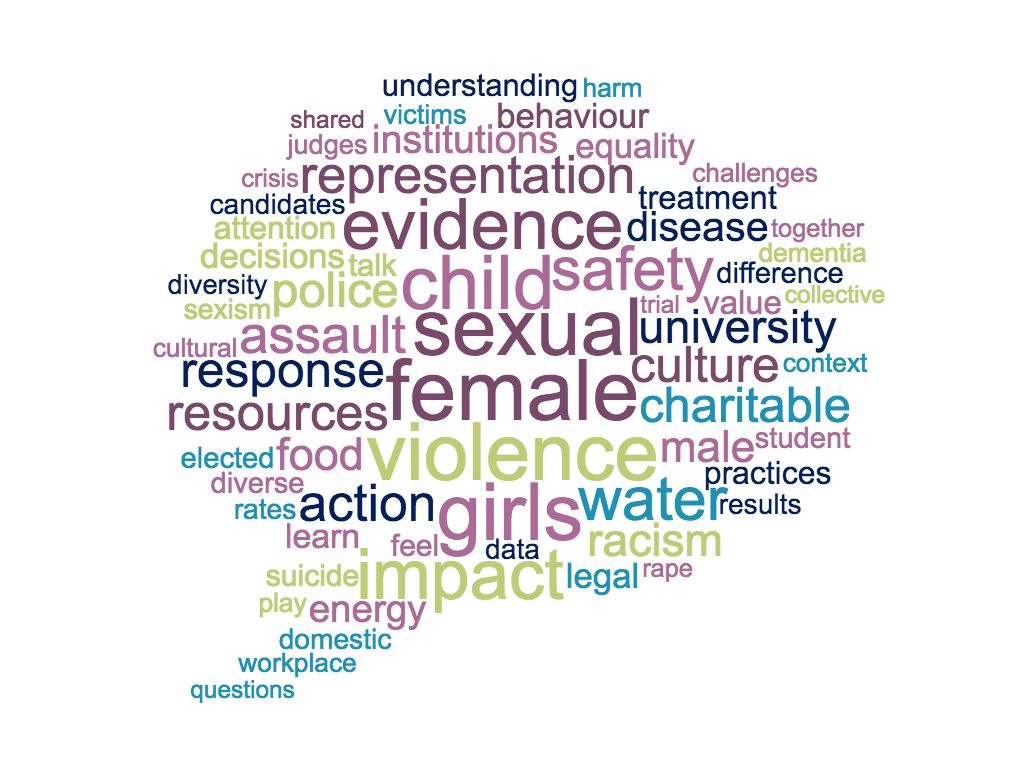
In an effort to understand what stories are missing when women’s voices are absent, we created a word cloud from 100 published op eds penned by women we’d trained. By removing words that also commonly appeared in op eds written by men, we were able to identify which topics and concerns get significantly less attention if women aren’t consulted.

Some of the issues on the list are heartbreakingly predictable. Even before the #MeToo movement, the words “sexual” and “assault”, “violence” and “female” were prominent. But many other words point to essential survival matters for all human beings, such as “food” and “water”, “evidence” and “safety”, “disease” and “treatment”.
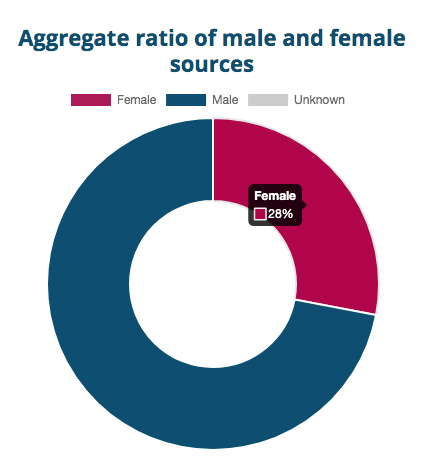
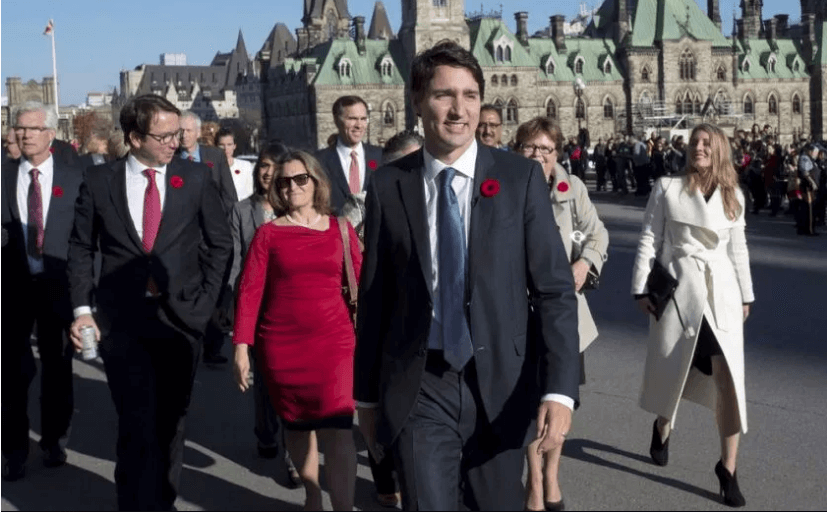
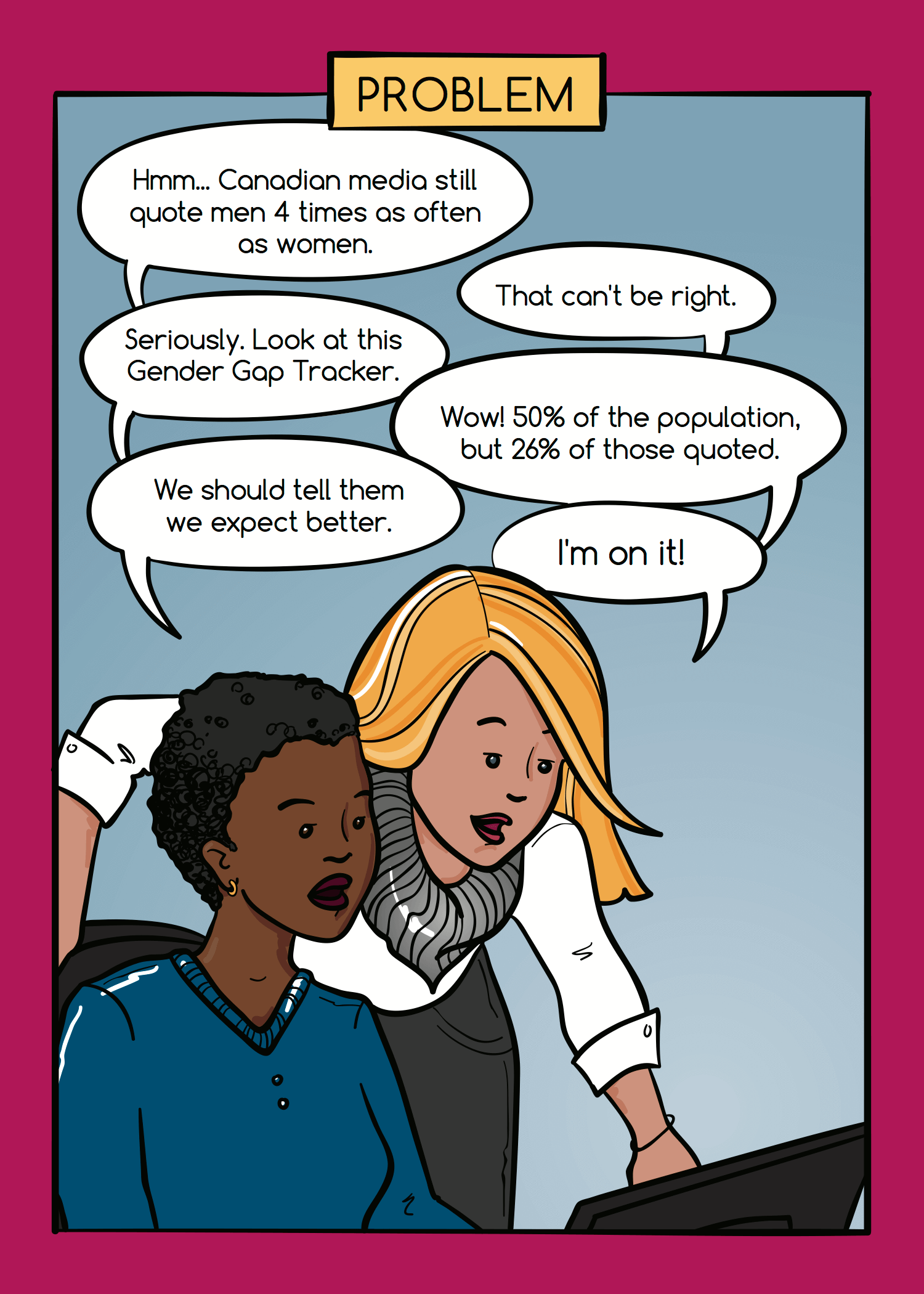
We also recently launched an online digital tool that measures in real time the percentage of women and men being quoted in influential news media. Our Gender Gap Tracker makes clear that men’s voices in public discourse dominate by more than two to one. It also tells us that 60% of the people quoted most often are politicians. That’s why it’s so important when party leaders appoint gender-balanced cabinets. Our equitable representation in one arena helps to eliminate our absence in the other.

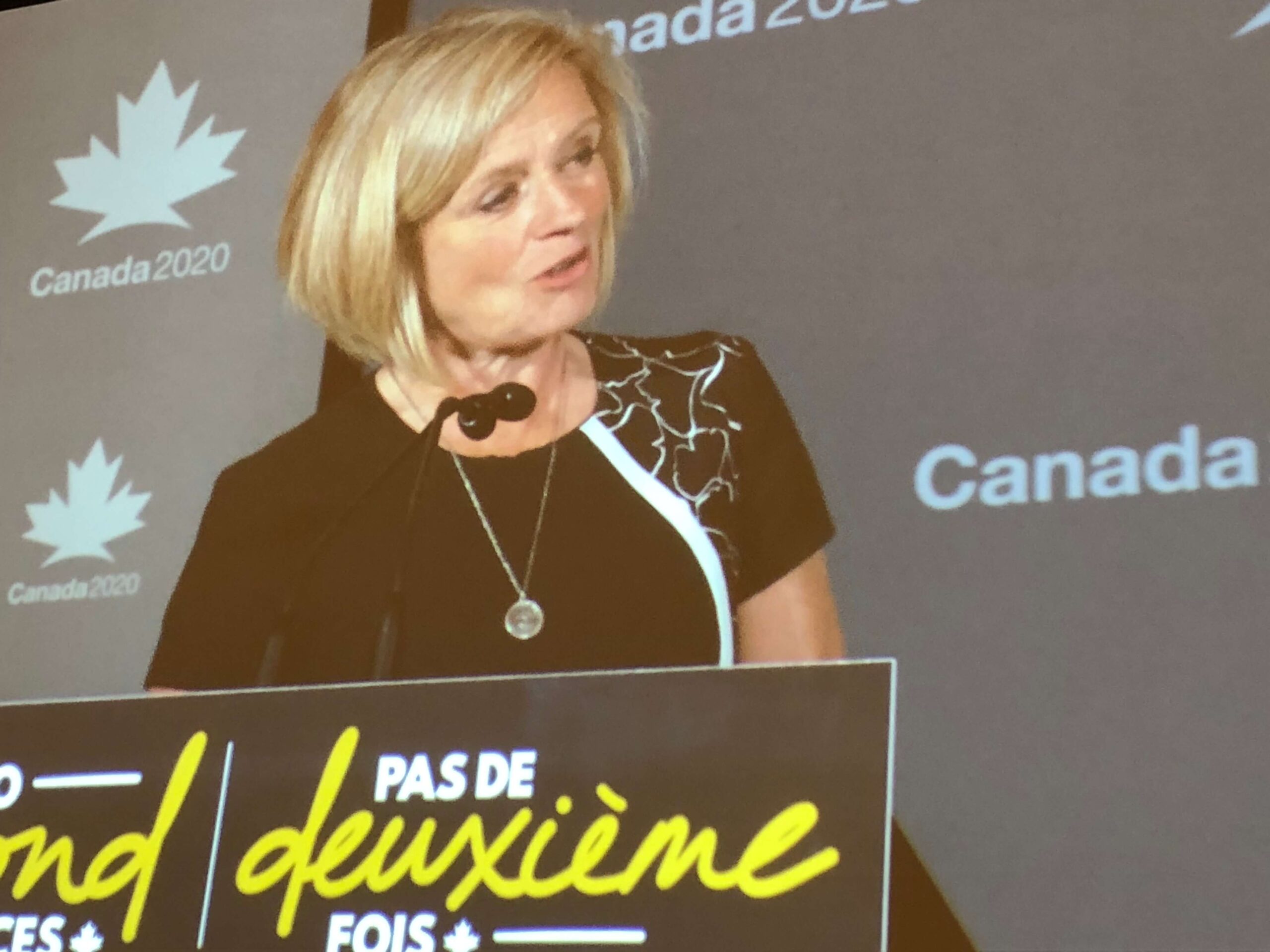
When Rachel Notley became leader of the Alberta NDP, she told her team: “Don’t even think about bringing me a slate of candidates that’s not gender balanced.”* That needs to be every leader’s default. And between now and the next election, Informed Opinions will be collaborating with organizations working to get more women into politics to encourage all political parties to adopt this gender equity principle. Because it’s fundamental to representation.

As for the sexism of snow-plowing, here’s the deal:

The order of priority in which streets are plowed can have significant consequences for women’s lives. Not only that, but those consequences can end up costing taxpayers in health care costs.

The short story is that clearing pedestrian and public transit routes first, as opposed to main arteries, results in fewer accidents and hospital visits, most of them involving women. Because while most men travel alone, many women travel encumbered by shopping bags, strollers or older relatives. Women also generally walk further than men, in part because they tend to be poorer.

You can read Invisible Women yourself to identify the myriad other reasons. These include the fact that male-biased voice recognition software endangers women’s lives and male-biased performance evaluations stunt our careers. Elected officials aren’t the only people responsible for fixing those problems, but because their contracts are up for renewal every four years, it’s easier to ensure gender parity in their ranks.

So, this federal election, if you’re not running for office yourself, support a woman who is, whose values and priorities you share. Knock on doors for her, donate to her campaign, or invite your neighbours to meet and support her, too.

Snow removal is a mere drip off the pointy end of a massive icicle of policy gaps, and so much more needs to be done to make Canada genuinely democratic, and as fair, healthy and prosperous as it can be. 

*Rachel Notley spoke about this in Kate Graham’s fabulous “No Second Chances” podcast. Every one of the 12 episodes offers context, inspiration and enlightenment about the critical importance of women in politics. 
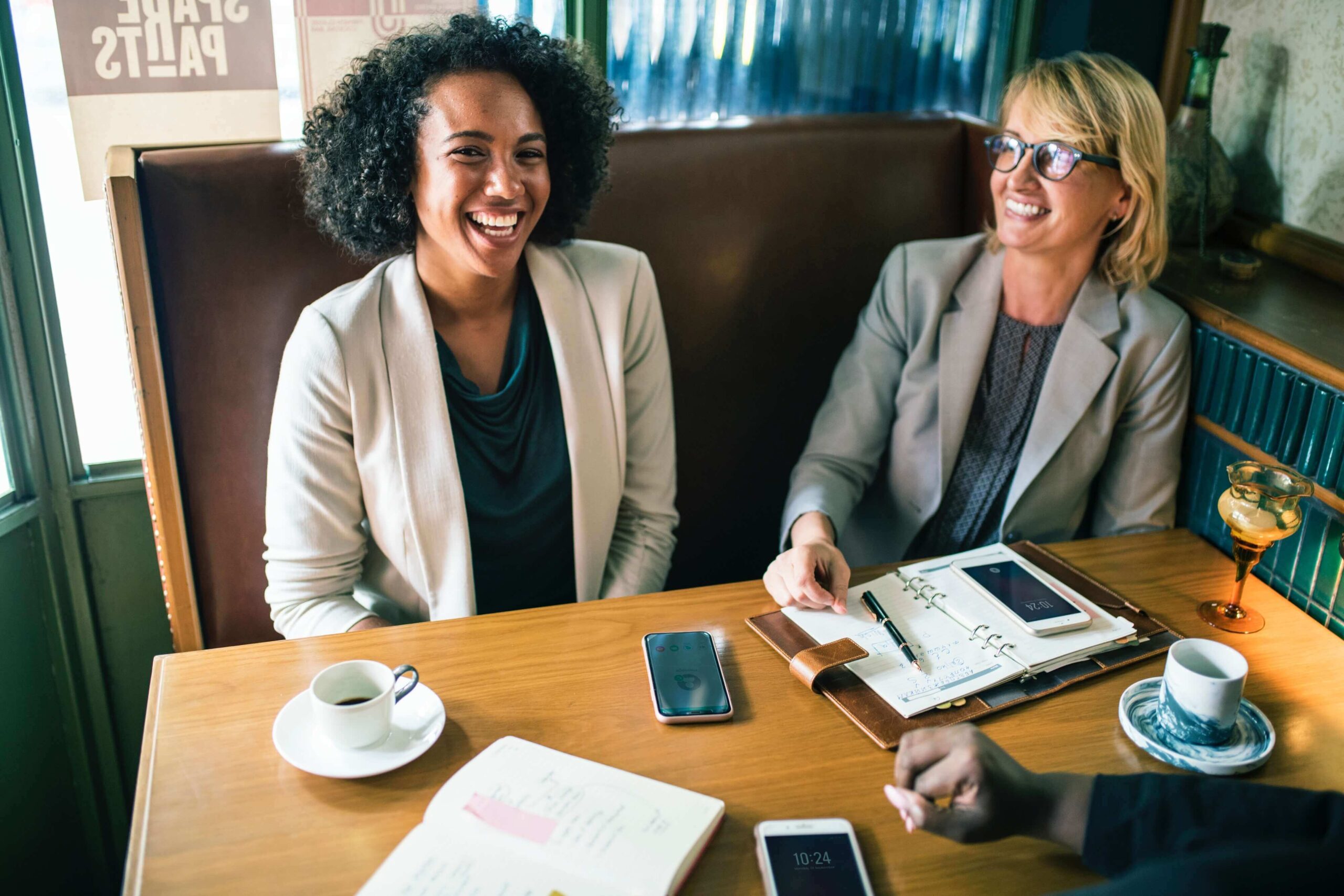
Featuring more female sources could increase your audience engagement, research suggests

This article was originally published on Poynter

What would happen if news media struggling to survive applied the productivity mantra “What gets measured gets done” to the sources they quote?

Business research, Hollywood sales data and anecdotal evidence from the news industry itself all suggest it’s worth a try.

In many western democracies — the United States, the United Kingdom and Canada included — most major news organizations continue to feature three or four times as many men as experts or sources as they do women.

This might have been more defensible a generation ago. Male CEOs, politicians and professionals were the norm, and we weren’t so clear about the costs of failing to consider how profoundly different men’s and women’s bodies and lives are when developing drugs, policies or programs.

But reams of respected business research has since found that when organizations draw on the talents of women, they make more informed decisions, better serve their customers and are ultimately more profitable. And continuing to rely primarily on a white, male subsection of the population to offer commentary and analysis when you’re trying to engage culturally diverse audiences that are 50% female? That hasn’t made sense for decades.

Nor is it good journalism. Diverse sources are a hallmark of responsible reporting. For news to effectively fulfill its democratic obligations, it needs to reflect the diverse perspectives of the citizens it purports to serve. Doing so is likely to engage more of them.

Entertainment box office figures are instructive. TV and film executives once believed that female audiences would watch programs aimed at men, but the reverse was not true. That rationale helped to justify decades of male-centric movies.

But a 2018 study found that on average, female-led films earned higher revenues than male-led films released in the same year. In an age of on-demand programming from a multitude of providers, the tastes of teenage boys no longer rule. Audiences want good storytelling and to see their realities reflected on large and small screens alike.

Good journalists understand this and many are already attempting to capitalize on a similar dynamic in terms of how they report and who they feature. Senior staff at Bloomberg and The Atlantic have been leading this charge for years. And in 2018, the BBC explicitly committed to meeting a 50:50 challenge, ensuring the equitable representation of male and female sources by this coming April.

Anecdotally, some media are discovering that such attention pays off. The producers of La sphére, a Radio Canada program that covered technology, noticed that efforts to achieve gender parity among guests corresponded with an increase in listeners. And The Financial Times determined that reframing one of its electronic newsletters to engage female readers inspired higher “open” rates among male readers as well.

Informed Opinions, the non-profit I lead, is looking to inspire others to mimic these experiments. We recently collaborated with scientists at Simon Fraser University to adapt the incentivizing power of a fitness tracker to this challenge. Leveraging the technology behind voice-activated assistants like Siri and Alexa, we created a tool designed to motivate journalists to pay more attention to the gender ratio of their sources.

Using big data analytics, our Gender Gap Tracker monitors the ratio of male to female sources quoted in Canada’s most influential news media. Its easy-to-read graphs are updated on a daily basis and reflect both the performance of individual newsrooms, and aggregate data from them all. From October through January, women’s voices remained steady at about 25 percent.

Most journalists know that doesn’t reflect well on either their journalism, or their audience engagement prospects. Beleaguered by industry disruptions, and competitive by nature, many are eager to improve. In fact, since we launched the Tracker on Feb. 4, women’s voices have increased by 4 percent.

This improvement has been aided by a number of grassroots women’s groups that have created databases of expert women across a wide range of fields. Our collective goal is to make it easier for journalists to find female sources who are both qualified and eager to share their insights.

Anyone familiar with the incentivizing power of a fitness tracker understands that what gets measured is more likely to get done. Like the 10,000-step crowd, news media may discover that the quantification leads to life-sustaining health benefits.

Here’s what you missed…

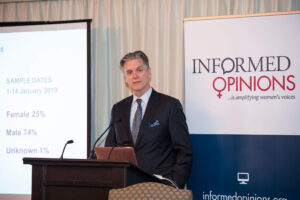
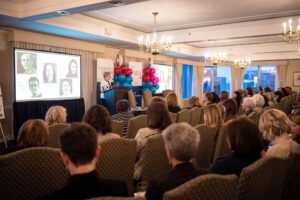
Business people, bureaucrats and board members, researchers, equality advocates and journalists — that’s who showed up on February 4th at Ottawa’s Rideau Club for the launch of the Gender Gap Tracker.

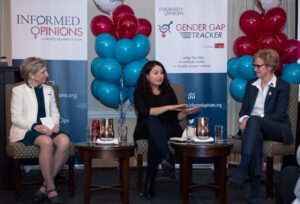
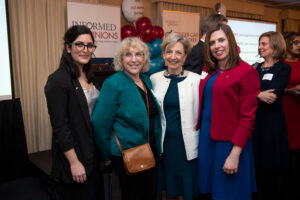
Left to right: Shari Graydon, The Honourable Maryam Monsef and Joy Johnson

 They came to celebrate the application of big data analytics to achieving gender equality in public discourse. And they stayed to watch an Informed Conversation between Minister for Women and Gender Equality, Maryam Monsef, and Joy Johnson, Vice President, Research at Simon Fraser University. The two leaders’ thoughtful exchange — which you can watch in its entirety here — included equality strategies and candid confessions about professional failures, and how they view those now.

You can read more about the Gender Gap Tracker (what it is, and why it’s necessary) here and here. But the short story is, for four months before launch, from October 1st to February 4th, women’s voices never edged above 26% of all those quoted or interviewed. Since then, we’ve seen brief spikes of 29 or 31%. Visit the site yourself, see how well the news media you rely on are doing, and then click on the media logos to let them know if you’re satisfied or disappointed.

In the meantime, here’s what a few of our board members in attendance had to say about the launch itself the following day:

Editor in Chief of the Conversation Canada, Scott White, offered a veteran journalist’s perspective on the stats

The event was superbly executed, had a strong turnout of folks committed to gender action in different domains, and featured a stellar and authentic conversation between Minister Monsef and SFU’s Joy Johnson…. It’s great to see the buzz on Twitter and the ease with which the tracker works. –Nobina Robinson

I’ve been blissed out since I got home last night.  The Gender Gap Tracker is helping us move the conversation in this country in a much-needed, positive direction! – Amanda Parriag

The event was terrific, the room was great, and you succeeded in elevating the work of Informed Opinions. It was an inspiring event. – Evelyne Guindon

The event was spectacular, it’s wonderful to see media and government engagement, and the spoken-word poetry summary at the end was brilliant! – Scott White

It took a diverse team of seriously brainy people to build the GGT

The event also gave us the opportunity to publicly recognize:

  • Kelly Nolan of Talent Strategy, who first proposed the idea of a big data analytics tool
  • John Simpson, University of Alberta physicist and digital humanities expert
  • Maite Taboada, Computational Linguistics professor at Simon Fraser University
  • Fatemah Torabi Asr, Software Engineer, Computational Linguist, Simon Fraser University
  • Mohammad Mazraeh, Big Data Engineer, Simon Fraser University
  • Alex Lopes, Big Data Analyst, Simon Fraser University
  • Simon Fraser University itself, for investing hundreds of thousands of dollars in developing the research
  • Roslyn Bern of Leacross Foundation, our most appreciated champion and supporter
  • Our valued corporate sponsors, who share our gender equality commitment:
Kelly Nolan, Joy Johnson and Maite Taboada all earned their front row seats
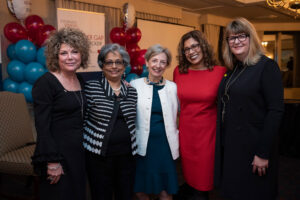
Informed Opinions core team and valued patron: from left: Zeba Tasci, Roslyn Bern, Shari Graydon, Samantha Luchuk
Some of Informed Opinions’ board members, from left to right: Jennifer Laidlaw, Nobina Robinson, Shari Graydon, Amanda Parriag and Evelyne Guindon

In numbers there is strength – how big data can help close the gender gap in Canadian journalism

This article was originally published in The Ottawa Citizen

We hear a lot these days about how artificial intelligence is taking away jobs and making it easy for foreign powers to hack democracy. But some scientists are hunched over their computers in an effort to harness the power of big data analytics for social good.

A new tool just launched by Informed Opinions is a case in point. We collaborated with a team of researchers at Simon Fraser University’s big data lab to develop a sophisticated digital monitoring system. It’s now measuring, in real time, the gender ratio of sources being quoted online by some of Canada’s most influential news outlets. It analyzes in microseconds what it used to take researchers hours to assess.

If only the data it reveals were more encouraging.

How grim are the statistics? Type gendergaptracker.informedopinions.org into your browser and see for yourself. You can access data as far back as October 2018, but no matter which date range you select, the aggregate percentage of women’s voices never moves above 26 per cent. For context, that’s a mere four-point increase over data we collected almost three decades ago.

And yet, in the intervening years, women have achieved significant advancement in virtually every field. They’ve become premiers and astronauts, Supreme Court justices and university presidents, corporate CEOs and award-winning scientists and entrepreneurs. And while it’s true that more men still lead governments and corporations, our research has found that even in health care disciplines, where women dominate, their voices remain under-represented.

That’s a problem. Women’s life experiences are often profoundly different from men’s. Those experiences feed different insights and sometimes priorities. So it’s not remotely defensible in a proud democracy that men’s perspectives continue to outnumber women’s by a ratio of almost three-to-one in public discourse. We can – and need to – do better.

Informed Opinions last commissioned content analysis research looking at the gender ratio of quoted and featured experts in 2015. Canada’s prime minister had just sworn in a new gender-balanced cabinet, and we were edging towards the #MeToo revelations that would remind everyone of the social consequences of failing to listen to women’s perspectives.

The aggregate ratio of experts quoted in the 2015 study was 29 per cent women to 71 per cent men. But that analysis left out both sports and entertainment coverage. It also included two broadcast talk shows: CBC Radio’s The Current, and Radio Canada’s Tout le monde en parle. Both programs exceeded 40 per cent female interviewees, raising the average stats overall.

In fact, the better performance of public broadcasters on gender parity planted the seed for the Gender Gap Tracker. Because Radio Canada and CBC are explicitly mandated to reflect the country to itself, their reporters and producers pay more attention to diversity. What gets measured does, indeed, get done. Anecdotal evidence and common sense suggest that journalists who actively track the gender of their sources achieve more equitable results. And a growing number are reporting on their performance.

The mixed gender team of scientists developing the Gender Gap Tracker includes researchers from across disciplines. They hail from Canada, Iran, Brazil and Spain and they’ve worked in the U.S., the U.K. and Switzerland. A microcosm of Canada’s diversity, they tangibly demonstrate the payoffs of collective intelligence that benefits from different perspectives.

We’ve set 2025 as the target date for achieving gender parity in Canadian news media. The Gender Gap Tracker, though, is just a tool. To make a difference, journalists need to actively seek to improve the data – and news consumers need to give them reasons to do so.

Online tool gives media outlets incentive to achieve gender parity

This article was originally published in The Toronto Star

Could the incentivizing power of a fitness tracker be adapted to help achieve gender equality in the media, enhancing Canadian democracy in the process? After a year of collaboration with a team of big data scientists, we’re about to find out.

Despite the increasing attention paid to the importance of women’s voices, in news media coverage — both in Canada and around the world — male perspectives continue to dominate by a ratio of more than two or three to one. In the days when few women earned graduate degrees, led organizations or were elected to public office, that dominance was understandable. But today? Not so much.

The disparity in representation now makes headlines. In 2012, the BBC convened an all – male panel to discuss breast cancer and teen contraception. The outrage was as swift as it was predictable. But humiliation can sometimes be a galvanizing force: Britain’s national broadcaster has since offered hundreds of expert women free media interview skills training. And last year, it explicitly committed to meeting a 50:50 challenge, aiming to ensure the equitable representation of male and female sources by 2020. Some programs have already achieved the milestone two years ahead of schedule.

In fact, doing so isn’t that difficult. Matthieu Dugal, host of Radio Canada’s La Sphere, reported more than two years ago that his program had featured as many female guests as male — despite its focus on technology. Similarly, Bloomberg has been actively seeking gender balance among its business news sources for several years.

Going beyond established contacts to achieve such diversity takes effort. In addition to searching for new sources, journalists have to actively record and tally their metrics. Several journalists at The Atlantic have written about their own commitment to doing this, and science reporter Ed Yong estimates that achieving gender parity requires an extra hour a week. He calls his monitoring spreadsheet “a vaccination against self delusion.”

In an age of the perpetual news cycle, when many reporters, editors and producers are doing the job of three people, we understand why this might be unappealing. But there are upsides to the vaccination discipline.

La Sphere’s gender parity achievement was accompanied by an increase in the program’s audience share. And The Financial Times recently discovered that reframing one of its electronic newsletters to actively engage female readers inspired higher open rates in male readers as well.

Given social media’s disruption of news gathering revenue models and the need to sustain trust among news consumers, all news organizations should be paying attention to these experiments. Indeed, a collaboration between the World Economic Forum and Internews, a U.S.-based global non-profit, is explicitly aimed at ensuring more women’s voices are included in news coverage, in pursuit of increasing community trust in news.

That’s why Informed Opinions has been working with researchers at Simon Fraser University to put big data to work in the service of democracy. Over the past year, we’ve built the Gender Gap Tracker, an online digital tool that monitors the ratio of male to female sources quoted in Canada’s most influential news media. It features easy-to-read graphs updated on a daily basis reflecting both the performance of individual newsrooms, and the aggregate ratio of them all.

The tool captures only the sources cited on each news outlet’s website; it’s unable to quantify those who might appear in broadcast interviews, but aren’t referenced online. Yet so far, its results mirror the ratios found in previous research done manually. The goal of the Gender Gap Tracker is to celebrate news organizations that lead by example, and motivate those who lag behind. And it offers news consumers and media organizations alike a daily reminder of the remaining gap.

Improving this metric is important for all of us. Good journalism is fundamental to democracy, and the persistent underrepresentation of women’s perspectives denies Canada access to the analysis and ideas of many of its best and brightest. It also undermines policy decisions. Many issues affect women differently; solving complex social, economic and environmental problems requires us to more equitably integrate their experiences and insights.

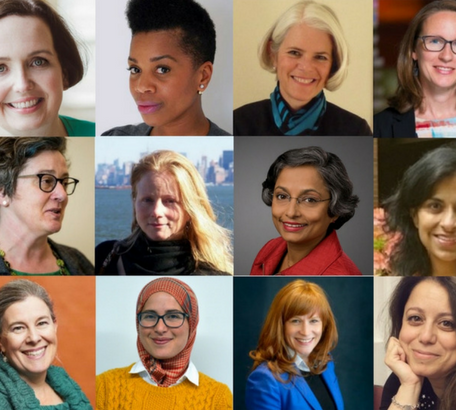
Diverse, qualified women exist in virtually every field, and for the past nine years, Informed Opinions has been motivating and delivering media skills training to thousands of them across the country. Our free online database of diverse experts committed to responding to interview requests quickly now features more than 800 female sources.

We’re looking for Canadians to join us in reminding journalists that it’s no longer necessary (or defensible) to declare, “But I couldn’t find a qualified woman.”

Mama Bear Instincts in Action

In honour of Mother’s Day, I’m sharing a tribute to my own, which was originally published as the postscript/dedication to my most recent book, OMG! What if I really AM the best person?

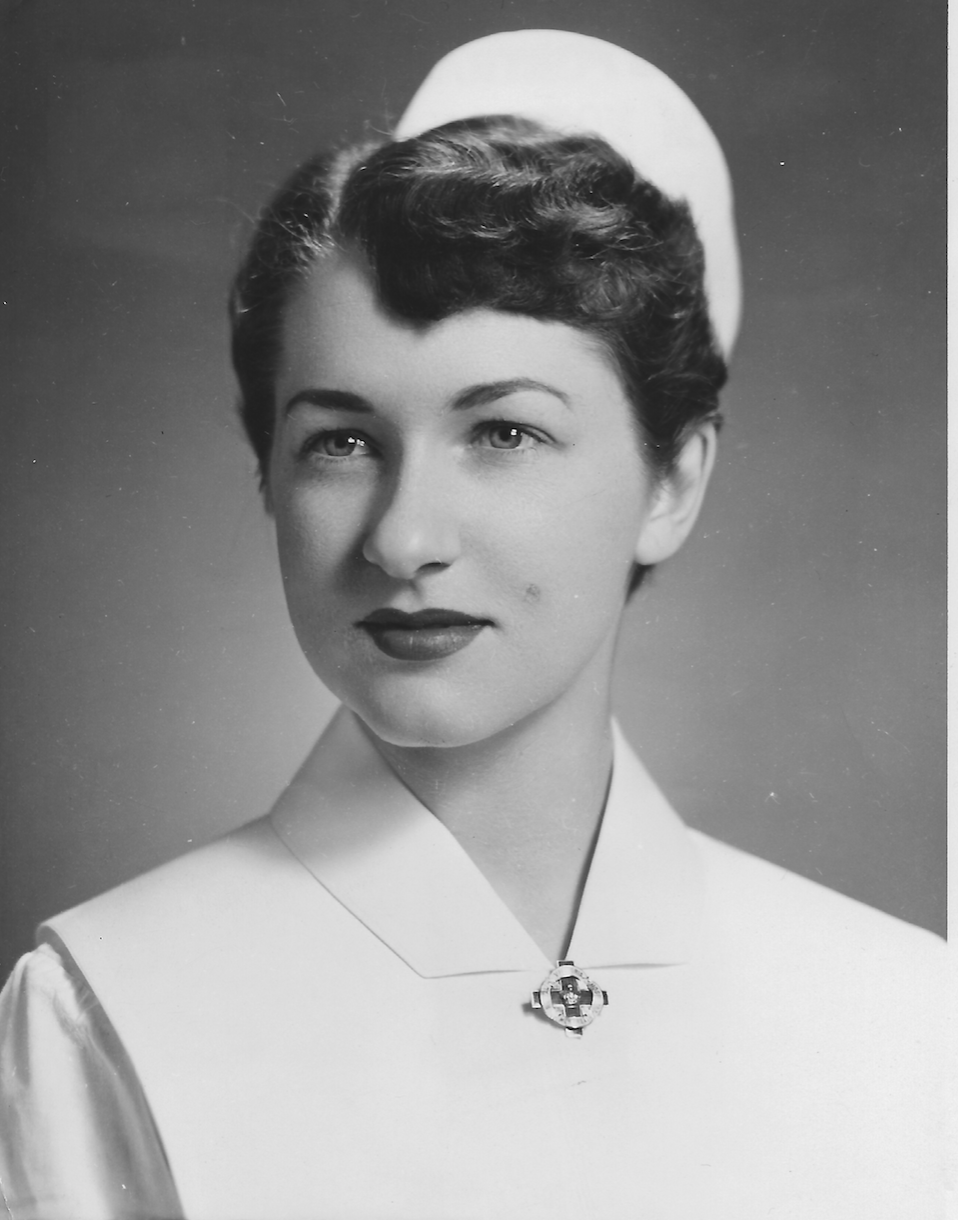
My mother was extremely proud of her nurses training and the use she put it to. But in 1959, as she lay on a gurney in the emergency ward of a Montreal hospital, listening to her own blood dripping onto the floor, it wasn’t helping her.

Beside her, my father was insisting she’d be fine. He dismissed her deathbed advice that he should remarry.

This made her furious. She’d heard enough of the terse medical conversation around her to understand what he had missed. She knew how serious her sudden blood condition was; it had killed her unborn child, just a month short of his birth, and she herself wasn’t likely to survive.

In fact, she had the kind of near-death experience recounted by others. She saw white light at the end of a tunnel, felt overcome by a compelling sense of peace. But because she was already mother to three daughters under the age of four, she fought her way back from the tempting light, summoned up all of her strength, and hissed at my poor father:

“You’re not listening to me. My girls need a mother. You need to marry again!

Luckily for me, her prognosis was wrong. She survived. (Possibly motivated by the fear that my father wouldn’t find a suitable replacement.) And five decades on, she may be legally blind, partly deaf, and living a very confined life, but in her 85th year, her nursing days long behind her, she correctly diagnosed my father’s appendicitis, and successfully badgered him into going to the hospital. (Which, let’s be clear, undoubtedly saved HIS life.)

This story offers a glimpse into the measure of awe and respect I feel, not just for my mother, but for all women who summon their strength for the welfare of others, who channel the kind of ferocious protective instinct that so often surfaces in motherhood, but is less dependent on hormones than it is on empathy.

I believe the world would be a dramatically better place if such voices exerted more influence. On everything.

If you share this perspective, please consider making a tax-deductible donation to Informed Opinions’ work. Although we deliver programming on a sliding scale fee-for-service basis, the database we’re building to make it easy for journalists to find expert women generates no revenue. 

What Impact are We Having? What More Can We Do?

We recently surveyed hundreds of women who’ve participated in our workshops and remained on our mailing list. Email overflow and work-life demands being what they are, we were happy to log 57 responses from women in 16 cities across the country. They gave us insight into what use they’ve made of the training we deliver, and how else we might be able to support them in continuing to amplify their voices.

Positioning yourself for impact

I recall hearing advice growing up that “it’s not what you know but who” that makes a difference to your career. But actually, it’s who knows you that’s more important. And visibility allows you to be seen, and your potential to contribute to be recognized. That dynamic is central to what we do and why.

That’s why we were very gratified by the responses women gave to the question:

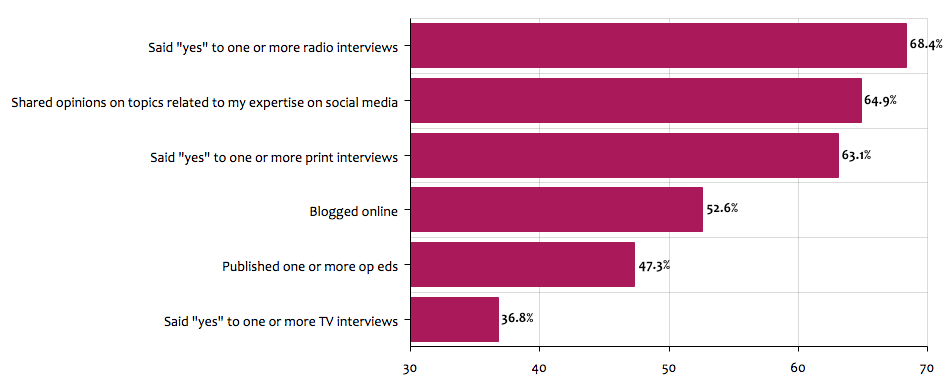
What kind of engagement with media have you had in the past 7 years?

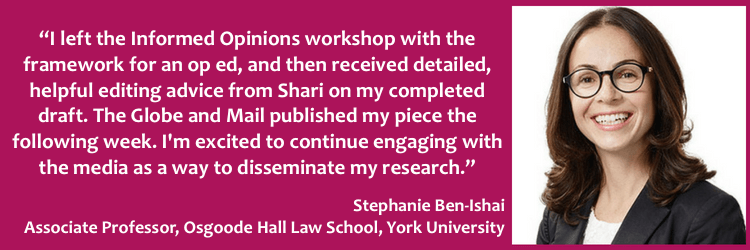
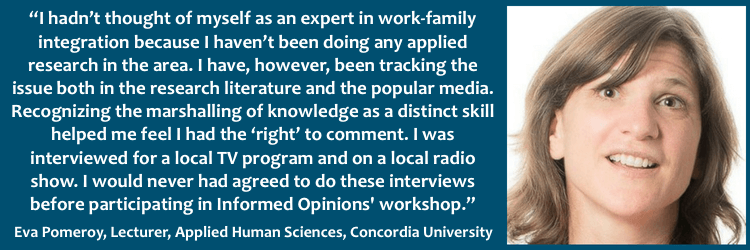
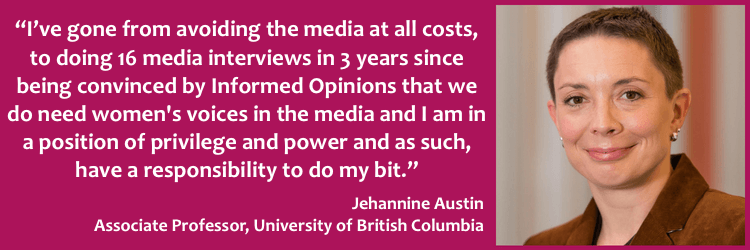
Eva Pomeroy published five op eds in 2015, three in print media and two online, and did two radio interviews. She says the idea of going to the media would never have occurred to her, but she now appreciates the impact she’s able to have addressing issues she knows and cares about.

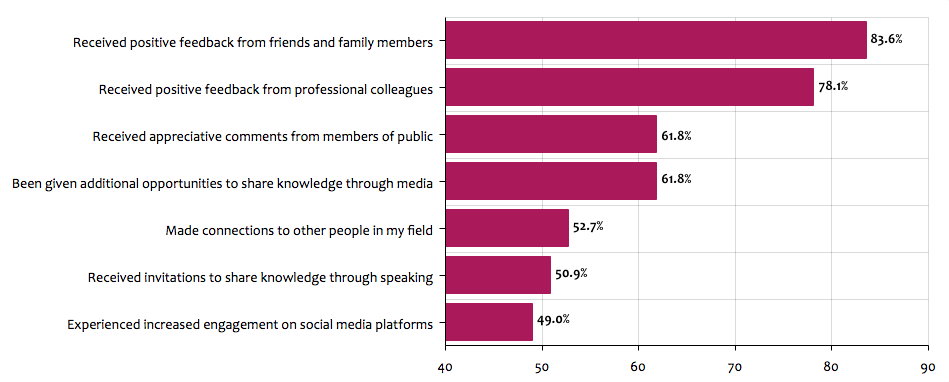
We also asked what kind of feedback or sense of impact women had experienced as a result of their increased profile. Here’s what they said:

Not all the news was good. Predictably, 29% of women received negative feedback from trolls or haters online, and 13% were criticized by colleagues. Although neither of those experiences are pleasant, on balance, the positive results of increased exposure far outweighed the negatives.

Indeed, in a response to a more general question about what impact, if any, attending our programming or engaging with media had had,

“82% cited increased confidence and/or sense of agency;
56% cited increased recognition, visibility and credibility.”

If she can’t see you, she can’t be you

The enhanced professional opportunities that flow from increased visibility constitute individual benefits. But the global impact of more diverse and visible female role models is also profound.

When Adrienne Clarkson was Governor General, she was often approached by Asian Canadian girls who were wide-eyed with the suddenly expanded possible futures they could imagine for themselves as a result of seeing someone who looked like them in the prestigious and influential role of Vice Regal.

Your visibility – as a politician or CEO, chemical engineer or doula, mining executive or chiropractor – makes it easier for girls and young women to envision themselves in a similar role. And most of those your role modelling inspires won’t ever have the chance to tell you. But the absence of that communication in no way lessens your impact.

We also asked members of our network to weigh in on what kinds of support from Informed Opinions they continue to value, or would like to see us take on in the future.

Almost three-quarters (74%) expressed interest in the kind of media engagement tips and tools that we deliver in our workshops, and share through this blog and on social media. (If you’re not already receiving notice of new blog posts by email, you can join our Linkedin Group or sign up for our blog.) Another 72% requested additional training workshops to help build and refine skills.

Many said they appreciated the work my colleague Samantha oversees in promoting their expert profiles or media commentaries to journalists (63% and 58% respectively). And well over half (58%) encouraged us to convene events that would permit them to connect with other media-engaged expert women. Slightly under half (46%) expressed interest in free webinars that would permit them to get answers to specific questions related to their media engagement.

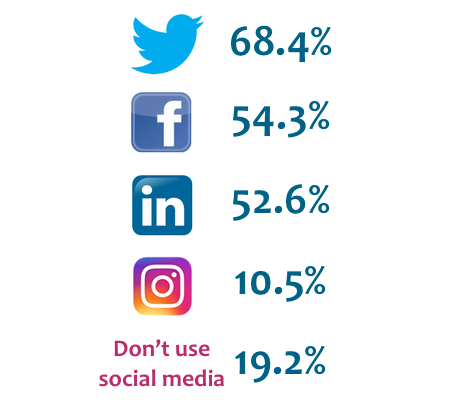
Where Do Our Experts Engage Online?

How We’re Going to Bridge the Gender Gap by 2025

Last fall we announced What Gets Measured Gets Done – a new initiative that tracks the data to measure the male and female voices being quoted and featured in Canada’s most influential news media. Our explicit goal is to achieve gender parity by 2025 by celebrating the leaders and encouraging the laggards to do better. Almost two-thirds of our grads (63%) expressed interest in supporting this endeavor, so we’ll be looking to them to share the data we collect with their networks.

Survival Guide for Women in the Workplace

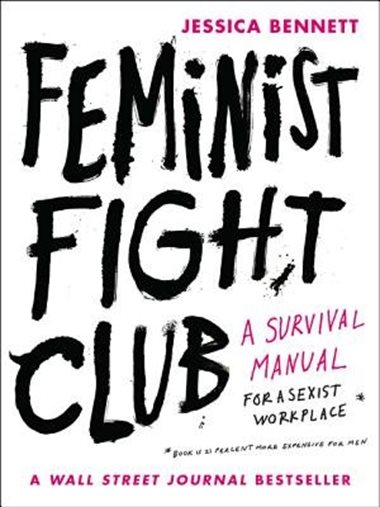
Finally, 53% of our network expressed interest in a “Surviving & Thriving in the Workplace Guide for Expert Women”.  Although I relished the idea of writing this book, anticipating its enormous audience, it turns out Jessica Bennett has already written it.

She called it Feminist Fight Club – A Survival Manual (For a Sexist Workplace), and it’s a gem: funny, deeply resonant and chock-full of practical advice. She drew on both her own daily office experiences as well as those of a small group of smart, articulate and ambitious women. Together they offer an arsenal of strategies that include snappy comebacks, encouraging pep talks and strategically smart action steps.

Unconscious Bias and the Right to Bare Arms

Recently I shared the link to a blog post written by a writer whose insights I have often found relevant, useful and supported by research. My 200-character comment suggested that speakers who wanted to be taken seriously should cover up their arms. A minor storm ensued. I regret my failure to review the original study being cited, and provide more nuanced context. Here, belatedly, is a better summary of what I understand from related research and personal experience.

In the immortal words of Martin Luther King, we all have the right to be judged by the content of our character, not the colour of our skin, or, I’d like to add, the amount of it that’s on display.

Among the many obstacles between this ideal and the reality is unconscious bias. In pursuit of survival, our limbic brains have, over centuries, developed the capacity to register and integrate bits of information so quickly that the conclusions we draw and the decisions we make occur without us being consciously aware of the process.

This remarkable capacity permits us to leap out of the way of speeding vehicles and answer tough questions when a microphone is thrust in our faces. But it also frequently steers us wrong, causing us to draw erroneous conclusions based on unreliable cues culled from among the millions of bits of visual, aural and sensory data that we’re exposed to every second.

As a result, without realizing it, even the best-intentioned and aware among us, often make assumptions based on superficial appearances. Our fast brains rely on stereotypes — reinforced by countless impressions delivered by media images and messages of all kinds — to equate gray hair and wrinkles with technological incompetence, and a direct, open gaze with honesty.

The impacts of unconscious bias — on women’s perceived credibility in sexual assault trials and on the opportunities we’re given in professional contexts — are punishing, pervasive and well-documented. Thankfully, the #MeToo movement is helping to address the former, and governments and universities are actively seeking to reverse the latter. The end goal is to overcome the barriers currently preventing women in all our diversity — including those affected by intersectional dimensions — from being accepted and believed, hired and promoted on a level playing field with our male colleagues.

On being “read” visually

I used to write and perform short commentaries on CBC TV about various aspects of media influence. My full-time job, however, was teaching business communication to college students. Occasionally one of them would see me on TV. This did wonders for my stature in the classroom, but it also taught me something important: my students rarely remembered what I had been talking about, but they almost always recalled what I had worn.

We are visual creatures. That’s why storytelling relies so heavily on concrete images – TV, film and picture books obviously, but also novels which succeed in evoking visually-rich fictional realities.

Prior to being hired to deliver TV commentaries, I used to contribute 3-minute radio pieces to CBC. Over the course of several years, I developed a lovely relationship over the phone and by email with an intelligent and collegial producer in Vancouver. When we eventually met in person for the first time and she discovered that I’m small and blonde, she exclaimed in surprise, “Oh! I thought you were tall with dark hair!”

She, in fact, is tall and has dark hair. Because we got along so well, I think she inadvertently projected her own physical qualities onto my disembodied voice. I was not insulted by this demonstration of unconscious bias.

My work frequently requires me to stand at the front of a room. My goal in every case is to speak to the people assembled in ways that will permit them to attend to, understand and benefit from what I’m saying. Recognizing how easy it is for all of us to be hijacked by distractions, I am very deliberate about seeking to minimize visual interference.

Another way to put this is I dress to be heard.

Images of women are in plentiful supply in the media. Musicians and models, reality TV stars and athletes often dress in ways that emphasize their physicality. Sometimes that’s practical: some impressive feats are more easily performed when unencumbered by restrictive clothing. But often the emphasis on physicality is deliberately sexual, in aid of selling music or beauty products, or a “brand”. We are meant to notice the skin on display, and primed to associate its visibility with desire.

Let me be clear about this: I fully support every woman in wearing whatever she likes and feels comfortable in. There was absolutely zero body-shaming content in my tweet, or the article or research that inspired it.

At the same time, out of strategic self-interest, I choose my wardrobe to diminish the likelihood that my audiences will focus on something other than my ideas.

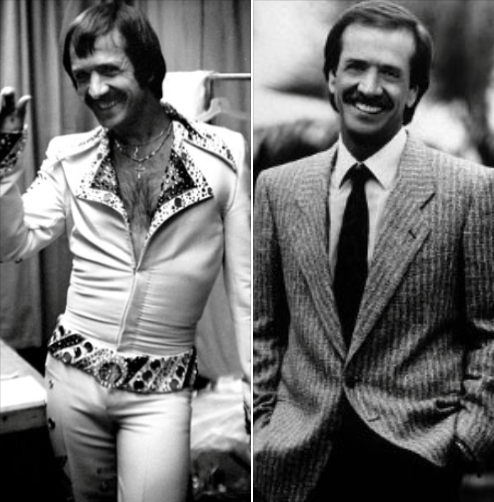
Finally, although the ways in which we judge women are more numerous and unfair, men are also vulnerable to this kind of unconscious bias, regularly seeking to mitigate it in order to be seen and heard. When Sonny Bono was the other half of Cher, he favoured very tight-fitting pants and often unzipped his body suit to reveal his chest hair. When he ran – successfully – for political office, he wore a dress shirt, tie and sports jacket.

Like many, I yearn to live in a world free of the unconscious bias that causes us to make unfair assumptions about others. I seek to become more aware of my own. But I also know that pretending bias doesn’t exist, or condemning people who acknowledge its impact, doesn’t help anyone. If we can’t talk about it – with respect – we’re never going to change it.

5 Resolutions to maintain 2017’s momentum

If 2017 goes down in history as a year of resolve, what will we say about 2018? That we built on the momentum to make lasting change, or that we let the energy dissipate into nothingness?

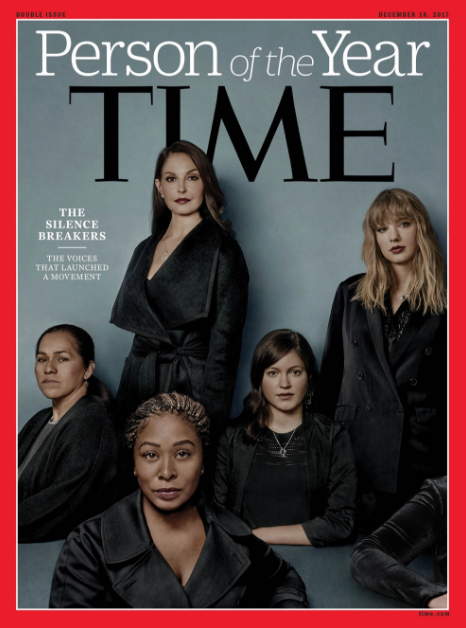
From women’s marches around the world to the #MeToo movement, many people took not just to social media, but to the streets, speaking up against hate, inequality and violence.

Women, in particular, shared their realities in ways and in numbers that got global attention and sent shock waves through a host of industries, from Hollywood and high tech to policing and restaurants.

But genuine revolution requires persistence: we need to continue challenging unconscious biases, dismantling entrenched systems, and redistributing power. We need to translate last year’s manifestations of resolve into actual resolutions – and then act on them. And we need leaders who are willing to take a stand and publicly spearhead this revolution.

Is that you? Someone you work with — or for?

Here are 5 suggestions for how to keep amplifying women’s voices for change in 2018:

  1. Publicly announce your commitment to support gender equality in the media and donate $1,000 for a tax receipt in support of “What Gets Measured Gets Done”, the high tech dashboard we’re building to track women’s voices in the media;
  2. Ask women in your workplace what’s needed to overcome the barriers to their advancement, and then commit to implementing meaningful measures that will benefit them and your bottom line;
  3. Nominate qualified women from your organization or network who are able to speak to media for inclusion in ExpertWomen, our online database designed to make it easier for journalists and conference programmers to feature smart women;
  4. Talk to us to explore how we might partner with you to amplify women’s voices in Canada and raise awareness at corporate events;
  5. Book a Finding Your Voice, or Building Allies for Change keynote or workshop combining research insights and concrete take-aways with storytelling and humour to engage and motivate your colleagues.

Brad Pitt’s 3-step program for #MaleAllies

Among the many feelings (fury, disgust, resignation) that surfaced for me upon learning the extent to which casting couch hell remains alive and well, was this thought:

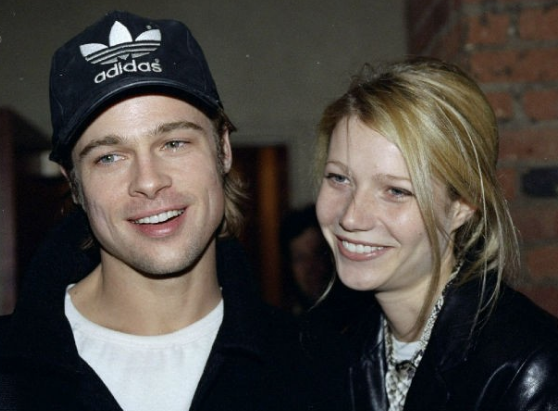
There are a lot of decent men in the world capable of doing what Brad Pitt did when he learned of the encounter his then girlfriend, Gwyneth Paltrow, had with the now disgraced movie mogul.

So guys, this is for you:

You don’t have to be Brad Pitt to stand up with women, demanding respect, and rejecting abuse.

We know you, too, feel disgust and anger about the Weinsteins, Trumps and Ailes of the world: men who give you all a bad name.

We know that most of you don’t behave this way. That you don’t need to have a daughter in order to recognize harassment and assault as loathsome and indefensible. That being a human being is enough.

So here’s a three-step process to out yourself as an ally, to align yourself as belonging to a different category of men in opposition to the bullies, the harassers, the predators.

  1. Speak to the people in your life, women AND men — your relatives, friends and colleagues — and tell them you’re angry and disgusted and you want to do something about this
  2. Pledge to be an ally: to listen to those who have been targeted, to believe them, to stand up with them — and against this kind of abuse
  3. Act on the pledge. Confront the perpetrators, encourage friends and colleagues to do the same. Stand up on social media and in the real world, every day, for women’s right to be treated with dignity and respect.

This may sometimes mean having uncomfortable conversations with other men. (Many women have some relevant experience; they can offer suggestions!)

It will require you to be strong and secure in your conviction that the behaviour is wrong, and to accept that you may be verbally ridiculed or denigrated (again, welcome to our world).

But the benefits of living in a society in which powerful men are held to account for despicable behaviour are worth it.

Because the abusers will eventually lose their power, and together women AND decent, respectful men will be able to create a better world for all of us — you, me, our daughters and our sons.

Women have been resisting and raging against this kind of behaviour for centuries. And not just in Hollywood, but in sports, the military and high tech, too. Your voices are needed to stop it.

#MaleAllies?  #ImWithHer?  #ImWithBradPitt? — choose whatever hashtag or platform you want, but choose to align yourself definitively, and publicly, with the human beings, not the abusers.

At Informed Opinions, we know from experience that you have no way of predicting the ripples you’ll create by speaking up.

by founder/catalyst Shari Graydon