
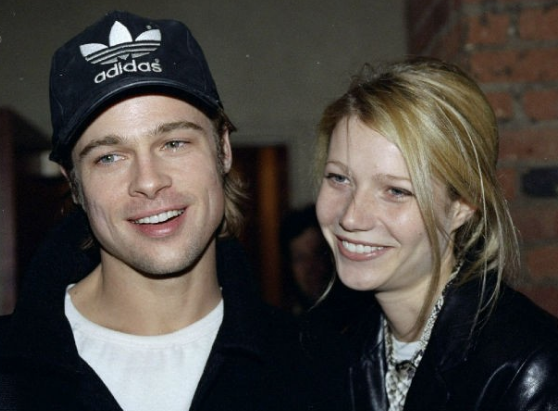
Brad Pitt’s 3-step program for #MaleAllies

Among the many feelings (fury, disgust, resignation) that surfaced for me upon learning the extent to which casting couch hell remains alive and well, was this thought:

There are a lot of decent men in the world capable of doing what Brad Pitt did when he learned of the encounter his then girlfriend, Gwyneth Paltrow, had with the now disgraced movie mogul.

So guys, this is for you:

You don’t have to be Brad Pitt to stand up with women, demanding respect, and rejecting abuse.

We know you, too, feel disgust and anger about the Weinsteins, Trumps and Ailes of the world: men who give you all a bad name.

We know that most of you don’t behave this way. That you don’t need to have a daughter in order to recognize harassment and assault as loathsome and indefensible. That being a human being is enough.

So here’s a three-step process to out yourself as an ally, to align yourself as belonging to a different category of men in opposition to the bullies, the harassers, the predators.

  1. Speak to the people in your life, women AND men — your relatives, friends and colleagues — and tell them you’re angry and disgusted and you want to do something about this
  2. Pledge to be an ally: to listen to those who have been targeted, to believe them, to stand up with them — and against this kind of abuse
  3. Act on the pledge. Confront the perpetrators, encourage friends and colleagues to do the same. Stand up on social media and in the real world, every day, for women’s right to be treated with dignity and respect.

This may sometimes mean having uncomfortable conversations with other men. (Many women have some relevant experience; they can offer suggestions!)

It will require you to be strong and secure in your conviction that the behaviour is wrong, and to accept that you may be verbally ridiculed or denigrated (again, welcome to our world).

But the benefits of living in a society in which powerful men are held to account for despicable behaviour are worth it.

Because the abusers will eventually lose their power, and together women AND decent, respectful men will be able to create a better world for all of us — you, me, our daughters and our sons.

Women have been resisting and raging against this kind of behaviour for centuries. And not just in Hollywood, but in sports, the military and high tech, too. Your voices are needed to stop it.

#MaleAllies?  #ImWithHer?  #ImWithBradPitt? — choose whatever hashtag or platform you want, but choose to align yourself definitively, and publicly, with the human beings, not the abusers.

At Informed Opinions, we know from experience that you have no way of predicting the ripples you’ll create by speaking up.

by founder/catalyst Shari Graydon
Sexual assault – defining consent, round 2

“Feminazi”, “President, Bitch of the Year Club” and “you dog-faced slut” – these are among the monikers I collected during my three-year stint as an out-feminist columnist with the Vancouver Sun. Most of the insults came from readers, but occasionally a columnist from another paper – or even my own – would be so stuck for meaningful material that he (and yes, I’m afraid it was invariably a “he”) would devote his 24 inches to slagging my apparent failure to find sexism funny, or permit other people to just “have a good time”.

My skin thickened over those three years, and I really grew to appreciate that the attacks helped expose the ignorance behind them. Moreover, I had the opportunity each week to challenge the dismissive or insulting characterizations of me with words of my own.

Women who don’t have the luxury of a regular column often feel personally bruised by the sometimes personalized and gratuitous word-assaults still regularly leveled at those who defend a woman’s right to say no, even to her partner.

That’s why it was doubly gratifying yesterday to see Danielle Fostey and Heather Cassells, two legal interns with West Coast LEAF who benefited from some indirect Informed Opinions support, challenge the specious arguments Vancouver Sun columnist Ian Mulgrew made about sexual consent in his own paper. Mulgrew himself had been responding, in part, to the cogent analysis of a recent Supreme Court decision delivered by University of Ottawa law professor, Elizabeth Sheehy, who had actually intervened in the case. In his column, however, Mulgrew characterized Prof. Sheehy as “sneering” and accused her of being locked up in her ivory tower. Neither charge is remotely accurate, and betray lazy reporting and a willingness to stereotype.

For their parts, Danielle Fostey and Heather Cassells take apart the columnist’s arguments piece by piece, refuting his claims with concrete evidence, case law and common sense. It’s an illuminating read about a persistently troubling issue.

Controversial “unconscious consent” case given context

Last week’s controversial decision by the Supreme Court of Canada in favour of protecting unconscious women from sexual assault begged for additional context and analysis. The salacious facts of the case (including the apparently agreed-to asphyxiation, the nature of the assault, and the subsequent relationship breakdown of the couple involved) have fueled simplistic and predictable commentary dismissing the woman’s complaint and raising the specious spectre of a slippery slope that will endanger men who kiss their sleeping wives.

But University of Ottawa professor, Elizabeth Sheehy knows the case well, having intervened at the Supreme Court on behalf of LEAF. On Friday when the decision was released, she was quick to translate the evidently compelling arguments she offered in court into accessible newspaper commentary.

As a result, her analysis is now enlightening readers of three daily newspapers: The Vancouver Sun, The Halifax Chronicle Herald, and La Presse.

This case is a classic illustration of the importance of ensuring women’s perspectives are heard. As Ms. Sheehy points out in her analysis, the Supreme Court’s decision reflects a gender split, with three male judges dissenting from the majority, which included all four of the female judges, as well as two of their male colleagues. If women’s realities weren’t represented by the presence of Justices Beverley McLachlin, Rosalie Abella, Louise Charron and Marie Deschamps, the outcome might have been different.