Blocking Online Abuse: Q&A with Toronto Star columnist Heather Mallick

In the context of Informed Opinions’ work to combat the #ToxicHush of online hate, we’re deeply conscious of how much abuse many outspoken women and gender-diverse journalists, bloggers and influencers receive. Noting a recent tweet by longtime feminist columnist, Heather Mallick about blocking words on Twitter, we reached out to learn more…

Do you remember the circumstances that led to you discovering the feature on Twitter that allows you to block words, not just users?

I started on Twitter in 2011, I think. Before that I’d get handwritten hate. I started using the filters when swarming began. (editor’s note: swarming is when a bunch of people target someone’s Twitter account all at once to overwhelm them with malicious content). It was just after Jon Ronson’s book, So You’ve Been Publicly Shamed. It occurred to me that tweeters could block the words they were being targeted for and never hear about it again.

To implement the filter, go to the “More” button at the bottom left hand side of your profile, then click on Settings and Privacy, then Privacy and Safety, then Mute and Block.

Can you share some of the words you block?

I block the c-word, and malice, plus racist stuff because I am biracial. Any words that are likely to be used by hateful people are blocked. 

Interestingly, people are calling me Hitler now because of a recent column on anti-vaxxers, but I don’t block “Hitler” because I’m interested in the man and don’t want to miss fascinating tweets about his history.

My list of blocked accounts is so long I don’t even think I would have the time to read it.

The list of Mute Notifications from People is the most helpful. You can officially mute people: ones you don’t follow, or who don’t follow you, who have a default profile photo, who haven’t confirmed their email, and who haven’t confirmed their phone number.

This means you can mute people who are concealing their identity, which is a danger sign right there.

Interestingly, if you get swarmed, Twitter will warn you and ask if you want to take precautions. Then the swarm vanishes.

How has being able to block specific words changed your experience of Twitter?

It’s so much nicer. It’s safer. I don’t live in Anxiety World. I feel I have control over what I see. Recently a sex killer (he tortured, raped and murdered an Indigenous woman many years ago) began emailing me and the IT people at the Star blocked him permanently. I also blocked him on Twitter.

If you look at who a dangerous person follows and who is following them, block them too. And never respond.

The greatest danger comes from obsessive men. I have had a man email me for decades, following me from job to job, sending me hate. One day I will ask a Star lawyer to call him and tell him to stop. But in the meantime, I have blocked him. He can’t reach me now.

As an unapologetically feminist columnist who frequently advocates for people and issues that make you a target, what other strategies do you recommend to those dealing with the backlash that results?

If you anger men, every aspect of your appearance will be judged. And yet you look wonderful, you truly do! Try to brush this aside because it is a hallmark of the backlash against feminism and will not end in our lifetime. Here’s a tip: look up your commenters online. You will laugh.

If you are being swarmed on social media, I believe you have to have defences already prepared. Try to have a life outside work. Have a means of distraction: friends or family, habits or interests.

You should not be alone because you will ruminate and that’s when the hurt becomes internal.

Find a therapist if you can. Try asking friends if they have a good one. That’s definitely helpful. Find a good female doctor. Medical science is your friend. Medication is a fine thing.

My greatest asset: a loving family. A Scottish mother who raised me to have no self-regard. “We are not put on this earth for pleasure,” she said. I was raised on boiled foods. Food is fuel; it’s not there to be enjoyed. Same with work: you do it for money. So I’m not easily hurt, really.

So, my advice is to go back in time and have a Scottish mother. Do that. You’ll expect the worst and you won’t be disappointed. None of this American wellness nonsense. Toughen up. Get a grip. (And yet I am not tough. I have little grip. But I’m a happy person, more or less.) Young women have much to fear and so much that is wonderful! I love them and admire them.

Which topics have you written about that received the most hate? 

I have a list of bandwagon topics I won’t write about, not any more, because they bring out noxious people.

  1. Attacking Sarah Palin at the Republican convention brought out the worst attacks in my entire life. Was that 2008? The American decline since then has been precipitous. Two weeks later, everyone realized that Palin was not up to the job, and dangerous to boot, but no one apologized.
  2. Abortion rights is consistently bad. Prepare yourself.
  3. #MeToo was horrific. I remembered things I had suppressed and it’s a shock to be assaulted for writing about that openly.

Notice that all these are women-related topics.

Has it gotten worse in recent years, and if so, to what do you attribute this? 

Yes, it’s worse because Americans are worse and their toxic hatred has floated north. It’s social media as invented by Americans and used planet-wide. There are actually very few appalling people, but when we give them oxygen, they grow.

NEVER UNDERESTIMATE HOW MUCH YOU ARE HATED. I always tell women this. It continues to be true and may become even more true. Nevertheless, we are half of humanity and we must work with good women and good men to make life better for all women.

We need all the strategies we can muster – personal, political, regulatory – to make it less tormenting for women to use their fine voices.

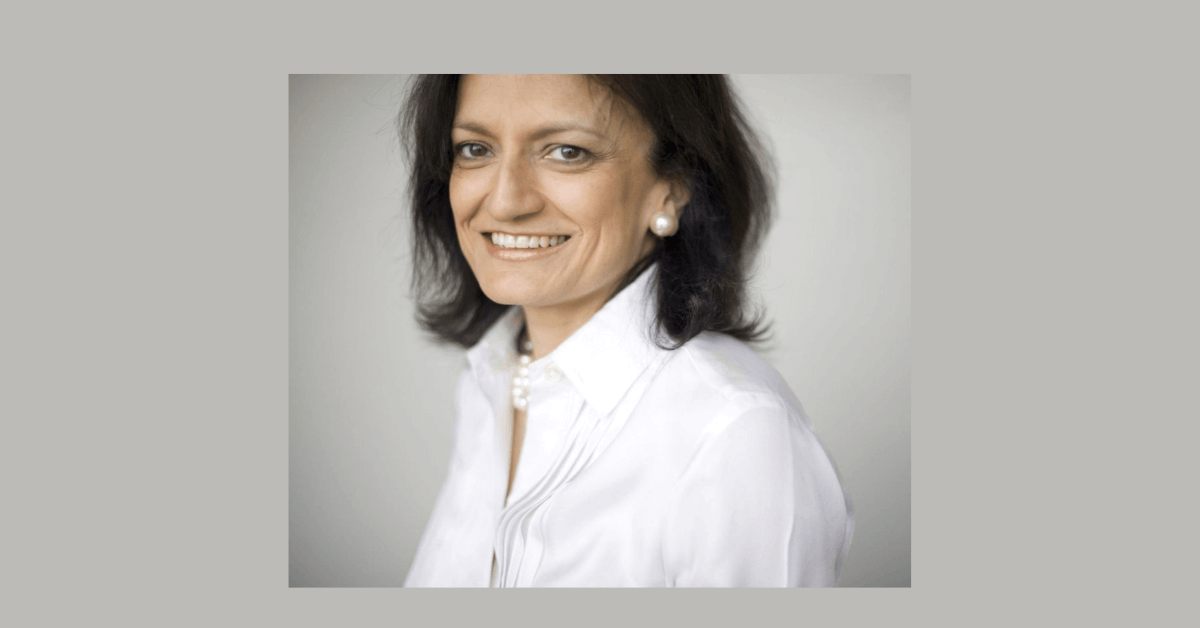
Heather Mallick is a columnist who writes about feminism, news and politics for the Toronto Star.@HeatherMallick

Online hate targeting politicians threatens democracy

If you’re a woman in Canada who pays any attention to politics, you already know the basic arc and many of the low points of the story below. In fact, you’re likely to have had a visceral experience of the events, even if you only ever saw them reported on the news or discussed on social media. And merely bearing witness has probably negatively influenced any inclination you might have had to run for office yourself.

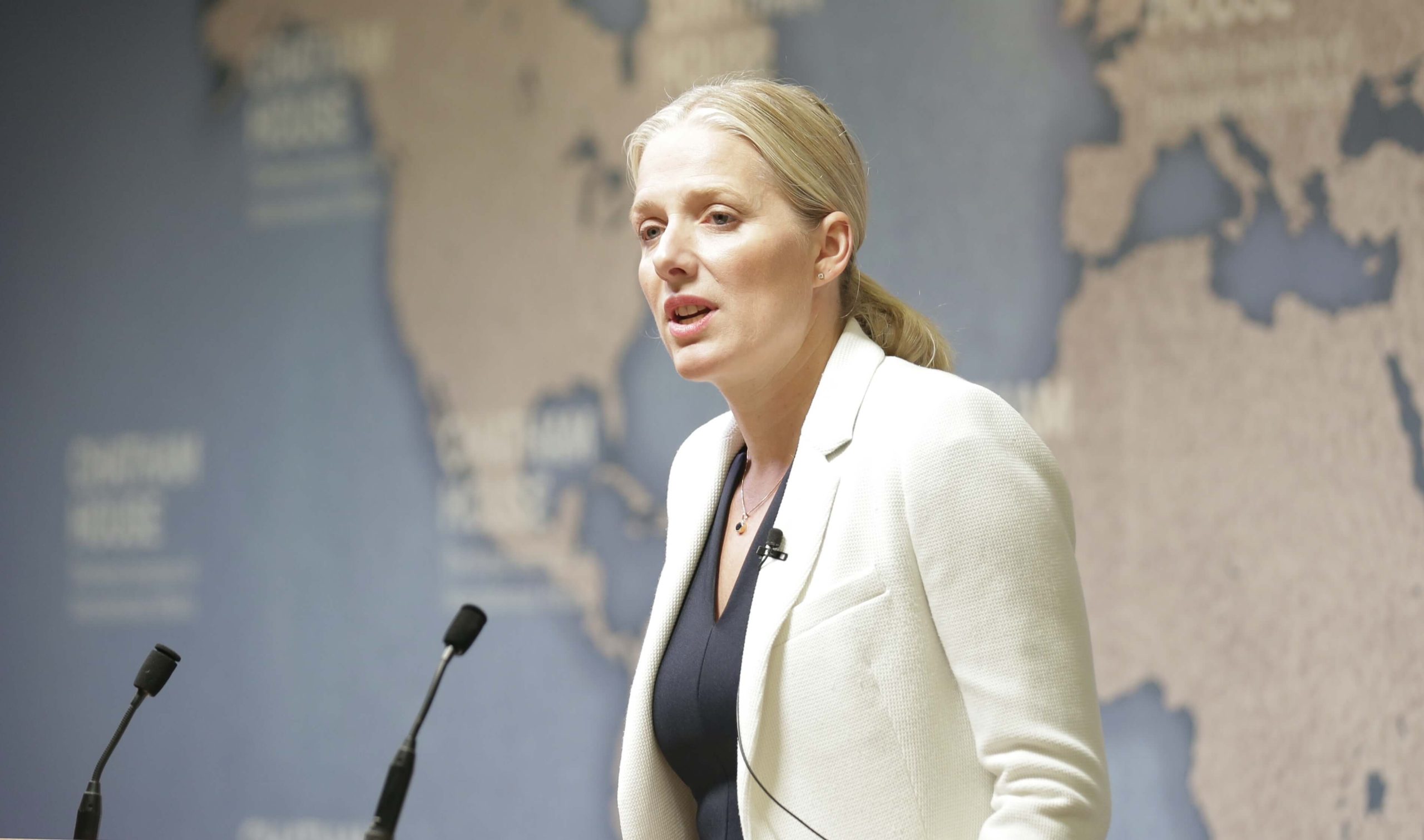
Catherine McKenna may be the canary in the coal mine of efforts to advance women’s leadership in Canadian public life – and the real and present threat that online hate poses to our democracy.

McKenna became the poster politician for online abuse during her tenure as federal Minister of the Environment – in part because the attacks targeting her online emboldened people to deliver their harassment and hate in person, too.

As the politician responsible for the government’s most contentious file, and as a woman, who also happened to be blonde, relatively young, conventionally attractive AND unapologetic about using her voice, she became a magnet for haters. They attacked her for policy and appearance issues alike, bent on discrediting her and undermining her ability to make the kind of changes that scientists have long been clear are necessary to protect the future of the planet.

In December, McKenna spoke to Taylor Owen, host of the Big Tech podcast produced out of McGill University’s Centre for International Governance Innovation.

She revisited the origins of the despicable “Climate Barbie” label (Rebel Media initially coined the phrase but she refrained from responding until a former Conservative cabinet minister used the moniker in Parliament).

“You take a lot of abuse,” she confessed, “but I was done.”

That only escalated the abuse: in addition to the online trolling, people sent her Barbie dolls with hate messages attached and created videos showing dolls being harmed.

After McKenna was elected for the second time in 2019, her campaign office was sprayed withmisogynistic graffiti in red paint across an image of her face.

Dealing with the daily onslaught of hate was very hard on her staff, and other women regularly confessed to her they would never consider running for office after witnessing the viciousness of the harassment directed at her.  

Moreover, anyone who tried to engage on social media to defend or celebrate her would themselves, become targeted by trolls.

As a result of this – and the “zero action” taken by the social media platforms which were made aware of the online hate they were facilitating – McKenna is now a big proponent of regulation.

Both she and Owen spoke about the now widespread concern Canadians have about the issue, and the license this gives politicians to enact legislation against online abuse.

Noted Owen, “We have lots of conversations about cancel culture, but the weaponizing of speech by these technologies is a certain kind of censorship; we’re forcing the people most affected by this – women, people of colour – out of our public sphere in really meaningful ways. Is that the cost we now have to bear?”

McKenna is vehement in her condemnation of the extent to which online hate is silencing the diverse voices we need to bring into politics and public discourse. She believes that government action, transparent algorithms and the use of human rights law are all needed to address the issue. She cited the many other countries already introducing legislation and noted that some of the social media companies themselves want to be relieved of the decision-making involved.

“We’re in a different place,” she observed, compared to 2015 when she was first elected. At that time, politicians were told “you can’t block anyone on social media, because you’re a public servant and need to be accessible.”

Now, she says, “Canadians expect action and they wanted it yesterday.”

Shari Graydon is the Catalyst of Informed Opinions, a non-profit amplifying the voices of women and gender-diverse people and combatting the #ToxicHush of online hate that is silencing voices that are already discouragingly under-represented.Informed Opinions’ campaign against #ToxicHush is funding the development of a research app that will gather evidence making clear how pervasive the problem is, to help equip policy-makers and governments to deliver on that action.

How to Use #Ottertime to Fight Online Hate and Disorient Trolls

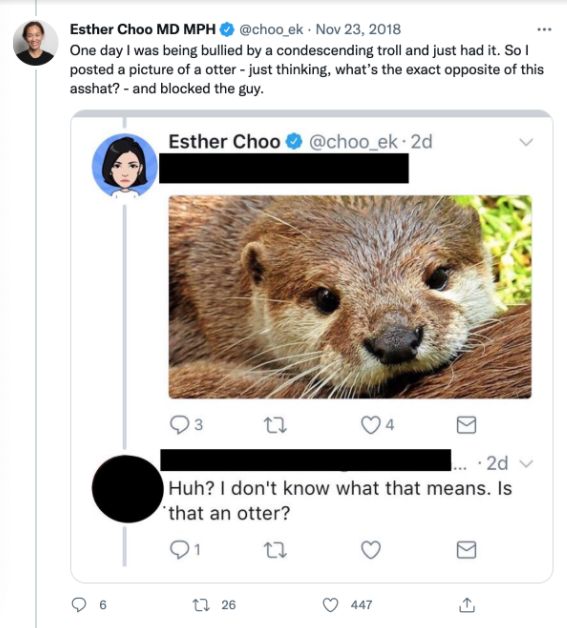
Esther Choo is a physician who does medical commentary on CNN, MSNBC and BBC. She has more than 192,000 followers. And because she’s a feminist, tweets about gender inequities, and is also Asian American, she gets trolled. 

But she’s smart and has a sense of humour, too. So here’s what she does when she gets sent online abuse: she responds by sharing an image of an otter. No explanation, just the image of the otter. 

I love the brilliance of this strategy. 

First of all, it’s confusing (see troller’s dumbfounded response, below).

Ester Choo MD MPH tweets One day I was being bullied by a condescending troll and just had it. So I posted a picture of a otter - just thinking, what's the exact opposite of this asshat? - and blocked the guy. Esther Choo tweets a picture of an otter. Troll responds Huh? I don't know what that means. Is that an otter?

Don’t you love the reply? He can’t reconcile the image with his intended effect. So he’s forced to ask for clarification, which disrupts the invective and undermines his stream of attack.

Secondly, it’s a way of Dr. Choo saying “your comments are so ignorant and uncool as to be unworthy of my intellectual or emotional capital; they do not deserve a response.”

Which, instead of silencing her, makes him both irrelevant and, in a way, invisible. 

Thirdly, the disconnect between his asshattedness and her sophistication is priceless.

Anyone who is regularly being targeted with online hate can attest to how exhausting it is to be on high alert as a result of vitriol and insults that find their way into the palm of your hand as you scroll Twitter or Facebook for news, or the threats that disrupt your workplace inbox. 

Dr. Choo continues…

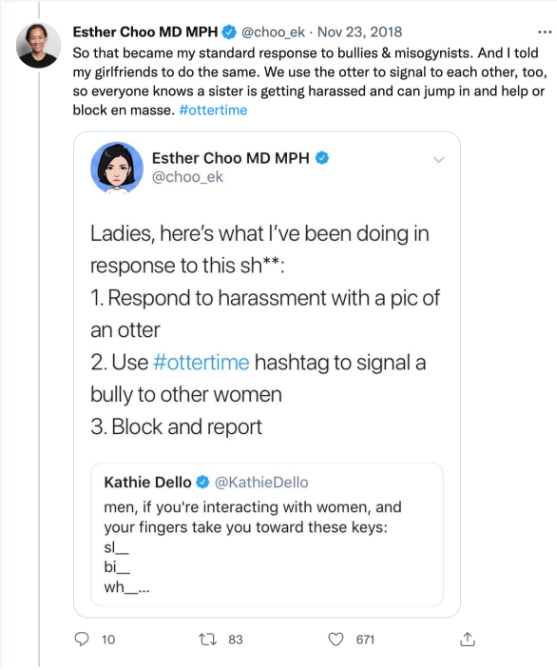
Esther Choo MD MPH tweets So that became my standard response to bullies and misogynists. And I told my girlfriends to do the same. We use the otter to signal to each other, too, so everyone knows a sister is getting harassed and can jump in and help or block en masse. #ottertime Tweet reply reads Ladies, here's what I've been doing in response to this sh**. 1. Respond to harassment with a pic of an otter 2. Use #ottertime hashtag to signal a bully to other women 3. Block and report Original tweet by Kathie Dello reads men, if you're interacting with women, an your fingers take you toward these keys: sl blank, bi blank, wh blank

Finding, let alone maintaining, a sense of humour in the face of egregious hate speech and personal attacks is almost impossible. So having a default response that helps you avoid the downward spiral into someone else’s dark, ugly world – and also gives you something easy and constructive to do to subvert the negative energy – is a special kind of genius. 

And inviting others to adopt the strategy is a special kind of sisterhood. But it gets better…

Dr. Choo then goes on to write about how perfect otters are as an analogy for women fighting back against online harassment:

Although they look harmless — and, often, it must be said, adorable — they can be really ferocious, using their powerful jaws and claws to tear apart enemies. Their thick fur makes them resilient to extreme cold and they’re smart enough to use rocks as tools and carry them around in pockets of skin. Moreover…

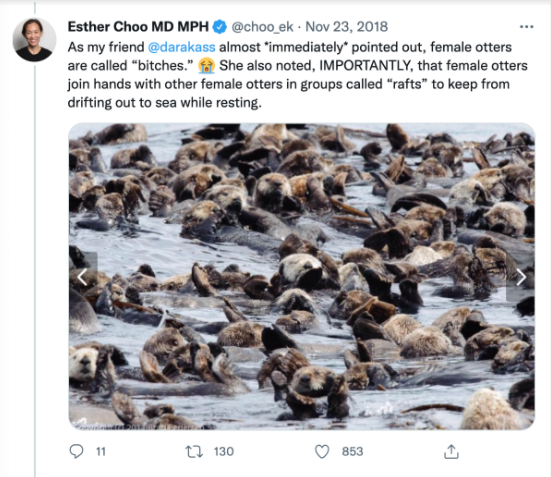
Esther Choo MD MPH tweet reads As my friend @darakass almost immediately pointed out, female otters are called bitches. Crying emoji She also noted, importantly, that female otters join hands with other female otters in groups called rafts to keep from drifting out to sea while resting

It makes me feel giddy to imagine the solidarity of women banding together like otters, emulating a “raft of bitches” to protect one another against the waves of online hate. 

So let’s embrace and build on Dr. Choo’s brilliance with a five-step action:

  1. Search for images of “otter”; 
  2. Copy or download a couple onto your desktop or phone so you have them handy;
  3. Prepare to disrupt and disorient the next “asshat” who dares to mistake your social media feed for one that requires his ignorance, insult or hate speech; 
  4. Incorporate the hashtag #Ottertime to signal to other feminists and allies that someone is unclear on the concept of “social” media;
  5. Share and repeat as needed.


Shari Graydon is the Catalyst of Informed Opinions, a non-profit amplifying the voices of women and gender-diverse people and combatting the #ToxicHush of online hate that is silencing voices that are already discouragingly under-represented.

Why are some people such jerks online? And how do you respond to social media attacks?

Is social media snark the gateway drug to full-on trolling?

I wondered this a lot last month, scrolling through the hate-tweets directed my way. Had I condemned a respected religious leader? Body-shamed a feminist icon? Described COVID as a viable form of population control? 

No, I’d had the temerity to confess in a Toronto Star commentary that I wasn’t in the mood to celebrate Canada Day. 

On LinkedIn, my piece generated thousands of views and many thoughtful and supportive responses. In contrast, on Twitter, dozens of vitriolic messages advised me to leave the country — although not nearly so politely. 

I was characterized as self-righteous, self-loathing and snobbish, “the worst a free democratic country can produce.” I was labeled “a non-entity”, accused of “grifting”, and ridiculed for having a degree in theatre. (Because it’s easier to attack someone personally, based on erroneously-drawn conclusions, than it is to mount a reasoned argument.)

One critic sneered that I was no doubt a fan of immigration (correct, although not mentioned), while another condemned me for having “defecated on the memory of the people who died at Verdun, Passchendaele, Ypres, Juno…Korea, Afghanistan.” (Nope, not even close.)

As disturbing as these attacks were, they pale in comparison to the kinds of hostile abuse directed at many other women, especially those who are Black, Indigenous, Asian, Muslim, lesbian, trans, women of colour… On a daily basis, they are targeted, threatened and silenced.

Over the past decade, in the process of teaching experts how to engage audiences through media, I’ve been enlightened by thousands of extremely knowledgeable and thoughtful scientists, health care professionals and advocates, across all sectors. Despite their deep insights on critically important issues, many of them have sometimes declined to share their experience-informed perspectives even when asked because they don’t have the time, patience or willingness to deal with poisonous online attacks that increase along with one’s profile. 

Who can blame them? 

That’s why Informed Opinions is now investing in a new project aimed at addressing online abuse. In the coming months we’ll be telling you more about our innovative new app and research initiative.

In the meantime, in trying to answer for myself the question, “Why are some people such jerks online?” I came across a New York Times article from 2007 which described the phenomenon of “online disinhibition”. 

Apparently, we’re more likely to be nasty because of the time lag between when we post a message and when we get a response… because the social media world is not governed by authority figures who might encourage us to behave better… because our empathy centres are hijacked by the absence of emotional signs and social cues typical of more personal interaction. 

And yet I and millions of others manage to regularly share thoughts and feelings on social media without personally insulting or attacking others. So I found this sentiment, penned on Quora by Alec Sorenson, more persuasive:

“People are jerks online because they’re jerks normally;
being online just allows them to be jerks without fear of consequence.”

Not insignificantly, social media companies have programmed their algorithms to reward ugliness. Academic research has determined that both Facebook and YouTube prioritize attacks. And posting something that triggers a pile-on of people who reinforce the attack with “likes” gives jerks the kind of dopamine surge experienced when gambling or using recreational drugs. By privileging online harassment and insults, these platforms are perpetuating an addiction to abuse. 

All of which feeds the inevitable conclusion: individual members of civil society, the organizations we support and the governments who serve us need to insist on accountability. 

We need to demand that social media companies live up to their own “community standards” and start genuinely managing not just fake news but the damaging content that their abusive users post. 

Even though the comments directed my way were tame in comparison to the insults and threats many other women and gender-diverse people experience, I did find them disturbing. I had to consciously remind myself that:

  1. Mounting personal attacks vs engaging with another’s ideas is cowardly and unworthy of response;
  2. Evidence-supported views trump the uninformed opinions of those who also deny that COVID exists or buy into disproven conspiracy theories; and, encouragingly,
  3. Most of my critics have few followers and little influence.

I also find valuable the insight articulated by George Bernard Shaw, who recommended:

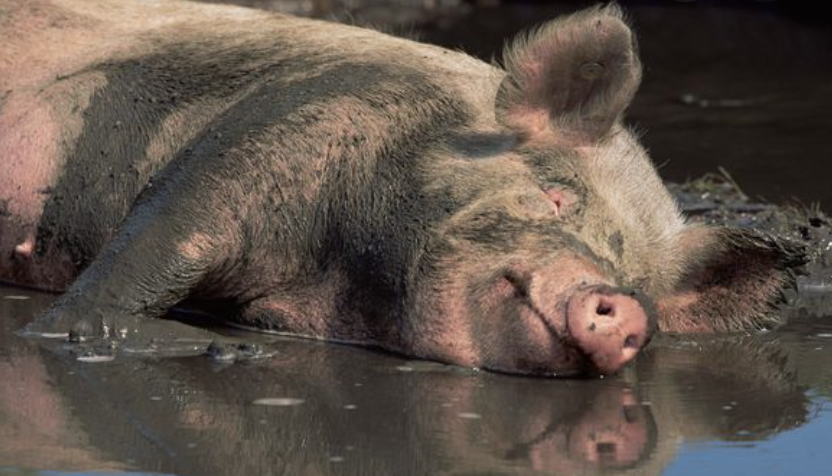
Never wrestle with a pig;
you both get dirty and the pig likes it.

Coincidentally, the day after I drafted the post above, I came across this piece written by the brilliant Roxane Gay about her own evolution with social media. It’s worth the read.

Shari Graydon is the Catalyst of Informed Opinions, a non-profit working to amplify the voices of women and gender-diverse people and ensure they have as much influence in public conversations as men’s.