Young women make waves – and inspire their mentoring peers in the process

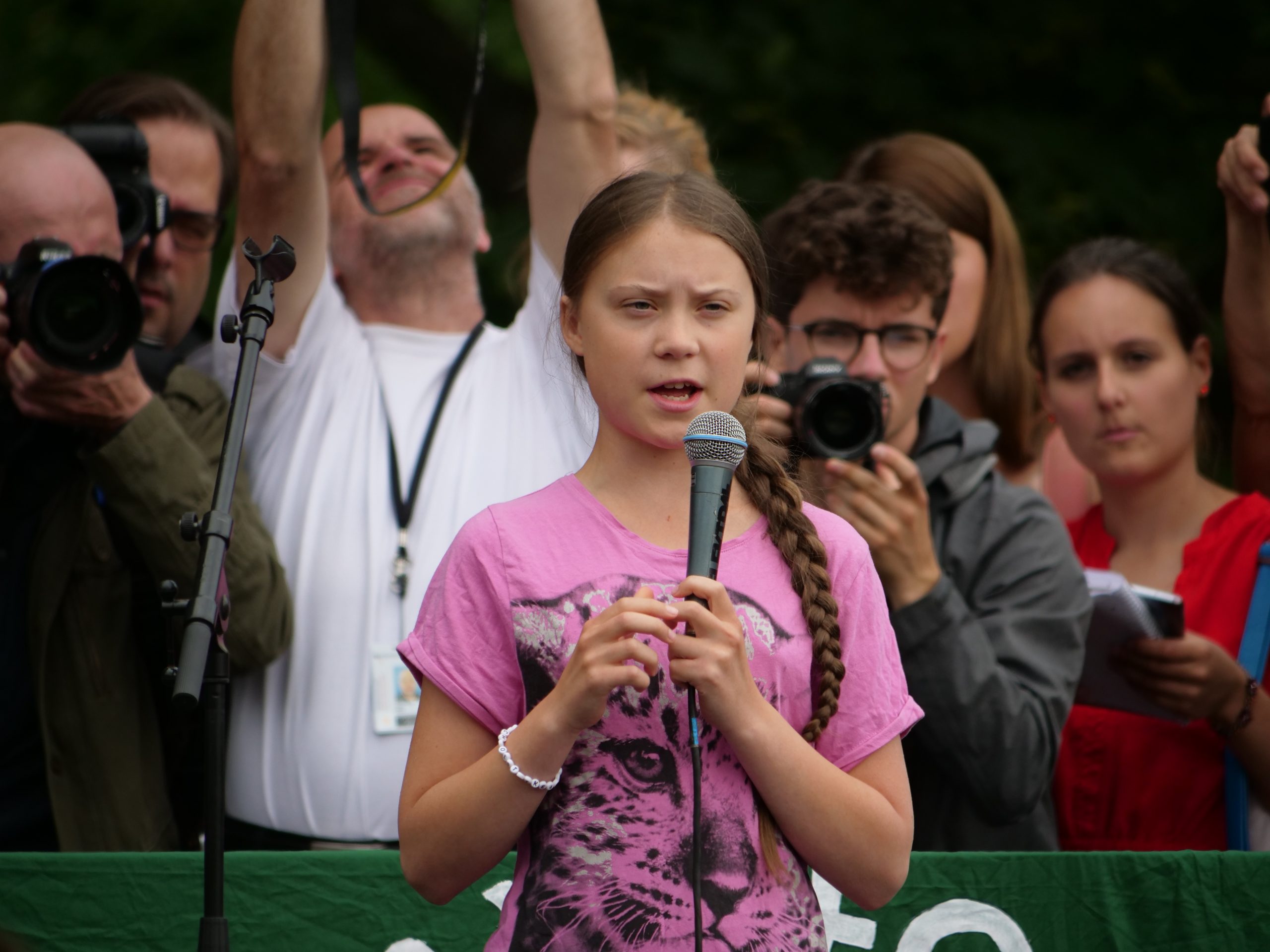
Greta Thunberg, in just 3 years, has shown the world a new way of doing things, of speaking up, of making a difference. She did what no one was able to do before: at 16 years old, she got the world to talk seriously about the climate crisis. 

Just weeks after Greta started her Fridays for Future climate strikes, my 17-year-old daughter and I gathered a small group of high school girls and adult women to create Making Waves, an intergenerational community focused on advancing gender equality. 

It was born of equal measures of inspiration, frustration and anger. Inspiration from Shari Graydon and Informed Opinions’ mission to close the gender gap in public discourse by encouraging women to speak up and take the mic. Frustration that very little had changed for young women going into science and engineering programs at university. And anger that rape culture seems more firmly implanted in university life than 30 years ago when the ‘No Means No” campaign started.

Looking around, we saw there was no organization that connected the sophistication and energy of young women in high school and university, with adult women who cared profoundly about gender equality and were willing to share their skills and knowledge, and invest in young women. We wanted to bring them together to learn, practice speaking up, and support each other both inside the safe space we create, and outside in the broader world.  

Through the pandemic, we’ve continued to find ways to connect, grow, build community, and most importantly to speak up. We’ve built on the annual workshop, adding an online book club featuring expert guests who facilitate rich discussions about important topics…  The Reality Bubble: How Science Reveals the Hidden Truths that Shape our World by Ziya Tong and Seven Fallen Feathers: Racism, Death and Hard Truths in a Northern City by Tanya Talaga have inspired lively and informative sessions. 

While our primary purpose is to encourage young women to speak up about their experiences and what matters to them, something unexpected has happened. The intergenerational synergy has inspired the adult women of Making Waves to make more change, to make bigger waves. 

“I want to grow up to be like 17-year-old Sarah,” texted one of the adults after an animated intergenerational panel.  

Young women aren’t waiting for us to start doing the work. They are just making it happen, demanding change. 

However, they appreciate being given opportunities and being mindfully mentored. When the voices and contributions of young women are truly valued, listened to, and responded to, the results are powerful. We just need to be open enough to see the world through their eyes, and be willing to join them in making change. 

We are just weeks away from our 4th Annual Making Waves Workshop, on May 1st 2022. If you know of a young woman who cares about gender equality and wants to make connections, hone her skills, and practice speaking up, invite her to join us. We welcome all self-identifying women, non-binary and gender non-conforming individuals who feel they would benefit from our conversations. 

And if investing in young women is important to you and you enjoy making waves to make a positive impact, please join us yourself! Everything we do is created with, by and for young women; there are no auditions, no waitlists and no cost.

And if investing in young women is important to you and you enjoy making waves to make a positive impact, please join us yourself! Everything we do is created with, by and for young women; there are no auditions, no waitlists and no cost.

Hanita Simard is the instigator and manager of Making Waves, a cross-generational initiative to mobilize young women to embrace their own power.
Giving media interviews through trauma — and giving back to community

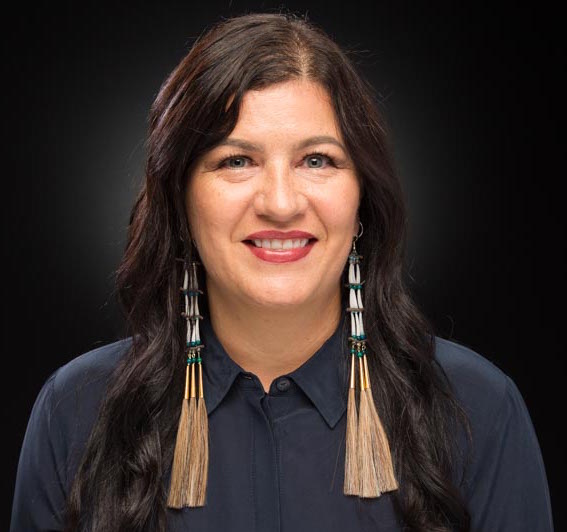
Lori Campbell, newly appointed Associate Vice President, Indigenous Engagement, at the University of Regina has a long history of advocacy. A survivor of the infamous “Sixties Scoop”, she has used her voice to amplify issues affecting Indigenous peoples for many years, responding to media interview requests despite the challenges of doing so.

We all benefit from her willingness to engage and educate, and Informed Opinions is proud to feature her profile in our database of sources. Given the understandable reasons many women representing historically-excluded communities have for not speaking to journalists, we especially appreciate her shared insights below.

Informed Opinions (IO): Given the risks associated with speaking up publicly, especially as an Indigenous woman weighing in on controversial and/or misunderstood issues, why do you say yes to media interviews?

Lori Campbell (LC): In our culture, knowledge and skills come with responsibility. We all have expertise in different areas; we all have a role. I have had, and continue to have, many teachers in my life, many mentors, and they have seen that I have a skill set to navigate media and to get our voices heard. They have nurtured this ability, and speaking to the media is one of those ways I can give back to my community.

IO: How has your perspective on the importance of doing this shifted over the years?

LC: I don’t get rattled so much by reporters now. Some have their own agenda and they want to ask you the same thing five different ways to try to get the answer they want to hear. I used to think maybe they didn’t understand my first answer, but now I know different so I simply keep on my messaging and respond with what I want told.

IO: What preparation strategies have you found to be especially helpful?

LC: Oftentimes I am called upon when there are tragedies or devastation that occur in our communities and to our people. It can be difficult because while providing my expertise, I am also living through the trauma in real time. Usually in these instances I prepare a couple of lines that are really key to the message I want to get out and try to stick to them. And I also do some deep breathing and let the ancestors, the energy flow through me.

IO: What kind of feedback have you received to your commentary either from people in your network or from members of the public more broadly?

LC: From my community, I receive a lot of positive feedback for standing up and carrying our voice forward and for telling it like it is and not holding back.

From the broader community, I also get a fair bit of positive feedback because it helps them learn. I always call on people to do differently, do better, once they know different and know better.

But there are always a few people who just want to be adversarial, who want to say “well, there are two sides to every story” when they hear about residential schools, for example. So I ask “What is the side of the story that explains why there are graveyards and unmarked graves with children outside of residential schools but not other schools across the country?”

IO: What impact — positive or negative — do you think your media engagement and enhanced profile have had on your professional work opportunities or reputation?

LC: Generally, I would say it has been positive. In all honesty, I prefer some reaction to no reaction on the issues I speak to. No reaction means that people are so disengaged that they don’t care. Even if a reaction is negative, at least it shows engagement.

Then again, sometimes your words are spun in a way that you don’t intend. It is important to have trust in our communities. When I hear a statement from an Indigenous leader who I admire and it sounds bad, instead of thinking “I can’t believe they said that”, I reach out to that person because I know they are likely feeling frustrated and angry about how they were presented in the story, and worried about what our community will think.

LC: Generally, I don’t engage with them. I often don’t read public comments. There are trolls and they are terrible. That’s why CBC can’t even allow comments on online stories with Indigenous content.

IO: Do you have any advice for other women who remain reluctant to share their knowledge through media?

LC: Even when your voice shakes, stand and speak. Our voices bring value, a unique narrative and perspective, and they inspire. Our stories need to be told.

We may never know who we touched or how, but we must trust that someone has heard what they needed to hear in what we have shared and it has impacted them profoundly.

Informed Opinions is a national non-profit working to amplify the voices of women and gender-diverse people and ensure they have as much influence in public conversations as men’s.

The upside of getting outside (of your comfort zone)

I’m embarrassed to confess how long it’s taken me to wake up to this revelation.

I ask women every day to step out of their comfort zones and speak up about things they know to be important — to share their insights, challenge ignorance, and make change. But recently it occurred to me that I have been unwilling to step outside my own comfort zone. 

I speak up all the time in my advocacy work. But I’ve been doing that for 30 years; it’s easy for me. What’s not easy for me is asking other people to help fund that work. And so mostly I haven’t. 

Since founding Informed Opinions ten years ago, I’ve asked three established feminist philanthropists for contributions to our work, and been so gratified by their support.  And as Christmas approaches every year, we’ve pulled together an email or two inviting people on our contacts list to make us part of their end-of-the-year giving plans. Many have, and we so value their donations. 

But these efforts have always made me enormously uncomfortable. As a result, I’ve focused almost all of my revenue-generating efforts on developing, promoting and delivering our programming. 

Over the past decade, we’ve essentially leveraged the few government and foundation grants we’ve received to build a social enterprise. We’ve cultivated relationships with universities and non-profits, and created a suite of practical workshops that help executives, scholars and advocates draw attention to the issues they know and care about. In the process, we’ve generated close to a million dollars in fee-for-service revenues. Those funds have been crucial to the impact we’ve had. They’ve supported our online resources and the ongoing expansion and promotion of our database of experts. I’m enormously proud of that. 

But the diligent members of my board have done the math that I’ve been avoiding. They’ve pointed out that just because Samantha and I are willing to work long hours for considerably less than market value because we “love the work and are committed to the mission” (and yes, I DO appreciate that this is one of the many ways women keep ourselves small and undervalued), doesn’t mean that doing so is a defensible position or recipe for sustainability. 

So this year I am focusing my attention on leveraging both our demonstrated impact and the unique cultural moment we’re in. I am actively seeking the resources necessary to scale up our work and deliver on our promise. 

I’m often in rooms full of smart, knowledgeable and articulate women. Invariably some of them express reluctance about having a public voice, knowing that it may open them up to criticism. I understand that. But here’s what I ask them:

“Do you believe the work you do is important? That it’s getting the attention it deserves? That it’s worthy of support?”

And then I remind them that if, despite their knowledge and commitment, they’re not willing to speak up, perhaps no one will. And all the research, insight and brilliance in the world is only valuable when it’s shared.

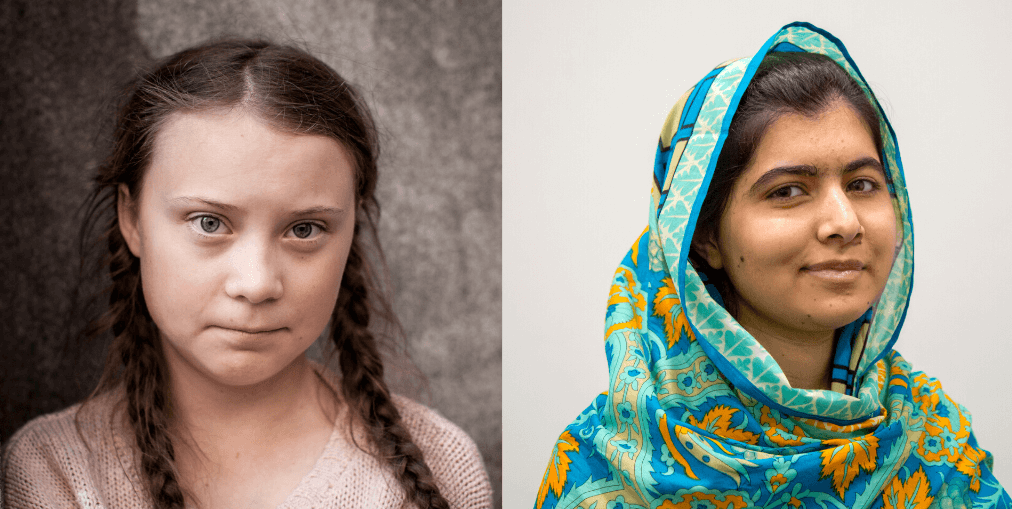
Malala Yousafzai and Greta Thunberg have made the world stand up and take notice of the causes they champion as teenagers. And as a result of speaking up, they’ve been shot in the head or publicly condemned by the President of the United States. But that hasn’t stopped them. 

Founder of the Op Ed Project, Katie Orenstein, also acknowledges that speaking up has consequences. But she points out that the alternative is to be inconsequential. Failing to capitalize on the potential we have to make a difference is likely to keep us on the wrong end of the consequential-inconsequential continuum. 

Last fall, I asked Barbara Grantham, then President of the Vancouver Hospital Foundation and now incoming CEO of Care Canada and a member of Informed Opinions’ advisory committee member, for fundraising advice. Among her many insights was this:

“Philanthropy is an opportunity for people to be their best selves.”

Even though my own giving capacity is limited, I understand that. When I donate to a food bank or woman’s shelter, I feel an expanded sense of my own humanity. And now I’m working to embrace the capacity Informed Opinions has to offer others a similar experience.

We’re collaborating with a wonderful team of women at capitalW, an initiative launched last year by Kathryn Babcock. When I first met Kathryn to explore whether or not we might work together to raise funds for Informed Opinions, almost the first sentence out of her mouth was: 

“I’m fascinated by money.”

I was genuinely shocked by this admission. I’ve been an advocate for 30 years, saw her as a sister in the trenches, and was still deep into my denial of the centrality of resources to make change happen. I’d spent years taking pride in my relentless focus on the work, not the infrastructure; I regularly told others I wasn’t looking to build an empire, I just wanted to make change. And that meant, in my naive and unquestioning mind, not thinking about money. So to hear a fierce feminist flat-out confess to being preoccupied by it was startling.

But Kathryn’s sophisticated analysis of the flow of money in a capitalistic society and vision of how we should be leveraging the untapped potential of women’s consumer spending for equality challenged me to think differently about my own relationship with money. Within moments of meeting her, I found myself saying, “What can I do to help you?”

So six months later, Informed Opinions has embarked on a concerted campaign to scale up the critically important and potentially far-reaching work we’re doing. I’m still often deeply uncomfortable speaking the words, “Would you consider making a contribution…” But in doing so, I feel a new connection to the women who email us every week or so to say something like:

“A journalist called wanting me to comment on national TV and I was going to say ‘no, I’m not the best person’, but I heard your voice in my head and so I said yes.  I did the interview — without throwing up! — and I’ve had great feedback. Thank you so much!”

If you’re already donating to Informed Opinions, I thank you from the bottom of my heart. If you’re not, but want to know more about the impact we’ve had, what we’re aiming to do next, and how you or your organization or network can help, click here.

Mama Bear Instincts in Action

In honour of Mother’s Day, I’m sharing a tribute to my own, which was originally published as the postscript/dedication to my most recent book, OMG! What if I really AM the best person?

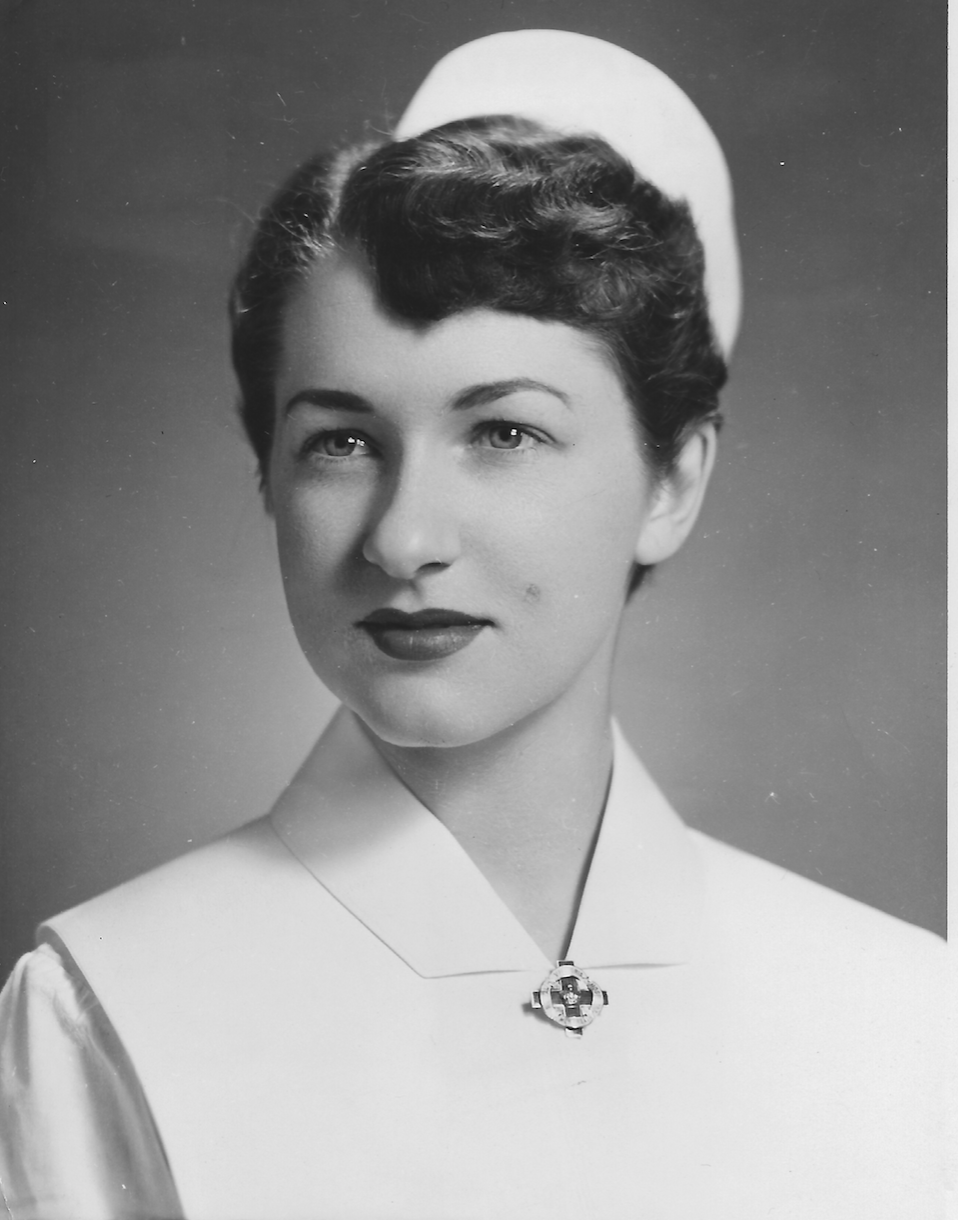
My mother was extremely proud of her nurses training and the use she put it to. But in 1959, as she lay on a gurney in the emergency ward of a Montreal hospital, listening to her own blood dripping onto the floor, it wasn’t helping her.

Beside her, my father was insisting she’d be fine. He dismissed her deathbed advice that he should remarry.

This made her furious. She’d heard enough of the terse medical conversation around her to understand what he had missed. She knew how serious her sudden blood condition was; it had killed her unborn child, just a month short of his birth, and she herself wasn’t likely to survive.

In fact, she had the kind of near-death experience recounted by others. She saw white light at the end of a tunnel, felt overcome by a compelling sense of peace. But because she was already mother to three daughters under the age of four, she fought her way back from the tempting light, summoned up all of her strength, and hissed at my poor father:

“You’re not listening to me. My girls need a mother. You need to marry again!

Luckily for me, her prognosis was wrong. She survived. (Possibly motivated by the fear that my father wouldn’t find a suitable replacement.) And five decades on, she may be legally blind, partly deaf, and living a very confined life, but in her 85th year, her nursing days long behind her, she correctly diagnosed my father’s appendicitis, and successfully badgered him into going to the hospital. (Which, let’s be clear, undoubtedly saved HIS life.)

This story offers a glimpse into the measure of awe and respect I feel, not just for my mother, but for all women who summon their strength for the welfare of others, who channel the kind of ferocious protective instinct that so often surfaces in motherhood, but is less dependent on hormones than it is on empathy.

I believe the world would be a dramatically better place if such voices exerted more influence. On everything.

If you share this perspective, please consider making a tax-deductible donation to Informed Opinions’ work. Although we deliver programming on a sliding scale fee-for-service basis, the database we’re building to make it easy for journalists to find expert women generates no revenue. 

How do you respond to charges of being too aggressive or sensitive?

Let’s say you’re an intelligent, confident and assertive woman who doesn’t shy away from expressing your opinion: chances are that at one time or another, a colleague may have decided you were “too aggressive.”

Or maybe, by politely objecting to sexist behaviour in your workplace – the kind that expects the women present to  serve the coffee, tolerate derogatory comments, or delight in remarks about their appearance – you’ve been accused of being “over-sensitive”.

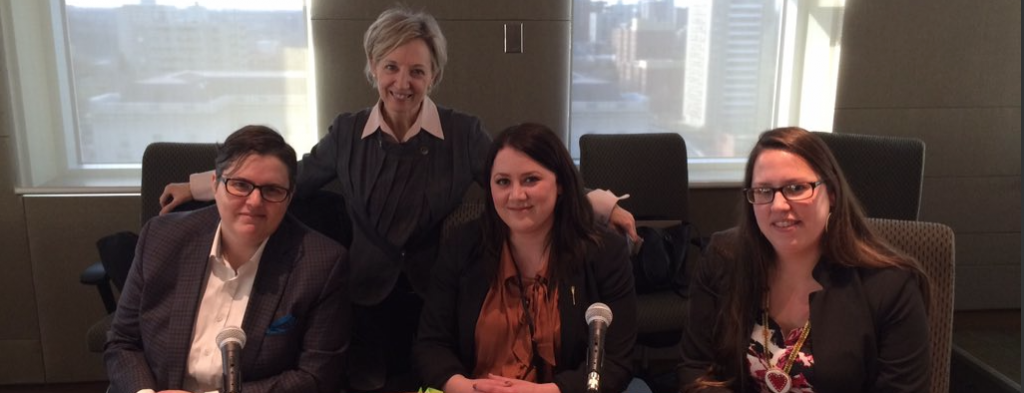
Last week at an Unbitten Tongues* forum with three fearless panelists and about 65 engaged civil servants in Alberta, both of these examples came up.

How, really, women asked, does one overcome the momentary disbelief or flash of irritation to respond to such comments effectively?

Dana DiTomaso, a digital marketing expert, CBC technology columnist and partner at Kick Point, observed that ever since she started dressing in men’s clothing, she’s no longer on the receiving end of such patronizing remarks.

But for those not willing to sacrifice their style preferences in order to be treated with respect, she offered the following comeback strategy:

Rather than try to respond to a comment or accusation that puts you on the defensive, she suggested, try shifting the onus onto the accuser by asking:

“How so?”

I think the strategy is inspired.

Because whether or not people offering such criticism are consciously trying to shut you down, by expecting them to explain or defend their comments, you’re both implicitly rejecting the premise of the dismissal, and requiring your accuser to articulate the value judgments that informed the comments. Their efforts to do so are likely to reveal more about their attitudes and assumptions than about your behaviour or emotional state.

The two other Edmonton panelists, recruited by the government of Alberta’s Ministry of the Status of Women, were equally thoughtful. Recently elected MLA Deborah Drever has been volunteering in her community since the age of eight, and is completing a degree in sociology at Mount Royal University. And Miranda Jimmy is a member of Thunderchild First Nation who sits on the Edmonton Public Library board and co-founded RISE – Reconciliation in Solidarity Edmonton – to support reconciliation in words and actions.

The participation of the three women in the Unbitten Tongues forum gave those present an opportunity to hear from, ask questions of and be inspired by role models who are speaking up in pursuit of making change in business, in government and in the non-profit sector.

For so many women who are working in arenas that are led and/or dominated by male colleagues, the opportunity to engage in frank conversations in a safe, women-only space is revelatory and invigorating.

That’s why, over the next year, in conjunction with the launch of my new book, OMG! What if I really AM the best person? I’ll be looking to convene similar panels in cities across Canada.

If you’re interested in engaging, motivating and supporting women in your network or community to speak up for change, please let us know. We would love to collaborate with you.

*Unbitten Tongues – In recognition of the difference women can make when they speak up — despite the many internal and external barriers to doing so — Informed Opinions offers opening remarks and facilitates panel discussions aimed at encouraging more women to share their knowledge and speak their truth.