
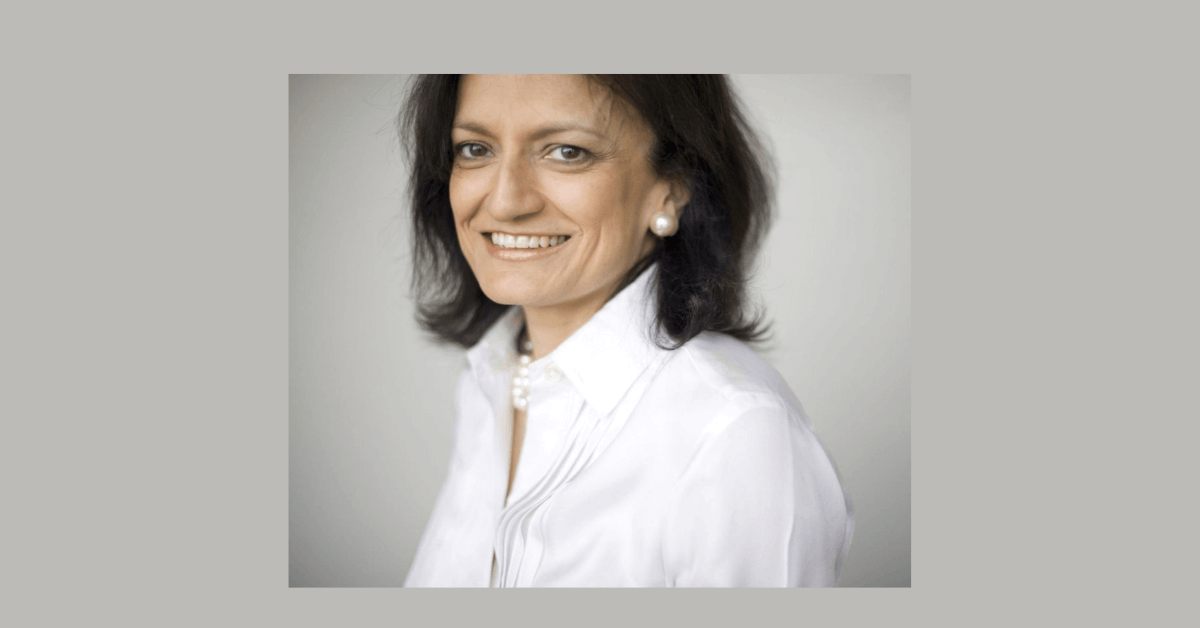
Blocking Online Abuse: Q&A with Toronto Star columnist Heather Mallick

In the context of Informed Opinions’ work to combat the #ToxicHush of online hate, we’re deeply conscious of how much abuse many outspoken women and gender-diverse journalists, bloggers and influencers receive. Noting a recent tweet by longtime feminist columnist, Heather Mallick about blocking words on Twitter, we reached out to learn more…

Do you remember the circumstances that led to you discovering the feature on Twitter that allows you to block words, not just users?

I started on Twitter in 2011, I think. Before that I’d get handwritten hate. I started using the filters when swarming began. (editor’s note: swarming is when a bunch of people target someone’s Twitter account all at once to overwhelm them with malicious content). It was just after Jon Ronson’s book, So You’ve Been Publicly Shamed. It occurred to me that tweeters could block the words they were being targeted for and never hear about it again.

To implement the filter, go to the “More” button at the bottom left hand side of your profile, then click on Settings and Privacy, then Privacy and Safety, then Mute and Block.

Can you share some of the words you block?

I block the c-word, and malice, plus racist stuff because I am biracial. Any words that are likely to be used by hateful people are blocked. 

Interestingly, people are calling me Hitler now because of a recent column on anti-vaxxers, but I don’t block “Hitler” because I’m interested in the man and don’t want to miss fascinating tweets about his history.

My list of blocked accounts is so long I don’t even think I would have the time to read it.

The list of Mute Notifications from People is the most helpful. You can officially mute people: ones you don’t follow, or who don’t follow you, who have a default profile photo, who haven’t confirmed their email, and who haven’t confirmed their phone number.

This means you can mute people who are concealing their identity, which is a danger sign right there.

Interestingly, if you get swarmed, Twitter will warn you and ask if you want to take precautions. Then the swarm vanishes.

How has being able to block specific words changed your experience of Twitter?

It’s so much nicer. It’s safer. I don’t live in Anxiety World. I feel I have control over what I see. Recently a sex killer (he tortured, raped and murdered an Indigenous woman many years ago) began emailing me and the IT people at the Star blocked him permanently. I also blocked him on Twitter.

If you look at who a dangerous person follows and who is following them, block them too. And never respond.

The greatest danger comes from obsessive men. I have had a man email me for decades, following me from job to job, sending me hate. One day I will ask a Star lawyer to call him and tell him to stop. But in the meantime, I have blocked him. He can’t reach me now.

As an unapologetically feminist columnist who frequently advocates for people and issues that make you a target, what other strategies do you recommend to those dealing with the backlash that results?

If you anger men, every aspect of your appearance will be judged. And yet you look wonderful, you truly do! Try to brush this aside because it is a hallmark of the backlash against feminism and will not end in our lifetime. Here’s a tip: look up your commenters online. You will laugh.

If you are being swarmed on social media, I believe you have to have defences already prepared. Try to have a life outside work. Have a means of distraction: friends or family, habits or interests.

You should not be alone because you will ruminate and that’s when the hurt becomes internal.

Find a therapist if you can. Try asking friends if they have a good one. That’s definitely helpful. Find a good female doctor. Medical science is your friend. Medication is a fine thing.

My greatest asset: a loving family. A Scottish mother who raised me to have no self-regard. “We are not put on this earth for pleasure,” she said. I was raised on boiled foods. Food is fuel; it’s not there to be enjoyed. Same with work: you do it for money. So I’m not easily hurt, really.

So, my advice is to go back in time and have a Scottish mother. Do that. You’ll expect the worst and you won’t be disappointed. None of this American wellness nonsense. Toughen up. Get a grip. (And yet I am not tough. I have little grip. But I’m a happy person, more or less.) Young women have much to fear and so much that is wonderful! I love them and admire them.

Which topics have you written about that received the most hate? 

I have a list of bandwagon topics I won’t write about, not any more, because they bring out noxious people.

  1. Attacking Sarah Palin at the Republican convention brought out the worst attacks in my entire life. Was that 2008? The American decline since then has been precipitous. Two weeks later, everyone realized that Palin was not up to the job, and dangerous to boot, but no one apologized.
  2. Abortion rights is consistently bad. Prepare yourself.
  3. #MeToo was horrific. I remembered things I had suppressed and it’s a shock to be assaulted for writing about that openly.

Notice that all these are women-related topics.

Has it gotten worse in recent years, and if so, to what do you attribute this? 

Yes, it’s worse because Americans are worse and their toxic hatred has floated north. It’s social media as invented by Americans and used planet-wide. There are actually very few appalling people, but when we give them oxygen, they grow.

NEVER UNDERESTIMATE HOW MUCH YOU ARE HATED. I always tell women this. It continues to be true and may become even more true. Nevertheless, we are half of humanity and we must work with good women and good men to make life better for all women.

We need all the strategies we can muster – personal, political, regulatory – to make it less tormenting for women to use their fine voices.

Heather Mallick is a columnist who writes about feminism, news and politics for the Toronto Star.@HeatherMallick
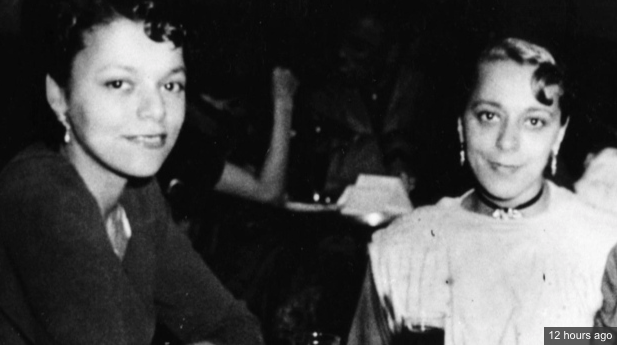
Why we’re celebrating the addition of Viola Desmond to the $10 bill

Viola Desmond (right) pictured with her sister, Wanda Robson who helped keep her story alive.

Is putting Viola Desmond on the Canadian $10 bill crass symbolism or a significant step forward?

Just ask Adrienne Clarkson. When she served as Governor General, Chinese Canadian girls across the country suddenly experienced a future of expanded possibilities. A refugee who looked like them serving as the head of state suggested there might be a lot more open doors than previous optics implied.

Symbols matter. A country’s institutions — its parliaments and ministers, its anthem and currency – send powerful messages about what and who is valued and important.

Photographs of all-white, all-male, able-bodied political leaders used to paint a picture of power that probably didn’t feel excusive to those who felt reflected by it.

But for others, merely witnessing a swearing-in ceremony that confers authority on men wearing turbans or traveling in wheelchairs, and women of Asian or indigenous descent, feels positively transformational.

The stories we tell about ourselves shape who we are and what we believe in profound ways. When history books and kids’ cartoons alike focus attention primarily on the perspectives of male players, the erasure of women’s experience is subtle but devastating.

Growing up on the west coast, I was in my 40s before I’d ever heard of Viola Desmond and the quiet courage that saw her fight for basic human rights – and lose on appeal to the Nova Scotia Supreme Court.

But that wasn’t merely a matter of geography, because my tax-payer funded education also failed to teach me about the shameful episode of the Komagata Maru, when Canada denied entry to 376 British subjects from Punjab stuck on a ship in Vancouver’s harbour in 1914.

As a result, like many white citizens, I grew up naively believing racism was not an issue in my proudly multicultural country. My ignorance has been challenged often since: Learning in the 1990s about the disproportionate rates at which aboriginal women went missing or were murdered in BC… Reading about the dramatically different sentencing patterns given to white and black defendants in Toronto…

And just this week, a brown-skinned colleague in Toronto spoke about being mistaken for a member of the cleaning staff when she sat behind her new desk in the Vice Principal’s office for the first time. She told me that this and other common experiences mean that she never wears jeans on casual Friday, and she consciously adopts a smile to ensure her resting face doesn’t inspire people she doesn’t know to label her “aggressive” or “angry”.

Canadians who belong to a racial minority experienced a daily reality qualitatively different from mine even before the now US President-elect made denigrating women and insulting Hispanics prominent features of his campaign. But since the election, the increase in reported incidents of racism on this side of the border should give us all pause.

Putting Viola Desmond on our currency may seem like a small and insignificant act, not remotely up to the task of reversing centuries of discrimination. But it still sends a critically important message about who belongs in this country, and who is worth celebrating.

Viola Desmond is a role model for our time. Let’s hope her face on the $10 bill, her story in our schools, and her example in our consciousness inspires countless future acts of speaking up for human rights and social justice.

This commentary was originally published in the Ottawa Citizen.

WTF???

The confession made by the Associate Dean of Undergraduate Studies doubled as both a great tip and the best laugh of the day.

Last week during one of three Informed Opinions workshops I delivered in Winnipeg (thank you, Jane Ursel, director of RESOLVE and a professor at the University of Manitoba), a discussion broke out among the assembled researchers about the kind of misogynistic comments and hate mail often triggered by women speaking up — especially if their topics are remotely contentious (sexism, racism, homophobia — really, human rights of any kind).

Lori Wilkinson, who frequently comments on immigration issues, acknowledged that she often receives vicious feedback to her public advocacy efforts, and regularly copies the unsolicited advice and threatening emails into a document on her computer labelled “WTF”.

It took a few seconds for the significance of this acronym to sink in (some of us had to channel our inner teenager, and imagine ourselves texting in response to an offensive or confusing event).

But everybody responded to both the irreverence and resilience that the acronym and Lori’s practice implied.

And there’s something about being reminded of the fact that many women are targeted by hate mail, and of considering the censorious consequences when such intimidation strategies are effective. Getting to speak about it in a room full of others helped to counter the degree to which it feels personal in the moment when it lands in your in-box, or appears online in reaction to your byline and considered commentary.

I was equally inspired by the participants in the other two Winnipeg workshops, one of which included 16 women working in the NGO sector, advocating for marginalized populations — from immigrants and former inmates to abused women and Aboriginal people. Appreciating how much they do, with so little in the way of resources or support, reminded me of the fury I felt recently reading a newspaper story about the Conservative government’s new funding policies for CIDA.

In justifying the precedence now given to partnering with the business (as opposed to non-profit) sector, Foreign Affairs Minister, Julian Fantino made a throw-away comment about the superior efficiency of private companies. Having worked in both, I know he couldn’t be more mistaken.

In my experience, charitable organizations forced to survive on very little become incredibly creative at doing more with less — or they go under. They partner wherever possible, are relentlessly focused on outcomes, and trimmed whatever “fat” they might have had decades ago when governments first began to cut funding for the sector.

And for the record, when they absolutely must travel, they fly economy, stay in modest accommodations, and eat on the cheap (because to do otherwise cuts into the resources they have to deliver their programs and services). If only the same could be said for government ministers and the business executives whose companies are now benefiting from CIDA funding.