Online hate targeting politicians threatens democracy

If you’re a woman in Canada who pays any attention to politics, you already know the basic arc and many of the low points of the story below. In fact, you’re likely to have had a visceral experience of the events, even if you only ever saw them reported on the news or discussed on social media. And merely bearing witness has probably negatively influenced any inclination you might have had to run for office yourself.

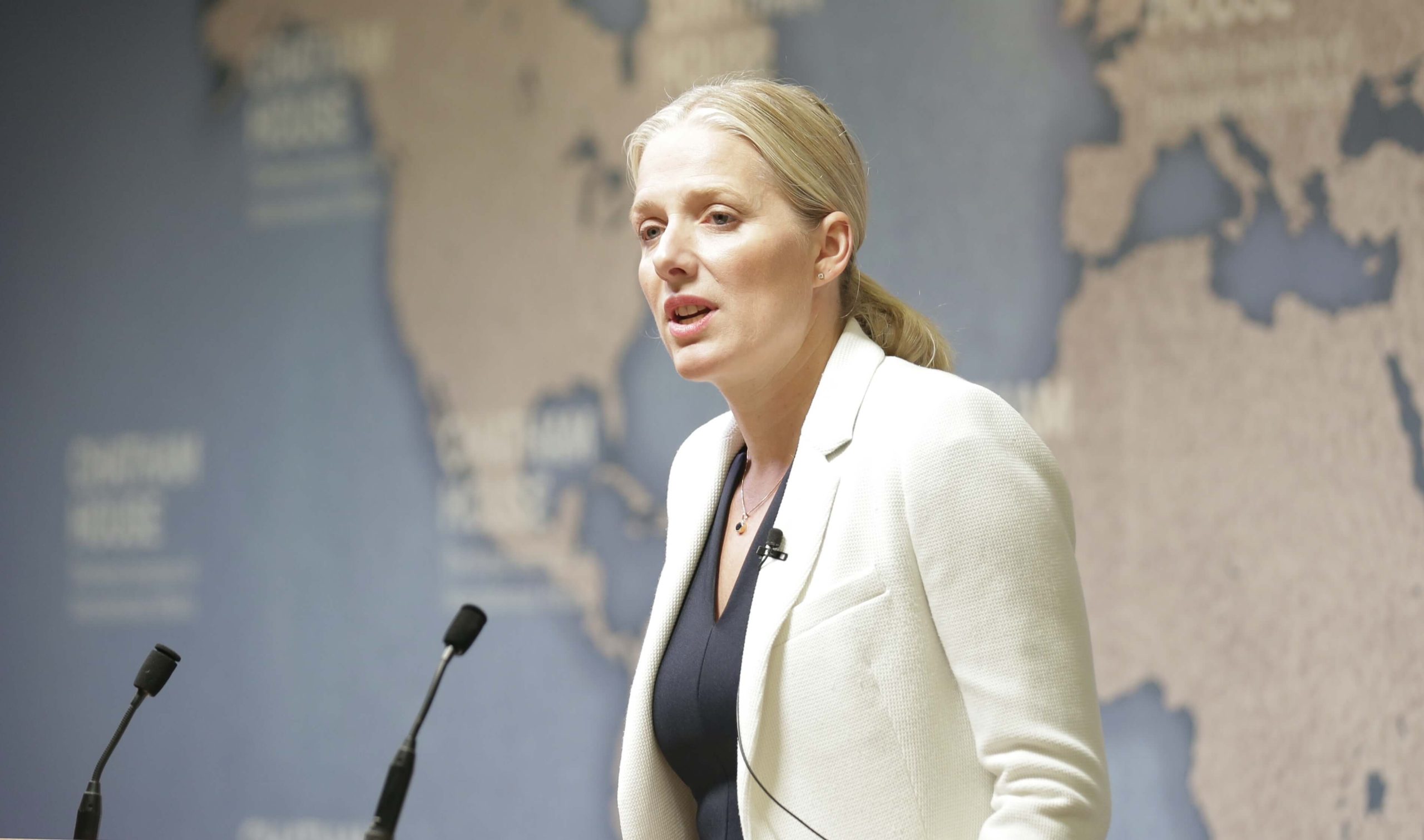
Catherine McKenna may be the canary in the coal mine of efforts to advance women’s leadership in Canadian public life – and the real and present threat that online hate poses to our democracy.

McKenna became the poster politician for online abuse during her tenure as federal Minister of the Environment – in part because the attacks targeting her online emboldened people to deliver their harassment and hate in person, too.

As the politician responsible for the government’s most contentious file, and as a woman, who also happened to be blonde, relatively young, conventionally attractive AND unapologetic about using her voice, she became a magnet for haters. They attacked her for policy and appearance issues alike, bent on discrediting her and undermining her ability to make the kind of changes that scientists have long been clear are necessary to protect the future of the planet.

In December, McKenna spoke to Taylor Owen, host of the Big Tech podcast produced out of McGill University’s Centre for International Governance Innovation.

She revisited the origins of the despicable “Climate Barbie” label (Rebel Media initially coined the phrase but she refrained from responding until a former Conservative cabinet minister used the moniker in Parliament).

“You take a lot of abuse,” she confessed, “but I was done.”

That only escalated the abuse: in addition to the online trolling, people sent her Barbie dolls with hate messages attached and created videos showing dolls being harmed.

After McKenna was elected for the second time in 2019, her campaign office was sprayed withmisogynistic graffiti in red paint across an image of her face.

Dealing with the daily onslaught of hate was very hard on her staff, and other women regularly confessed to her they would never consider running for office after witnessing the viciousness of the harassment directed at her.  

Moreover, anyone who tried to engage on social media to defend or celebrate her would themselves, become targeted by trolls.

As a result of this – and the “zero action” taken by the social media platforms which were made aware of the online hate they were facilitating – McKenna is now a big proponent of regulation.

Both she and Owen spoke about the now widespread concern Canadians have about the issue, and the license this gives politicians to enact legislation against online abuse.

Noted Owen, “We have lots of conversations about cancel culture, but the weaponizing of speech by these technologies is a certain kind of censorship; we’re forcing the people most affected by this – women, people of colour – out of our public sphere in really meaningful ways. Is that the cost we now have to bear?”

McKenna is vehement in her condemnation of the extent to which online hate is silencing the diverse voices we need to bring into politics and public discourse. She believes that government action, transparent algorithms and the use of human rights law are all needed to address the issue. She cited the many other countries already introducing legislation and noted that some of the social media companies themselves want to be relieved of the decision-making involved.

“We’re in a different place,” she observed, compared to 2015 when she was first elected. At that time, politicians were told “you can’t block anyone on social media, because you’re a public servant and need to be accessible.”

Now, she says, “Canadians expect action and they wanted it yesterday.”

Shari Graydon is the Catalyst of Informed Opinions, a non-profit amplifying the voices of women and gender-diverse people and combatting the #ToxicHush of online hate that is silencing voices that are already discouragingly under-represented.Informed Opinions’ campaign against #ToxicHush is funding the development of a research app that will gather evidence making clear how pervasive the problem is, to help equip policy-makers and governments to deliver on that action.
Let’s make this the last election in which our voices, realities, leadership capacities are absent, marginalized

The following op ed first appeared on The Toronto Star‘s website (17 September 2021) and in the print version (20 September 2021). The argument I make below is one we’re going to repeat, in collaboration with researchers and advocates across the country, many times in the coming year as part of our new initiative, Making Gender Parity in Politics Inevitable. If you’re interested in learning more about the initiative, please contact sidney@informedopinions.org

Women candidates and their issues not represented, yet again, during the election

For a few moments last year, when COVID-19’s disproportionate impact on women, immigrants and other historically excluded communities became inescapable, the darkness cracked open and some light got in.

Political leaders across the spectrum mouthed encouraging platitudes, the intrepid leaders at Canada’s YWCA released a feminist recovery plan, and women everywhere, exhausted by the homeschooling-full-time-work Watusi, allowed themselves an instant of optimism. They entertained fantasies in which women’s priorities would drive “building back better” priorities.

(If only they’d been reading the New York Times, they’d have known how futile this was. A header in the paper underlined the ongoing disconnect, declaring, “Nearly half of men say they do most home schooling; 3 per cent of women agree.”)

Earlier this month, Equal Voice revealed that this election features a record number of women and gender-diverse candidates. But hold the champagne: the one-point increase over 2019 obscures the fact that just because 43 per cent of candidates are or identify as women, doesn’t mean the House of Commons will reflect these numbers when the voting is over.

Evidence for this is that women currently make up only 29 per cent of sitting MPs, a 13-point gap from their candidate numbers. Not because voters are reluctant to support them, as research conducted by CBC has made clear; the margins of their wins are similar to men. No, their electoral success rate is driven by the fact that across the board, their parties give them less funding and less access to winnable ridings than their male counterparts.

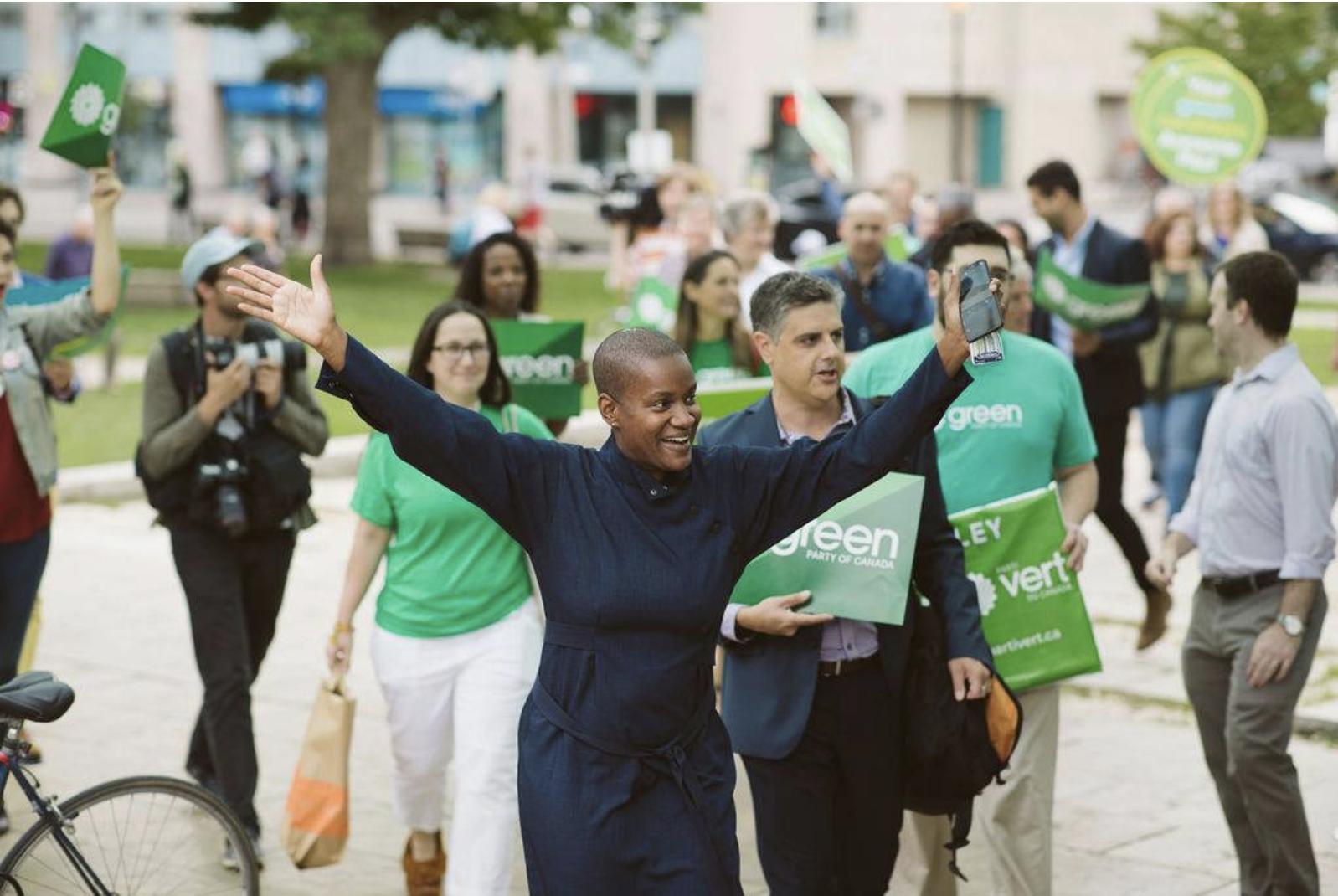
That’s why many Canadian women cheered last week when Green leader Annamie Paul made a point of flagging not only the absence of sisters on the debate platform, but also a few of the policy consequences of our collective absence from the halls of power. She cited sexual harassment in the military and the absence of affordable child-care, but she could have added a whack of others.

Historically, women have tended to place greater priority than men on combating climate change and food insecurity, on investing in diplomacy versus military action, on promoting education and public health.

Earlier this month, 50 prominent women leaders from politics and business, academia, the arts and the non-profit sector, signed an open letter to politicians and the Canadian public reminding everyone how critically dependent our economy is on working mothers.

“Canada won’t return to pre-COVID prosperity levels if moms can’t go to work,” they wrote. “And moms can’t go to work without better child care.”

Will their “don’t mess with us” message make a difference? Although the letter didn’t generate much news attention, a recent analysis by polling firm Environics finds that child care is, in fact, a key issue in a large number of close races.

Although no demographic group votes as a monolith, a review of voter inclinations conducted last month shows a significant gender divide. Support for the Liberals was greater among women and the Conservatives enjoyed a significant lead among men.

What’s also clear is that more women than men have voted in every one of the last four federal elections. Not seeing themselves and their life-informed perspectives represented by political leadership has perhaps inspired, instead of dissuaded, them from casting ballots.

Whatever the outcome of Monday’s vote, Canadian women deserve better, and our persistent underrepresentation continues to undermine Canada’s claims to democracy.

We need to make this the last election in which our voices, our realities, our leadership capacities are absent or marginalized. The fastest and easiest way to do that is to insist that political parties themselves commit to equality and nominate as many women and gender diverse candidates as men, and give them access to at least half of their stronghold ridings.

Monthly gender prominence by topic of sources in news stories from October 2018 through October 2021. (Courtesy: Gender Gap Tracker research dashboard)

It’s not radical to expect political parties to field as many women candidates as men

(Originally published in The Hill Times 15 February 2021)

When Justin Trudeau shuffled his cabinet in January, he retained the gender balance that earned him headlines back in 2015. No one commented, because six years on, it’s become the default for the federal Liberals. That’s good news for the roughly 50 percent of the population who identify as women. 

But it’s not remotely enough — and the disproportionate impacts of COVID19 on the people whose voices are least often heard in parliament and the corridors of power have made it clearer than ever why. Women — particularly Black, Indigenous and immigrant women, and those living in poverty, or with a disability or an abusive partner — have been especially hard hit.

Even when we’re not battling a deadly global pandemic, representation is fundamental to democracy. That’s why for decades, prime ministers have appointed cabinets that respected the geographic diversity of this vast country. Ministers are carefully chosen to ensure that concerns from Western, central and Atlantic Canada are reflected around the table. So it’s appalling that it took almost an entire century after the election of the first woman MP in 1921 for gender parity to make it onto the agenda. 

Nor is such attentiveness widespread. With the exception of BC, where women hold 46% of cabinet portfolios, most of the premiers have allocated only about a third of ministerial positions to women. And it’s difficult to salute Premier Legault in Quebec for achieving 38% when Jean Charest appointed a gender-balanced cabinet in the province in 2007, before Justin Trudeau’s political career had even begun. 

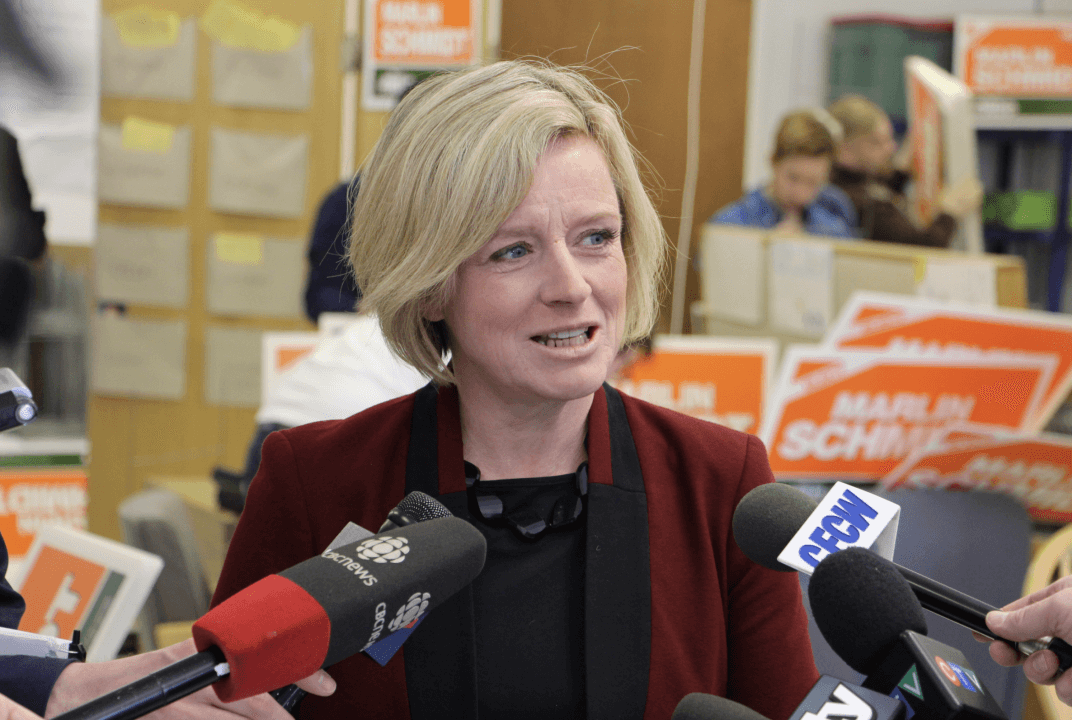
The real trailblazer, however, is Alberta’s NDP leader and former premier, Rachel Notley. She extended the parity principle in a profoundly meaningful way. Speaking with Kate Graham on the podcast, No Second Chances, Notley related the conversation she had had with her staff when she became leader of her party in 2014. 

“Don’t even think about bringing me a roster of candidates that doesn’t reflect the diversity of the population,” she told them. So they did. Despite Alberta’s long history of convening among the most male-dominated legislatures in the country, 50 percent of the NDP’s nominated candidates were women, and when the party formed government, both its cabinet and its entire caucus were virtually gender balanced.

This is what leadership looks like. And in the face of entrenched barriers and incremental change, clearly leadership is what it takes. 

The early promise of this significant shift was chronicled in 2016 by journalists Sydney Sharpe and Don Braid in Notley Nation: How Alberta’s Political Upheaval Swept the Country. Citing Notley’s background as a labour lawyer and research finding that women are more inclined to collaborate than compete, they lauded her revolutionary approach to relations with the federal government. Instead of picking fights as her recent predecessors had done, she sought solutions.

Two of her cabinet members gave birth while in office, and NDP MLAs introduced a private members bill allowing women to break lease agreements if they’re in danger of violent abuse. This is now law. In response, Calgary Herald columnist Gillian Steward optimistically wrote, “No question, Alberta is setting the stage for a new normal when it comes to women in politics.”

But five years later, the province has reverted to business as usual. In the United Conservative Party, women represent just a quarter of the caucus and premier Jason Kenney has made fed-bashing a cornerstone of his approach. The UCP also appears to be going out of its way to alienate women, canceling the NDP’s popular childcare program, threatening to restrict access to abortions, and attacking female critics. 

Kenney’s record unpopularity, especially among women, is no surprise, and if an election were held in Alberta tomorrow, Rachel Notley would likely be given a second opportunity to re-establish that “new normal”.

Now that I live in the province, that gives me hope. But hope is not a strategy. And women in every region of this country deserve much better. We’re integral to the labour force and the economy, we pay taxes, and communities could not function without our unpaid work. We also teach school, deliver health care and, not incidentally, conceive, birth and raise the children our collective future depends on. 

We need an equal voice at the tables where decisions are being made. And political parties of all stripes, in all jurisdictions, need to stop pretending incremental change is defensible. The systemic barriers baked into a system designed by and for men 150 years ago is not up to the task. What’s required is the solution modeled by the Alberta NDP: recruit slates of candidates that reflect the population they seek to represent — not just in terms of gender balance, but other diversity metrics, too.

The national advocacy group, Equal Voice, has been championing the cause of gender equality in politics for more than two decades, conducting research, convening campaign schools for women and drawing attention to the problem through their inspired “Daughters of the Vote” program. 

These are laudable initiatives. But progress remains glacial, and “what gets measured gets done” has a demonstrated impact on results. More importantly — as Rachel Notley demonstrated — party leaders have the singular power to address this problem. 

Shari Graydon is the Catalyst of Informed Opinions, a non-profit working to amplify the voices of women, Two-Spirit and gender-diverse individuals and ensure they have as much influence in Canada’s public conversations as men’s.

We train women, Two-Spirit and gender-diverse individuals to speak up more often and share their insights more effectively.

We make them easier for journalists to find.

And your donation can help ensure that their perspectives exert influence in every arena that matters.

Donate button

Democracy needs women; snowplowing policy proves it

Can snowplowing be sexist?

Even if you live in Ottawa, a city that removes snow from its downtown core with military precision, you’ve probably never asked yourself that. Until I read Caroline Criado Perez’s Invisible Women – Data Bias in a World Designed for Men, it had never occurred to me to pose the question either.

But it matters that the answer is yes. And this is just one of a thousand reasons that our democracy needs to elect sufficient numbers of women to erase our chronic under-representation in the halls of power.

When you grow up in a world dominated by male decision-makers, the default assumption is that’s the way it is. And many of the stories we tell ourselves – “men are bigger risk takers”, “men have more confidence”, “it’s easier for men to raise money” – reinforce our willingness to accept that status quo.

But many other countries – some of them with much younger democracies and much less advanced economies – do better.  Despite significant gains women have made in every realm, Canada ranks a shocking 61st worldwide in terms of women’s political representation. And our failure to draw on women’s talents and insights has huge implications for every aspect of our lives.

We intuitively grasp how ridiculous it would be if parents were largely left out of policy decisions that affected families… If people living with disabilities had little to no voice when it came to making cities and technology accessible. And yet even though it’s 2019, women still occupy only 27% of the seats in our federal parliament. That’s indefensible.

Women’s voices in the news media are similarly under-represented, so over the past ten years, Informed Opinions has trained women all over the country to translate their knowledge and experience across many fields and sectors into news commentary. We motivate and support women in helping the broader public understand issues important to our lives. More than a thousand of them have done so.

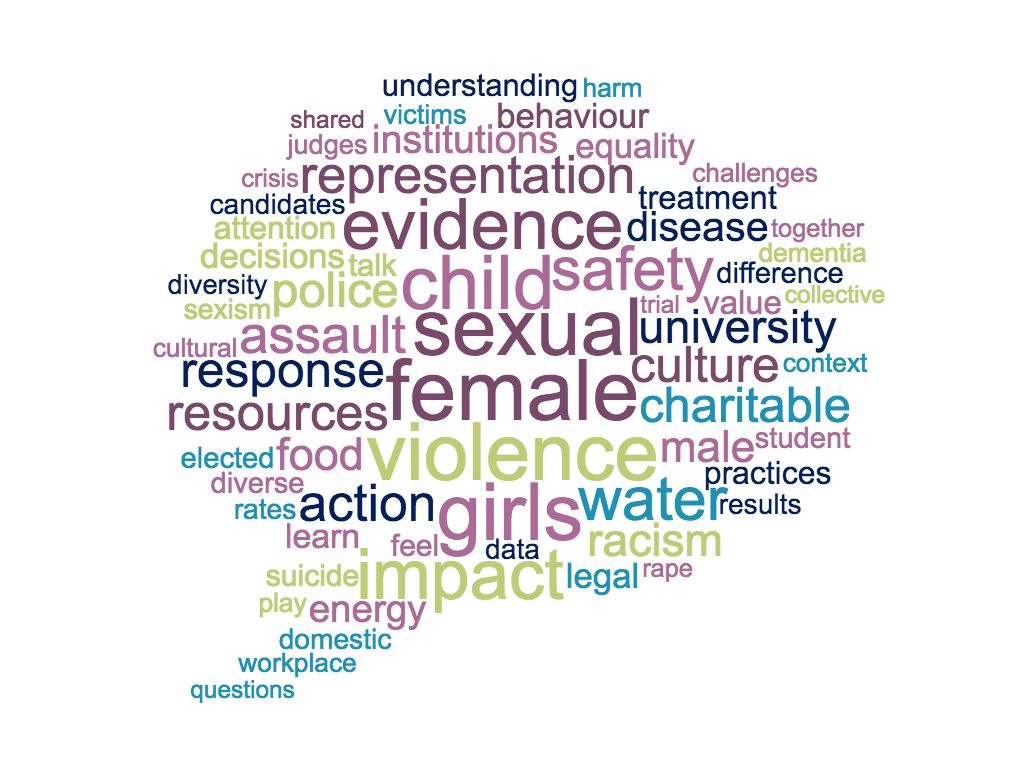
In an effort to understand what stories are missing when women’s voices are absent, we created a word cloud from 100 published op eds penned by women we’d trained. By removing words that also commonly appeared in op eds written by men, we were able to identify which topics and concerns get significantly less attention if women aren’t consulted.

Some of the issues on the list are heartbreakingly predictable. Even before the #MeToo movement, the words “sexual” and “assault”, “violence” and “female” were prominent. But many other words point to essential survival matters for all human beings, such as “food” and “water”, “evidence” and “safety”, “disease” and “treatment”.

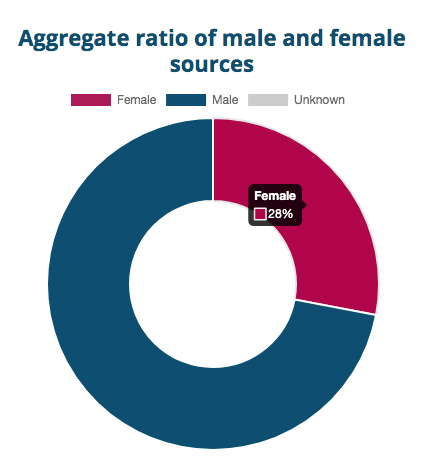
We also recently launched an online digital tool that measures in real time the percentage of women and men being quoted in influential news media. Our Gender Gap Tracker makes clear that men’s voices in public discourse dominate by more than two to one. It also tells us that 60% of the people quoted most often are politicians. That’s why it’s so important when party leaders appoint gender-balanced cabinets. Our equitable representation in one arena helps to eliminate our absence in the other.

When Rachel Notley became leader of the Alberta NDP, she told her team: “Don’t even think about bringing me a slate of candidates that’s not gender balanced.”* That needs to be every leader’s default. And between now and the next election, Informed Opinions will be collaborating with organizations working to get more women into politics to encourage all political parties to adopt this gender equity principle. Because it’s fundamental to representation.

As for the sexism of snow-plowing, here’s the deal:

The order of priority in which streets are plowed can have significant consequences for women’s lives. Not only that, but those consequences can end up costing taxpayers in health care costs.

The short story is that clearing pedestrian and public transit routes first, as opposed to main arteries, results in fewer accidents and hospital visits, most of them involving women. Because while most men travel alone, many women travel encumbered by shopping bags, strollers or older relatives. Women also generally walk further than men, in part because they tend to be poorer.

You can read Invisible Women yourself to identify the myriad other reasons. These include the fact that male-biased voice recognition software endangers women’s lives and male-biased performance evaluations stunt our careers. Elected officials aren’t the only people responsible for fixing those problems, but because their contracts are up for renewal every four years, it’s easier to ensure gender parity in their ranks.

So, this federal election, if you’re not running for office yourself, support a woman who is, whose values and priorities you share. Knock on doors for her, donate to her campaign, or invite your neighbours to meet and support her, too.

Snow removal is a mere drip off the pointy end of a massive icicle of policy gaps, and so much more needs to be done to make Canada genuinely democratic, and as fair, healthy and prosperous as it can be. 

*Rachel Notley spoke about this in Kate Graham’s fabulous “No Second Chances” podcast. Every one of the 12 episodes offers context, inspiration and enlightenment about the critical importance of women in politics. 

Parliament is still Mad Men territory for women

(The following op ed was published in the Globe and Mail‘s online edition yesterday to help launch #respectHER, a joint campaign of Equal Voice and Informed Opinions.)

At least some of the audience’s weeping was laughter-induced. But it was hard to tell how much.

When she was first elected, Vancouver Magazine called Darlene Marzari, “the first civic politician hereabouts to make a full-time career out of trying to do things right rather than just getting them done.”

At the front of the conference room, former B.C. cabinet minister, Darlene Marzari was wearing a red business dress she had regularly sported during her time in office. Astonishingly, she had climbed into the dress AFTER donning her teenage son’s hockey pads. Zipping up the garment without effort, and reinforcing her point with too many disturbing anecdotes to recount, she explained that the weight she had packed on as a politician was necessary armor that allowed her to survive the legislative chamber as a woman.

Ms. Marzari’s illuminating skit – at once wildly hilarious and deeply depressing – took place almost 20 years ago. But the hostility she endured is unpromisingly contemporary. And it’s costing us all.

In the past year alone, Conservative MP Michelle Rempel was labelled a prostitute for perching on her parliamentary desk; Liberal MP Chrystia Freeland was heckled into silence for having a “little girl” voice; and NDP MP Megan Leslie called out the appearance comments and physical touching that she and her female colleagues still frequently experience in their place of work. (Yes, it’s 2014 everywhere else, but pockets of Parliament Hill appear to be stuck back in 1963.)

To be sure, many male MPs are equally appalled by such bad behaviour, and political life has always required a thick skin. But it remains Mad Men territory for women. And at a time of increasingly complex social, economic and environmental challenges, this is bad news for democracy.

Other sectors are bending over backward to increase their appeal to the best, brightest and most diverse work force possible. Banks, law firms and universities are responding to a raft of research documenting the competitive edge accorded organizations that incorporate skilled women. They recognize the importance of creating workplace atmospheres that will attract top female talent.

But in an age of anonymous online trolls and twitter-amplified personal attacks, entering a political world that remains elbows-up and tolerant of troglodytes is becoming even less attractive to anyone – female OR male – who is more driven by a desire to do good than fight dirty.

And it’s not like the disrepute of politics isn’t deterrent enough. Indefensible patronage, unaccountable spending, inexcusable election practices – they’ve all taken a toll.

It’s time to aim higher.

That’s why Equal Voice and Informed Opinions saluted The Hill Times last week. The Ottawa weekly paper responded to calls requesting that it abandon its annual tradition of polling MPs on the “sexiest” elected officials of the year. This is a small but symbolic act, worth emulating and expanding. And its timing coincides with our joint #respecther campaign – a bid to mobilize Canadians, who overwhelmingly support gender equality and expect genuine democratic debate from their representatives. We’re encouraging all politicians, partisan staff and journalists to embrace the spirit of the newspaper’s decision and promote a culture of respect.

Dissing women for failing to conform to outmoded stereotypes of how a mother or a “lady” is expected to behave is juvenile schoolyard chatter, not political discourse. And those who engage in below-the-belt insults designed to denigrate a rival on the basis of his or her appearance or sexuality isn’t worthy of the label “public servant.”

It’s beyond time to abandon personal attacks and sexist slurs, and to focus energy instead on ideas and policies. Exit interviews conducted with retiring MPs and catalogued in the recently published book by Samara co-founders Alison Loat and Michael McMillan make clear the damage being done. The title alone – Tragedy in the Commons – speaks volumes.

Politicians and their supporters need to aim higher. And citizens? We need to reward them for doing so at the ballot box.