What do three years of data on the gender gap in news reporting tell us?

The following op ed, co-authored with Prashanth Rao and Dr. Maite Taboada, appeared on Poynter‘s website on 28 October 2021.

Looking for silver linings in the midst of a pandemic is fraught. But here’s one that journalists need to pay attention to: Since March 2020, news media have devoted a lot more time and space to covering health care, and a lot less time and space to covering hockey fights.

In the process, they’ve featured the perspectives and reflected the realities of a much wider swath of their audience. And for news organizations looking to survive, that’s a useful shift.

The gender gap in news reporting is so longstanding it should be old news. But three years of data and more than 1 million news articles from the most influential English-language news organizations in Canada have highlighted the pitfalls with hard and discouraging data.

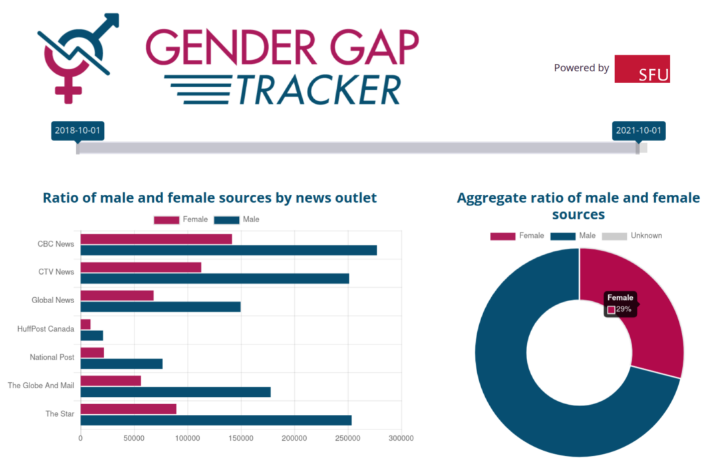
In October 2018, we launched the Gender Gap Tracker, a digital analytics research tool that measures in real time the ratio of men and women being quoted in online news. At the time, women’s voices constituted just 27% of the total number of quotes captured. (Because the tool relies on traditional associations of names with genders, it measures gender as a binary, a limitation that denies insight into the continuum of perspectives but remains currently unavoidable, given the technology.)

Over time, however, especially with the start of the COVID-19 pandemic, we saw a recognizable uptick in the proportion of women quoted. Throughout 2021, this has been a sustained trend. On occasion, women’s voices have reached 32% (International Women’s Day, for example), but even during the recent Canadian federal election, in which the major party leaders were all male, the proportion of quotes by women continued to be around 30%.
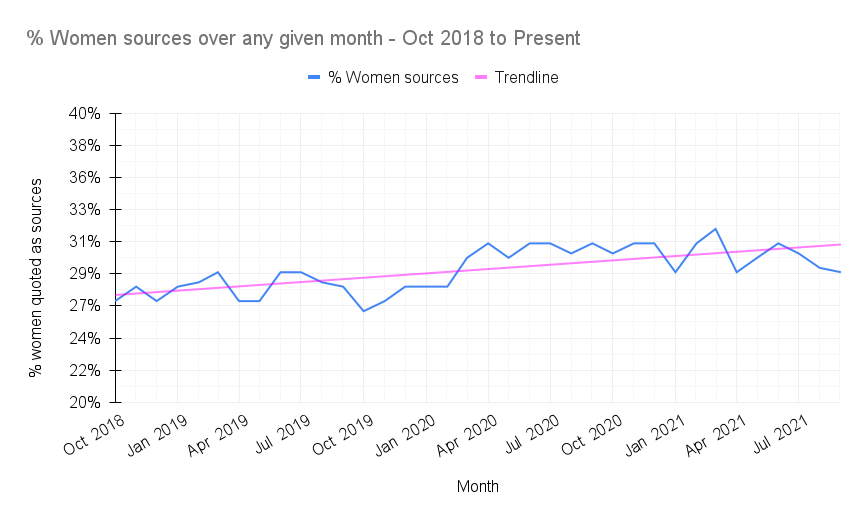
Percentage of women sources in news stories from October 2018 through October 2021. (Courtesy: Gender Gap Tracker)

Beyond this glimmer of optimism, the Gender Gap Tracker provides useful insights into key issues of relevance to news organizations.

It’s never been a winning business strategy to chronically underrepresent 50% of your potential audience. At a time of shrinking readership and divided attention, there are clear gains to be made from featuring a greater diversity of perspectives. That became even more obvious during the pandemic, given how differently it affected women.

A related problem is what constitutes a “women’s issue.” An analysis by news topic shows that women are consistently quoted more often in so-called “soft news,” on arts and entertainment, health and lifestyle issues. In contrast, men’s voices appear much more often in articles about politics, business and sports.
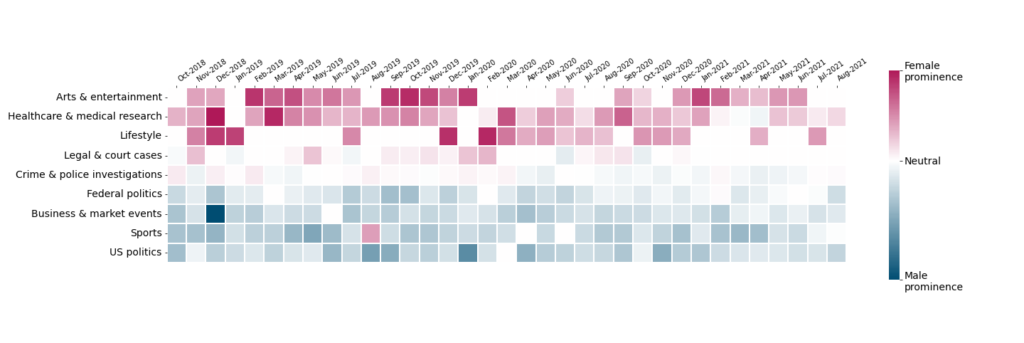
Monthly gender prominence by topic of sources in news stories from October 2018 through October 2021. (Courtesy: Gender Gap Tracker research dashboard)

This reinforces both sexist stereotypes (women are caregivers; men are leaders) as well as the notion that business is more important than health care. Indeed, the ongoing tension between prioritizing unrestricted reopening of the economy over mask protocols and vaccine passports may be in part a symptom of those entrenched practices.

As the pandemic has shown, relegating to also-ran status the arenas in which women dominate (education, childcare, mental health) can have catastrophic consequences.

Analysis of who is quoted and in what role offers additional insights. Breaking down gender by profession reveals that 60% of the most quoted men and women are elected officials. This not only explains part of the gender gap, since men still dominate politics, but it also paints a more troubling picture about an over-reliance on official sources.

Elected officials often default to canned talking points or partisan interests. Journalists know this and actively seek to challenge the default in interviews. But an additional workaround would be to do a more rigorous job of supplementing government news releases with more alternative sources — including women and other underrepresented populations who are able to speak to the disparate experiences of citizens affected by the policy being proposed.

These insights reflect just a few of those available to extract from the data we amassed over the past three years. In that time, we’ve witnessed both the US 2020 presidential election and two federal elections in Canada. We’ve seen topics change with the seasons and major world events unfold, told through the words of those being quoted.

What has not changed substantially is the gender gap in media reporting. Beyond the obvious need for more equity, leaving that gap unaddressed is a missed opportunity for news organizations.

Prashanth Rao is an applied scientist with a passion for building AI systems with a social impact. Maite Taboada is a computational linguist researching social and traditional media. Shari Graydon is the founder and catalyst of Informed Opinions, an organization dedicated to amplifying women and gender-diverse people’s voices. 
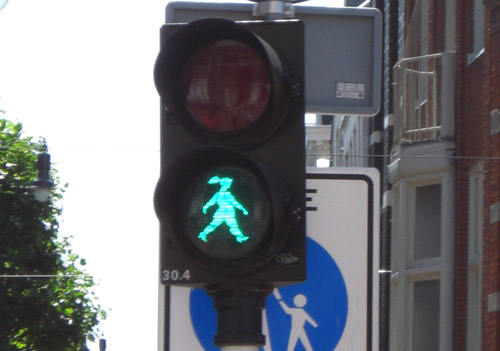
Running to catch the light — and creating the “Transformational 20s”

Is patience still a virtue? 

When teaching kids, or walking behind those forced by age or disability to slow down, absolutely. But as Australia burns, and bellicose men on either side of the world threaten war, I feel with greater urgency than ever that change can’t happen quickly enough.

My partner would tell you that patience has never been my virtue. If the “walk” sign appears when I’m half a block away from the intersection, I will break into a sprint — even if I’m carting fragile eggs and an unwieldy watermelon.

Broken eggs aside, impatience has its virtues. 

The women who fought to ensure that the rest of us get to vote, take maternity leave, and be paid commensurate with our equally qualified male colleagues, were not a patient bunch. Meaningful change of any kind requires that people who are dissatisfied enough with the status quo not put off agitating today for what they think should have been available yesterday.

Impatience gets sh*t done. It’s the very air that activists and the ambitious of all kinds breathe.   

A few years ago I came across a persuasive op ed published in The Globe and Mail about the controversy around foreign workers. The byline identified its author, Catherine Connelly, as a prof at McMaster University. I had recently delivered an op ed writing workshop on the Hamilton campus, and at first thought she must have attended. But she hadn’t. I reached out anyway to compliment her on her thoughtful media intervention. 

“Great op ed,” I wrote. 

“Great lecture,” she replied.

Although Catherine hadn’t participated in my workshop, she had attended a public talk I gave at the university on the same trip. She told me that my talk had inspired her to translate the research she was doing into a newspaper commentary. She was too impatient to wait for the next workshop, so she wrote and pitched her op ed without additional support. Its publication in The Globe then helped her secure additional research funding.

I founded Informed Opinions ten years ago, believing that the way to bridge the gender gap in Canadian public discourse was to ensure enough expert women had the tools and motivation to write commentary and say “yes” to media interviews. 

In those 10 years, we’ve delivered media engagement training and support to more than 3,000 extremely knowledgeable women from across disciplines, sectors and the country. We’ve built a database to make them easier for journalists to find. And when that didn’t move the needle as fast as we’d hoped, we built an online digital analytics accountability tool — the Gender Gap Tracker — in the hopes of incentivizing a change in behaviour. 

As a result, a significant number of the women we’ve supported have amplified their voices and raised their profiles through public discourse. Many have also increased their impact and experienced expanded professional opportunities.

But the progress overall remains incremental, and I’m more impatient than ever. Every morning when I walk up one side of the Rideau Canal and down the other, I chant the following affirmation:

“You easily attract all the funding, resources, talent and buy-in necessary to successfully bridge the gender gap in Canadian public discourse by 2025.”  

Increasing women’s share of written commentary, feature interviews and cited quotations from 28% (what it is now) to 50% in five years might sound laughably optimistic, but we believe it’s both essential and achievable. 

Corporations and governments alike have invested in all kinds of efforts aimed at advancing equality for women. Most of those efforts have been met with systemic resistance. But in the media realm, some journalists — both in Canada and elsewhere — are already achieving gender parity in the sources they quote. And the answer to who and how is simple: what gets measured gets done

And here’s why that matters beyond the media: the Gender Gap Tracker allows us to measure the gains made in public discourse in real time. And they can be leveraged to increase women’s participation, leadership opportunities and profile elsewhere. Amplifying the voices and visibility of qualified women with expertise across disciplines makes it easier for all women to see themselves as leaders, easier for political parties and conference programmers and executive recruiters to identify potential candidates, and more difficult for organizations of all kinds to claim that women capable of serving in any of those capacities don’t exist.

We’re impatient to realize the future we’ve been envisioning and working towards for ten years. And we’ve developed smart, strategic plans to get there.

In the meantime, people are musing aloud about what the next ten years should be labelled. Here at Informed Opinions, merely one week in, we’ve already decided, designating them:

The Transformational 20s.

This is not wishful thinking on our part, it’s intentional action. We live in starkly sobering times. From the growing recognition of our terrifying environmental vulnerability, to revenge-driven threats of war, to the aftermath of the #MeToo movement… We are reminded in every news cycle of the democratic necessity of including diverse women’s voices in decision-making of all kinds.

Impatience is not just desirable, it’s demanded.  That’s why we are running as fast as we can to catch the light — both actually, at the intersection, to move forward, and metaphorically, in the world, before darkness descends. 

Here’s how you can help us:

  1. Book a workshop or keynote. We’ve documented in detail how impactful the former are, but if you’re impatient, and can convene a larger group, the latter are great for the impatient. We can usually accommodate 10 or 20 in a training session, but we can motivate action in 100 or 1000 people with a keynote. 
  2. Share your insights where they can make a difference. That stuff you know that most people don’t? That has implications for the health or safety or prosperity of others? Find a way to amplify your voice and increase the audience able to make use of your knowledge. The Learning Hub section of our website has lots of free resources aimed at helping you. 
  3. Encourage journalists and news organizations near you to track the gender ratio of their sources to better reflect the realities of the 50% of the population they’re currently under-serving (and to broader their own audience!). Our website features a free, downloadable spreadsheet to make it easy for them to do so.
  4. Donate to Informed Opinions to jumpstart the Transformational 20s. Help us keep our database free to both expert women and the journalists looking to feature them.

Democracy needs women; snowplowing policy proves it

Can snowplowing be sexist?

Even if you live in Ottawa, a city that removes snow from its downtown core with military precision, you’ve probably never asked yourself that. Until I read Caroline Criado Perez’s Invisible Women – Data Bias in a World Designed for Men, it had never occurred to me to pose the question either.

But it matters that the answer is yes. And this is just one of a thousand reasons that our democracy needs to elect sufficient numbers of women to erase our chronic under-representation in the halls of power.

When you grow up in a world dominated by male decision-makers, the default assumption is that’s the way it is. And many of the stories we tell ourselves – “men are bigger risk takers”, “men have more confidence”, “it’s easier for men to raise money” – reinforce our willingness to accept that status quo.

But many other countries – some of them with much younger democracies and much less advanced economies – do better.  Despite significant gains women have made in every realm, Canada ranks a shocking 61st worldwide in terms of women’s political representation. And our failure to draw on women’s talents and insights has huge implications for every aspect of our lives.

We intuitively grasp how ridiculous it would be if parents were largely left out of policy decisions that affected families… If people living with disabilities had little to no voice when it came to making cities and technology accessible. And yet even though it’s 2019, women still occupy only 27% of the seats in our federal parliament. That’s indefensible.

Women’s voices in the news media are similarly under-represented, so over the past ten years, Informed Opinions has trained women all over the country to translate their knowledge and experience across many fields and sectors into news commentary. We motivate and support women in helping the broader public understand issues important to our lives. More than a thousand of them have done so.

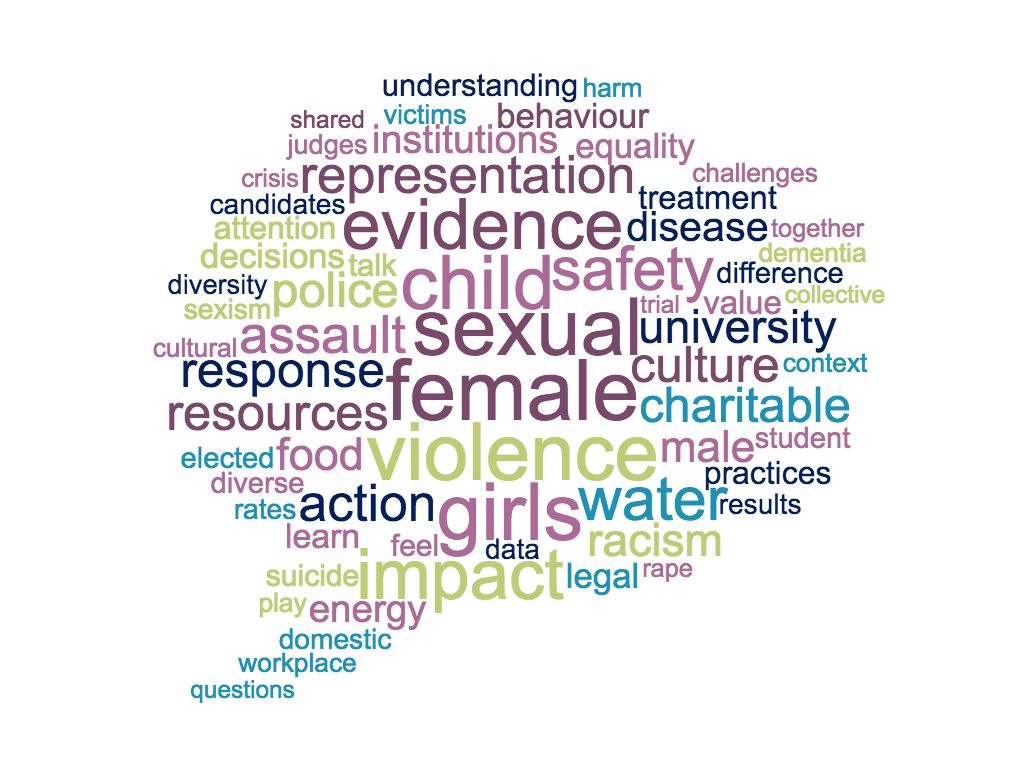
In an effort to understand what stories are missing when women’s voices are absent, we created a word cloud from 100 published op eds penned by women we’d trained. By removing words that also commonly appeared in op eds written by men, we were able to identify which topics and concerns get significantly less attention if women aren’t consulted.

Some of the issues on the list are heartbreakingly predictable. Even before the #MeToo movement, the words “sexual” and “assault”, “violence” and “female” were prominent. But many other words point to essential survival matters for all human beings, such as “food” and “water”, “evidence” and “safety”, “disease” and “treatment”.

We also recently launched an online digital tool that measures in real time the percentage of women and men being quoted in influential news media. Our Gender Gap Tracker makes clear that men’s voices in public discourse dominate by more than two to one. It also tells us that 60% of the people quoted most often are politicians. That’s why it’s so important when party leaders appoint gender-balanced cabinets. Our equitable representation in one arena helps to eliminate our absence in the other.

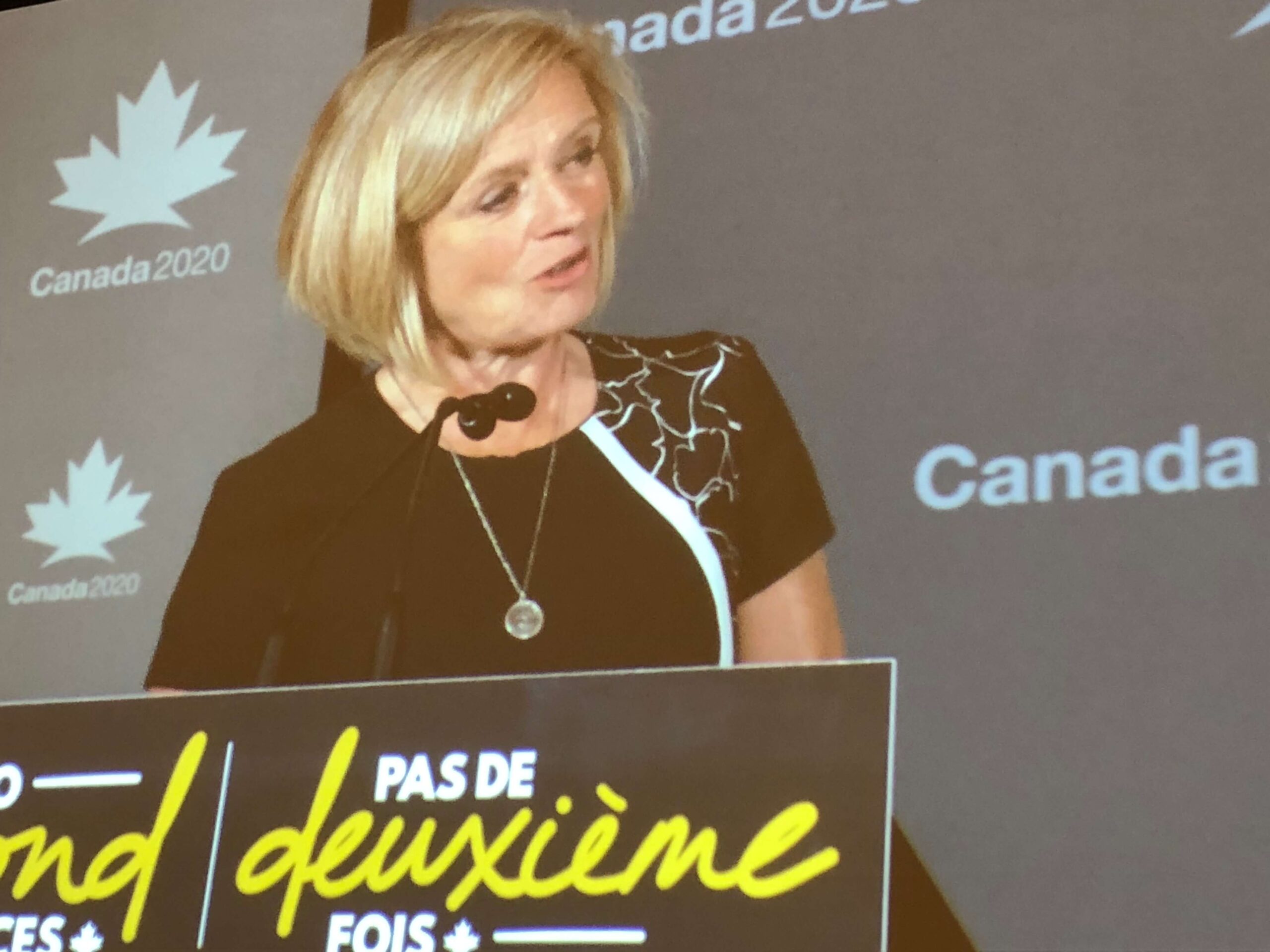
When Rachel Notley became leader of the Alberta NDP, she told her team: “Don’t even think about bringing me a slate of candidates that’s not gender balanced.”* That needs to be every leader’s default. And between now and the next election, Informed Opinions will be collaborating with organizations working to get more women into politics to encourage all political parties to adopt this gender equity principle. Because it’s fundamental to representation.

As for the sexism of snow-plowing, here’s the deal:

The order of priority in which streets are plowed can have significant consequences for women’s lives. Not only that, but those consequences can end up costing taxpayers in health care costs.

The short story is that clearing pedestrian and public transit routes first, as opposed to main arteries, results in fewer accidents and hospital visits, most of them involving women. Because while most men travel alone, many women travel encumbered by shopping bags, strollers or older relatives. Women also generally walk further than men, in part because they tend to be poorer.

You can read Invisible Women yourself to identify the myriad other reasons. These include the fact that male-biased voice recognition software endangers women’s lives and male-biased performance evaluations stunt our careers. Elected officials aren’t the only people responsible for fixing those problems, but because their contracts are up for renewal every four years, it’s easier to ensure gender parity in their ranks.

So, this federal election, if you’re not running for office yourself, support a woman who is, whose values and priorities you share. Knock on doors for her, donate to her campaign, or invite your neighbours to meet and support her, too.

Snow removal is a mere drip off the pointy end of a massive icicle of policy gaps, and so much more needs to be done to make Canada genuinely democratic, and as fair, healthy and prosperous as it can be. 

*Rachel Notley spoke about this in Kate Graham’s fabulous “No Second Chances” podcast. Every one of the 12 episodes offers context, inspiration and enlightenment about the critical importance of women in politics. 

Featuring more female sources could increase your audience engagement, research suggests

This article was originally published on Poynter

What would happen if news media struggling to survive applied the productivity mantra “What gets measured gets done” to the sources they quote?

Business research, Hollywood sales data and anecdotal evidence from the news industry itself all suggest it’s worth a try.

In many western democracies — the United States, the United Kingdom and Canada included — most major news organizations continue to feature three or four times as many men as experts or sources as they do women.

This might have been more defensible a generation ago. Male CEOs, politicians and professionals were the norm, and we weren’t so clear about the costs of failing to consider how profoundly different men’s and women’s bodies and lives are when developing drugs, policies or programs.

But reams of respected business research has since found that when organizations draw on the talents of women, they make more informed decisions, better serve their customers and are ultimately more profitable. And continuing to rely primarily on a white, male subsection of the population to offer commentary and analysis when you’re trying to engage culturally diverse audiences that are 50% female? That hasn’t made sense for decades.

Nor is it good journalism. Diverse sources are a hallmark of responsible reporting. For news to effectively fulfill its democratic obligations, it needs to reflect the diverse perspectives of the citizens it purports to serve. Doing so is likely to engage more of them.

Entertainment box office figures are instructive. TV and film executives once believed that female audiences would watch programs aimed at men, but the reverse was not true. That rationale helped to justify decades of male-centric movies.

But a 2018 study found that on average, female-led films earned higher revenues than male-led films released in the same year. In an age of on-demand programming from a multitude of providers, the tastes of teenage boys no longer rule. Audiences want good storytelling and to see their realities reflected on large and small screens alike.

Good journalists understand this and many are already attempting to capitalize on a similar dynamic in terms of how they report and who they feature. Senior staff at Bloomberg and The Atlantic have been leading this charge for years. And in 2018, the BBC explicitly committed to meeting a 50:50 challenge, ensuring the equitable representation of male and female sources by this coming April.

Anecdotally, some media are discovering that such attention pays off. The producers of La sphére, a Radio Canada program that covered technology, noticed that efforts to achieve gender parity among guests corresponded with an increase in listeners. And The Financial Times determined that reframing one of its electronic newsletters to engage female readers inspired higher “open” rates among male readers as well.

Informed Opinions, the non-profit I lead, is looking to inspire others to mimic these experiments. We recently collaborated with scientists at Simon Fraser University to adapt the incentivizing power of a fitness tracker to this challenge. Leveraging the technology behind voice-activated assistants like Siri and Alexa, we created a tool designed to motivate journalists to pay more attention to the gender ratio of their sources.

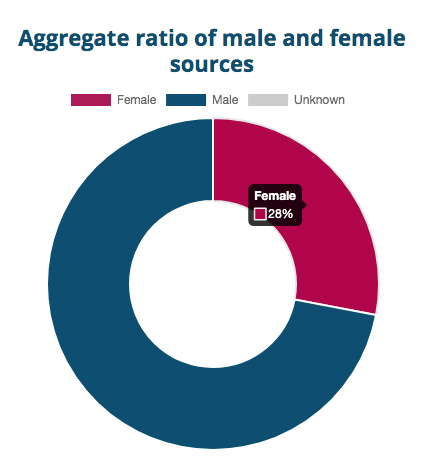
Using big data analytics, our Gender Gap Tracker monitors the ratio of male to female sources quoted in Canada’s most influential news media. Its easy-to-read graphs are updated on a daily basis and reflect both the performance of individual newsrooms, and aggregate data from them all. From October through January, women’s voices remained steady at about 25 percent.

Most journalists know that doesn’t reflect well on either their journalism, or their audience engagement prospects. Beleaguered by industry disruptions, and competitive by nature, many are eager to improve. In fact, since we launched the Tracker on Feb. 4, women’s voices have increased by 4 percent.

This improvement has been aided by a number of grassroots women’s groups that have created databases of expert women across a wide range of fields. Our collective goal is to make it easier for journalists to find female sources who are both qualified and eager to share their insights.

Anyone familiar with the incentivizing power of a fitness tracker understands that what gets measured is more likely to get done. Like the 10,000-step crowd, news media may discover that the quantification leads to life-sustaining health benefits.

Here’s what you missed…

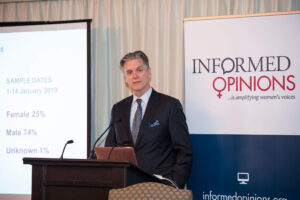
Business people, bureaucrats and board members, researchers, equality advocates and journalists — that’s who showed up on February 4th at Ottawa’s Rideau Club for the launch of the Gender Gap Tracker.

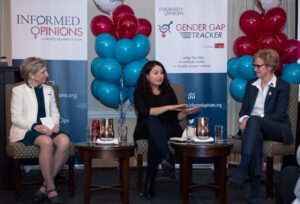
Left to right: Shari Graydon, The Honourable Maryam Monsef and Joy Johnson

 They came to celebrate the application of big data analytics to achieving gender equality in public discourse. And they stayed to watch an Informed Conversation between Minister for Women and Gender Equality, Maryam Monsef, and Joy Johnson, Vice President, Research at Simon Fraser University. The two leaders’ thoughtful exchange — which you can watch in its entirety here — included equality strategies and candid confessions about professional failures, and how they view those now.

You can read more about the Gender Gap Tracker (what it is, and why it’s necessary) here and here. But the short story is, for four months before launch, from October 1st to February 4th, women’s voices never edged above 26% of all those quoted or interviewed. Since then, we’ve seen brief spikes of 29 or 31%. Visit the site yourself, see how well the news media you rely on are doing, and then click on the media logos to let them know if you’re satisfied or disappointed.

In the meantime, here’s what a few of our board members in attendance had to say about the launch itself the following day:

Editor in Chief of the Conversation Canada, Scott White, offered a veteran journalist’s perspective on the stats

The event was superbly executed, had a strong turnout of folks committed to gender action in different domains, and featured a stellar and authentic conversation between Minister Monsef and SFU’s Joy Johnson…. It’s great to see the buzz on Twitter and the ease with which the tracker works. –Nobina Robinson

I’ve been blissed out since I got home last night.  The Gender Gap Tracker is helping us move the conversation in this country in a much-needed, positive direction! – Amanda Parriag

The event was terrific, the room was great, and you succeeded in elevating the work of Informed Opinions. It was an inspiring event. – Evelyne Guindon

The event was spectacular, it’s wonderful to see media and government engagement, and the spoken-word poetry summary at the end was brilliant! – Scott White

It took a diverse team of seriously brainy people to build the GGT

The event also gave us the opportunity to publicly recognize:

  • Kelly Nolan of Talent Strategy, who first proposed the idea of a big data analytics tool
  • John Simpson, University of Alberta physicist and digital humanities expert
  • Maite Taboada, Computational Linguistics professor at Simon Fraser University
  • Fatemah Torabi Asr, Software Engineer, Computational Linguist, Simon Fraser University
  • Mohammad Mazraeh, Big Data Engineer, Simon Fraser University
  • Alex Lopes, Big Data Analyst, Simon Fraser University
  • Simon Fraser University itself, for investing hundreds of thousands of dollars in developing the research
  • Roslyn Bern of Leacross Foundation, our most appreciated champion and supporter
  • Our valued corporate sponsors, who share our gender equality commitment:
Kelly Nolan, Joy Johnson and Maite Taboada all earned their front row seats
Informed Opinions core team and valued patron: from left: Zeba Tasci, Roslyn Bern, Shari Graydon, Samantha Luchuk
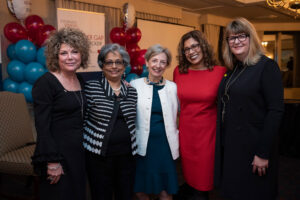
Some of Informed Opinions’ board members, from left to right: Jennifer Laidlaw, Nobina Robinson, Shari Graydon, Amanda Parriag and Evelyne Guindon

In numbers there is strength – how big data can help close the gender gap in Canadian journalism

This article was originally published in The Ottawa Citizen

We hear a lot these days about how artificial intelligence is taking away jobs and making it easy for foreign powers to hack democracy. But some scientists are hunched over their computers in an effort to harness the power of big data analytics for social good.

A new tool just launched by Informed Opinions is a case in point. We collaborated with a team of researchers at Simon Fraser University’s big data lab to develop a sophisticated digital monitoring system. It’s now measuring, in real time, the gender ratio of sources being quoted online by some of Canada’s most influential news outlets. It analyzes in microseconds what it used to take researchers hours to assess.

If only the data it reveals were more encouraging.

How grim are the statistics? Type gendergaptracker.informedopinions.org into your browser and see for yourself. You can access data as far back as October 2018, but no matter which date range you select, the aggregate percentage of women’s voices never moves above 26 per cent. For context, that’s a mere four-point increase over data we collected almost three decades ago.

And yet, in the intervening years, women have achieved significant advancement in virtually every field. They’ve become premiers and astronauts, Supreme Court justices and university presidents, corporate CEOs and award-winning scientists and entrepreneurs. And while it’s true that more men still lead governments and corporations, our research has found that even in health care disciplines, where women dominate, their voices remain under-represented.

That’s a problem. Women’s life experiences are often profoundly different from men’s. Those experiences feed different insights and sometimes priorities. So it’s not remotely defensible in a proud democracy that men’s perspectives continue to outnumber women’s by a ratio of almost three-to-one in public discourse. We can – and need to – do better.

Informed Opinions last commissioned content analysis research looking at the gender ratio of quoted and featured experts in 2015. Canada’s prime minister had just sworn in a new gender-balanced cabinet, and we were edging towards the #MeToo revelations that would remind everyone of the social consequences of failing to listen to women’s perspectives.

The aggregate ratio of experts quoted in the 2015 study was 29 per cent women to 71 per cent men. But that analysis left out both sports and entertainment coverage. It also included two broadcast talk shows: CBC Radio’s The Current, and Radio Canada’s Tout le monde en parle. Both programs exceeded 40 per cent female interviewees, raising the average stats overall.

In fact, the better performance of public broadcasters on gender parity planted the seed for the Gender Gap Tracker. Because Radio Canada and CBC are explicitly mandated to reflect the country to itself, their reporters and producers pay more attention to diversity. What gets measured does, indeed, get done. Anecdotal evidence and common sense suggest that journalists who actively track the gender of their sources achieve more equitable results. And a growing number are reporting on their performance.

The mixed gender team of scientists developing the Gender Gap Tracker includes researchers from across disciplines. They hail from Canada, Iran, Brazil and Spain and they’ve worked in the U.S., the U.K. and Switzerland. A microcosm of Canada’s diversity, they tangibly demonstrate the payoffs of collective intelligence that benefits from different perspectives.

We’ve set 2025 as the target date for achieving gender parity in Canadian news media. The Gender Gap Tracker, though, is just a tool. To make a difference, journalists need to actively seek to improve the data – and news consumers need to give them reasons to do so.

Online tool gives media outlets incentive to achieve gender parity

This article was originally published in The Toronto Star

Could the incentivizing power of a fitness tracker be adapted to help achieve gender equality in the media, enhancing Canadian democracy in the process? After a year of collaboration with a team of big data scientists, we’re about to find out.

Despite the increasing attention paid to the importance of women’s voices, in news media coverage — both in Canada and around the world — male perspectives continue to dominate by a ratio of more than two or three to one. In the days when few women earned graduate degrees, led organizations or were elected to public office, that dominance was understandable. But today? Not so much.

The disparity in representation now makes headlines. In 2012, the BBC convened an all – male panel to discuss breast cancer and teen contraception. The outrage was as swift as it was predictable. But humiliation can sometimes be a galvanizing force: Britain’s national broadcaster has since offered hundreds of expert women free media interview skills training. And last year, it explicitly committed to meeting a 50:50 challenge, aiming to ensure the equitable representation of male and female sources by 2020. Some programs have already achieved the milestone two years ahead of schedule.

In fact, doing so isn’t that difficult. Matthieu Dugal, host of Radio Canada’s La Sphere, reported more than two years ago that his program had featured as many female guests as male — despite its focus on technology. Similarly, Bloomberg has been actively seeking gender balance among its business news sources for several years.

Going beyond established contacts to achieve such diversity takes effort. In addition to searching for new sources, journalists have to actively record and tally their metrics. Several journalists at The Atlantic have written about their own commitment to doing this, and science reporter Ed Yong estimates that achieving gender parity requires an extra hour a week. He calls his monitoring spreadsheet “a vaccination against self delusion.”

In an age of the perpetual news cycle, when many reporters, editors and producers are doing the job of three people, we understand why this might be unappealing. But there are upsides to the vaccination discipline.

La Sphere’s gender parity achievement was accompanied by an increase in the program’s audience share. And The Financial Times recently discovered that reframing one of its electronic newsletters to actively engage female readers inspired higher open rates in male readers as well.

Given social media’s disruption of news gathering revenue models and the need to sustain trust among news consumers, all news organizations should be paying attention to these experiments. Indeed, a collaboration between the World Economic Forum and Internews, a U.S.-based global non-profit, is explicitly aimed at ensuring more women’s voices are included in news coverage, in pursuit of increasing community trust in news.

That’s why Informed Opinions has been working with researchers at Simon Fraser University to put big data to work in the service of democracy. Over the past year, we’ve built the Gender Gap Tracker, an online digital tool that monitors the ratio of male to female sources quoted in Canada’s most influential news media. It features easy-to-read graphs updated on a daily basis reflecting both the performance of individual newsrooms, and the aggregate ratio of them all.

The tool captures only the sources cited on each news outlet’s website; it’s unable to quantify those who might appear in broadcast interviews, but aren’t referenced online. Yet so far, its results mirror the ratios found in previous research done manually. The goal of the Gender Gap Tracker is to celebrate news organizations that lead by example, and motivate those who lag behind. And it offers news consumers and media organizations alike a daily reminder of the remaining gap.

Improving this metric is important for all of us. Good journalism is fundamental to democracy, and the persistent underrepresentation of women’s perspectives denies Canada access to the analysis and ideas of many of its best and brightest. It also undermines policy decisions. Many issues affect women differently; solving complex social, economic and environmental problems requires us to more equitably integrate their experiences and insights.

Diverse, qualified women exist in virtually every field, and for the past nine years, Informed Opinions has been motivating and delivering media skills training to thousands of them across the country. Our free online database of diverse experts committed to responding to interview requests quickly now features more than 800 female sources.

We’re looking for Canadians to join us in reminding journalists that it’s no longer necessary (or defensible) to declare, “But I couldn’t find a qualified woman.”