Online tool gives media outlets incentive to achieve gender parity

This article was originally published in The Toronto Star

Could the incentivizing power of a fitness tracker be adapted to help achieve gender equality in the media, enhancing Canadian democracy in the process? After a year of collaboration with a team of big data scientists, we’re about to find out.

Despite the increasing attention paid to the importance of women’s voices, in news media coverage — both in Canada and around the world — male perspectives continue to dominate by a ratio of more than two or three to one. In the days when few women earned graduate degrees, led organizations or were elected to public office, that dominance was understandable. But today? Not so much.

The disparity in representation now makes headlines. In 2012, the BBC convened an all – male panel to discuss breast cancer and teen contraception. The outrage was as swift as it was predictable. But humiliation can sometimes be a galvanizing force: Britain’s national broadcaster has since offered hundreds of expert women free media interview skills training. And last year, it explicitly committed to meeting a 50:50 challenge, aiming to ensure the equitable representation of male and female sources by 2020. Some programs have already achieved the milestone two years ahead of schedule.

In fact, doing so isn’t that difficult. Matthieu Dugal, host of Radio Canada’s La Sphere, reported more than two years ago that his program had featured as many female guests as male — despite its focus on technology. Similarly, Bloomberg has been actively seeking gender balance among its business news sources for several years.

Going beyond established contacts to achieve such diversity takes effort. In addition to searching for new sources, journalists have to actively record and tally their metrics. Several journalists at The Atlantic have written about their own commitment to doing this, and science reporter Ed Yong estimates that achieving gender parity requires an extra hour a week. He calls his monitoring spreadsheet “a vaccination against self delusion.”

In an age of the perpetual news cycle, when many reporters, editors and producers are doing the job of three people, we understand why this might be unappealing. But there are upsides to the vaccination discipline.

La Sphere’s gender parity achievement was accompanied by an increase in the program’s audience share. And The Financial Times recently discovered that reframing one of its electronic newsletters to actively engage female readers inspired higher open rates in male readers as well.

Given social media’s disruption of news gathering revenue models and the need to sustain trust among news consumers, all news organizations should be paying attention to these experiments. Indeed, a collaboration between the World Economic Forum and Internews, a U.S.-based global non-profit, is explicitly aimed at ensuring more women’s voices are included in news coverage, in pursuit of increasing community trust in news.

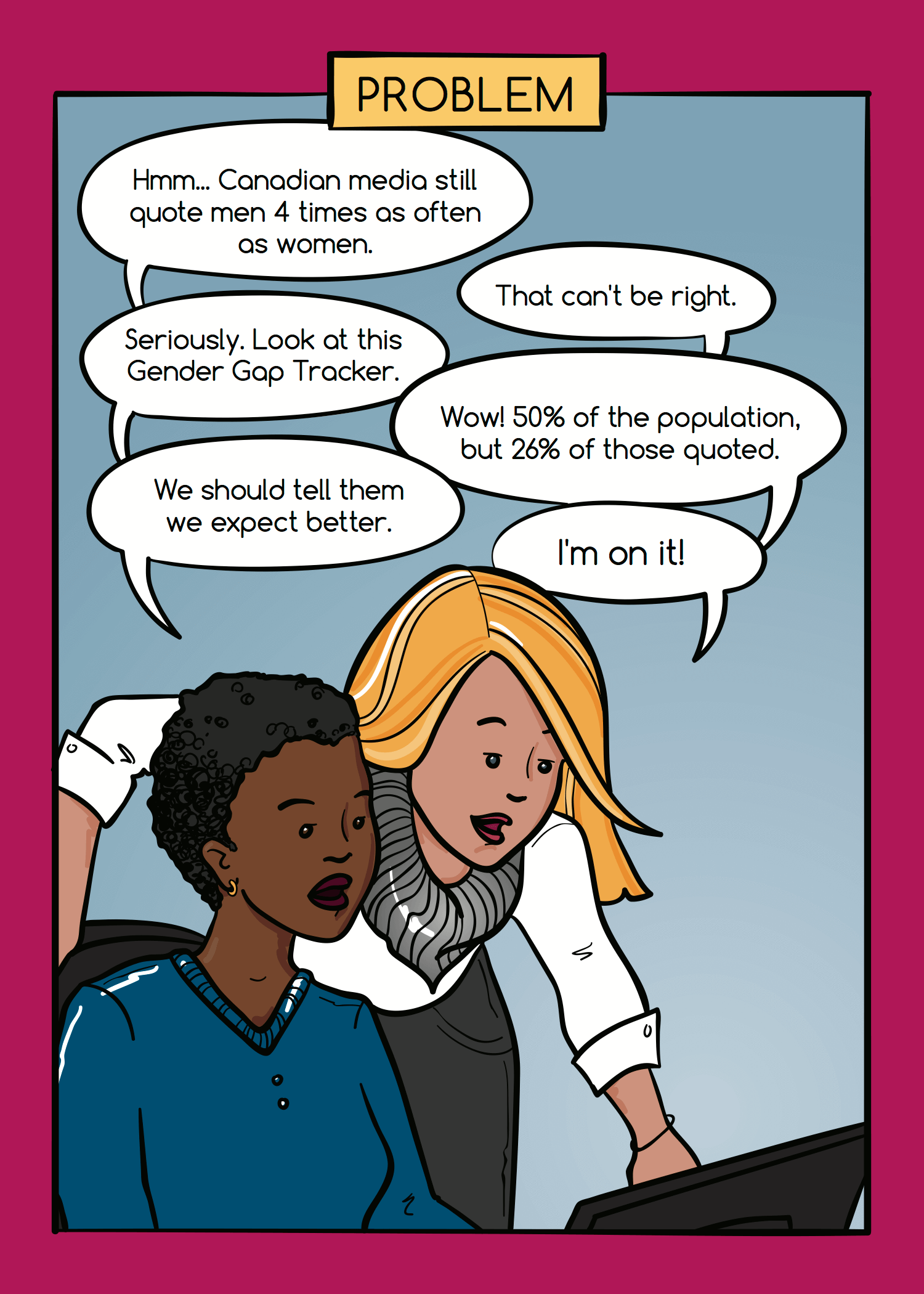
That’s why Informed Opinions has been working with researchers at Simon Fraser University to put big data to work in the service of democracy. Over the past year, we’ve built the Gender Gap Tracker, an online digital tool that monitors the ratio of male to female sources quoted in Canada’s most influential news media. It features easy-to-read graphs updated on a daily basis reflecting both the performance of individual newsrooms, and the aggregate ratio of them all.

The tool captures only the sources cited on each news outlet’s website; it’s unable to quantify those who might appear in broadcast interviews, but aren’t referenced online. Yet so far, its results mirror the ratios found in previous research done manually. The goal of the Gender Gap Tracker is to celebrate news organizations that lead by example, and motivate those who lag behind. And it offers news consumers and media organizations alike a daily reminder of the remaining gap.

Improving this metric is important for all of us. Good journalism is fundamental to democracy, and the persistent underrepresentation of women’s perspectives denies Canada access to the analysis and ideas of many of its best and brightest. It also undermines policy decisions. Many issues affect women differently; solving complex social, economic and environmental problems requires us to more equitably integrate their experiences and insights.

Diverse, qualified women exist in virtually every field, and for the past nine years, Informed Opinions has been motivating and delivering media skills training to thousands of them across the country. Our free online database of diverse experts committed to responding to interview requests quickly now features more than 800 female sources.

We’re looking for Canadians to join us in reminding journalists that it’s no longer necessary (or defensible) to declare, “But I couldn’t find a qualified woman.”
5 Resolutions to maintain 2017’s momentum

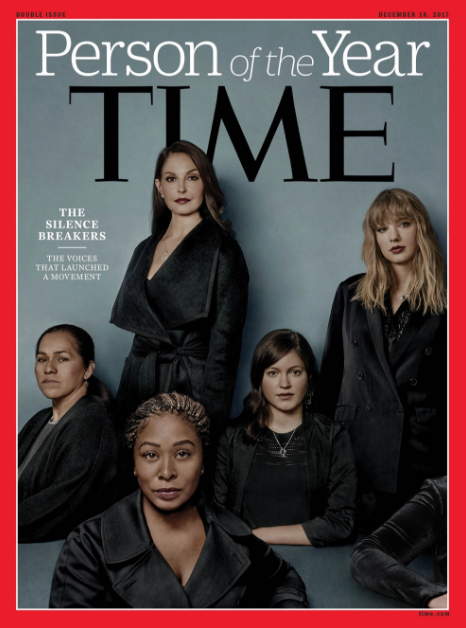
If 2017 goes down in history as a year of resolve, what will we say about 2018? That we built on the momentum to make lasting change, or that we let the energy dissipate into nothingness?

From women’s marches around the world to the #MeToo movement, many people took not just to social media, but to the streets, speaking up against hate, inequality and violence.

Women, in particular, shared their realities in ways and in numbers that got global attention and sent shock waves through a host of industries, from Hollywood and high tech to policing and restaurants.

But genuine revolution requires persistence: we need to continue challenging unconscious biases, dismantling entrenched systems, and redistributing power. We need to translate last year’s manifestations of resolve into actual resolutions – and then act on them. And we need leaders who are willing to take a stand and publicly spearhead this revolution.

Is that you? Someone you work with — or for?

Here are 5 suggestions for how to keep amplifying women’s voices for change in 2018:

  1. Publicly announce your commitment to support gender equality in the media and donate $1,000 for a tax receipt in support of “What Gets Measured Gets Done”, the high tech dashboard we’re building to track women’s voices in the media;
  2. Ask women in your workplace what’s needed to overcome the barriers to their advancement, and then commit to implementing meaningful measures that will benefit them and your bottom line;
  3. Nominate qualified women from your organization or network who are able to speak to media for inclusion in ExpertWomen, our online database designed to make it easier for journalists and conference programmers to feature smart women;
  4. Talk to us to explore how we might partner with you to amplify women’s voices in Canada and raise awareness at corporate events;
  5. Book a Finding Your Voice, or Building Allies for Change keynote or workshop combining research insights and concrete take-aways with storytelling and humour to engage and motivate your colleagues.

Conversations that matter: For women in media, it’s still a man’s world

Vancouver Sun by Stu McNish 08 April 2017

This week’s Conversation That Matters features Shari Graydon of Informed Opinions, which strives to amplify women’s voices to ensure women’s perspectives and priorities play an equal role in Canadian society.

Graydon regrets that in 2017, women remain under-represented, as experts in the media, while men provide the lion’s share of commentary and analysis. She says, “that it is a profound loss that we are not actively engaging, accessing, utilizing, permitting women to contribute their talents, insights, energies and intelligence to everything we’re doing.”

Graydon points to the U.S. election as proof that women are still treated differently, “it’s very, very clear that the degree of sexism that operated in terms of the coverage and attitudes generally, reinforced by media about Hillary Clinton’s candidacy are still alive and thriving.”

She notes that the more female experts and politicians we see, the easier it will be for all of them to be perceived as competent and treated more responsibly.

Conversations That Matter is a partner program with the Centre for Dialogue at Simon Fraser University. Join veteran Broadcaster Stuart McNish each week for these important and engaging Conversations shaping our future.

Why Journalists Should Be Forced to Quote More Women

It’s often seen as a dirty word, and I usually avoid using it. So when Lisa Kimmel, the general manager of Edelman PR agency recently invited me to debate the merits of imposing a gender “quota” on journalists as a means of increasing the number of women quoted in the news, I balked.

Even though the aim of the social enterprise I lead is explicitly to amplify women’s voices, and I’m convinced that doing so could reshape society for the better, I replied, “Not even I would argue that!”

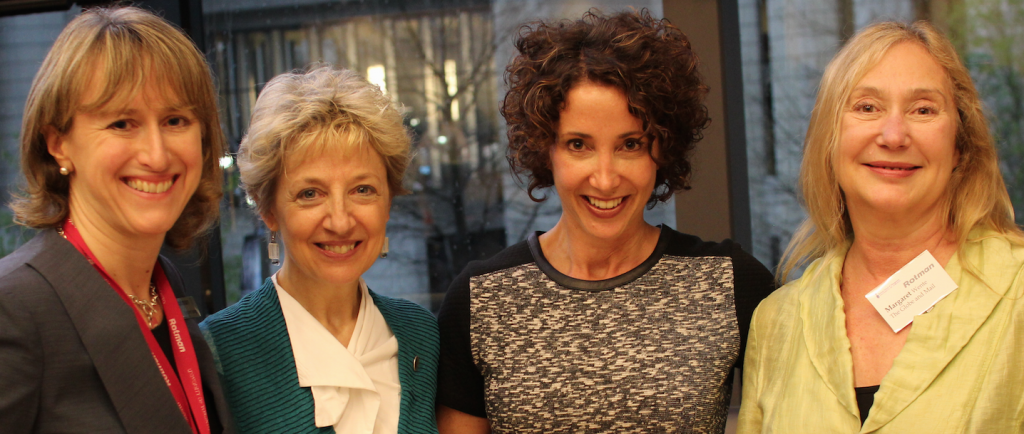
But faced with the opportunity to provoke discussion in a public forum and cross swords with a journalist famous for her ability to elicit strong reactions, I reconsidered. For the sake of debate, I was willing to risk knee jerk dismissals and engage in the intellectual exercise – even if it did only mean a few minutes at the Rotman School of Management microphone.

Interestingly, the process of building the argument changed my mind. Anticipating the likely objections of the Globe and Mail’s Margaret Wente in order to refute them convinced me of the merits of what I originally deemed an outlandish and indefensible suggestion. I’ll tell you why in a minute. But first, let’s get a few of her arguments out of the way.

Not one to let nuance get in the way of hyperbole, Ms. Wente declared quotas “the most dreadful thing in the world.”

I didn’t have the opportunity to offer some comparative alternatives at the time, but most of the many journalists I know, given a choice between say, being gang raped, sold into slavery, or compelled to quote a few more female sources – even if it did take longer to find them – would happily opt for an imposed quota.

Especially since, as the Globe columnist herself made clear, “We’re not lacking for strong female role models.” In the next breath, however, she insisted on the existence of a mythical “best person” who responsible journalists must seek to quote above all others for any given article.

This is a disingenuous claim. For the vast majority of news stories that benefit from insights offered by an authoritative source, there is no single “best person.” Virtually every event or announcement covered by the media could be given valuable context and analysis by a number of people with informed opinions about related issues or likely consequences. They won’t all give the same context and analysis, and indeed, believing that one individual is necessarily “the best” implies a disturbingly narrow perspective on the potential implications of any given story.

So here’s why a quota on quoting women might actually make sense:

1. BETTER, RICHER ANALYSIS

A raft of respected research makes clear: whether you’re talking about scientific research, corporate governance, or social policy, including the insights and ideas of competent women alongside men leads to greater innovation and competitiveness, improved client responsiveness and better financial performance. More perspectives translate into more empathy and greater collaboration.

Mixed gender teams develop safer drugs and make more ethical decisions. Not because women are better than men, but because they often think about and approach things differently, and diversity is a demonstrated strength. (You don’t have to take an advocate’s word for it: the studies have been funded by independent research councils, conducted by esteemed academics, and embraced by bank presidents convinced that to get the best talent, you have to expand your recruitment pool.

So given the critical role played by the news media, and the complex social, economic and environmental challenges they’re tasked with telling us about, we’d be smart to broaden the perspectives we invite to weigh in and ensure we more often seek the views of people (OK, women) whose brains are apparently wired to consider consequences. The downstream benefits are likely to include more family-friendly policies, stronger communities, and reduced conflict – everywhere.

2. MEN NEED A BREAK:

We know that smart women chronically under-estimate their abilities and, in so doing, often decline to pontificate when given the chance. National Post columnist Jonathan Kay explained this by noting that most women just aren’t arrogant enough to think they have all the answers. Which, you know, seems like a reasonable position for pretty much everybody to adopt.

Rotman debate audience enjoying feminist humour.

“Do we need to point out that being a microphone hog doesn’t always lead to value-added commentary? That we’d benefit from a little more Lang and a lot less O’Leary?”

In fact, responding to the new book about the female confidence gap, New York Times columnist David Brooks recently cited psychological research suggesting that overconfidence is actually the more serious problem (think 2009 financial meltdown). He argued for an approach that would inject women’s tendency for “self-policing into the wider culture”, and asked, “How can each of us get a better mixture of “female” self-doubt and “male” self-assertion?

Centuries of entrenched sexism deemed women intellectually feeble and emotionally volatile. Ignoring for a minute who was responsible for perpetuating such attitudes, think of the pressure that put on men to be the go-to guys on almost everything. It’s past time to relieve them of the responsibility of having to know it all.

3. A BROADER DEFINITION OF NEWS:

Now, it’s true that quoting more women might make us pay attention to other things. But would that be so wrong?

What if we focused less on hockey fights and more on health research? If so-called “women’s issues” got front-page treatment – even when the women being profiled weren’t wearing bikinis? If some of what’s currently deemed “soft” news and relegated to the life section were accorded more importance? If we stopped devoting detailed front page coverage to misogynist murderers and more to the social context that contributes to creating them in the first place?

4. WHAT GETS MEASURED GETS DONE:

Some reporters and producers say they’d like to quote women more often – but how many are really investing significant effort in expanding their pool of sources? Doing so requires creativity, resourcefulness and time, and when you’re on deadline, it’s easier to default to the usual suspects. So I think it’s fair to say that despite claims made to the contrary, nobody is doing “everything they can.”

If they were, they would be calling more of the thousand women Informed Opinions has worked with across the country. Women with deep knowledge on a wide variety of topics who are eager to share what they know…Women with distinguished careers and respected reputations who hold PhDs in economics, political science and marine biology, and boast decades of experience in business, immunology and criminal law…

As the successful imposition of quotas in the academic world and relating to board appointments have shown, if we were to compel reporters to start tracking the ratio of women to men they interview, they would somehow manage to find and interview more expert women.

And that would be demonstrably good for all of us.

NOTE: Edelman has posted a 3-minute video from the event (focusing mostly on Lisa Kimmel’s introduction, and including very brief rebuttals by Ms. Wente and me onto Youtube here.

Girls fuel outrage and inspiration

I don’t often shout back at the TV, despite the vast volume of material it broadcasts that I find vile or banal. But last week I couldn’t help myself.

The object of my fury wasn’t Fox News or Sun TV, it wasn’t some retrograde beauty pageant, exploitive reality show, or a crime drama featuring a multitude of victimized women (respecting the fleeting nature of life, I avoid those.)

Instead, my outburst was precipitated by two words uttered by Peter Mansbridge.

CBC’s The National had just finished airing Anna Maria Tremonti’s interview with the inspirational Malala Yousafzai about her campaign for girls’ education — initially in Pakistan, but now around the world.

When Mansbridge re-appeared on the screen, he innocuously referred to this campaign as “her cause”, and I found myself shouting at the TV through tears:

“It’s not just HER cause, it’s the WORLD’S cause!”

Of course, what I meant was, it SHOULD be the world’s cause. And I want everyone to be as outraged as I am about the colossal cost and profound unfairness of failing to educate, support the equality of, and benefit from the gifts and contributions of millions of girls.

Then today, I came across a 2-minute video from the UN featuring dozens of girls from around the world looking into the camera and declaring:

I was not put on this earth to be invisible.

I was not born to be denied.

I was not given life only to belong to someone else. I belong to me.

I have a voice & I will use it. I have dreams unforgettable.

I have a name and it is not anonymous or insignificant or unworthy or waiting any more to be called.

Some day, they will say: this was the moment when the world woke up to my potential.

This is the moment I was allowed to be astonishing.

This is the moment when my rising no longer scares you.

This is the moment when being a girl became my strength, my sanctuary, not my pain.

This is the moment when the world sees that I am held back by every problem and I am key to all solutions.

We so need to help make them right. And one of the ways we can do that in North America, where so many of us are extraordinarily privileged in a multitude of ways — not the least of which is to have access to decades of exceptionally good education — is to speak up ourselves.

We should be ashamed not to. Like living in a democracy and having the capacity to vote, our educational attainment — the knowledge and credibility it gives us — cannot be taken for granted.

Not as long as we share the planet with 250 million girls for whom those rights are denied.

What might you speak up about? Where? And when? Who might you help educate or enlighten by exercising your voice? By making the best possible use of your privilege?

And what would those girls, denied such basic rights, say about women who have such access to education and the means to communicate their knowledge more broadly, but fail to take advantage of it?

Your engagement is critical to the difference that Informed Opinions is making.

Canada’s anthem back in the hot seat

Jian Ghomeshi calls it common sense. But will the government listen?

Last week, some of Canada’s most notable women (including Informed Opinions Honorary Patrons, Senator Nancy Ruth and the Rt. Hon. Kim Campbell) launched a formidable campaign advocating that gender-neutral lyrics be restored to Canada’s national anthem. Since then, all sorts of media heavyweights — including the host of CBC’s Q — have championed the cause. And no wonder.

Restore Our Anthem uses a powerful two-minute video to remind Canadians that the original lyrics to O Canada didn’t exclude women, and there’s no reason the ones we sing in 2013 should either. The site includes a comprehensive list of FAQs and timeline of the anthem’s history, and brilliantly showcases the absurdity of hanging on to the outdated words. It even features a user-friendly politician-locator that makes it easy for supporters to write to their elected representatives.

The call for restoring our anthem likely sounds familiar. In July, Informed Opinions launched its own campaign demanding the same change be made to O Canada’s lyrics. Our short, emotionally charged video and accompanying written pieces received overwhelmingly positive support from women and men across the country. But we’re still waiting.

As the momentum behind Restore Our Anthem continues to build, we hope the small change necessary to re-establish a gender inclusive national anthem will follow. Let’s commemorate the 100th anniversary of the initial revisions to O Canada with another change — one that reflects our country’s reality.

To learn more about the campaign, or to add your voice to the growing chorus of Canadians demanding equality, click here.

Project aims to close gender gap in public discourse

Project aims to close gender gap in public discourse

by Shari Graydon   (published in the Victoria Times Colonist 17 January 2010)

Even before my short-lived plunge into BC political waters as press secretary to premier, Ujjal Dosanjh, I’d survived the kind of name-calling most people imagine being strictly reserved for terrorists or puppy mill operators. As a weekly newspaper columnist during the mid-1990s, my mild musings on questionable polls and the peculiar sizing practices of women’s clothing manufacturers had earned me hate mail addressed to “bitch of the year”.

I reflected on this recently when learning that even in 2010, men’s perspectives on newspaper commentary pages outnumber women’s by a margin of three to one, a ratio that some editors say reflects the relative lack of submissions from women.

Reluctance to become a target of criticism remains an issue for some women, but lack of time is another factor. Women still shoulder more caregiving responsibilities than their male counterparts, and are more apt to be CEOs of small, rather than large enterprises. So even a female expert not squeezed by sandwich generation duties is less likely to have access to the resources that would support her in crafting a well-written argument based on her area of expertise.

But there’s another dynamic at play. Women are also more inclined than men to discount their expertise. I once invited dozens of female experts from a wide range of fields to be listed in a directory for reporters. A depressingly large number of them demurred, saying, “I’m really not the best person.” Journalists tell me that this kind of confession rarely emerges from the mouths of their male sources.

As a result, news media seeking qualified commentary – either on the op ed pages, or in the context of a particular story – reflect a chronic gender imbalance. And the absence of women’s voices means that their good ideas are less likely to be heard and their leadership is less likely to be noticed. And that’s a problem – not just for women, but for society as a whole.

It’s never made sense to access only the intelligence and insights of half the population, and now, when more women graduate from universities than men, it makes even less sense. Ignoring the informed opinions of women has significant implications for the health of our democracy and the quality of our governance. The challenges we face – environmental, economic, social, cultural – have never been so great, and we need the best public policy and the most informed decisions we can possibly get.

This is the impetus behind Informed Opinions – a new initiative designed to support more knowledgeable women in contributing their perspectives, priorities and perceptions to public discourse. In partnership with universities and news outlets, the project delivers skill-building workshops to female experts and connects them with key news editors. The goal is to not only broaden the diversity of voices in the media, but to enhance Canada’s competitiveness in the process.

Research from around the world makes clear that social equality translates into economic prosperity. When women are educated and contributing their skills and knowledge in all arenas, the entire society benefits. Canada is already testimony to that. But the chronic under-representation of women’s perspectives – both in government and in the news media – continues to limit our capacity to address complex issues.

In 2007 McKinsey & Company found that companies with women as well as men in senior management positions perform better financially than organizations where all senior managers are male. It’s not a big stretch to assume that our contribution to public discourse would also have a positive impact on Canada’s performance on a broad range of indicators.

At a time when traditional newsgathering models are struggling to maintain their advertising base and compete with electronic and digital media, an expanded pool of expert sources can’t help but be welcome. And who knows? Maybe the increase in women’s perspectives will make female commentators less likely to be targeted with gender slurs.

Ottawa-based author Shari Graydon is delivering a public lecture about Informed Opinions on Monday January 25th at 12 noon at the University of Victoria in room 157 at the Faculty of Law (Fraser) building. For more information, contact Maneesha Dekha at mdeckha@uvic.ca