What difference do women’s voices make?

You know that old saying, “If you’re the smartest person in the room, you’re probably in the wrong room”? I looked up its origins today, and couldn’t find an attribution (which, as Virginia Woolf pointed out years ago, likely means the observation was first articulated by a woman!)

Although I’m pretty clear about the value of my skill set, in the work I do with Informed Opinions, I am NEVER the smartest person in the room. And that’s a source of enormous satisfaction for me. Because it means I’m getting to play a small role in exposing the world to the talents and insights of women whose comprehensive familiarity with vast arenas of knowledge can benefit us all.

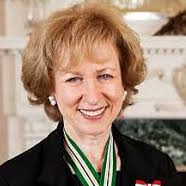
The Right Honourable Kim Campbell, Canada’s first and, regrettably, only female Prime Minster, has been advocating for the increased representation of women for decades.

That’s why no arm-twisting was necessary to get her to agree to become one of the project’s honorary patrons. And on Friday of this week, she’ll be sitting down with me for an armchair discussion on the difference women’s voices make at a public event co-hosted by SFU and UBC in Vancouver. She’ll expand on her advocacy efforts to increase women’s participation in politics and talk about her own experiences with the media.

Having heard Ms. Campbell speak many times, I suspect she often IS the smartest person in the room. But her insights are invariably delivered with the kind of grace, humour and respect that reduce the intimidation factor. She’s entertaining and inspirational company.

In the meantime, Informed Opinions continues to precipitate and/or support the dissemination of hundreds of expert commentaries on diverse issues of critical importance not just to women, but to Canada as a whole. Each participant’s approach to engaging with media differs, depending on her field and circumstances.

You’ll apply the training when it makes most sense for you…

Joanne Cave, a Rhodes Scholar studying social policy at Oxford University, is a case in point. She says,

“After I attended the Informed Opinions workshop, the ideas and tools shared took a year to percolate. But in August my first op-ed was published in four newspapers across Canada, generating interest from politicians, non-profits and community members. I never imagined that commentary writing would be a way to make my voice matter, and I’m so grateful.”

In fact, six weeks after her first piece on the funding environment for charities was published, she submitted a second one on dementia policy and informal caregiving, the focus of her research. It also got picked up.

Where’s the line between professional discretion and a responsibility to advocate?

Three years ago, a significantly pregnant Martha Paynter organized and attended an Informed Opinions workshop in Halifax, recruiting more than a dozen other smart, educated, articulate activists and professors to invest a day and some professional development dollars into expanding their advocacy tool kits. Her employment context is very different from Joanne’s and as a result, she says, “I’ve struggled to balance professional discretion with my responsibility to advocate for health and reproductive justice. I both work for the Nova Scotia Department of Health and Wellness, and am an activist for equitable health access.”

How does she decide when it’s okay to speak up?

“I’m comfortable and feel safe commenting on the actions of other provincial governments and the federal government. Two recent examples included the New Brunswick government’s refusal to repeal a section of the Medical Act, which restricts public funding of abortion (limiting it to procedures authorized by two physicians and performed by an OBGYN, in hospital); and the federal government’s unwillingness to support refugee health care.”

Martha has also used her networks and the Informed Opinions training to encourage other friends and colleagues to take up media opportunities on which she’s unable to comment publicly, such as changes to Nova Scotia Public Health perinatal services.

“Since attending a workshop in 2011, I have become attuned to the exclusion of women’s voices in the media, and conscious of how infrequently I participate – and in particular, write – despite my ceaseless opining in my own head. I do hope to improve on this!”

Parliament is still Mad Men territory for women

(The following op ed was published in the Globe and Mail‘s online edition yesterday to help launch #respectHER, a joint campaign of Equal Voice and Informed Opinions.)

At least some of the audience’s weeping was laughter-induced. But it was hard to tell how much.

When she was first elected, Vancouver Magazine called Darlene Marzari, “the first civic politician hereabouts to make a full-time career out of trying to do things right rather than just getting them done.”

At the front of the conference room, former B.C. cabinet minister, Darlene Marzari was wearing a red business dress she had regularly sported during her time in office. Astonishingly, she had climbed into the dress AFTER donning her teenage son’s hockey pads. Zipping up the garment without effort, and reinforcing her point with too many disturbing anecdotes to recount, she explained that the weight she had packed on as a politician was necessary armor that allowed her to survive the legislative chamber as a woman.

Ms. Marzari’s illuminating skit – at once wildly hilarious and deeply depressing – took place almost 20 years ago. But the hostility she endured is unpromisingly contemporary. And it’s costing us all.

In the past year alone, Conservative MP Michelle Rempel was labelled a prostitute for perching on her parliamentary desk; Liberal MP Chrystia Freeland was heckled into silence for having a “little girl” voice; and NDP MP Megan Leslie called out the appearance comments and physical touching that she and her female colleagues still frequently experience in their place of work. (Yes, it’s 2014 everywhere else, but pockets of Parliament Hill appear to be stuck back in 1963.)

To be sure, many male MPs are equally appalled by such bad behaviour, and political life has always required a thick skin. But it remains Mad Men territory for women. And at a time of increasingly complex social, economic and environmental challenges, this is bad news for democracy.

Other sectors are bending over backward to increase their appeal to the best, brightest and most diverse work force possible. Banks, law firms and universities are responding to a raft of research documenting the competitive edge accorded organizations that incorporate skilled women. They recognize the importance of creating workplace atmospheres that will attract top female talent.

But in an age of anonymous online trolls and twitter-amplified personal attacks, entering a political world that remains elbows-up and tolerant of troglodytes is becoming even less attractive to anyone – female OR male – who is more driven by a desire to do good than fight dirty.

And it’s not like the disrepute of politics isn’t deterrent enough. Indefensible patronage, unaccountable spending, inexcusable election practices – they’ve all taken a toll.

It’s time to aim higher.

That’s why Equal Voice and Informed Opinions saluted The Hill Times last week. The Ottawa weekly paper responded to calls requesting that it abandon its annual tradition of polling MPs on the “sexiest” elected officials of the year. This is a small but symbolic act, worth emulating and expanding. And its timing coincides with our joint #respecther campaign – a bid to mobilize Canadians, who overwhelmingly support gender equality and expect genuine democratic debate from their representatives. We’re encouraging all politicians, partisan staff and journalists to embrace the spirit of the newspaper’s decision and promote a culture of respect.

Dissing women for failing to conform to outmoded stereotypes of how a mother or a “lady” is expected to behave is juvenile schoolyard chatter, not political discourse. And those who engage in below-the-belt insults designed to denigrate a rival on the basis of his or her appearance or sexuality isn’t worthy of the label “public servant.”

It’s beyond time to abandon personal attacks and sexist slurs, and to focus energy instead on ideas and policies. Exit interviews conducted with retiring MPs and catalogued in the recently published book by Samara co-founders Alison Loat and Michael McMillan make clear the damage being done. The title alone – Tragedy in the Commons – speaks volumes.

Politicians and their supporters need to aim higher. And citizens? We need to reward them for doing so at the ballot box.

Of privilege and prostitution

For a few years in the 1990s I had the enormous privilege of a regular column in the Vancouver Sun. Every week, I’d write 750 words on pretty much any topic I wanted, and the Sun (a broadsheet not affiliated with the tabloid chain) would disseminate it to hundreds of thousands of readers.

That’s where the privilege came in. Pre-Facebook, Twitter and widespread Internet use, having a newspaper column gave you a singularly influential platform.

After three years, a new editor-in-chief decided to replace my overtly feminist voice with that of another more conservative-minded woman whose opinions more often aligned with those of the new owner (and yes, his name was Conrad Black).  I doubt that my views ever registered on Mr. Black’s consciousness, but from the day he became the major shareholder of the paper, my own editor began second-guessing my commentary, calling me up to inquire, “Are you sure you want to (write about breast feeding, contradict yesterday’s editorial about same-sex parents, or encourage police to do a better job of investigating the disappearance of aboriginal women on the Downtown Eastside)?”

(This was years before the Port Coquitlam pig farmer was finally identified as the man behind those disappearances, and I continue to regret that I only devoted one column to the topic, instead of 5, or 10.)

Yesterday, the Ottawa Citizen gave me space to write about some of the issues currently being considered by the Supreme Court regarding the decriminalization of prostitution. The debate over the wisdom of what’s being advocated by Bedford and company is one that divides feminists, and I respect the perspectives of those who take a different view on the matter.

But I’m siding with Aboriginal women on this one. The Native Women’s Association of Canada is one of seven organizations that make up the Women’s Coalition for the Abolition of Prostitution. The Coalition used its intervener status at this week’s Supreme Court hearing to advocate for the decriminalization of prostituted women, but not the legalization of brothels or pimping. (You can read the full column here.)

Although mainstream newspaper columns don’t have quite the same dominance as they once did, being able to focus thousands of readers’ attention on an issue you think is important remains a privilege. I appreciate it every time I’m given the opportunity.

And I am genuinely thrilled every time a woman who has attended an Informed Opinions workshop, or heard me speak, takes advantage of a similar forum to amplify her voice on a topic she knows and cares about.

Our site now features more than 100 of these interventions, with many more to come… 

Calgary Herald Editorial Page Analysis – More Women’s Opinions Needed

Readers often overlook the byline of a story indicating the writer’s name, and although reading an article without knowing who wrote it will still leave you informed, when it comes to commentary, bylines can provide insights into what kind of world view or life experiences have influenced the opinions being expressed.

As part of  Informed Opinions’ mandate to help bridge the gender gap in public discourse, we’ve been conducting content analysis studies of the op ed pages of prominent major market daily newspapers. Most recently we looked at the Calgary Herald.

Encouragingly, the paper features a significant number of female columnists on its opinion pages, including the Editorial Page editor herself. However, of the 30 outside commentaries published during the period of our 3-week analysis, only three (10%) were written by women.

In contrast, 43% of the Herald’s columns reflected women’s perspectives.

So our study of the Herald demonstrated that, while there are many women writing opinion commentary, not enough female op ed writers are being published.

An increasing number of Informed Opinions’ grads submitting timely and relevant analysis to, and being published in papers across the country are starting to change that.

In the meantime, we all have a role to play: If you read a great opinion piece by a woman, please share it with us and your network. And if your own informed opinion can add value and context to an important story, we encourage you to put it to paper. Our commentary writing resources, designed to help women craft compelling, publishable analysis, may be of use.