Women face additional hurdles: specifically, they are:
Less likely to be recruited by parties
Less likely to be nominated in safe ridings
More likely to face funding gaps and higher scrutiny
More likely to be run in a riding, their party has little chance of winning
The evidence makes clear: Countries using quotas have noticed that legislative performance improves, deliberation becomes more inclusive and public trust rises.
In Sweden, after quotas were introduced, researchers found the qualifications of people elected improved. When parties are forced to recruit women candidates, they seek the best-qualified people they can, and let some of their less-qualified male defaults go.
That’s what Shari Graydon asked the executive director of Equal Voice back in 2019. She had just learned from our ground-breaking Gender Gap Tracker research that politicians made up a whopping 60% of the men and women most frequently quoted by Canada’s most influential news media.
The discovery made her realize that Informed Perspectives (formerly Informed Opinions) couldn’t achieve our mandate – to bridge the gender gap in media – until Equal Voice realized its goal of ensuring women held as many seats as men.
For over more than two decades, organizations like Equal Voice have done vital work encouraging more women to run, hosting campaign schools and raising awareness.
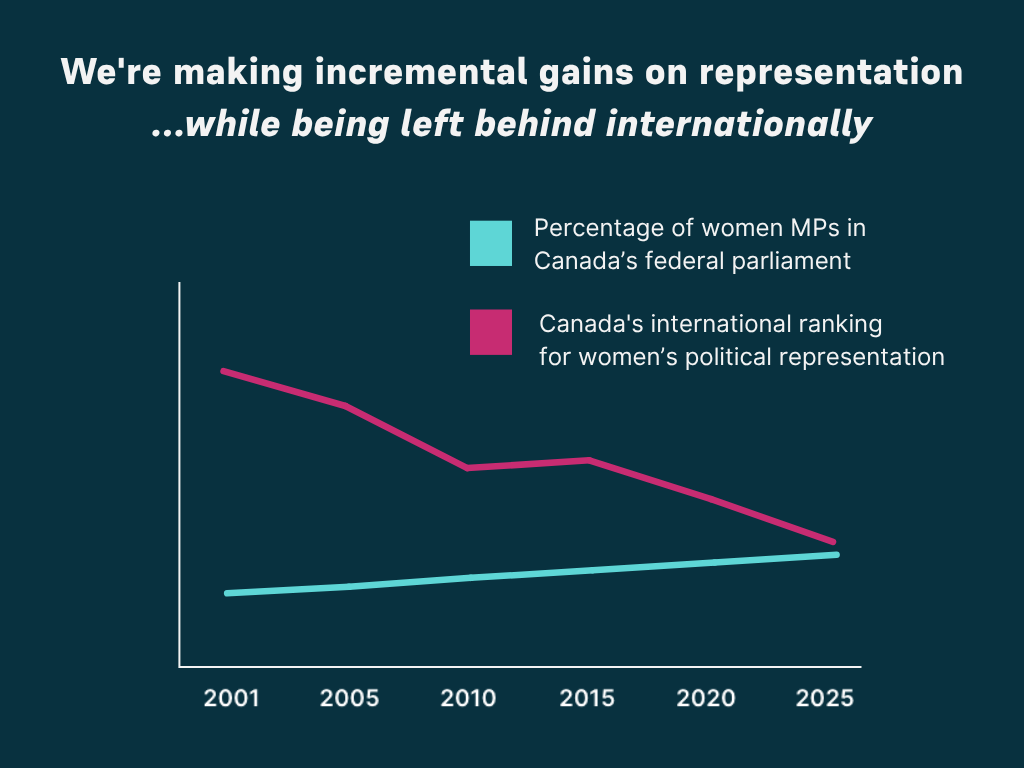
These efforts may have moved individuals, but they failed to move the system itself: men still occupy 69.5% of the seats, and Canada’s global ranking for the representation of women in politics has dropped from a respectable 26th to a shameful 70th.
This is a problem, because like the media, politics have the power to influence everything else.
And it’s why we’ve been investing heavily in research, public engagement and advocacy aimed at making systemic change.
Instead of preparing women to fit an electoral machine that was built to keep them out, we’re exploring proven remedies that will ensure they hold the balance of power within.
Over the past four years, we have:
1) Reviewed the different paths to parity other countries have taken and created an accessible summary to make clear what the broad options include;
2) Collaborated with scholars and advocates to write, publish and disseminate thought leadership on related issues in dozens of publications across Canada;
3) Commissioned polling research documenting Canadians’ overwhelming support for seeing women hold a balance of power and publicized it through hundreds of news stories;
4) Met with dozens of MPs and policy makers about our research, the actions Canada could take, and the democratic and economic benefits we could realize;
5) Created an online tool that makes it easy for residents to send an email to their elected representatives at all three levels of government, requesting action.
Our efforts are gaining traction.
Earlier this fall in Ottawa, we met with senior officials to talk about how to advance the issue. I’m delighted to report that we’re seeing an openness to this conversation that didn’t exist a few years ago.
We need to seize the moment – but we can’t do it alone!
We’re collaborating with international experts to create a tailored brief that maps out the most impactful means of achieving progress within Canada’s first-past-the-post single-member system. And we’re reminding politicians why acting now is not just in our best interests, but in theirs, too.
Your support for this work has been – and will continue to be – invaluable. And when we ultimately realize our collective ambition to “Balance the Power” we look forward to declaring in celebration:
(Ottawa) – September 22nd, 2025 –Informed Perspectives reveals that Canada’s status as a global champion of gender equality is under serious threat.
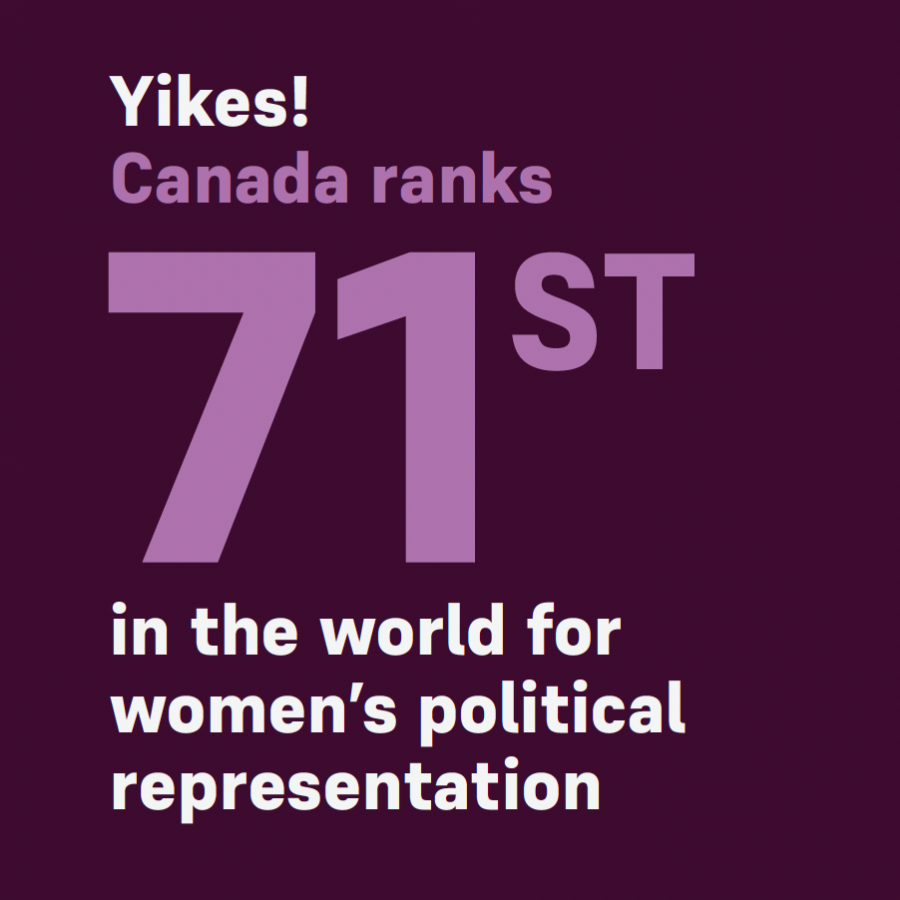
In just 25 years, the country has plummeted from 28th to 71st place in world rankings for women’s representation. This significant decline highlights the inadequacy of our current approach to achieving parity in Canadian politics. This backslide has occurred despite overwhelming support for change. New polling from Abacus Data reveals that gender parity is a core belief for most Canadians, with 86% saying it’s important to have equal representation of men and women in politics at all levels of government.
Democracy Deficit “Equal representation is fundamentally about democracy and trust,” said Shari Graydon, Catalyst at Informed Perspectives. “Canadians overwhelmingly expect that women should hold the balance of power in politics at all levels, and Canada cannot claim to be a global leader on equality while men dominate at 70% in our highest decision-making body.”
The consequences extend far beyond representation numbers. A significant majority of Canadians understand that gender parity delivers tangible benefits to Canadian democracy, with roughly four in five people saying that ensuring a balance of power among elected representatives leads to:
Improved policy outcomes that accurately reflect the diverse realities of the entire population
Stronger political discourse reflecting increased civility and respect
More effective governance through increased productivity
Global Representation Standard While Canada’s ranking has continued to slip, countries around the world have explicitly acted to address equality. More than 100 nations have implemented concrete steps to increase gender parity by setting minimum representation targets and requiring political parties to meet them. These countries recognize that meaningful representation requires decisive action, not wishful thinking. They also understand that such gains feed increased trust in electoral outcomes.
Strategies Canada Must Adopt Inclusive candidate recruitment and nomination processes can make a big difference in ensuring that women and gender-diverse people have a seat at the decision-making table.
Countries that have been successful in ensuring meaningful representation have implemented different strategies, including electoral reform, a parity law, constitutional reform and mandatory quotas. “Canada has an opportunity to lead the world by strengthening women’s political representation. By working together across all levels of governments, institutions, and communities we can ensure women and gender diverse people are equal partners in shaping Canada’s future,” said Chi Nguyen, Member of Parliament for Spadina–Harbourfront.
“Government must lead by example if we want true gender parity in Canada. When public institutions reflect the diversity of our country, they set a powerful standard for businesses to follow – and unlock the full economic potential of a workforce where everyone can contribute and thrive,” said Julie Savard-Shaw, Executive Director, The Prosperity Project.
The choice facing Canada’s political leadership is clear: implement proven strategies that have been successful internationally or watch Canada’s global standing continue to drop.
This mind-blowingly ignorant pronouncement was made by a Calgary high school teacher to his biology students. Not last century, but this year.
Does thinking about a room full of impressionable young people hearing this claim made by an authority figure in the tax-payer funded education system enrage you? (Three days later, I’m still fuming.)
But what gives me hope is that it was one of the first stories shared at the Making Waves workshop Informed Opinions convenes every year in collaboration with Hanita Simard.
Hanita mobilizes a network of women and teens keen to spend their privilege by working for change – on everything from climate action and women’s equality to mental health and LGBTQ+ rights. We invest a day together talking about how to make waves and why it matters that their voices are heard.
When I paused my presentation 20 minutes in to invite the 60 teens and women present to reflect on if or when they’d either silenced themselves or been silenced by others, a grade 12 student spoke up to share her experience.
She said that when her biology teacher verbally demonstrated how unfit he was to deliver scientific insights, she was too stunned to object. But by sharing the story with the rest of us, she galvanized the room.
Later that day, after we’d already talked about the value of being strategic about your audience, articulating a clear, out-come-focused purpose and making an explicit solution-focused call-to-action, we drafted a letter to the principal.
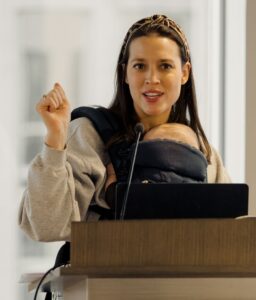
Maria Spronk-Johnson, a lawyer currently on mat leave, facilitated a live demo using ChatGPT to show how easy the technology made it to incorporate data about how often c-sections are medically-necessary.
Maria did so with her infant daughter, Rose, strapped to her chest, a visible reminder of how profoundly different women’s realities so often are and why it’s critically necessary for our voices to be equitably integrated into every decision-making — and educational — arena.
Calgary Foundation and Bennett Jones sponsored Saturday’s event in the law firm’s beautiful Calgary offices. We all left high on one another’s energy, insights and commitment.
Decades of research make clear that ensuring women’s voices are integrated into decision-making in every arena delivers better outcomes.
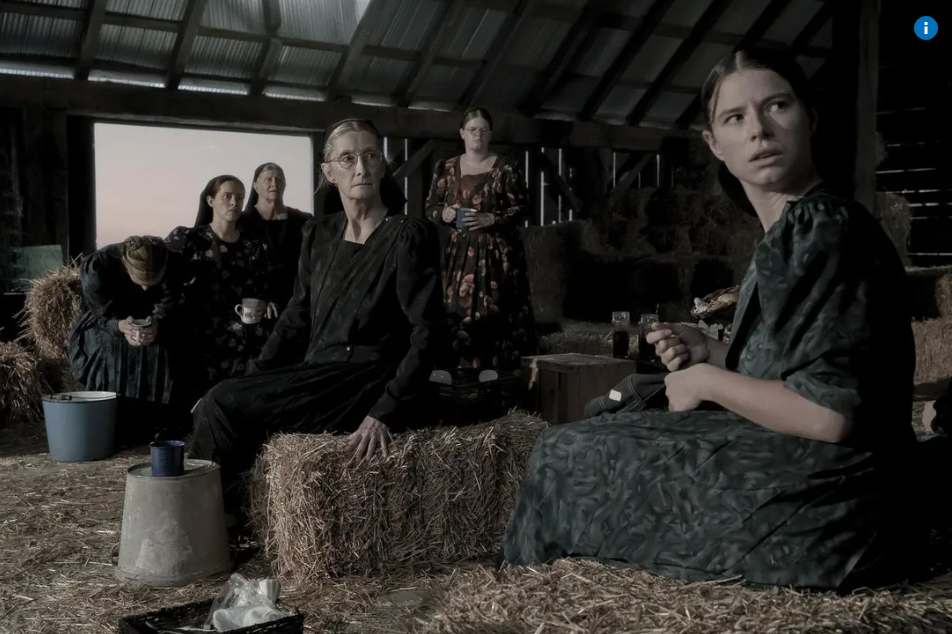
Women are being silenced, violated and gaslit. And not just in Sarah Polley’s brilliant, Oscar-nominated film, “Women Talking.”
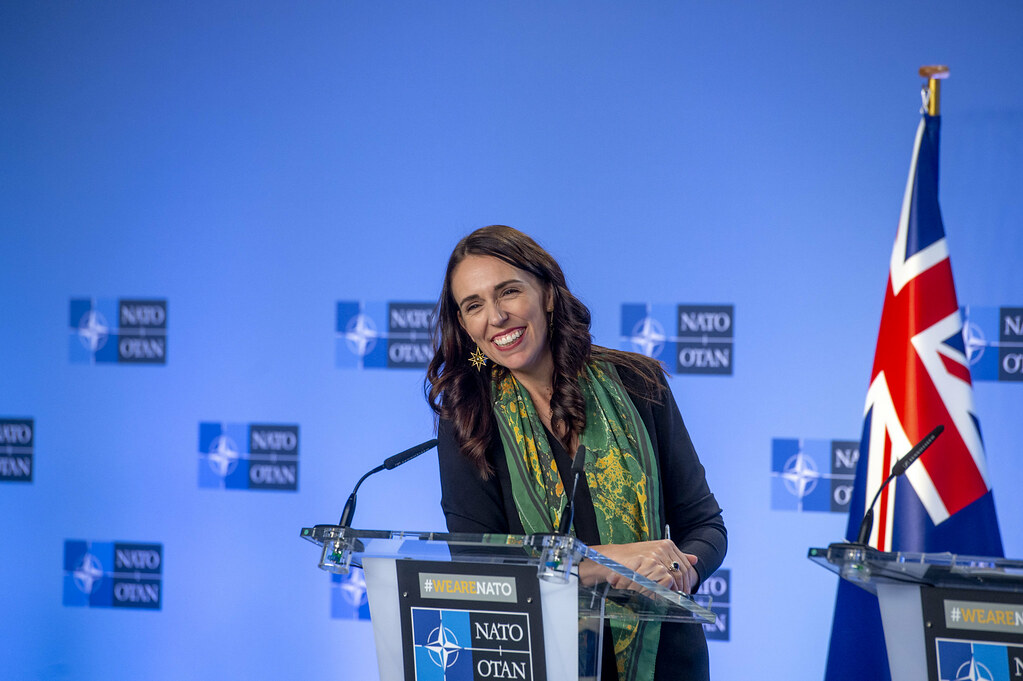
In recent weeks, New Zealand Prime Minister Jacinda Ardern and Scotland First Minister Nicola Sturgeon announced their resignations, citing, in part, the toll that being viciously trolled and attacked was taking on their lives.
Here at home, Gov.-Gen. Mary Simon’s office announced the closing of all comments on her social media accounts due to an increase in abusive, racist and violent threats. And BC MLA Melanie Mark cited similar treatment in her decision to resign.
Like the dilemma faced by the women on whom Polley’s film and Miriam Toews’ equally powerful book was based, the decisions these women are making are not free choices: they are lesser-evils necessitated by self-preservation.
Watching the film, it’s crystal clear that the women being driven from their homes by abuse do not enjoy basic democratic privileges. But we need to understand the continuing exodus of women from public life in Canada as a threat to our own democracy.
Decades of research make clear that ensuring women’s voices are integrated into decision-making in every arena — from science to business to policy-making — delivers better outcomes.
“Women Talking” complements that research with rich emotional context. Although the story reflects the particular circumstances faced by a colony of isolated and illiterate Mennonite women, its message — demonstrating the heartbreaking consequences of being denied influence and autonomy — is universal.
At a time when violence against women, both online and off, is rising, the story’s broader relevance is impossible to miss. And the power of this explicit “act of female imagination,” as both Polley and Toews labelled it, comes from privileging women’s perspectives in every frame.
Many of the vivid scenes of sexual assaultor domestic abuse written and shot by men reinforce and normalize the violation of women’s bodies. But this film’s depiction is completely centred on the women’s emotional sense-making and the consequences they’re trying to survive.
The violence is evoked solely through aftermath: footage of women and girls shot from above, awakening in their beds bruised, bleeding and disoriented, calling out to, and then being comforted by one another. And it’s utterly devastating.
Some viewers raised on a diet of action flicks may spurn a movie so-up-front about its focus on talking. But they would be wrong to conclude that watching a group of oppressed women discussing, debating and coming to consensus by envisioning a shared future would merit a pass. Because the film is, in fact, a riveting and emotionally gripping roller-coaster.
In contrast to the world it depicts, women in Canada do have a voice. But we still hold less than a third of the seats in Parliament. And we’ve had to march in the streets, to demand every bit of equality: to be able to vote … to own, versus be, property … to be paid what we’re worth … to be protected from sexual harassment or assault, whether we work in mining or the military, health care or high-tech.
As recent events make clear, we’re not remotely there yet.
Canada currently lags dozens of other countries for women’s representation in elected office. We rank 61st in the world because governments from Sweden to Mexico have taken deliberate measures to ensure women hold a balance of power.
Informed Opinions, the organization I lead, recently conducted research to document the paths they’ve taken to achieve parity. It’s not rocket science; the steps are clear and replicable. What’s required is political will.
“Women Talking” surfaces issues we should all not only be talking about, but acting on. We need a balance of power in this country. And to achieve that, politicians need to adopt measures that will deliver meaningful change.
Chutzpah and humility are a rare but precious combination.
It takes the first to run for Prime Minister at 37.
It takes the second to have the self-awareness to bow out after six years — despite earning international accolades for leading through a pandemic, mass murder and volcanic eruption — because you’ve candidly assessed your capacity and believe that someone else on your team will be better equipped to lead your party to victory in the next election.
Much will be written about Jacinda Ardern’s leadership. The BBC article linked below quotes the Australian PM as appreciating her “intellect, strength and empathy”, and New Zealand’s opposition leader as recognizing that she gave “her all to this incredibly demanding job”.
But what I think resonated with many people, both in NZ and around the world, was that she manifested unparalleled authenticity and grace.
She was both unapologetically in charge and deeply human. She demonstrated strength in vulnerability.
She brought to the role many of the qualities that have been historically denigrated by patriarchal values, and made clear how valuable they are.
In the process, she reinforced the critical importance of more gender-balanced governing.
When asked what she hoped her legacy would be, she did not cite the accomplishments that earned her global attention, but said,
“I hope I leave New Zealanders with a belief that you can be kind, but strong, empathetic, decisive, optimistic but focused. And that you can be your own kind of leader – one who knows when it’s time to go.”
Making decisions on a daily basis that have massive implications for the lives of the citizens you serve is enormously difficult.
And being able to acknowledge your limitations, not just privately, but publicly? That’s genuine #leadership.
Politics shouldn’t be a life sentence.
We would all benefit from more leaders able to do what Jacinda Ardern has done.
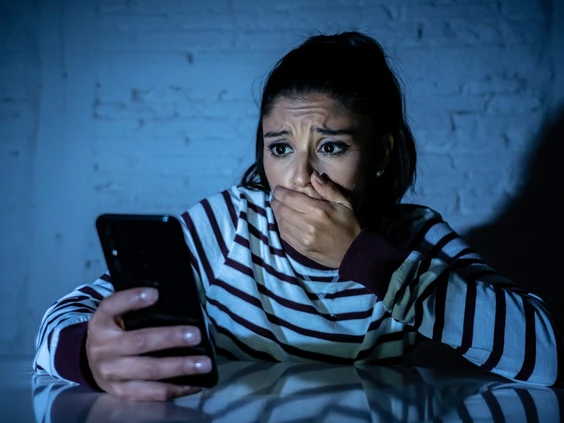
Women are now being subjected not just to insults and demeaning comments but to vicious lies, doctored images and sexual and violent intimidation.
Elon Musk isn’t responsible for how unappealing public life has become for even ambitious women. But the billionaire’s ascension to Twitter’s c-suite and his reinstatement of some infamously banned bad actors is turbo-charging abuse on the platform, making the challenge even harder.
Research by Amnesty International and others has already established that women are much more frequently targeted by online hate than men.
Consider that in the 2017 municipal elections in Alberta, women candidates were four times more likely than men to describe the campaign as “negative” and report that the criticism they received was personal. They weren’t being dissed for their policies or positions, but for their race or religion, their parenting or appearance.
Almost half said they “regularly” received misogynistic or discriminatory attacks.
And research by my organization, Informed Opinion, finds that the problem is growing, and if you’re Black or Brown, Indigenous or openly LGBTQ, it’s even worse.
Women are now being subjected not just to insults and demeaning comments but also to vicious lies and doctored images aimed at damaging their reputations. Many are being threatened with physical or sexual violence. This is an existential threat to democracy.
It makes online hate seem not just normal but inevitable. And that makes people who aren’t receiving it complacent — unwilling to take it seriously and prone to defending egregious attacks as a “freedom of speech” issue.
But it’s not the abusers whose speech is threatened. The truth is that if we don’t impose limits on what can be shared, anonymous attackers can say whatever they want, while the message to women is “Speak at your own risk.”
Many of the women we support who’ve reported safety concerns to the police have been told “Just stay off the internet.” But social media platforms are central to the way most of us access news, remain connected or wield influence. If you’re a politician, staffer, journalist, researcher or advocate, you rely on email and social media in order to do your job.
So when your mobile phone becomes weaponized, or when trolls are regularly hijacking your feed with insults, lies and threats, you have to review those attacks to decide whether to mute or block, document or report. Reading rape threats and seeing images of yourself photo-shopped onto porn takes a huge toll on your mental health, and it often comes with an actual pricetag.
Some women don’t promote their public appearances because they don’t want to be stalked in person. Others decline speaking opportunities altogether. This may reduce their income. It definitely undermines their ability to have impact.
Many invest in therapy because the threats are triggering. Still others are compelled to hire a lawyer. This constitutes a “toxicity tax.” And the people paying it are already under-represented.
So when they leave public office — or journalism or advocacy work — they deprive themselves of their chosen career and rob the rest of us of their talents and contributions. That affects us all. Public conversations, amplified through the news and social media, help set agendas, shape priorities, impact spending. Our democracy needs those conversations in order to reflect the experiences, insights and solutions of all citizens.
Online abuse threatens to erode equality gains that have taken decades to achieve.
When Informed Opinions heard from the women in our database about how brutal the attacks targeting them had become, we created our #ToxicHush Online Action Kit to offer them guidance on how to deal with it. But we can’t make victims responsible for addressing this crime. Curbing online harms is about promoting free speech by safeguarding public conversations.
We expect the companies making the drugs we take, and the cars we drive, to assess the risks involved and show how they’ve ensured our safety. We need to demand similar transparency from billion-dollar tech corporations. Legacy media aren’t allowed to disseminate hate; social media platforms have had a free pass for too long.
They didn’t invent misogyny, racism, homophobia — but they facilitate anonymity, promote conflict, and amplify abuse. Platforms that profit from this must be made accountable. The U.K., the EU and Australia are all demanding this. Canadian governments at all levels must do the same.
Adapted from remarks Shari Graydon, CEO and Catalyst of Informed Opinions, to the Federation of Canadian Municipalities earlier this week. The Toxic Hush Action kit is available here.
Charlotte, light of my life, is 7. Her fearless physicality, fierce devotion to her brothers, and clarity about her artist’s soul… these are just three of the things that make my heart ache when I think about the many ways the world she is inheriting will fail to deliver what she deserves.
But one of those likely or inevitable failures is fixable. And you can help (especially if you act now — see below)!
At the turn of the millennium, Canada ranked 27th in the world for women’s representation in parliament. Now we’re 59th.
Let that sink in. Canada, a beacon of democracy, has been outpaced on this metric by 58 other nations.
Representation is a prerequisite for democracy — but we don’t offer it to women and girls in this country.
Despite the good work of Equal Voice, which has been advocating for parity in politics for two decades, we’ve only gained 10 points in the past 20 years. At this rate, we’ll be lucky to reach parity by 2062.
Charlotte will be pushing 50 by then, and I probably won’t be alive to see it.
While we were feeling smug about the appointment of a gender-balanced federal cabinet, other countries recognized the cost of not ensuring women have an equal say across government. Dozens of them decided that “natural evolution” (aka “incremental change”) wasn’t cutting it. And so they adopted laws.
Mexico is among them. This deeply Catholic country wrestled its culture of machismo to the ground and achieved parity in politics in 2018.
If they can do it, so can we.
But change doesn’t just happen; it’s made to happen. Especially when the change involved requires some people with power to dismantle the structural barriers that keep other people from accessing it.
Political parties have the power to fix this. The status quo exists because they haven’t prioritized women’s equality as dozens of other countries have. And we haven’t insisted. So we can start to do that, now.
Canadians who want our democracy to live up to its promise can say “no” to the status quo. They can sign an online petition calling on our elected MPs to ensure it is read aloud in the House of Commons. The deadline to make this happen is September 17th.
Together we can create the circumstances that all the Charlottes in our lives grow up in a country that demonstrates its respect for women’s rights by giving them access to an equal voice in government.
The staff and board of Informed Opinions join all of Ottawa, many thousands of women, and the extended Greenberg family in mourning the passing of Shirley Greenberg.
An inspirational feminist advocate, role model and philanthropist, her generosity has made — and continues to make — a profound difference in the lives of countless women.
Alongside many other feminist advocacy organizations, Informed Opinions benefited from Shirley’s commitment to backing up her vision of equality with vital financial support.
She funded both pragmatic essentials and visionary projects. Her most recent contribution to our work amplifying women’s voices helped launch our campaign against the toxic hush of online hate. She well understood how much of a target women who dare to speak up and share their insights through legacy or social media become, and how profoundly online attacks threaten the progress we’re making in the fight to ensure women are heard.
Now, with the benefit of her support, we are on the verge of releasing Every Woman’s Right to Speak Free from Online Hate – A Peoples’ Tribunal (streaming live via video on June 14th). Her early financial endorsement was pivotal both to the Tribunal and the research we’re gathering to support it.
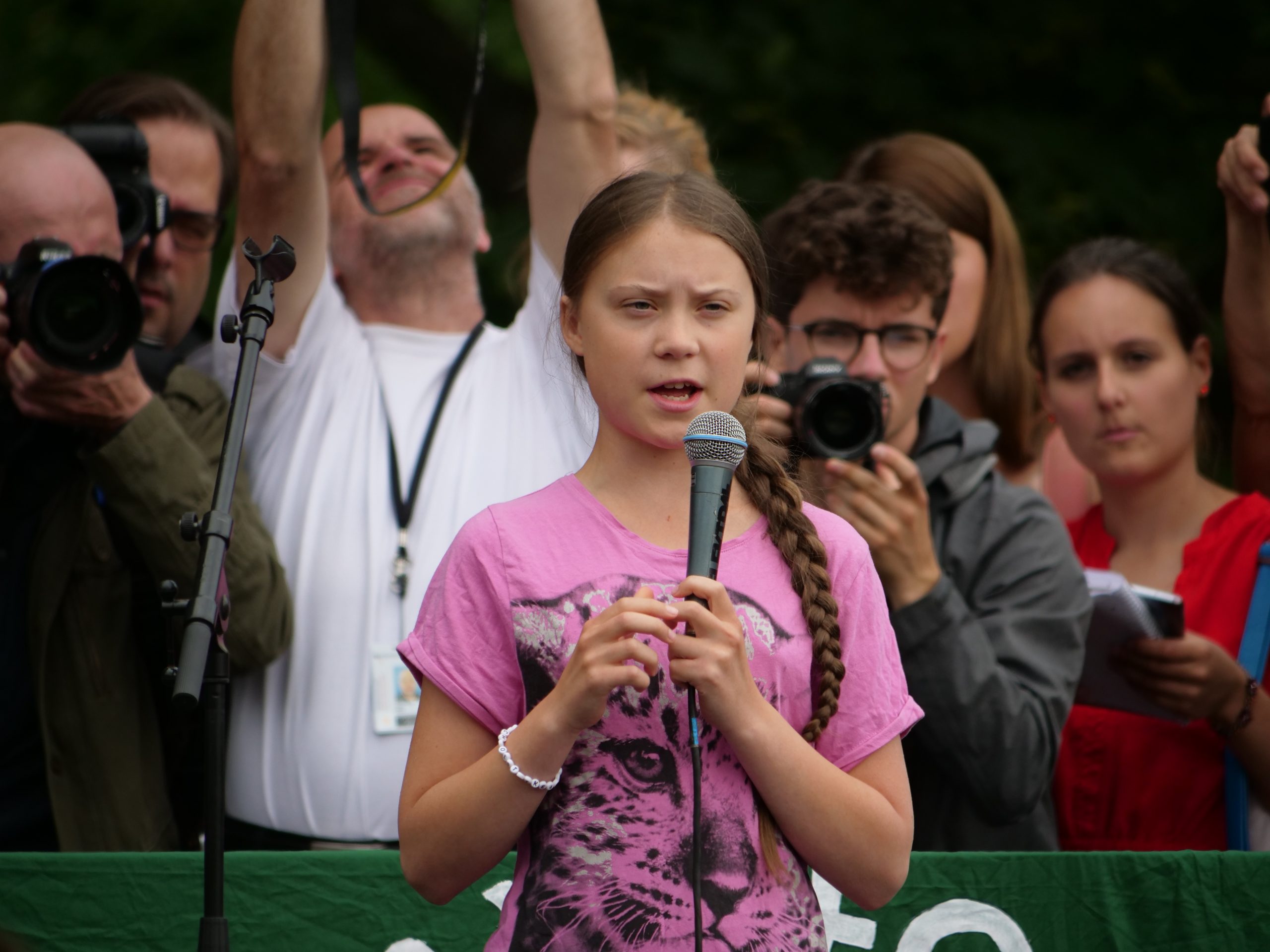
Greta Thunberg, in just 3 years, has shown the world a new way of doing things, of speaking up, of making a difference. She did what no one was able to do before: at 16 years old, she got the world to talk seriously about the climate crisis.
Just weeks after Greta started her Fridays for Future climate strikes, my 17-year-old daughter and I gathered a small group of high school girls and adult women to create Making Waves, an intergenerational community focused on advancing gender equality.
It was born of equal measures of inspiration, frustration and anger. Inspiration from Shari Graydon and Informed Opinions’ mission to close the gender gap in public discourse by encouraging women to speak up and take the mic. Frustration that very little had changed for young women going into science and engineering programs at university. And anger that rape culture seems more firmly implanted in university life than 30 years ago when the ‘No Means No” campaign started.
Looking around, we saw there was no organization that connected the sophistication and energy of young women in high school and university, with adult women who cared profoundly about gender equality and were willing to share their skills and knowledge, and invest in young women. We wanted to bring them together to learn, practice speaking up, and support each other both inside the safe space we create, and outside in the broader world.
Through the pandemic, we’ve continued to find ways to connect, grow, build community, and most importantly to speak up. We’ve built on the annual workshop, adding an online book club featuring expert guests who facilitate rich discussions about important topics… The Reality Bubble: How Science Reveals the Hidden Truths that Shape our World by Ziya Tong and Seven Fallen Feathers: Racism, Death and Hard Truths in a Northern City by Tanya Talaga have inspired lively and informative sessions.
While our primary purpose is to encourage young women to speak up about their experiences and what matters to them, something unexpected has happened. The intergenerational synergy has inspired the adult women of Making Waves to make more change, to make bigger waves.
“I want to grow up to be like 17-year-old Sarah,” texted one of the adults after an animated intergenerational panel.
Young women aren’t waiting for us to start doing the work. They are just making it happen, demanding change.
However, they appreciate being given opportunities and being mindfully mentored. When the voices and contributions of young women are truly valued, listened to, and responded to, the results are powerful. We just need to be open enough to see the world through their eyes, and be willing to join them in making change.
We are just weeks away from our 4th Annual Making Waves Workshop, on May 1st 2022. If you know of a young woman who cares about gender equality and wants to make connections, hone her skills, and practice speaking up, invite her to join us. We welcome all self-identifying women, non-binary and gender non-conforming individuals who feel they would benefit from our conversations.
And if investing in young women is important to you and you enjoy making waves to make a positive impact, please join us yourself! Everything we do is created with, by and for young women; there are no auditions, no waitlists and no cost.
And if investing in young women is important to you and you enjoy making waves to make a positive impact, please join us yourself! Everything we do is created with, by and for young women; there are no auditions, no waitlists and no cost.
Hanita Simard is the instigator and manager of Making Waves, a cross-generational initiative to mobilize young women to embrace their own power.