How do you respond to charges of being too aggressive or sensitive?

Let’s say you’re an intelligent, confident and assertive woman who doesn’t shy away from expressing your opinion: chances are that at one time or another, a colleague may have decided you were “too aggressive.”

Or maybe, by politely objecting to sexist behaviour in your workplace – the kind that expects the women present to  serve the coffee, tolerate derogatory comments, or delight in remarks about their appearance – you’ve been accused of being “over-sensitive”.

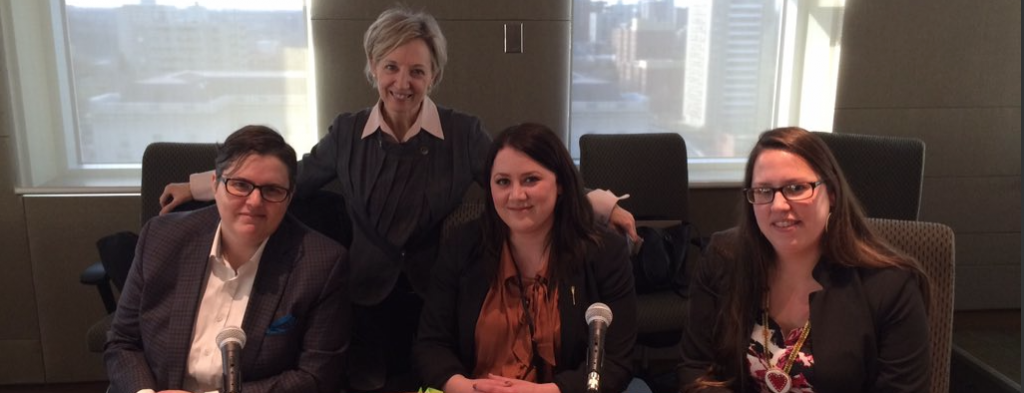
Last week at an Unbitten Tongues* forum with three fearless panelists and about 65 engaged civil servants in Alberta, both of these examples came up.

How, really, women asked, does one overcome the momentary disbelief or flash of irritation to respond to such comments effectively?

Dana DiTomaso, a digital marketing expert, CBC technology columnist and partner at Kick Point, observed that ever since she started dressing in men’s clothing, she’s no longer on the receiving end of such patronizing remarks.

But for those not willing to sacrifice their style preferences in order to be treated with respect, she offered the following comeback strategy:

Rather than try to respond to a comment or accusation that puts you on the defensive, she suggested, try shifting the onus onto the accuser by asking:

“How so?”

I think the strategy is inspired.

Because whether or not people offering such criticism are consciously trying to shut you down, by expecting them to explain or defend their comments, you’re both implicitly rejecting the premise of the dismissal, and requiring your accuser to articulate the value judgments that informed the comments. Their efforts to do so are likely to reveal more about their attitudes and assumptions than about your behaviour or emotional state.

The two other Edmonton panelists, recruited by the government of Alberta’s Ministry of the Status of Women, were equally thoughtful. Recently elected MLA Deborah Drever has been volunteering in her community since the age of eight, and is completing a degree in sociology at Mount Royal University. And Miranda Jimmy is a member of Thunderchild First Nation who sits on the Edmonton Public Library board and co-founded RISE – Reconciliation in Solidarity Edmonton – to support reconciliation in words and actions.

The participation of the three women in the Unbitten Tongues forum gave those present an opportunity to hear from, ask questions of and be inspired by role models who are speaking up in pursuit of making change in business, in government and in the non-profit sector.

For so many women who are working in arenas that are led and/or dominated by male colleagues, the opportunity to engage in frank conversations in a safe, women-only space is revelatory and invigorating.

That’s why, over the next year, in conjunction with the launch of my new book, OMG! What if I really AM the best person? I’ll be looking to convene similar panels in cities across Canada.

If you’re interested in engaging, motivating and supporting women in your network or community to speak up for change, please let us know. We would love to collaborate with you.

*Unbitten Tongues – In recognition of the difference women can make when they speak up — despite the many internal and external barriers to doing so — Informed Opinions offers opening remarks and facilitates panel discussions aimed at encouraging more women to share their knowledge and speak their truth.  
Awe-struck by engineers

“Thank God the world is not populated by people like me.”

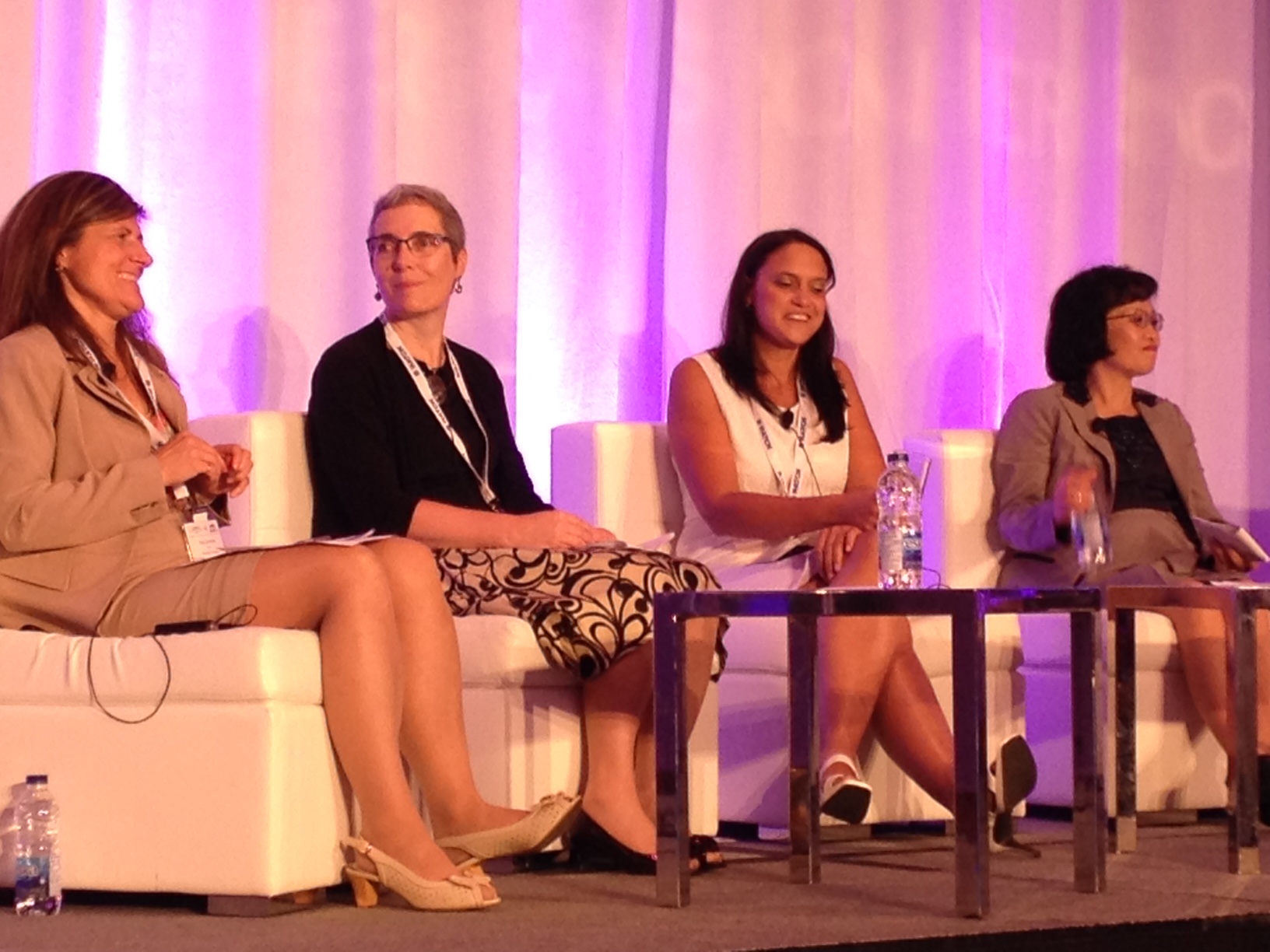
That was my overwhelming thought last week while participating in a symposium of women engineers.

Unlike most of the rest of the attendees at the first ever Women of Impact in the Canadian Materials, Metallurgy and Mining Fields event, I dropped physics and chemistry after 10th grade. And the hair-tearing experience of surviving grade 12 rapid math reinforced my certainty that my future lay in arts.

So being in a room full of women who earned science and engineering degrees, and had been applying their related analytical abilities to solving problems, building sophisticated machines and challenging the rest of us to reconsider our stereotypical notions of #WhatAnEngineerLooksLike was, for me, genuinely awesome.

Over and above their subject matter smarts, they also had enormously valuable advice about life and success and what it (still) takes to manage the two when you’re a woman pursuing work in a field traditionally dominated by men.

Many shared strategies for juggling family and career, and cited the crucial influence of role models, mentors and sponsors who reinforced their individual beliefs that they could excel in science and engineering disciplines. These included parents who worked in related fields (or insisted that their daughters had to choose something similar), teachers who nurtured potential and offered encouragement, and colleagues who actively opened doors. Such champions helped them to overcome the subtle and overt naysayers who sported a limited view of the world and women’s position within it.

Nean Allman, a Scotland-born geologist who runs her own consultancy helping mining companies tell their stories, recalled receiving a letter in response to her application to the University of Edinburgh in the 1960s, asking,

“Are you aware that it’s unusual for a woman to study geology?”

Retired physicist Jennifer Jackman, who has held a number of senior posts in industry and government, referred to the “subtle discrimination of lower expectations” that she faced as a Black woman. Evidence of this included the frequent assumption people made that she must be a secretary, rather than a PhD-holding research scientist.

And yet none of the women featured on the three panels dwelled on the obstacles they encountered, because the success they’ve achieved in diverse and challenging careers furnished them with a lot more interesting stories to tell and recommendations to share.

Many spoke about the qualities they felt were necessary to assume leadership positions. Eva Carissimi, CEO of Quebec-based CEZinc, cited advice she received from a mentor who noted that tunnel-like focus is a useful asset when you’re seeking to solve problems, but suggested that leaders really needed to leave the tunnel for the bridge – having a bird’s eye view of the big picture being a better vantage point to chart a course for success.

Louise Grondin, Senior VP of Environment and Sustainable Development at Agnico Eagle Mines, earned an appreciative laugh when she declared,

“I always think there’s a solution to every problem – and that I’m not the problem.”

Susan Knoerr, Director of Business Planning for Zinc at Teck Resources advised: “Never be afraid of having a team that’s stronger than you are.”

And Shastri Ramnath, owner and CEO of Orix Geoscience offered an insight that – given the talent in the room, employers of engineers should embrace.

“Many employers don’t recognize the value of employing new moms,” she said. “75% of Orix’s staff are women, and yes, we do always have at least one person on maternity leave. But if you’re willing to accommodate mothers, they often make really flexible workers willing to enter data at night, or work on Saturday mornings.”

Finally, a number of the women echoed one of the points Sheryl Sandberg devoted an entire chapter to in her book, Lean In. She titled it “Make Your Partner a Real Partner”, and many of the married symposium participants credited husbands who were willing to follow them around the country or the world to new posts, allowing them career opportunities they would have otherwise had to turn down.

Noted Ms. Grondin:

“You want to have a supportive spouse so when you go to work on Christmas day, he understands.”

In response to which Waterloo engineering professor Carolyn Hansson, whose long career included stints in the UK, US and Denmark, quipped:

“No – the reason you want a supportive spouse is so someone can cook the turkey!”

The breadth and depth of these engineers’ fascinating and challenging careers, both past and present, are captured in a book written by symposium organizers, Mary Wells, Associate Dean of Engineering at the University of Waterloo and President of the Metallurgy and Materials Society of CIM (MetSoc), and Anne Millar, a PhD candidate in history at the University of Ottawa. The book will be available online at http://www.cim.org/en.aspx in the coming weeks.

Parliament is still Mad Men territory for women

(The following op ed was published in the Globe and Mail‘s online edition yesterday to help launch #respectHER, a joint campaign of Equal Voice and Informed Opinions.)

At least some of the audience’s weeping was laughter-induced. But it was hard to tell how much.

When she was first elected, Vancouver Magazine called Darlene Marzari, “the first civic politician hereabouts to make a full-time career out of trying to do things right rather than just getting them done.”

At the front of the conference room, former B.C. cabinet minister, Darlene Marzari was wearing a red business dress she had regularly sported during her time in office. Astonishingly, she had climbed into the dress AFTER donning her teenage son’s hockey pads. Zipping up the garment without effort, and reinforcing her point with too many disturbing anecdotes to recount, she explained that the weight she had packed on as a politician was necessary armor that allowed her to survive the legislative chamber as a woman.

Ms. Marzari’s illuminating skit – at once wildly hilarious and deeply depressing – took place almost 20 years ago. But the hostility she endured is unpromisingly contemporary. And it’s costing us all.

In the past year alone, Conservative MP Michelle Rempel was labelled a prostitute for perching on her parliamentary desk; Liberal MP Chrystia Freeland was heckled into silence for having a “little girl” voice; and NDP MP Megan Leslie called out the appearance comments and physical touching that she and her female colleagues still frequently experience in their place of work. (Yes, it’s 2014 everywhere else, but pockets of Parliament Hill appear to be stuck back in 1963.)

To be sure, many male MPs are equally appalled by such bad behaviour, and political life has always required a thick skin. But it remains Mad Men territory for women. And at a time of increasingly complex social, economic and environmental challenges, this is bad news for democracy.

Other sectors are bending over backward to increase their appeal to the best, brightest and most diverse work force possible. Banks, law firms and universities are responding to a raft of research documenting the competitive edge accorded organizations that incorporate skilled women. They recognize the importance of creating workplace atmospheres that will attract top female talent.

But in an age of anonymous online trolls and twitter-amplified personal attacks, entering a political world that remains elbows-up and tolerant of troglodytes is becoming even less attractive to anyone – female OR male – who is more driven by a desire to do good than fight dirty.

And it’s not like the disrepute of politics isn’t deterrent enough. Indefensible patronage, unaccountable spending, inexcusable election practices – they’ve all taken a toll.

It’s time to aim higher.

That’s why Equal Voice and Informed Opinions saluted The Hill Times last week. The Ottawa weekly paper responded to calls requesting that it abandon its annual tradition of polling MPs on the “sexiest” elected officials of the year. This is a small but symbolic act, worth emulating and expanding. And its timing coincides with our joint #respecther campaign – a bid to mobilize Canadians, who overwhelmingly support gender equality and expect genuine democratic debate from their representatives. We’re encouraging all politicians, partisan staff and journalists to embrace the spirit of the newspaper’s decision and promote a culture of respect.

Dissing women for failing to conform to outmoded stereotypes of how a mother or a “lady” is expected to behave is juvenile schoolyard chatter, not political discourse. And those who engage in below-the-belt insults designed to denigrate a rival on the basis of his or her appearance or sexuality isn’t worthy of the label “public servant.”

It’s beyond time to abandon personal attacks and sexist slurs, and to focus energy instead on ideas and policies. Exit interviews conducted with retiring MPs and catalogued in the recently published book by Samara co-founders Alison Loat and Michael McMillan make clear the damage being done. The title alone – Tragedy in the Commons – speaks volumes.

Politicians and their supporters need to aim higher. And citizens? We need to reward them for doing so at the ballot box.

Deferring to Jay Smooth on trolls

Don’t take my word for it… On the retrograde troll front, I defer to hip hop DJ and vlogger, Jay Smooth, who recently weighed in on the classic, cautionary Internet story involving media critic, Anita SarkeesianHe offers a compelling and persuasive analysis of an issue I’ve tackled before— but does so from a distinctly male gamer perspective.

My favourite line — and the one most relevant to Informed Opinions — is this: 

“When you bully and harass a woman for speaking her mind, all you do is show us that you’re afraid of that woman’s voice and you don’t think you can beat her intellectually without using a cheat code.

A videoblogger herself, Sarkeesian had launched a Kickstarter campaign in May to raise money for a new series of videos about sexist stereotyping in video games (a subject ripe for critique, if there ever was one).

Predictably, the anti-women troll community (many of them avid gamers) went into overdrive, responding with the kind of hate and vitriol now familiar to anyone who spends time in comment sections inspired by articles, commentary or, apparently, funding appeals by women with opinions.

The irony — and we’re really celebrating this — is that the misogynist spewing fueled an astonishingly supportive backlash. Although Sarkeesian asked for only $6,000 worth of funding, she ended up with $158,922!

Now if only there were a way for other progressive writers and media makers, male and female, to harness that same energy.

Jesse Brown, who blogs on technology for Maclean’s, summed up the good news/bad news nature of this event in How misogynist trolls accidentally funded feminism, also worth a look.

Implanted breasts and concerned scholars

Yesterday, sharing my Top 7 Reasons Smart Women Should Speak Up with a group of scholars at Carleton University in Ottawa, the conversation turned – as it often does – to the potential aftermath of gaining media profile. Many women worry about the fall-out from this, not wanting to be slagged – either by colleagues who disagree with their analysis, or by mean-spirited internet trolls who insult their appearance, intelligence or right to an opinion.

(Yes, it happens, but you’re the one with the informed insights whose views were deemed of sufficient value to publish or broadcast, not theirs, so let’s be clear about the resentment that’s often behind such critiques. And think about how little sense it makes to lose sleep over attacks coming from anonymous on-line time-wasters too cowardly to even own their identity!)

When I’m moved to write commentary, I never think about such consequences – partly because I’m not an academic and don’t deal with the petty jealousies and power jockeying that often takes place in universities, and partly because being called a feminazi or dog-faced slut hasn’t killed me yet.

Other women are concerned about being seen as promoting themselves. But that’s not what it’s about. By speaking up about something you believe is important and happen to know more about than the average person, you’re sharing information that may help others better understand an issue or make a decision in their – or society’s – best interests. It has nothing to do with self-promotion.

I have a piece in today’s Globe and Mail about the FDA’s recent update on the “relative safety” of breast implants. Whenever I write on this topic, there are probably a few people who wonder about the status of my breasts and/or psyche: why does she care? what does she know? is she bitter because they didn’t work for her? is she trying to deprive guys from enjoying Hooters? does she have any idea of the havoc pregnancy and breast feeding can wreak on beautiful breasts?

The truth is much simpler: in researching a previous book, In Your Face – The Culture of Beauty and You, I learned all sorts of things about the problematic impacts of breast implants that are not commonly understood. It made me incensed that we live in a culture that encourages kids as young as 7 years old to become self conscious about their “breasts” and wonder if they need implants. (True story told to me by a TV reporter about her young niece.) Discovering that implants were becoming a graduation gift of choice in many affluent communities, I collaborated with two amazing media artists to create an online media literacy intervention that would draw attention to the health and financial consequences of implants. Our site, plasticassets.com, won a Huffington Post Contagious Media award for its demonstrated effectiveness at spreading the word.

Which is what it’s all about, for me.