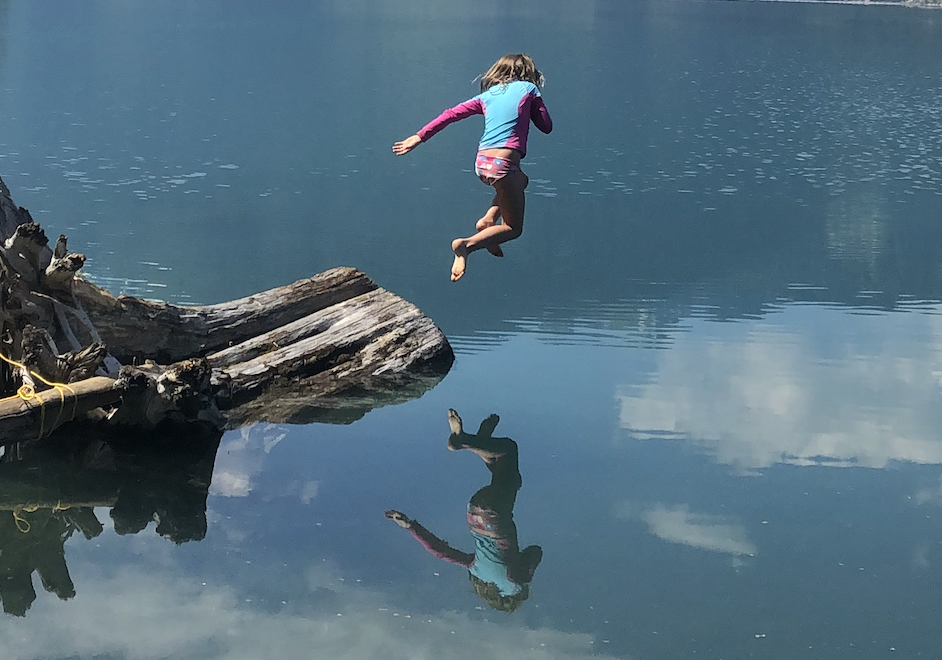
Charlotte, light of my life, is 7. Her fearless physicality, fierce devotion to her brothers, and clarity about her artist’s soul… these are just three of the things that make my heart ache when I think about the many ways the world she is inheriting will fail to deliver what she deserves.
But one of those likely or inevitable failures is fixable. And you can help (especially if you act now — see below)!
At the turn of the millennium, Canada ranked 27th in the world for women’s representation in parliament. Now we’re 59th.
Let that sink in. Canada, a beacon of democracy, has been outpaced on this metric by 58 other nations.
Representation is a prerequisite for democracy — but we don’t offer it to women and girls in this country.
Despite the good work of Equal Voice, which has been advocating for parity in politics for two decades, we’ve only gained 10 points in the past 20 years. At this rate, we’ll be lucky to reach parity by 2062.
Charlotte will be pushing 50 by then, and I probably won’t be alive to see it.
While we were feeling smug about the appointment of a gender-balanced federal cabinet, other countries recognized the cost of not ensuring women have an equal say across government. Dozens of them decided that “natural evolution” (aka “incremental change”) wasn’t cutting it. And so they adopted laws.
Mexico is among them. This deeply Catholic country wrestled its culture of machismo to the ground and achieved parity in politics in 2018.
If they can do it, so can we.
But change doesn’t just happen; it’s made to happen. Especially when the change involved requires some people with power to dismantle the structural barriers that keep other people from accessing it.
Political parties have the power to fix this. The status quo exists because they haven’t prioritized women’s equality as dozens of other countries have. And we haven’t insisted. So we can start to do that, now.
Canadians who want our democracy to live up to its promise can say “no” to the status quo. They can sign an online petition calling on our elected MPs to ensure it is read aloud in the House of Commons. The deadline to make this happen is September 17th.
Together we can create the circumstances that all the Charlottes in our lives grow up in a country that demonstrates its respect for women’s rights by giving them access to an equal voice in government.
The following op ed first appeared on The Toronto Star‘s website (17 September 2021) and in the print version (20 September 2021). The argument I make below is one we’re going to repeat, in collaboration with researchers and advocates across the country, many times in the coming year as part of our new initiative, Making Gender Parity in Politics Inevitable. If you’re interested in learning more about the initiative, please contact sidney@informedopinions.org.
Women candidates and their issues not represented, yet again, during the election
For a few moments last year, when COVID-19’s disproportionate impact on women, immigrants and other historically excluded communities became inescapable, the darkness cracked open and some light got in.
Political leaders across the spectrum mouthed encouraging platitudes, the intrepid leaders at Canada’s YWCA released a feminist recovery plan, and women everywhere, exhausted by the homeschooling-full-time-work Watusi, allowed themselves an instant of optimism. They entertained fantasies in which women’s priorities would drive “building back better” priorities.
(If only they’d been reading the New York Times, they’d have known how futile this was. A header in the paper underlined the ongoing disconnect, declaring, “Nearly half of men say they do most home schooling; 3 per cent of women agree.”)
Earlier this month, Equal Voice revealed that this election features a record number of women and gender-diverse candidates. But hold the champagne: the one-point increase over 2019 obscures the fact that just because 43 per cent of candidates are or identify as women, doesn’t mean the House of Commons will reflect these numbers when the voting is over.
Evidence for this is that women currently make up only 29 per cent of sitting MPs, a 13-point gap from their candidate numbers. Not because voters are reluctant to support them, as research conducted by CBC has made clear; the margins of their wins are similar to men. No, their electoral success rate is driven by the fact that across the board, their parties give them less funding and less access to winnable ridings than their male counterparts.
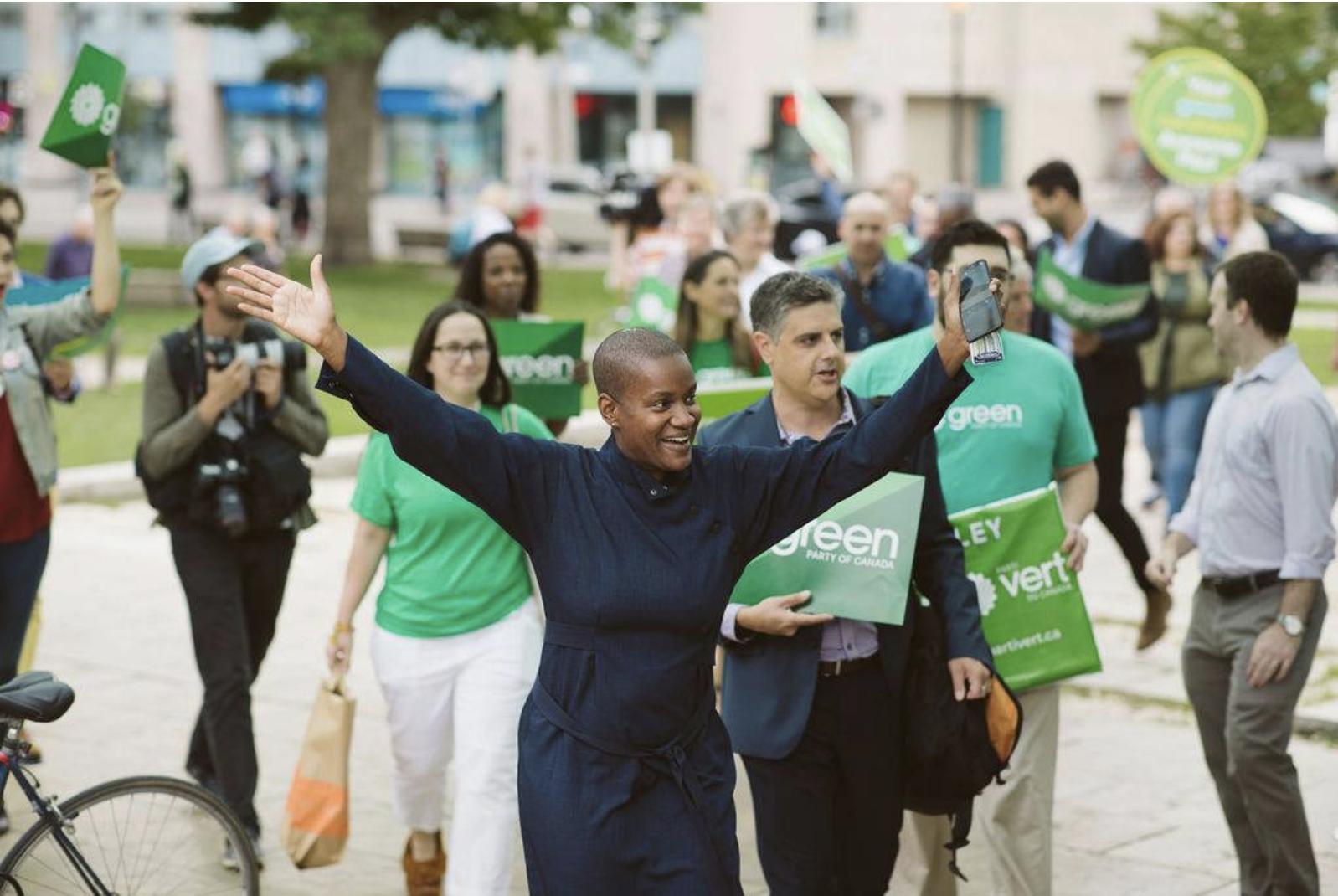
That’s why many Canadian women cheered last week when Green leader Annamie Paul made a point of flagging not only the absence of sisters on the debate platform, but also a few of the policy consequences of our collective absence from the halls of power. She cited sexual harassment in the military and the absence of affordable child-care, but she could have added a whack of others.
Earlier this month, 50 prominent women leaders from politics and business, academia, the arts and the non-profit sector, signed an open letter to politicians and the Canadian public reminding everyone how critically dependent our economy is on working mothers.
“Canada won’t return to pre-COVID prosperity levels if moms can’t go to work,” they wrote. “And moms can’t go to work without better child care.”
Although no demographic group votes as a monolith, a review of voter inclinations conducted last month shows a significant gender divide. Support for the Liberals was greater among women and the Conservatives enjoyed a significant lead among men.
What’s also clear is that more women than men have voted in every one of the last four federal elections. Not seeing themselves and their life-informed perspectives represented by political leadership has perhaps inspired, instead of dissuaded, them from casting ballots.
Whatever the outcome of Monday’s vote, Canadian women deserve better, and our persistent underrepresentation continues to undermine Canada’s claims to democracy.
We need to make this the last election in which our voices, our realities, our leadership capacities are absent or marginalized. The fastest and easiest way to do that is to insist that political parties themselves commit to equality and nominate as many women and gender diverse candidates as men, and give them access to at least half of their stronghold ridings.
Monthly gender prominence by topic of sources in news stories from October 2018 through October 2021. (Courtesy: Gender Gap Tracker research dashboard)
Even if you live in Ottawa, a city that removes snow from its downtown core with military precision, you’ve probably never asked yourself that. Until I read Caroline Criado Perez’s Invisible Women – Data Bias in a World Designed for Men, it had never occurred to me to pose the question either.
But it matters that the answer is yes. And this is just one of a thousand reasons that our democracy needs to elect sufficient numbers of women to erase our chronic under-representation in the halls of power.
When you grow up in a world dominated by male decision-makers, the default assumption is that’s the way it is. And many of the stories we tell ourselves – “men are bigger risk takers”, “men have more confidence”, “it’s easier for men to raise money” – reinforce our willingness to accept that status quo.
But many other countries – some of them with much younger democracies and much less advanced economies – do better. Despite significant gains women have made in every realm, Canada ranks a shocking 61st worldwide in terms of women’s political representation. And our failure to draw on women’s talents and insights has huge implications for every aspect of our lives.
We intuitively grasp how ridiculous it would be if parents were largely left out of policy decisions that affected families… If people living with disabilities had little to no voice when it came to making cities and technology accessible. And yet even though it’s 2019, women still occupy only 27% of the seats in our federal parliament. That’s indefensible.
Women’s voices in the news media are similarly under-represented, so over the past ten years, Informed Opinions has trained women all over the country to translate their knowledge and experience across many fields and sectors into news commentary. We motivate and support women in helping the broader public understand issues important to our lives. More than a thousand of them have done so.
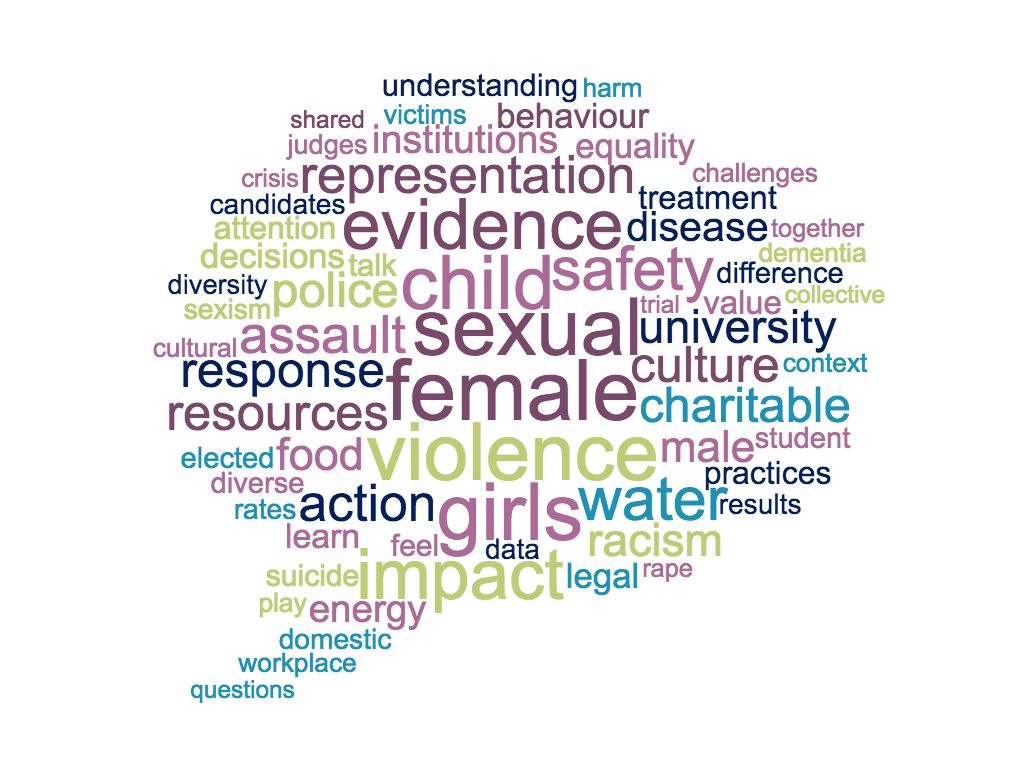
In an effort to understand what stories are missing when women’s voices are absent, we created a word cloud from 100 published op eds penned by women we’d trained. By removing words that also commonly appeared in op eds written by men, we were able to identify which topics and concerns get significantly less attention if women aren’t consulted.
Some of the issues on the list are heartbreakingly predictable. Even before the #MeToo movement, the words “sexual” and “assault”, “violence” and “female” were prominent. But many other words point to essential survival matters for all human beings, such as “food” and “water”, “evidence” and “safety”, “disease” and “treatment”.
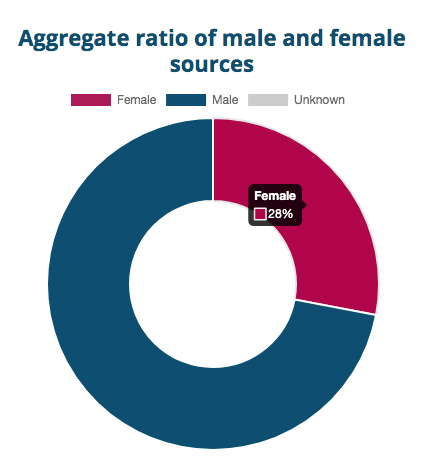
We also recently launched an online digital tool that measures in real time the percentage of women and men being quoted in influential news media. Our Gender Gap Tracker makes clear that men’s voices in public discourse dominate by more than two to one. It also tells us that 60% of the people quoted most often are politicians. That’s why it’s so important when party leaders appoint gender-balanced cabinets. Our equitable representation in one arena helps to eliminate our absence in the other.
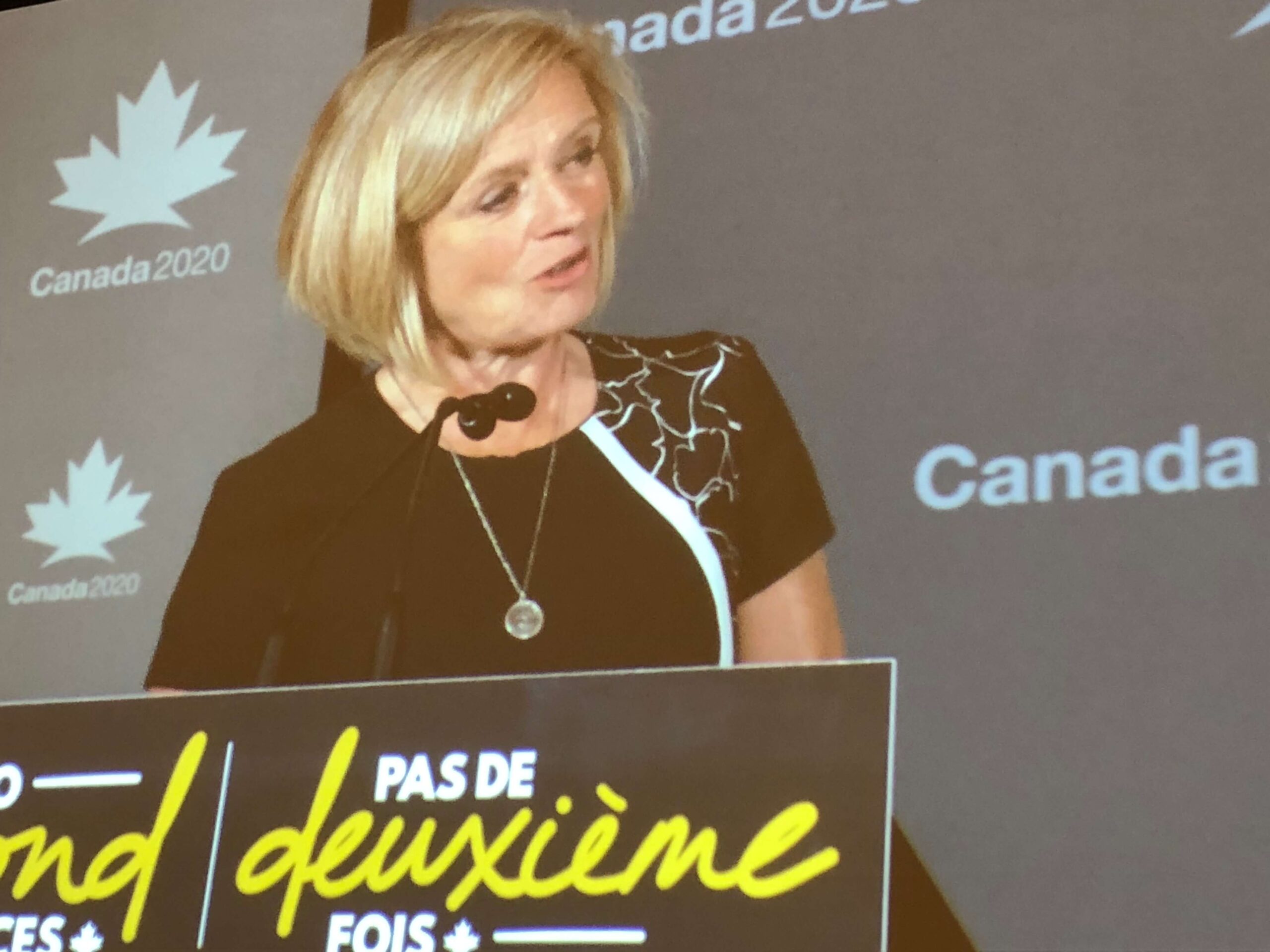
When Rachel Notley became leader of the Alberta NDP, she told her team: “Don’t even think about bringing me a slate of candidates that’s not gender balanced.”* That needs to be every leader’s default. And between now and the next election, Informed Opinions will be collaborating with organizations working to get more women into politics to encourage all political parties to adopt this gender equity principle. Because it’s fundamental to representation.
As for the sexism of snow-plowing, here’s the deal:
The order of priority in which streets are plowed can have significant consequences for women’s lives. Not only that, but those consequences can end up costing taxpayers in health care costs.
The short story is that clearing pedestrian and public transit routes first, as opposed to main arteries, results in fewer accidents and hospital visits, most of them involving women. Because while most men travel alone, many women travel encumbered by shopping bags, strollers or older relatives. Women also generally walk further than men, in part because they tend to be poorer.
You can read Invisible Women yourself to identify the myriad other reasons. These include the fact that male-biased voice recognition software endangers women’s lives and male-biased performance evaluations stunt our careers. Elected officials aren’t the only people responsible for fixing those problems, but because their contracts are up for renewal every four years, it’s easier to ensure gender parity in their ranks.
So, this federal election, if you’re not running for office yourself, support a woman who is, whose values and priorities you share. Knock on doors for her, donate to her campaign, or invite your neighbours to meet and support her, too.
Snow removal is a mere drip off the pointy end of a massive icicle of policy gaps, and so much more needs to be done to make Canada genuinely democratic, and as fair, healthy and prosperous as it can be.
*Rachel Notley spoke about this in Kate Graham’s fabulous “No Second Chances” podcast. Every one of the 12 episodes offers context, inspiration and enlightenment about the critical importance of women in politics.