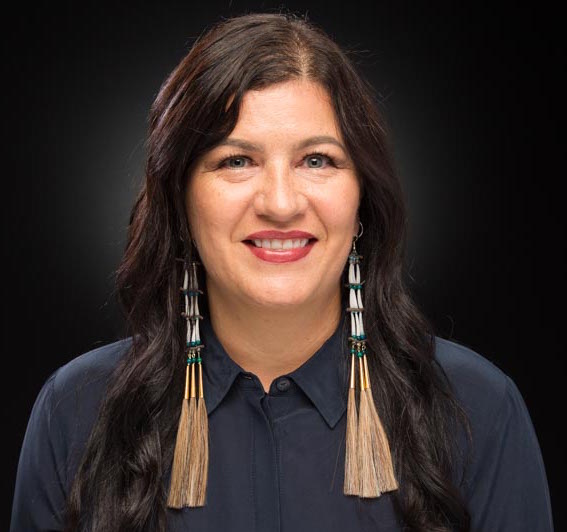
Lori Campbell, newly appointed Associate Vice President, Indigenous Engagement, at the University of Regina has a long history of advocacy. A survivor of the infamous “Sixties Scoop”, she has used her voice to amplify issues affecting Indigenous peoples for many years, responding to media interview requests despite the challenges of doing so.
We all benefit from her willingness to engage and educate, and Informed Opinions is proud to feature her profile in our database of sources. Given the understandable reasons many women representing historically-excluded communities have for not speaking to journalists, we especially appreciate her shared insights below.
Informed Opinions (IO): Given the risks associated with speaking up publicly, especially as an Indigenous woman weighing in on controversial and/or misunderstood issues, why do you say yes to media interviews?
Lori Campbell (LC): In our culture, knowledge and skills come with responsibility. We all have expertise in different areas; we all have a role. I have had, and continue to have, many teachers in my life, many mentors, and they have seen that I have a skill set to navigate media and to get our voices heard. They have nurtured this ability, and speaking to the media is one of those ways I can give back to my community.
IO: How has your perspective on the importance of doing this shifted over the years?
LC: I don’t get rattled so much by reporters now. Some have their own agenda and they want to ask you the same thing five different ways to try to get the answer they want to hear. I used to think maybe they didn’t understand my first answer, but now I know different so I simply keep on my messaging and respond with what I want told.
IO: What preparation strategies have you found to be especially helpful?
LC: Oftentimes I am called upon when there are tragedies or devastation that occur in our communities and to our people. It can be difficult because while providing my expertise, I am also living through the trauma in real time. Usually in these instances I prepare a couple of lines that are really key to the message I want to get out and try to stick to them. And I also do some deep breathing and let the ancestors, the energy flow through me.
IO: What kind of feedback have you received to your commentary either from people in your network or from members of the public more broadly?
LC: From my community, I receive a lot of positive feedback for standing up and carrying our voice forward and for telling it like it is and not holding back.
From the broader community, I also get a fair bit of positive feedback because it helps them learn. I always call on people to do differently, do better, once they know different and know better.
But there are always a few people who just want to be adversarial, who want to say “well, there are two sides to every story” when they hear about residential schools, for example. So I ask “What is the side of the story that explains why there are graveyards and unmarked graves with children outside of residential schools but not other schools across the country?”
IO: What impact — positive or negative — do you think your media engagement and enhanced profile have had on your professional work opportunities or reputation?
LC: Generally, I would say it has been positive. In all honesty, I prefer some reaction to no reaction on the issues I speak to. No reaction means that people are so disengaged that they don’t care. Even if a reaction is negative, at least it shows engagement.
Then again, sometimes your words are spun in a way that you don’t intend. It is important to have trust in our communities. When I hear a statement from an Indigenous leader who I admire and it sounds bad, instead of thinking “I can’t believe they said that”, I reach out to that person because I know they are likely feeling frustrated and angry about how they were presented in the story, and worried about what our community will think.
LC: Generally, I don’t engage with them. I often don’t read public comments. There are trolls and they are terrible. That’s why CBC can’t even allow comments on online stories with Indigenous content.
IO: Do you have any advice for other women who remain reluctant to share their knowledge through media?
LC: Even when your voice shakes, stand and speak. Our voices bring value, a unique narrative and perspective, and they inspire. Our stories need to be told.
“We may never know who we touched or how, but we must trust that someone has heard what they needed to hear in what we have shared and it has impacted them profoundly.“
Informed Opinions is a national non-profit working to amplify the voices of women and gender-diverse people and ensure they have as much influence in public conversations as men’s.
NOTE: This piece was originally published on the Toronto Star’s website on 23 June 2021, and in the paper’s print version the following day. It became the site’s most-read story, and generated significant response. Although I knew my thesis would be controversial, I was still taken aback by how incredibly hostile many people’s defensiveness made them. Some recommended I leave the country, others interpreted my views as an attack on Canadian war veterans. The feedback was often personal and aggressive. It gave me a small window into the abuse that Indigenous people and other members of marginalized groups must face on social media every day. At the same time, seeing the image of Canadians celebrating July 1st on Parliament Hill that the Star used to illustrate my piece reminded me of having witnessed many immigrant families do exactly that during my years in Ottawa. Knowing what a haven this country has been for people persecuted around the world made me proud then, and continues to now. But our claims to moral superiority are undermined by our treatment of Indigenous peoples, both historical and current. We need to do better.
I can no longer celebrate Canada Day, and I’m at a loss as to why anyone else should, either.
The holiday has become for me a reminder of the unspeakable wrongs my ancestors visited upon those who inhabited this land for many centuries before white settlers arrived. Wrongs that many governments have continued in my lifetime.
Sickened by the stark testimony from thousands of residential school survivors brought to light by the Truth and Reconciliation Commission, I first began feeling this way in 2015. But it’s not like illumination hadn’t been available before that.
I had read Maria Campbell’s powerful account of growing up Métis on a road allowance in Saskatchewan. I had followed the news coverage of the Oka and Ipperwash crises, Stephen Harper’s apology to Indigenous peoples in 2008, the Idle No More movement protests in 2012.
So I feel shame over how long it took me to get here; how many opportunities I was given to arrive at this conclusion; how much evidence I needed to be presented with in order to understand — not just the historical travesties, but my own family’s complicity.
I grew up in the leafy, affluent suburbs of west island Montreal and Vancouver’s North Shore, in circumstances that assured my ignorance was as vast as my privilege. I learned more about the first peoples of this continent from TV and movies than I did in school — no doubt all of it grievously wrong. And I never crossed paths with a person I knew to be Indigenous until I was in my early thirties.
The first time I heard human rights lawyer Mary Eberts use “settler” to refer to herself, the concept was so foreign to me that I took several minutes to grasp what she meant. And when I did, I was not ready to claim the term for myself.
Then a few years ago, at a conference in Calgary, an Indigenous panelist invited the mostly white people present to consider how we had benefited from colonization. That moment called to mind my mother’s childhood home on a lush and productive fruit farm bordering on the south shore of Lake Ontario. I had spent many delightful weeks there as a kid, climbing the poplar trees, swimming in the pool, collecting chestnuts in the fall.
Although the property hasn’t been in my family for decades now, it still figures prominently in my imagination. My mother’s maiden name was Secord, connecting her, like many in the region, to the famous Laura Secord. A few years earlier, I had proudly participated in a walk commemorating my ancestor’s historic trek to warn the British troops of a likely American invasion during the War of 1812.
Laura Secord’s father had come north from Massachusetts to what was then known as Upper Canada in 1795 to accept a land grant. So claiming my connection with Laura Secord necessitates acknowledging my settler status.
You may not feel a connection to land that was inappropriately granted to your predecessors. Maybe your own forebears didn’t own the fields they worked. Or maybe your family came here more recently, absolving you of the responsibility I now feel.
But here’s what I invite you to think about on July 1 this year:
As long as Indigenous children are still being taken from their homes at a disproportionate rate by social service workers … As long as Indigenous communities are still living under boil-water advisories … As long as Indigenous women are still being murdered, or incarcerated for being poor or profoundly damaged by intergenerational trauma, how can Canadians hold up our flag as an emblem of the values we say we support?
Every cent earmarked for Canada Day celebrations — the concerts, the fireworks, the speechmaking — should be multiplied by a thousand and invested instead in the reconciliation efforts repeatedly called for not just by Indigenous peoples but by government reports documenting the indefensible acts carried out in our names.
No doubt it would still be a drop in the bucket relative to what’s required, but at least it would remind us every year that we cannot in all conscience, celebrate “Canada” until our actions live up to our commitments to human rights.
Shari Graydon is the Catalyst of Informed Opinions, a non-profit working to amplify the voices of women and gender-diverse people and ensure they have as much influence in public conversations as men’s.
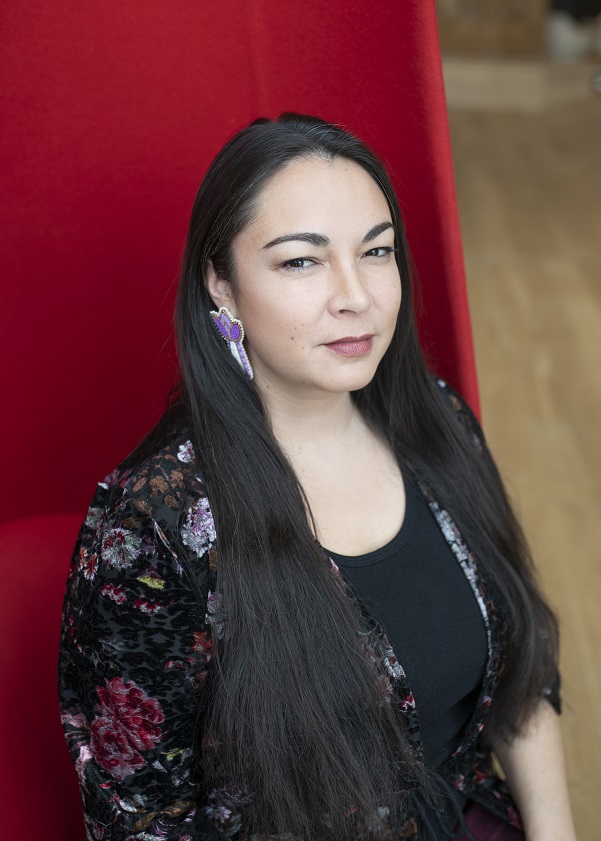
andAmy Ede.In the context of our collaboration to engage and support more Indigenous women and gender diverse people in being heard through the media, the two recently sat down (virtually) to discuss related ideas.
SHARI: I’m embarrassed to admit that when we started Informed Opinions in 2010, I seriously under-estimated the obstacles to bridging the gender gap in Canadian media. Blinded by my own, relatively benign experience, I thought “if I just show women how under-represented our voices are; teach them how to translate their knowledge into publishable op eds, or become more comfortable and effective in media interviews; and then make it easy for journalists to find them, that will do it.”
I failed to realize how reluctant many women are, especially if they work in sectors where they’re constantly being reminded in subtle or explicit ways that they don’t belong. As a woman who never had kids of my own, I also didn’t appreciate just how challenging it is to make time for unpaid media engagement while holding down a job and raising a family.
And even though I’ve been getting hate mail since the days when trolls had to address and stamp an actual envelope, my privilege blinded me to how much worse the backlash directed to BIPOC women is, especially when facilitated by toxic social media culture.
AMY: Yes,doxxing (the public broadcasting of personal details about how to find a person offline) is a terrifying form of oppression and the violence in real life and on social media is omnipresent and magnified for Indigenous women. Every interaction presents a choice to face violence or be silent. Real life danger looms large as we know that white men may rape and murder Indigenous women, girls, Two-Spirt and LGBTQQIA people with impunity. The cases of Missing and Murdered Indigenous Women and Girls, including Cindy Gladue and Tina Fontaine, show a justice system that dehumanizes us and robs us of our dignity just as the perpetrators have.
Encouraging us to step up is asking us to engage with systems that have ignored, pressured, manipulated, or exploited us. We have been consulted but our input has not been honoured. In addition, demands for unpaid labour, rationalized by community good or awareness, have exhausted us. We are asked to be experts on Indigenous culture or history, educating journalists, interviewers and consultants about basic things that should have been taught in schools.
I share a great deal of myself through the news media and on social media because I want to be seen and understood in a system that erases, displaces and misrepresents me. I have experienced the hurt and humiliation of opening an article about an Indigenous woman advocate I look up to and being thrown into the horrifying details of her childhood abuse in the opening paragraphs.
I know that there is always a possibility of harm to myself and others when I lend my voice to a medium I can’t control. The best I can do is equip myself with the tools I need to advocate for strength-based, solution-focused, and trauma-informed communications and go the extra mile to educate others. It’s a privilege that I have the support systems and conviction that I need to do this and that trailblazers like Ellen Gabriel and Pam Palmater have normalized being outspoken.
SHARI: The sobering context you share echoes the perspectives we heard this summer during a roundtable we convened with BIPOC women who are featured in our database of expert sources. White journalists and sources need to better understand how fraught the terrain is for those who don’t enjoy privileges we take for granted.
At the same time, we remind women with critically valuable insights that if they decline interview opportunities, counting themselves out because they’re not “the best” person, this is as much of a problem as journalists failing to seek their perspectives in the first place. The journalist will simply go to the next available source, who’s likely to be male, and unlikely to be fettered by the self-expectation that he has to know everything.
That’s why we encourage women to focus on their ability to “add value”. And because they have relevant experience — or they wouldn’t have been contacted in the first place — they can almost always clear that bar.
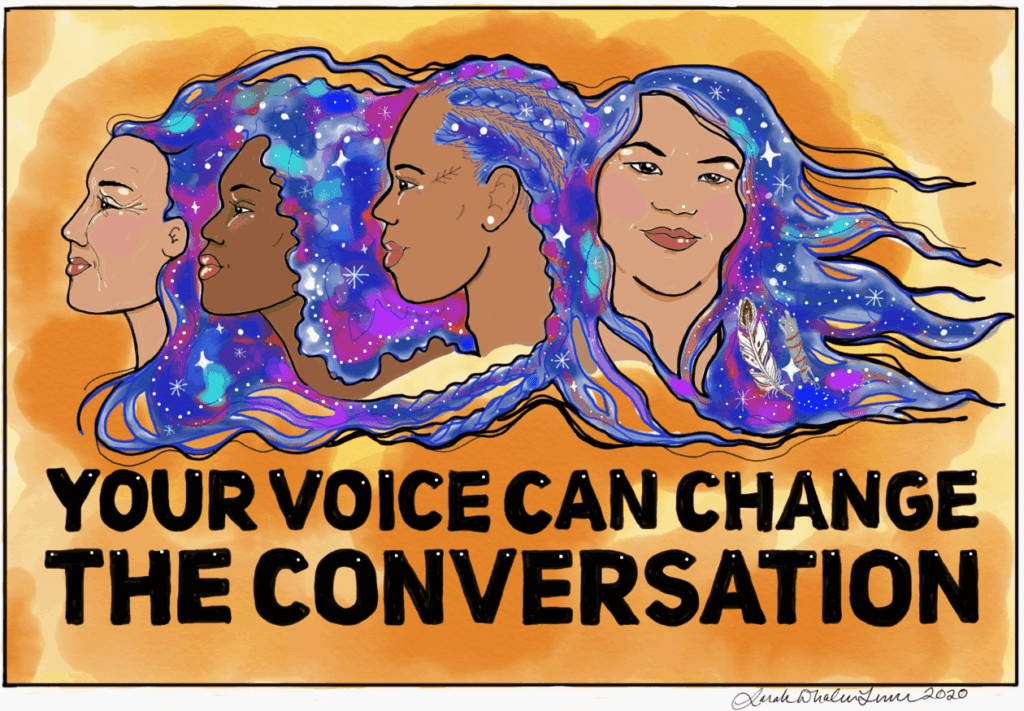
“The galactic imagery in this work suggests the infinite knowledge that lives within us. The lived experience of these four women is valid and theirs to share.” – Sarah Ayaqi Whalen-Lunn (she/her) is an Inuk artist based out of Anchorage
AMY: I see Indigenous women on Twitter who are experts on traditional Indigenous governance structures, relational worldviews, and artistic practices posting brilliant statements in the public domain, for free. A decolonized perspective on holding knowledge recognizes that job titles and institutional credentials are irrelevant to the value of a person, their ideas, and the level of respect we show them. We need to change not only how we listen, but who we listen to, facilitating the amplification of these perspectives.
SHARI: The absence of financial compensation for one’s hard-won insights compounds the problems of invisibility. The deck is stacked against those who are already challenged by racist structures and don’t have the time to invest in labour that’s not only risky but unpaid.
Another challenge is that dominant media practices have created the perception that you have to look or sound a certain way to be considered credible. The image of authority that’s been reinforced by news media for centuries is that of a middle-age white male dressed in business attire. And so anyone outside of that frame is more likely to feel undermined before they even open their mouths.
AMY: Some women are resisting constructs of appropriate ways to express themselves and exercising our right to be angry. Black and Indigenous women have led the way in challenging the notion that we need to be polite, approachable, and smile in order to be heard; that we don’t have to create a safe space for others to witness our outrage. When Minister Hadju was on CBC’s Power & Politics in a leather flight jacket, an Indigenous woman leader expressed that this was how she wanted to dress for interviews. We need to dress in ways that make us feel powerful and ourselves.
I was approached to speak on an Ask Women Anything panel in Ottawa back in 2018, when I’d recently departed my position as Director of Communications at the Native Women’s Association of Canada. I wrote speeches and presentations for others but I didn’t see how I had a voice that mattered.
Participating convinced me that I’m an expert in my own personal experience. The act of voicing my truth legitimizes shared experiences of violence, racism, and erasure and helps others better understand the barriers to the health and wellbeing facing many Indigenous women, Black women, and Women of Colour.
SHARI: I’d forgotten that connection! Ask Women Anything is an Ottawa-based grassroots amplification initiative that was created by Informed Opinions’ previous board Chair, Amanda Parriag as a project of Informed Opinions. It became such a powerful platform for voices and perspectives that have been traditionally marginalized that Amanda is now leading it as a stand-alone entity.
AMY: After the panel, Amanda offered to co-write an op-ed with me for a national publication. The piece we wrote lamenting that “progress” had become a dirty word was published in The Toronto Star, and generated a lot of reader engagement. The next time I felt that I had a perspective that needed to be heard, I had the confidence and experience to be published on my own. It’s our responsibility not only to speak out, but to encourage and lend capacity and resources to others who are finding their own voice in media.
I’m experienced in advocacy, I’m engaged with my community, and I spend a lot of time learning and writing about Indigenous priorities. Who I am and what I do has made me artful in the communication of difficult truths. I know that my voice can change the conversation and I put in extra work to be heard on my own terms.
AMY: This was a success for me in many ways. I fear backlash from the Indigenous community the most and was shocked not to be called in or called out on something egregious. My tweet about the article received over 100 retweets from accounts including 1492 LandBackLane, so I hope that land and water defenders knew it was a love letter to them and their work and that Indigenous readers knew I wasn’t trying to speak on their behalf. Non-Indigenous readers told me that they felt informed and that was also a goal; to stomp out confusion and build understanding that I hope will turn into support.
SHARI: We’ve seen so many examples of women creating demonstrated impact by sharing experiences and perceptions that were previously under-reported or missing entirely.
It’s impossible to predict what difference it would make if women were quoted 50% of the time (instead of 30%, as our Gender Gap Tracker is currently showing). But we experimented by taking 100 op eds written by women we’d trained that were published in influential daily newspapers. We created a word cloud to see what issues came up most often. Then we created a comparable word cloud with a random sample of 100 op eds written by men during the same period of time. Finally, we deducted the words that were common to both samples to end up with the issues that only gained prominence when women’s voices were featured.
It was a heartbreaking exercise. Some words were completely predictable: women, girls, sexual, assault. But many others were not, like food and water, evidence and impact, racism and police! What’s interesting is that we did this experiment in 2016, before the #MeToo movement and #BlackLivesMatter — though interestingly after #IdleNoMore. It’s deeply concerning to think of the issues that are not getting attention because we chronically under-represent the people — women, Indigenous people, people of colour, people living with a disability, LGBTQQIA — who are most affected by them.
AMY: I agree that the more we expand representation in media to include people who identify as Two-Spirit and non-binary, women of diverse faiths, women experiencing incarceration, women who live in rural, remote, and northern areas, working-class women, women experiencing poverty, and women who are street associated, the better we will be able to see the landscape as it is.
It interests me that evidence and impact are included in the word cloud. Indigenous women are trained to give evidence beyond our lived experiences because we are not believed. With better awareness of our lived experiences and understanding of our priorities, it may be possible to speak without first quantifying how we have been silenced, why our knowledge is valuable, and why our voices are deserving of respect.
Informed Opinions is actively focused on including voices more representative of the population in the Circle of Experts. We’re seeking Indigenous women and gender diverse people across industries and with professional and personal expertise to join. There’s no limit to the number of rich perspectives needed from First Nations, Inuit, and Métis women, as well as others with a story to tell.
Shari Graydon is the Catalyst of Informed Opinions, a non-profit working to amplify women and gender diverse individuals’ voices and ensure they have as much influence in public conversations as men’s.