

For Charlotte’s sake, say NO to the status quo

Charlotte, light of my life, is 7. Her fearless physicality, fierce devotion to her brothers, and clarity about her artist’s soul… these are just three of the things that make my heart ache when I think about the many ways the world she is inheriting will fail to deliver what she deserves. 

But one of those likely or inevitable failures is fixable. And you can help (especially if you act now — see below)!

At the turn of the millennium, Canada ranked 27th in the world for women’s representation in parliament. Now we’re 59th. 

Let that sink in. Canada, a beacon of democracy, has been outpaced on this metric by 58 other nations.

Representation is a prerequisite for democracy — but we don’t offer it to women and girls in this country. 

Despite the good work of Equal Voice, which has been advocating for parity in politics for two decades, we’ve only gained 10 points in the past 20 years. At this rate, we’ll be lucky to reach parity by 2062

Charlotte will be pushing 50 by then, and I probably won’t be alive to see it. 

While we were feeling smug about the appointment of a gender-balanced federal cabinet, other countries recognized the cost of not ensuring women have an equal say across government. Dozens of them decided that “natural evolution” (aka “incremental change”) wasn’t cutting it. And so they adopted laws.

Mexico is among them. This deeply Catholic country wrestled its culture of machismo to the ground and achieved parity in politics in 2018. 

If they can do it, so can we.

But change doesn’t just happen; it’s made to happen. Especially when the change involved requires some people with power to dismantle the structural barriers that keep other people from accessing it.

Political parties have the power to fix this. The status quo exists because they haven’t prioritized women’s equality as dozens of other countries have. And we haven’t insisted. So we can start to do that, now.

Canadians who want our democracy to live up to its promise can say “no” to the status quo. They can sign an online petition calling on our elected MPs to ensure it is read aloud in the House of Commons. The deadline to make this happen is September 17th. 

Parity in politics? It’s only fair. 

Share the petition with others, follow us on Twitter @59_WTF, watch this space for other ways you can help, or sign up to receive email notifications from Informed Opinions. 

Together we can create the circumstances that all the Charlottes in our lives grow up in a country that demonstrates its respect for women’s rights by giving them access to an equal voice in government.
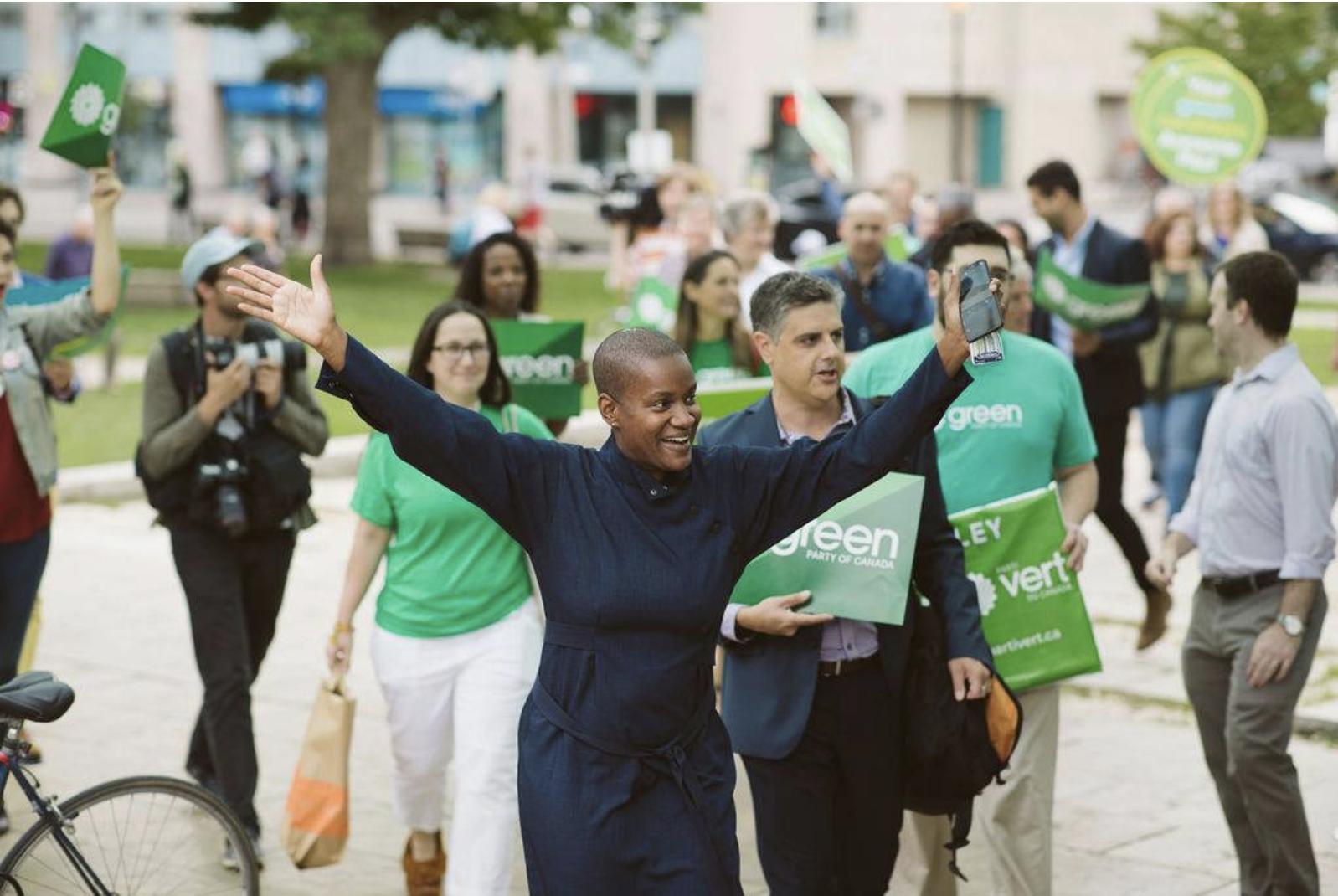
Let’s make this the last election in which our voices, realities, leadership capacities are absent, marginalized

The following op ed first appeared on The Toronto Star‘s website (17 September 2021) and in the print version (20 September 2021). The argument I make below is one we’re going to repeat, in collaboration with researchers and advocates across the country, many times in the coming year as part of our new initiative, Making Gender Parity in Politics Inevitable. If you’re interested in learning more about the initiative, please contact sidney@informedopinions.org

Women candidates and their issues not represented, yet again, during the election

For a few moments last year, when COVID-19’s disproportionate impact on women, immigrants and other historically excluded communities became inescapable, the darkness cracked open and some light got in.

Political leaders across the spectrum mouthed encouraging platitudes, the intrepid leaders at Canada’s YWCA released a feminist recovery plan, and women everywhere, exhausted by the homeschooling-full-time-work Watusi, allowed themselves an instant of optimism. They entertained fantasies in which women’s priorities would drive “building back better” priorities.

(If only they’d been reading the New York Times, they’d have known how futile this was. A header in the paper underlined the ongoing disconnect, declaring, “Nearly half of men say they do most home schooling; 3 per cent of women agree.”)

Earlier this month, Equal Voice revealed that this election features a record number of women and gender-diverse candidates. But hold the champagne: the one-point increase over 2019 obscures the fact that just because 43 per cent of candidates are or identify as women, doesn’t mean the House of Commons will reflect these numbers when the voting is over.

Evidence for this is that women currently make up only 29 per cent of sitting MPs, a 13-point gap from their candidate numbers. Not because voters are reluctant to support them, as research conducted by CBC has made clear; the margins of their wins are similar to men. No, their electoral success rate is driven by the fact that across the board, their parties give them less funding and less access to winnable ridings than their male counterparts.

That’s why many Canadian women cheered last week when Green leader Annamie Paul made a point of flagging not only the absence of sisters on the debate platform, but also a few of the policy consequences of our collective absence from the halls of power. She cited sexual harassment in the military and the absence of affordable child-care, but she could have added a whack of others.

Historically, women have tended to place greater priority than men on combating climate change and food insecurity, on investing in diplomacy versus military action, on promoting education and public health.

Earlier this month, 50 prominent women leaders from politics and business, academia, the arts and the non-profit sector, signed an open letter to politicians and the Canadian public reminding everyone how critically dependent our economy is on working mothers.

“Canada won’t return to pre-COVID prosperity levels if moms can’t go to work,” they wrote. “And moms can’t go to work without better child care.”

Will their “don’t mess with us” message make a difference? Although the letter didn’t generate much news attention, a recent analysis by polling firm Environics finds that child care is, in fact, a key issue in a large number of close races.

Although no demographic group votes as a monolith, a review of voter inclinations conducted last month shows a significant gender divide. Support for the Liberals was greater among women and the Conservatives enjoyed a significant lead among men.

What’s also clear is that more women than men have voted in every one of the last four federal elections. Not seeing themselves and their life-informed perspectives represented by political leadership has perhaps inspired, instead of dissuaded, them from casting ballots.

Whatever the outcome of Monday’s vote, Canadian women deserve better, and our persistent underrepresentation continues to undermine Canada’s claims to democracy.

We need to make this the last election in which our voices, our realities, our leadership capacities are absent or marginalized. The fastest and easiest way to do that is to insist that political parties themselves commit to equality and nominate as many women and gender diverse candidates as men, and give them access to at least half of their stronghold ridings.

Monthly gender prominence by topic of sources in news stories from October 2018 through October 2021. (Courtesy: Gender Gap Tracker research dashboard)