What Impact are We Having? What More Can We Do?

We recently surveyed hundreds of women who’ve participated in our workshops and remained on our mailing list. Email overflow and work-life demands being what they are, we were happy to log 57 responses from women in 16 cities across the country. They gave us insight into what use they’ve made of the training we deliver, and how else we might be able to support them in continuing to amplify their voices.
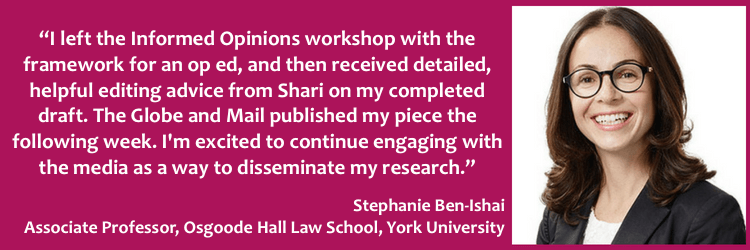
Positioning yourself for impact

I recall hearing advice growing up that “it’s not what you know but who” that makes a difference to your career. But actually, it’s who knows you that’s more important. And visibility allows you to be seen, and your potential to contribute to be recognized. That dynamic is central to what we do and why.

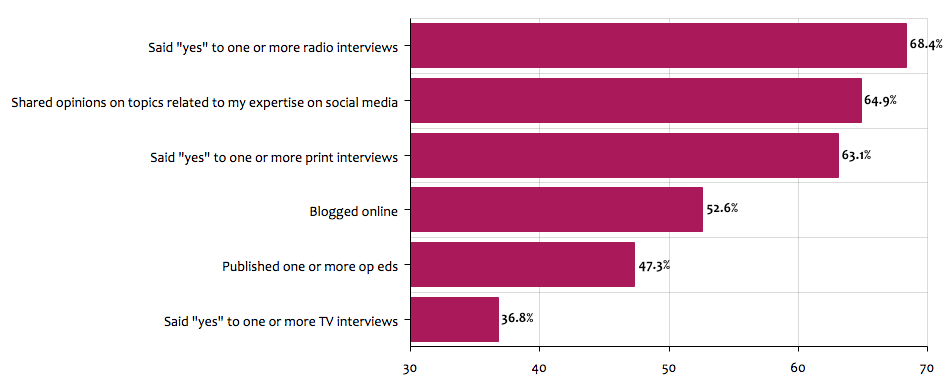
That’s why we were very gratified by the responses women gave to the question:

What kind of engagement with media have you had in the past 7 years?
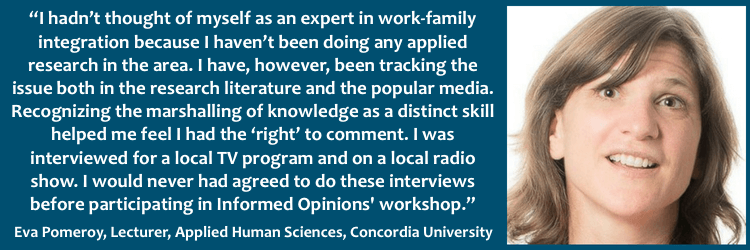
Eva Pomeroy published five op eds in 2015, three in print media and two online, and did two radio interviews. She says the idea of going to the media would never have occurred to her, but she now appreciates the impact she’s able to have addressing issues she knows and cares about.

We also asked what kind of feedback or sense of impact women had experienced as a result of their increased profile. Here’s what they said:
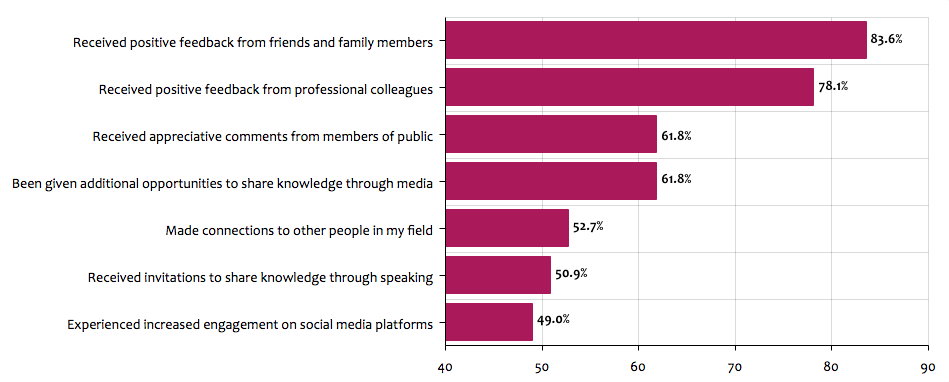
Not all the news was good. Predictably, 29% of women received negative feedback from trolls or haters online, and 13% were criticized by colleagues. Although neither of those experiences are pleasant, on balance, the positive results of increased exposure far outweighed the negatives.

Indeed, in a response to a more general question about what impact, if any, attending our programming or engaging with media had had,

“82% cited increased confidence and/or sense of agency;
56% cited increased recognition, visibility and credibility.”

If she can’t see you, she can’t be you

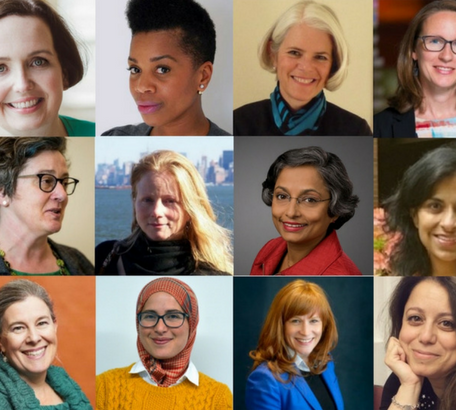
The enhanced professional opportunities that flow from increased visibility constitute individual benefits. But the global impact of more diverse and visible female role models is also profound.

When Adrienne Clarkson was Governor General, she was often approached by Asian Canadian girls who were wide-eyed with the suddenly expanded possible futures they could imagine for themselves as a result of seeing someone who looked like them in the prestigious and influential role of Vice Regal.
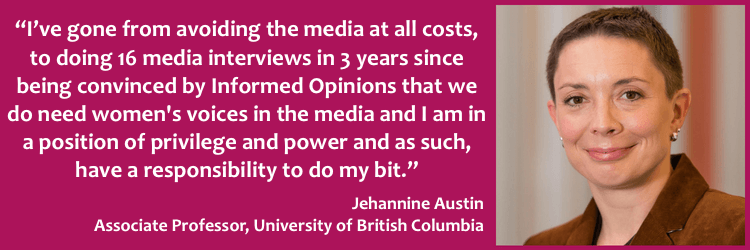
Your visibility – as a politician or CEO, chemical engineer or doula, mining executive or chiropractor – makes it easier for girls and young women to envision themselves in a similar role. And most of those your role modelling inspires won’t ever have the chance to tell you. But the absence of that communication in no way lessens your impact.

We also asked members of our network to weigh in on what kinds of support from Informed Opinions they continue to value, or would like to see us take on in the future.

Almost three-quarters (74%) expressed interest in the kind of media engagement tips and tools that we deliver in our workshops, and share through this blog and on social media. (If you’re not already receiving notice of new blog posts by email, you can join our Linkedin Group or sign up for our blog.) Another 72% requested additional training workshops to help build and refine skills.

Many said they appreciated the work my colleague Samantha oversees in promoting their expert profiles or media commentaries to journalists (63% and 58% respectively). And well over half (58%) encouraged us to convene events that would permit them to connect with other media-engaged expert women. Slightly under half (46%) expressed interest in free webinars that would permit them to get answers to specific questions related to their media engagement.

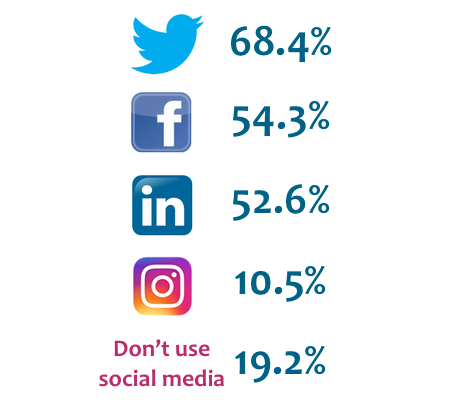
Where Do Our Experts Engage Online?
How We’re Going to Bridge the Gender Gap by 2025

Last fall we announced What Gets Measured Gets Done – a new initiative that tracks the data to measure the male and female voices being quoted and featured in Canada’s most influential news media. Our explicit goal is to achieve gender parity by 2025 by celebrating the leaders and encouraging the laggards to do better. Almost two-thirds of our grads (63%) expressed interest in supporting this endeavor, so we’ll be looking to them to share the data we collect with their networks.
Survival Guide for Women in the Workplace

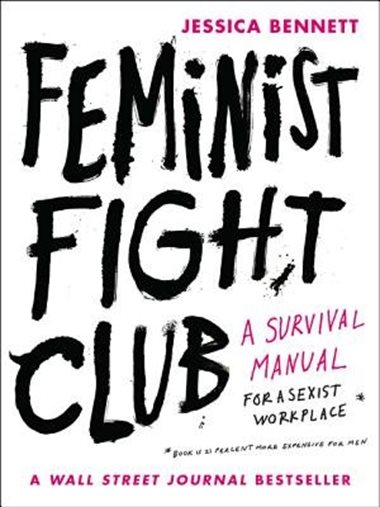
Finally, 53% of our network expressed interest in a “Surviving & Thriving in the Workplace Guide for Expert Women”.  Although I relished the idea of writing this book, anticipating its enormous audience, it turns out Jessica Bennett has already written it.

She called it Feminist Fight Club – A Survival Manual (For a Sexist Workplace), and it’s a gem: funny, deeply resonant and chock-full of practical advice. She drew on both her own daily office experiences as well as those of a small group of smart, articulate and ambitious women. Together they offer an arsenal of strategies that include snappy comebacks, encouraging pep talks and strategically smart action steps.
How do you respond to charges of being too aggressive or sensitive?

Let’s say you’re an intelligent, confident and assertive woman who doesn’t shy away from expressing your opinion: chances are that at one time or another, a colleague may have decided you were “too aggressive.”

Or maybe, by politely objecting to sexist behaviour in your workplace – the kind that expects the women present to  serve the coffee, tolerate derogatory comments, or delight in remarks about their appearance – you’ve been accused of being “over-sensitive”.

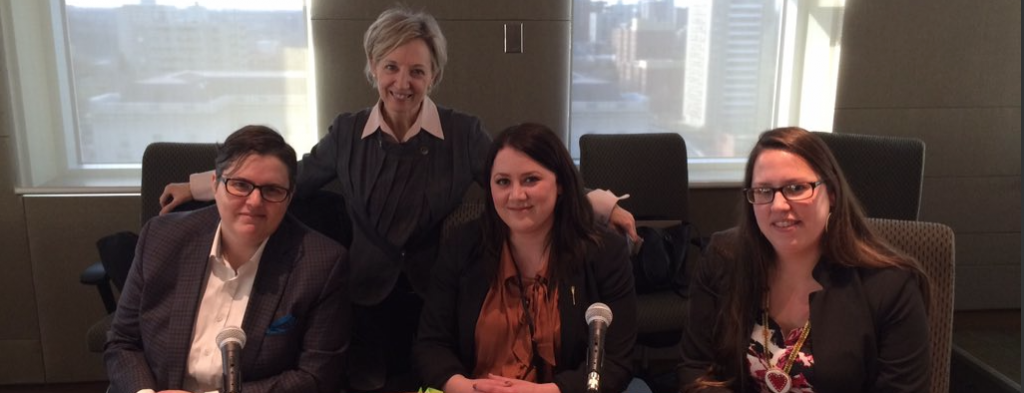
Last week at an Unbitten Tongues* forum with three fearless panelists and about 65 engaged civil servants in Alberta, both of these examples came up.

How, really, women asked, does one overcome the momentary disbelief or flash of irritation to respond to such comments effectively?

Dana DiTomaso, a digital marketing expert, CBC technology columnist and partner at Kick Point, observed that ever since she started dressing in men’s clothing, she’s no longer on the receiving end of such patronizing remarks.

But for those not willing to sacrifice their style preferences in order to be treated with respect, she offered the following comeback strategy:

Rather than try to respond to a comment or accusation that puts you on the defensive, she suggested, try shifting the onus onto the accuser by asking:

“How so?”

I think the strategy is inspired.

Because whether or not people offering such criticism are consciously trying to shut you down, by expecting them to explain or defend their comments, you’re both implicitly rejecting the premise of the dismissal, and requiring your accuser to articulate the value judgments that informed the comments. Their efforts to do so are likely to reveal more about their attitudes and assumptions than about your behaviour or emotional state.

The two other Edmonton panelists, recruited by the government of Alberta’s Ministry of the Status of Women, were equally thoughtful. Recently elected MLA Deborah Drever has been volunteering in her community since the age of eight, and is completing a degree in sociology at Mount Royal University. And Miranda Jimmy is a member of Thunderchild First Nation who sits on the Edmonton Public Library board and co-founded RISE – Reconciliation in Solidarity Edmonton – to support reconciliation in words and actions.

The participation of the three women in the Unbitten Tongues forum gave those present an opportunity to hear from, ask questions of and be inspired by role models who are speaking up in pursuit of making change in business, in government and in the non-profit sector.

For so many women who are working in arenas that are led and/or dominated by male colleagues, the opportunity to engage in frank conversations in a safe, women-only space is revelatory and invigorating.

That’s why, over the next year, in conjunction with the launch of my new book, OMG! What if I really AM the best person? I’ll be looking to convene similar panels in cities across Canada.

If you’re interested in engaging, motivating and supporting women in your network or community to speak up for change, please let us know. We would love to collaborate with you.

*Unbitten Tongues – In recognition of the difference women can make when they speak up — despite the many internal and external barriers to doing so — Informed Opinions offers opening remarks and facilitates panel discussions aimed at encouraging more women to share their knowledge and speak their truth.  

7 Ways to disable gender stereotypes for your daughter

Screen Shot 2014-01-27 at 12.54.01 PM

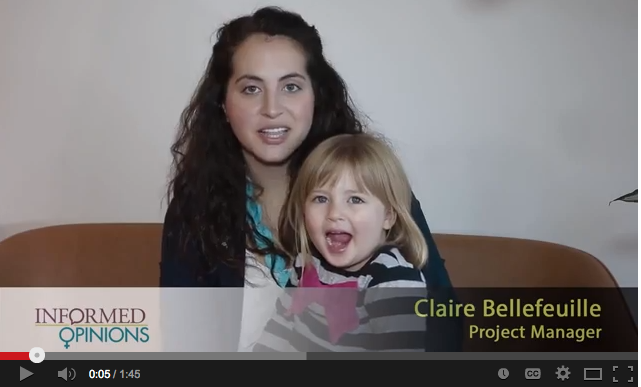
Last month, Informed Opinions’ Project Manager, Claire Bellefeuille published an op ed in the Ottawa Citizen expressing the wish that people would stop telling her daughter, Lily, how beautiful she is. She confessed that,

“…receiving constant accolades about her physical appearance gives my daughter the impression that her value is predicated on how she looks.”

And then she explained that Lily was refusing to wear jeans in cold weather because she’d already learned that she got more compliments when dressed in frilly dresses. We turned our discouragement over the fact that Lily had discerned this even though she was barely out of diapers into a 2-minute video campaign to reinforce the importance of strong and visible female role models who are celebrated for the brains, rather than beauty.

All sorts of research backs up why our tendency to focus girls’ attention on stereotypically feminine traits and behaviours undermines our aspirations for them to have access to every career and achievement opportunity available to boys.

Kids start to understand gender roles before they’ve reached their third birthday. And pre-school is where they begin developing social prejudices, including those based on gender.

Many of the things we do to reinforce gender roles are unconscious and reinforced by years of living in societies that still value men and women differently. The following advice reframes a list of “don’ts” I came across recently to focus on the kinds of positive choices we can all make around the girls and young women in our lives.

1. PRAISE HER INTELLIGENCE, COURAGE, SKILL…

Claire did a great job of making this point, encouraging us all to bite our tongues when moved to comment on superficials, and look for other qualities to praise, instead:

… tell a child or a teen how much you appreciate their thoughtfulness or generosity… In the spirit of the season, give them a reason to glow from the inside out.

2. LET HER BE BOISTEROUS

Encouraging girls to be quiet and polite, while allowing boys to be rambunctious, sets up a behavior pattern that ultimately reinforces the women as “pleaser” trap. And the desire to be likeable and accommodating can inspire women to avoid conflict and refrain from challenging the status quo, neither of which will serve those who aspire to leadership roles.

3. ABANDON PINK TOYS

Much hand-writing has already occurred over the unfortunate tendency of marketers to paint everything meant for girls a perky bubble-gum pink. Despite innate differences between males and females, much research suggests that the way we socialize kids has more to do with their preferences than genetic predispositions.

Many toys targeted to girls are appearance-based, while those aimed at boys are more likely to encourage the kinds of exploration and problem-solving skills that will be useful at work and in leadership capacities.

4. REDEFINE PRINCESS

It’s almost impossible to prevent girls growing up in our world from being exposed to the princess mania, but that doesn’t mean that you have to let the Disney definition – “Rescue my hourglass figure from harm so I can live happily ever after!” – prevail.

Contemporary real-life princesses are often highly educated, multi-lingual and engaged in advocacy.  Other cultural references – The Paper Bag Princess by Robert Munsch, the TV show Xenia the Warrior Princess, and the animated film, Tangled – also offer alternative models.

5. MODEL & PROMOTE PHYSICAL PROWESS

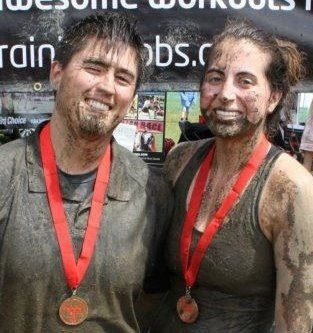
I know for a fact that the hard jobs in Claire’s household don’t always get relegated to her husband. Just this weekend she was captured on film scaling a 12-foot high rope, and she’s also been known to compete in gruelling tests of strength and endurance!

Claire and her husband Pierre after having completed the Spartan Race. (I know: crazy!)

But there are easier ways to address this issue: make sure your daughter gets to see you wield a hammer or push a lawnmower now and then, encourage her to take out the garbage, and show her how to open the new jar of peanut butter by banging the edge of the top on the counter first.

6. GIVE HER A CHANCE TO INTERACT WITH BOYS

All-girls’ schools have for years trumpeted the advantages available to those attend them. New research questions that. Regardless of who they’re surrounded by in the classroom, it’s useful for girls to have the opportunity to develop the social skills necessary to interact with boys.

Studies have found that single-sex segregation influences what kinds of social skills, styles and expectations develop, and the lack of exposure to boys is likely to make it harder for girls to integrate into male-dominated fields or workplaces later on.

7. ABANDON BODY CRITICISM

In an age sensitive to the impact of anorexic-looking models and the devastation of social media assaults, this should be a no-brainer. But so much of our culture perpetuates the constant critique; standing at a check-out counter in the supermarket alone makes it hard to avoid the “Crimes against bikinis” and “who wore it better” features.

At very least, we can control the things we say in the presence of girls: we can avoid commenting on the bodies of celebrities, confessing to our own physical insecurities, or focusing undue attention (pro or con) on anyone’s physical parts. It’s possible to promote healthy eating and regular exercise without the relentless appraisal attached to the practice by the body image police.

Given the cultural onslaught we’re up against, our work amplifying women’s voices has to start early — by encouraging girls to play big.