

How to Cope with the Coronavirus Shutdown

Is it possible to eat your weight in popcorn? 

I appear to be trying. 

The pandemic lock-down has also given me permission to double my chocolate intake, consume cookies at breakfast and microwave chunks of cheese on a plate so I can scrape the stuff into my mouth with a fork. The grapes have become mere garnish, and I don’t even try to find a 5 pm Zoom date to pretend I’m not drinking alone. 

I’m not proud of this behaviour, and the fact that I have the luxury of doing it without being criticized or even interrupted at any hour of the day or night is not lost on me. I know others are negotiating divorces over lesser offences committed in too-close quarters. And some are contributing to the tragically skyrocketing calls to women’s shelters.

Reading others’ coronavirus coping mechanisms inspires or depresses me, depending on how ambitious they are and where I am on the popcorn/chocolate/cheese self-loathing cycle. But in case you’re in need of new ideas, here’s what I — and some of Informed Ops’ experts — have found helpful:

Phone calls: I’m old enough to have spent the first part of my career unencumbered by email’s demands. And yet like almost everyone else, I’ve allowed online communication to supersede the phone. Now, however, exhausted by the cognitive dissonance of virtual Zoom meetings (the video tricks your brain into believing you’re with others, but your body knows better and the impact is wearing), I often dial a contact or friend without (gasp!) emailing them to secure an appointment first. 

The intimacy of voice-only calls made while wandering around my apartment, sitting on the couch or lying on the floor feels both liberating and deeply human. 

Performance metrics: At my first non-service-industry job post-university I had to keep a time-sheet, recording my hours against the clients on whose behalf I was securing media exposure. Although I left the job after three years, three decades later, I’m still logging my hours. 

At Informed Opinions, the resulting data is complemented by other measures. These include both productivity metrics — how many workshops we deliver, women we train, experts we recruit to our online database — and evidence of impact — how many op eds they publish, interview requests they receive, and journalists we engage.  

Pandemic fears have increased some of these metrics but seriously eroded others. And when every day feels the same, and there’s no clear end in sight, being able to note even small accomplishments helps boost my mood. This means I now keep a manual spreadsheet to track the days I complete my self-imposed routine of pushups, lunges, supported shoulder stands and a dozen other stretch and strength exercises. And I check my Fitbit data more than ever. Where before I paid attention primarily to my step count, now I’ve become manic about minutes of activity and number of hours I’m moving. (On balance, given my consumption confessions above, I think this qualifies as a healthy tech addiction.)

Romantic comedies: Movies I previously turned my nose up at because of their predictability (plucky heroine! deal-breaking secret! happy ending!) I now seek out precisely because the characters’ arcs are so familiar and a satisfying resolution is guaranteed to arrive within two hours (as opposed to, say, 18 months).

Last weekend alone I watched both Maid in Manhattan and The Wedding Planner. I did find the retro Cinderella story vibe of the former and the excessive consumption ethos of the latter grating, but I also loved the warm embrace of the hotel staff sisterhood and geriatric scrabble players who had Lopez’s back in the two films. 

Also, and not incidentally, because I’m currently watching Ozark with my partner long-distance, the rom-coms provide a necessary break from the thrumming undertone of threatened — and sometimes graphically realized — violence in the much more sophisticated and satisfying-in-other-ways programming.  

Writing: Despite having ample time to complete a still unfinished funding application, I have repeatedly stepped away from my computer to mop my kitchen floor, watch origami videos and make massive vats (yes, plural) of my favourite pasta sauce. 

But writing that gives me an opportunity to express how I feel? That I make time for. Last week I discovered that Toronto-based poet Dwayne Morgan was offering an online session that night for a $10 contribution. Tough call: finish tallying my 2019 receipts so I could finally submit my tax return, or hang out with Dwayne? His gentle prompts helped me translate a little of my own sadness into something that might be relatable to others.

Many of the experts profiled in our database are being called upon to share their insights on Covid-related issues, and a number have offered their own coping advice:
The upside of getting outside (of your comfort zone)

I’m embarrassed to confess how long it’s taken me to wake up to this revelation.

I ask women every day to step out of their comfort zones and speak up about things they know to be important — to share their insights, challenge ignorance, and make change. But recently it occurred to me that I have been unwilling to step outside my own comfort zone. 

I speak up all the time in my advocacy work. But I’ve been doing that for 30 years; it’s easy for me. What’s not easy for me is asking other people to help fund that work. And so mostly I haven’t. 

Since founding Informed Opinions ten years ago, I’ve asked three established feminist philanthropists for contributions to our work, and been so gratified by their support.  And as Christmas approaches every year, we’ve pulled together an email or two inviting people on our contacts list to make us part of their end-of-the-year giving plans. Many have, and we so value their donations. 

But these efforts have always made me enormously uncomfortable. As a result, I’ve focused almost all of my revenue-generating efforts on developing, promoting and delivering our programming. 

Over the past decade, we’ve essentially leveraged the few government and foundation grants we’ve received to build a social enterprise. We’ve cultivated relationships with universities and non-profits, and created a suite of practical workshops that help executives, scholars and advocates draw attention to the issues they know and care about. In the process, we’ve generated close to a million dollars in fee-for-service revenues. Those funds have been crucial to the impact we’ve had. They’ve supported our online resources and the ongoing expansion and promotion of our database of experts. I’m enormously proud of that. 

But the diligent members of my board have done the math that I’ve been avoiding. They’ve pointed out that just because Samantha and I are willing to work long hours for considerably less than market value because we “love the work and are committed to the mission” (and yes, I DO appreciate that this is one of the many ways women keep ourselves small and undervalued), doesn’t mean that doing so is a defensible position or recipe for sustainability. 

So this year I am focusing my attention on leveraging both our demonstrated impact and the unique cultural moment we’re in. I am actively seeking the resources necessary to scale up our work and deliver on our promise. 

I’m often in rooms full of smart, knowledgeable and articulate women. Invariably some of them express reluctance about having a public voice, knowing that it may open them up to criticism. I understand that. But here’s what I ask them:

“Do you believe the work you do is important? That it’s getting the attention it deserves? That it’s worthy of support?”

And then I remind them that if, despite their knowledge and commitment, they’re not willing to speak up, perhaps no one will. And all the research, insight and brilliance in the world is only valuable when it’s shared.

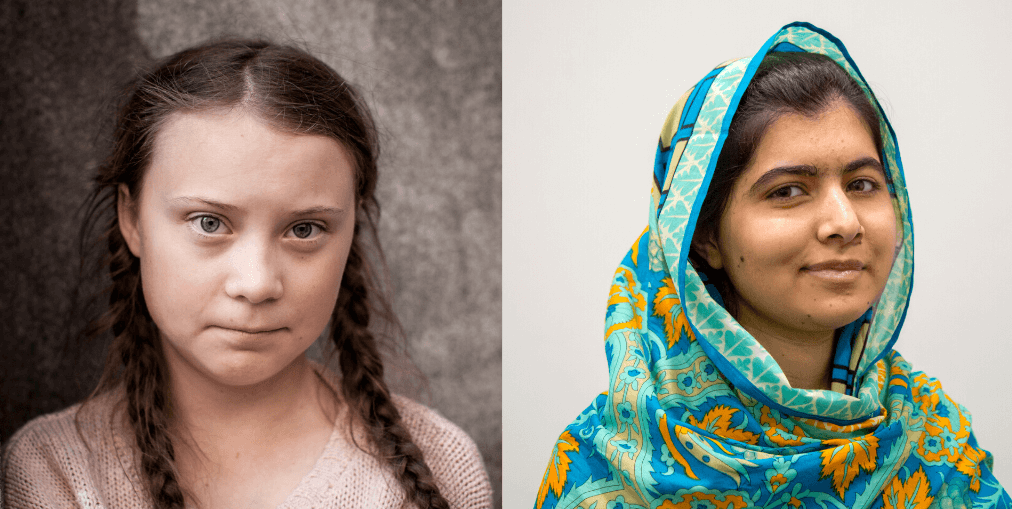
Malala Yousafzai and Greta Thunberg have made the world stand up and take notice of the causes they champion as teenagers. And as a result of speaking up, they’ve been shot in the head or publicly condemned by the President of the United States. But that hasn’t stopped them. 

Founder of the Op Ed Project, Katie Orenstein, also acknowledges that speaking up has consequences. But she points out that the alternative is to be inconsequential. Failing to capitalize on the potential we have to make a difference is likely to keep us on the wrong end of the consequential-inconsequential continuum. 

Last fall, I asked Barbara Grantham, then President of the Vancouver Hospital Foundation and now incoming CEO of Care Canada and a member of Informed Opinions’ advisory committee member, for fundraising advice. Among her many insights was this:

“Philanthropy is an opportunity for people to be their best selves.”

Even though my own giving capacity is limited, I understand that. When I donate to a food bank or woman’s shelter, I feel an expanded sense of my own humanity. And now I’m working to embrace the capacity Informed Opinions has to offer others a similar experience.

We’re collaborating with a wonderful team of women at capitalW, an initiative launched last year by Kathryn Babcock. When I first met Kathryn to explore whether or not we might work together to raise funds for Informed Opinions, almost the first sentence out of her mouth was: 

“I’m fascinated by money.”

I was genuinely shocked by this admission. I’ve been an advocate for 30 years, saw her as a sister in the trenches, and was still deep into my denial of the centrality of resources to make change happen. I’d spent years taking pride in my relentless focus on the work, not the infrastructure; I regularly told others I wasn’t looking to build an empire, I just wanted to make change. And that meant, in my naive and unquestioning mind, not thinking about money. So to hear a fierce feminist flat-out confess to being preoccupied by it was startling.

But Kathryn’s sophisticated analysis of the flow of money in a capitalistic society and vision of how we should be leveraging the untapped potential of women’s consumer spending for equality challenged me to think differently about my own relationship with money. Within moments of meeting her, I found myself saying, “What can I do to help you?”

So six months later, Informed Opinions has embarked on a concerted campaign to scale up the critically important and potentially far-reaching work we’re doing. I’m still often deeply uncomfortable speaking the words, “Would you consider making a contribution…” But in doing so, I feel a new connection to the women who email us every week or so to say something like:

“A journalist called wanting me to comment on national TV and I was going to say ‘no, I’m not the best person’, but I heard your voice in my head and so I said yes.  I did the interview — without throwing up! — and I’ve had great feedback. Thank you so much!”

If you’re already donating to Informed Opinions, I thank you from the bottom of my heart. If you’re not, but want to know more about the impact we’ve had, what we’re aiming to do next, and how you or your organization or network can help, click here.