
On Personal Branding, Being Authentic, and Avoiding Irrelevancy

I’m speaking to a select group of rising star business women. In mid-sentence, I pause to pull off my suddenly too-warm jacket as I smile and murmur “hot flash”. At the end of my talk, the marketing VP of a major credit card company approaches.

“You’re so authentic,” she exclaims. “That really works for your brand.”

This makes me deeply uncomfortable on several counts. Can authenticity be a brand? Aren’t the two concepts mutually exclusive? (And wouldn’t it be better if authenticity were everyone’s default and we left the branding to the makers of ketchup and running shoes?)

Having decried the objectification of women in advertising and pop culture for decades, I resist the notion that we should all seek to commodify ourselves. Doing so feels reminiscent of laws that treated women like chattel, and practices that continue to barter young women’s sexual and reproductive labour around the world.

Also, how do you actually connect with people at a human level if a part of what’s driving your interactions is the conscious cultivation of your “unique selling proposition”? Brands are essentially ways to distinguish yourself from the competition; brands vie for category share and market dominance. Even if they’re complementary, their relationships are often transactional in nature, in the service of generating business.

Then I get to wondering what “authenticity” means in this instance. What if I’m really just exploiting my body’s temperature fluctuations as a means of cultivating relatability. Can you still be authentic if you’re deliberate about what you reveal and to whom? (And would I have as readily confessed my hormonal roller coaster to a mixed audience?)

This also leads me to question whether authenticity is an asset when you’re a woman over 50 in a world that often treats you like your best-before-date passed several decades before — never mind that you feel like you’re at your creative and productive peak.

Charlotte, age 2, in her sticker phase

Maybe I should stop flagging my impending irrelevance with references to my grandchildren. (Technically, Sam, Charlotte and Harrison, as the offspring of my stepdaughter, are not my grandchildren. But they don’t know that the absence of my blood in their veins renders me extraneous. And my heart doesn’t either.)

That’s why lately, in pursuit of motivating people to care about the chronic absence of women’s voices in public conversations, informing the decisions being made about public policy, I’ve been sharing photographs of five-year-old Samuel kissing week-old Harrison, and three-year-old Charlotte sporting a sticker on the tip of her nose.

Sometimes, given the story I tell immediately before the images, and the comments I make about the kind of future I’d like to see these kids inherit, people get teary-eyed about their own aspirations for the children in their lives. Research has documented how much more likely that emotional connection is to inspire them to respond positively to the call to action I’m about to make. That’s why I always supplement data with stories, and why I put names and images to the people in them whenever possible.

Is it possible to be authentic and manipulative at the same time? And if the end goal is greater equality for women and a tide that raises all boats, benefiting men and children too, is that OK?

Let me know how you reconcile any or all of these issues…

Two unexpected performance lessons and the power of the mic

The Québécoise singer-songwriter on stage at the beautifully renovated National Arts Centre is charming and talented. But she’s also distracted. The connection between her plugged-in guitar and the amp is not working. In the audience, we can hear her lovely vocals, and the music being played by her band, but not her own strumming.

Fortunate Ones, Catherine Allan and Andrew James O’Brien. Photo by Tom Cochrane

If she weren’t sending increasingly frantic eye daggers to the guy at the sound board offstage, most of us wouldn’t actually notice this. But she is, and we do. In fact, although her musicianship and stage presence are strong, it’s clear that the broken technical connection is mirrored by the broken audience connection: we might as well not be there.

It’s oddly fascinating… like the feeling you get when conversing with a person whose lips curve up in smile that fails to include their eyes. It’s lonely and alienating. I think, maybe if I close my own eyes, I won’t notice the disconnect. But as a perpetual communication and performance student, I can’t look away: she’s teaching me something profound about what not to do.

When an audience has assembled to hear you sing (or speak), and you’re on stage, that’s a gift.
Nurturing that relationship needs to be your number one priority.

Another night, another free concert at the same venue, and another minor technical problem. But this time, Andrew James O’Brien and Catherine Allan of the dynamic Newfoundland duo, Fortunate Ones, speak to the audience while waiting for the glitch to be fixed.

“Just building suspense,” O’Brien jokes, transforming us from awkward witnesses to allied insiders.

Later, he compels the audience to join in the chorus of a song most of us have never heard before. He coaxes us once, twice, three times (because of course, we’re shy). But then we do. And the reward is so worth his unselfconscious insistence. Our combined voices bind us to him and each other, making us all part of the music magic.

This is especially impressive considering that because the small venue is standing-room-only, a third of the audience is actually seated around the corner. We can’t see the performers, except on a TV screen, and they can’t see us at all.

But just before they sing the final song, O’Brien waves at us via the camera, and says, “If you can hear me on the stairs, say ‘oh yeah’!” We comply with this and a couple more commands, and then he adds,

“This is the power of a microphone: you can pretty well make anyone do anything.”

We laugh at our complicity and the exaggeration. We know the power is limited. But we’ve also just seen a warm, open, confident performer exercise it well.

I wish every woman I’ve ever encouraged to step up to – instead of away from – a microphone, could have witnessed this beautiful demonstration of the possibilities that come with having an amplified voice.

(And I think – as I often do when, notebook in hand, I’m lucky enough to learn from another – I’ll have to adapt this for my own purposes.)

Postscript: After writing the above, I go online to visit the Fortunate Ones’ website, and in their bio, I stumble across this line:

“their beginnings are in keeping with one of the core messages they carry. That sometimes the most important decision you can make is to just say YES.

— a sentiment after my own heart!

And then a few paragraphs later on I read:

“Their name reflects shared experience with audiences. It is about connecting people of all kinds, to make strangers friends, to elicit feelings of joy, hope, sadness, and contemplation – and the spirit that we are all in this together.”

…Which is exactly the kind of connection they created, and that we all secretly crave when we show up as audience members, no matter what the venue, performance or program.

Storytelling and the power of visual feedback

I undermined the impact of my opening.

I relied on my notes too much.

I failed to advance my slides as intended.

Those are just three of the critical observations I made after watching a video of myself delivering a conference keynote in Winnipeg. That’s the bad news.

The good news is that 1. the audience of women in engineering, science, trades and technology didn’t appear to judge me nearly as harshly as I judged myself, and 2. reviewing the unassailable evidence on tape ensures I’ll do better next time.

With the possible exception of Donald Trump, most of us find it discomfiting to watch ourselves speaking. We’re our own worst critics, overwhelmed by our awkward transitions, too-speedy delivery or that weird thing we do with our mouths.

As a result, we rarely subject ourselves to the experience, preferring not to have to think about any aspect of our failure to come across as polished as we’d like.

But the feedback is invaluable, and more than worth the pain.

On the other hand, feedback is even more valuable when you receive it in ADVANCE of your keynote, panel participation or board presentation. That’s why we’re now offering more opportunities for women to participate in small, women-only presentation coaching sessions to help them build their presence, polish their delivery and hone their content. (Spaces still available in May 30th session in Toronto.)

Speaking of which, last week I had the opportunity to meet with a senior businesswoman who is receiving significant recognition for her leadership next month. She’s smart and articulate, accomplished and charismatic.

Not to mention organized: more than 6 weeks in advance of the event where she’ll be speaking, she’d already worked her way through several drafts of her remarks. They were funny and thoughtful.

But between draft 2 and draft 3, she talked herself out of including one of her most interesting stories. I spent time talking her back into keeping it.

Here’s why:

Stories Rule.

They are, hands down, the most interesting and memorable parts of almost every speech you will ever hear. Research backs this up. Whatever data points you share with an audience, they’re 7 times more likely to recall the story that followed or preceded the stats.

We’re wired for stories. They light up more and different areas of our brain than facts alone. And the meaning they deliver creates a sense of connection with the people assembled.

At a cocktail reception at the University of Waterloo last year, I was chatting with a woman I didn’t know. What do you do, she asked. When I told her that I train smart women to share what they know through the media, she could hardly contain her excitement.

“Oh!” she exclaimed: “You have to meet this woman I just heard about… She and her husband were in Montreal and they were walking across the parking lot of a Catholic church when…”

I started to back away from her in horror and disbelief.

Because she was telling me MY story: the one I have used for the past six years to explain why I founded Informed Opinions and make clear to women why they need to speak up when given the opportunity.

How dare she — especially since she neither realized that the story she was telling was attached to me, nor knew the name of the project!

But then I got over myself. I realized that her telling my story – just as my friends and allies over at TVO’s The Agenda say they frequently do – was a marker of success. Because its point is to demonstrate the need for more women’s voices. And when everybody gets that, and is working to achieve the goal of gender parity in public discourse, my job will be done.

Telling a story well is a skill that can be taught. You want to include enough concrete detail to allow your listeners to visualize the scene, but keep the story concise enough that they don’t lose interest.

Relevance is key. How does this particular story relate to these people? What about it will resonate with their experience? Why is the meaning you’re extracting important to them?

You also want the story to be authentic, to describe a real life situation that you or someone you know encountered, and to reflect your own personal sense-making.

For help in learning how to identify and tell powerful stories to increase your impact, your can register for one of our workshops here.

Five Steps to Overcoming Public Speaking Nerves

Brilliance, without the capacity to communicate it, is wasted.

I learned this in grade 10 chemistry from the intellectually-gifted, but communicationally-impaired Mr. Philipps.

Sadly, that’s about all I learned (and it wasn’t the lesson he was intending to teach).

Although my parents may have been disappointed that I dropped sciences in grade 11, I’ve never regretted the training I received in telling stories and engaging audiences.

Because the capacity to capture people’s attention and persuade from the front of a room are critical tools in changing the world. And they’re widely recognized as key career skills. Failure to master presentations – or at least develop some degree of comfort – can limit opportunities in many fields.

And yet many incredibly intelligent and accomplished people find public speaking deeply terrifying, even after they’ve done it for years.

What I hear often in workshops is that even thinking about the prospect can make hearts race, palms sweat and mouths go dry.

1. Start with your head. 

Here’s what I know to make a difference: You can’t treat the symptoms without addressing the cause. And the cause is all in your head.

This is not to minimize the palpitations or over-active sweat glands. Those fight or flight symptoms are real. But they’re triggered by a manufactured fear, not the imminence of a genuine threat to your life. (An approaching grizzly bear and a disinterested audience of your peers really should elicit different responses.)

Apocalyptic self-talk is behind why some of us experience those symptoms and some don’t. So if you’re afflicted, ask yourself if the mental chatter in the days, hours or minutes leading up to a presentation sounds anything like this:

  • These people know way more than I do; they’ll recognize me as a fraud.

  • They’re going to ask me challenging questions, and I don’t have all the answers.

  • My presentation is boring, they’ll be checking their phones within five minutes.

  • The chances of me losing my train of thought or otherwise humiliating myself are very high.

These are extremely common fears. But giving them air time constitutes exactly the kind of internal reinforcement almost guaranteed to inspire shaky hands.

So – and I know this is going to sound obnoxiously simplistic – you need to consciously substitute specific alternative chatter, appropriate to your context, because…

2. Positive self-talk is more powerful than you imagine.

Consider the following alternatives:

  • No one knows more about my project or research than I do.

  • I was asked to speak because I have something of value to share.

  • All questions are welcome; they demonstrate engagement and curiosity; I don’t need to know the answer to every one.

  • I’ve thought about what aspects of my topic will be of most interest to these people, and incorporated vivid language, telling images, relevant stories and surprising data to engage and enlighten them.

But please note: you can’t overcome the physical symptoms – the racing heart, the sweaty palms, the dry mouth – in the 20 minutes before you speak.

You’ll want to begin your alternative self-talk as far in advance of the presentation as you can.

3. Start early; repeat often.

If you’ve spent 20 years running repetitive audio tapes in your head about how scary public speaking is, how ill-equipped you are for the task, and how badly you’re going to fail, you’ll want to take a running start at re-programming your poor brain. You don’t need the equivalent of two decades, but a month or two of chanting a new mantra every time you drive to work, step on the treadmill, or walk the dog, is probably necessary.

And while you’re doing so, it helps if you can vividly imagine yourself in the room, confident and relaxed, holding the audience spellbound.

Audience members at Rotman School of Business enjoying a debate on whether journalists should be forced to quote more women. I think the smiles were induced by my contention that we would all benefit from “a little more Lang, and a lot less O’Leary.” (And this was years before the man’s short-lived political career.)

4. Vividly imagining your success will significantly enhance its likelihood.

Serious athletes who are too injured to train don’t log onto Netflix for the six weeks it takes them to recuperate; they do the work mentally, instead. Because research has found that our brains often can’t tell the difference between a real and vividly imagined event.

Monitors attached to athletes’ legs have found that mentally putting yourself in the starting block, hearing the gun go off and sprinting down the track to the finish line, can create an astonishing level of muscle activity that helps to speed up recovery and maintain athleticism.

My own mental rehearsal also involves imagining an engaged audience who listen attentively, appreciate my sense of humour, and leave feeling both enlightened and motivated.

5. Repetition enhances performance.

Whether you’re an aspiring Olympic skater or a high-tech titan, actual practice is also necessary. Steve Jobs rehearsed out loud, and you should, too. The first time you tell a story, describe your research or deliver your pitch won’t be nearly as clear, concise or compelling as the fifth time.

As American thinker, Ralph Waldo Emerson once observed,

“All good speakers were bad speakers first.”

Practicing your delivery in front of a supportive but candid friend (or even your smart phone on audio record) can be revelatory. The feedback helps you condense, polish and clarify. And the repetition reinforces the flow of ideas, making you more confident about your ability to deliver with the aid of a few bullets, rather than depend on an entire text.

You’re introducing a speaker: can you channel Leonard Cohen?


By RamaOwn work, CC BY-SA 2.0 fr, Link

 Leonard Cohen’s passing offered us all an occasion to re-visit his art and impact.

In my fantasy of this singular man, he is introducing me.

I don’t even have to be on the stage with him. Or even in the concert hall. I just want him to use his poetry to evoke in one perfect sentence the essence of my contribution. And to do so in a way that makes every listener certain that I must be an extraordinary human being. The kind of person anyone would benefit from knowing.

Because the ability to do this was one of his many gifts.

I watched awe-struck from a seat in the National Arts Centre in Ottawa as he celebrated the musicians who shared the stage with him during one of his last tours.

The almost-octogenarian stood patiently in front of his still vamping band, waiting for the applause to subside. He then walked over to each of his collaborators, bent down on one knee, removed his fedora and, clutching it to his heart, brought the microphone to his lips to deliver a single magnificent line of tribute. His resonant bass lent every word – and the person he was describing – sophistication, brilliance and gravitas.

I wept at the grace and beauty of it all, and wished that I could endow others with such gifts when tasked with introducing them.

Alas, I’m not Leonard Cohen, and neither are you. But here are a few suggestions as to how we can all move past the tedious list of a speaker’s accomplishments to deliver something more inherently engaging.

  1. Find out what the person is most proud of, and then talk about what that says about who they are

  2. Describe the impact the person has made on the lives of others, using at least one concrete example

  3. Tell a story that illustrates the core moral values and integrity of the person

In an ideal world, you have enough time to practice speaking your introduction out loud often enough that you don’t need a text. But if that’s not the case, write your notes in bullet form or short sentences so you can look down, absorb the point, and then look up and deliver the content, making eye contact with the audience.

The pause after each line required by this approach will allow them to reflect on the speaker’s experience and how it might be relevant to or inform their insights.

And you can always imagine a simple line of music underscoring your words, heightening the impact of the tribute you are paying.

Less is more (how your mobile’s stop watch will improve your speaking)

My cabinet minister client was a speechwriter’s dream: She had deep knowledge of, inspirational passion for, and a lifetime of stories relevant to her portfolio. She also had a great sense of humour, and a strong and unique voice, which I could hear in my head as I wrote.

Because she was a minister, and her conference pronouncements might be construed as government policy, ministry staff occasionally had transcripts made of her remarks. On one occasion, I was sent such a transcript. I read it eagerly, so gratified to see that she had delivered every one of the 2,000 words I’d written – and (gulp) another 2,000 besides.

Her extemporaneous digressions were relevant and often entertaining, but knowing what havoc they would have wreaked not only on her schedule, but also on the conference program itself, made me cringe.

Here’s what happens when speakers are given 10 minutes, and they take 20: they are effectively saying either…

  1. “I’m such an amateur that I don’t know that a conference organizer asking me to speak for 10 minutes expects me to actually time my remarks so as not to inconvenience everyone else”; OR

  2. “I’m so self-important that I think my insights deserve more attention than those of the other speakers.”

Neither option is likely to endear a presenter to the people who spent months planning the event, recruiting talent, and developing a program that would maximize stimulation and engagement while still permitting attendees time to network and pee.

I appreciate that most offenders would excuse their failure to keep to their time window by saying they were too busy to rehearse. But that’s not an option.

“Because when someone gives us a microphone and a captive audience, we need to treat that as the privilege it is.

Besides, every time-stealing performance is also likely to be met with misery by those presenters unlucky enough to share the offender’s time slot. Because they know that every extra minute stolen by the undisciplined speaker means either less time for them, or no time for questions. This is particularly infuriating for speakers who did, actually rehearse their remarks with a timer, paring back their insights to the requested length so as not to infringe on others’ time.

Moreover, some audience members may be more interested in the remarks of the speakers scheduled to follow the self-important rambler. They, too, will be conscious of, and fretting over, the diminishing window of time available for the person they’re most interested in hearing.

I have lamented microphone hogs both as an audience member and as a speaker. And I feel for the conveners, especially if they were explicit about the timing requirements and context. I know it’s awkward as a moderator to have to sit in the front row and hold up a sign saying “Time’s up”. And if the speaker is reading from a text, never raising her head to look out at the audience, it’s useless.

The bottom line is, when someone gives you a platform at an event they’ve invested time in planning, which includes other thought leaders on a packed program, this is what respectful professionalism looks like:

  1. You think about what you can say that will be of most interest to the audience given the context for and focus of the event. If you’re drafting notes, you aim for no more than 115 words per minute of allotted time.

  2. Whether or not you’ve scripted your remarks, you rehearse them OUT LOUD, with the stopwatch function on your smart phone. And you DON’T read them at the kind of breakneck pace that prevents you from breathing.

  3. You then revise as needed.

Let me be clear on the second point: nobody wants to listen to your pinched and breathless voice as you stress it with the desperate task of delivering 30 minutes of material in 15. This act will not inspire an audience with confidence in your authority. And it will not support them in reflecting on, or remembering, what you said.

If you have something worth saying, you need to

slow

down.

Research has found that audiences remember less what you said

than what they thought about what you said.

So you need to give them time to process,

to consider,

to make sense of your words…

You need to vary your pace, and punctuate your key points

with…

…pauses.

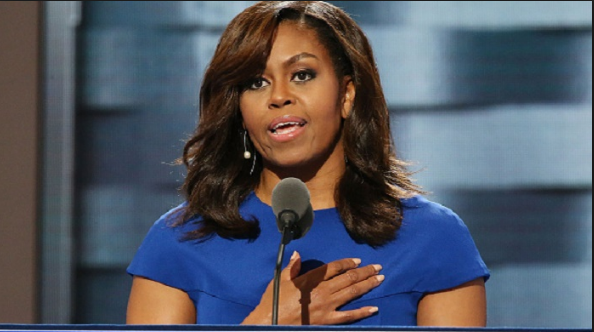
The pauses will take up a bit of time. You’ll have to sacrifice some of your precious words to accommodate them. But watch even just a few excerpts from a speech by Michelle Obama for a little inspiration. Even though she’s not offering complex analysis, the pauses she uses allow her audience some time to process and consider the significance of her words. To think about related consequences. To make personal connections.

Every speaker benefits from that kind of engagement.

Less really IS more: more engaging, more powerful, more memorable.

How to Avoid Power Point Crimes

 Power pointers everywhere, can we talk?

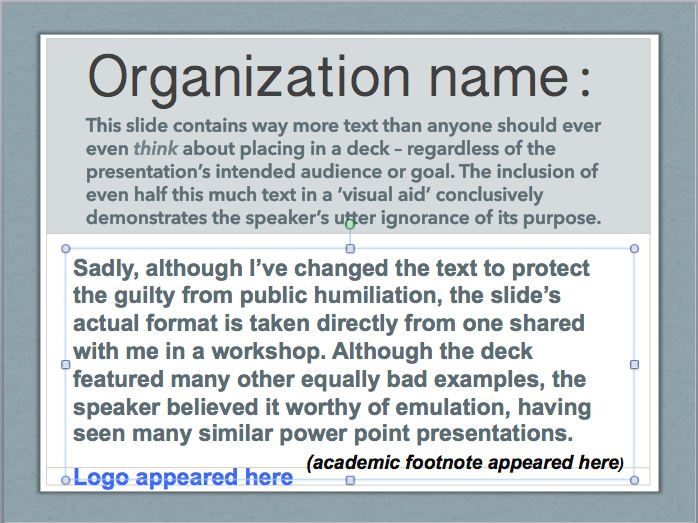
The time has long passed for you to be creating slides featuring 79 word-paragraphs. It’s not a good idea to share detailed graphs with data that’s indecipherable from even the first row. And no one wants to see your meticulously footnoted sources during a stand-up presentation.

That’s what handouts are for — and no, they’re not the same thing.

I’ve seen enough truly terrible slide decks to know that the practice of using a Power Point-based presentation as both visual support and handout is common practice in government, academia and some business circles.

But that doesn’t mean it’s defensible.

A basic principle of any good communications strategy is identifying your purpose and audience before you craft the message and decide on the vehicle. And here’s the thing: handouts and presentation slides have different purposes. Handouts are designed to highlight the important stuff, and maybe help readers track down relevant resources. (So, yes: footnote or hyperlink away!)

Slides, on the other hand, are a form of visual aid. Visual aids have two jobs; they have to:

1. Be visual

2. Aid.

That wasn’t even a trick question; it’s very straightforward!

Slides featuring lots of text fail on the first point; slides featuring complex and/or hard-to-read visual information fail on the second point.

Paragraphs and long sentences are inherently not visual. And please don’t read the text off the slide: audiences can generally do so much more quickly.

On the other hand, you don’t want to put up a text-heavy slide and then deliver supplementary or contextual information. This forces your audience to choose: do they read your slide, or listen to your comments?

Because here’s the thing: THEY CAN’T DO BOTH. Not effectively. Not even the ones who think they’re great multi-taskers. They’re wrong. Our magnificent brains have their limits, and this is one of them.

Some people will choose to focus on the slide, tuning you out. Others will choose to listen, and ignore the slide. Either way, you’re muddying your message and confusion is likely to result, regardless of whom you’re addressing.

Even highly-educated academic audiences, accustomed to seeing slides that have too much information on them, benefit from and appreciate a simpler presentation of information. And simpler doesn’t have to mean simplistic.

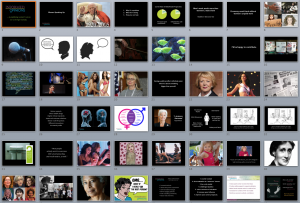
Consider this: slides are not a limited resource. You can have as many as it takes to make the information clear and accessible, breaking up the content so no single slide has more than a few words on it.

As just one example of an alternative approach, here’s the slide sorter view of a guest lecture I gave at McMaster University last year.

Moreover, you’ve seen enough advertising campaigns to understand that point form text is easier to scan and absorb than paragraphs or long quotes.

Before TED talks changed our expectations, the accepted guideline was no more than 6 points on a slide, with a maximum of 6 words per point. But now, depending on the context and content, even bulleted text often seems unnecessary. We live in an image-rich environment. And that old saying about a picture telling a thousand words? There’s a lot of truth in it.

Sometimes your theoretical or specific information can’t be replaced by an image. But chances are very high that you can dispense with articles, prepositions and entire clauses to visually reinforce the key phrases you want people to grasp and remember.

Fundamental to the act of presenting live, in a room, with other people, is the potential for a dynamic exchange. If a speaker delivers information in a way that would be more easily absorbed through a written document, that potential is wasted.

You don’t want your audience members to be wondering, “Why didn’t she just send me the text? I could have read this at my desk much more efficiently, and understood it better.”

Informed Opinions offers both one-on-one coaching and tailored workshops to support speakers in becoming more engaging and effective presenters. We’re happy to chat about whether and how we can help you achieve your speaking goals.

How to rescue yourself from a poor introduction

 Three times in recent weeks, women I know and respect have declared, in conversation or in print, “I’m really good at what I do.”

In all cases, I knew them to be stating the truth. And because a part of what Informed Opinions does is remind women of the importance of owning their expertise, I salute their confident assertions.

The problem is that such bold declarations still make many listeners or readers squirm. When someone makes unequivocal claims about their capabilities, even when they’re completely defensible, it strikes us as déclassé. (Especially, it must be acknowledged, if the speaker or writer is female.)

“Shouldn’t you leave it to others to publicly celebrate your brilliance?” is a common, if unspoken, response. And of course, independent endorsements are generally more persuasive.

But women in particular are often in situations where, if we don’t make clear our competency, it will go unrecognized. So the challenge becomes how to communicate qualifications or accomplishments without sounding smug and self-aggrandizing. Often the best way to do that — whether in an email, written proposal, or verbal presentation — is to adopt the kind of approach that writing instructors encourage in aspiring novelists: “Show, don’t tell.”

Much more effective than bald statements of your competency are the slipped-in references to your experience or impact. Integrating your claim to fame into some other context allows you to deliver the message without actually sounding like the world’s most narcissistic billionaire. For example…

I’ve dealt with similar challenges often in the past 20 years…

… allows you to cite your decades of experience in an organic way. Similarly…

Dozens of our (clients, students…) have succeeded in applying this approach…

… gives you an opportunity to talk about impact by invoking the success of others.

Earlier this year, a client introduced me to her colleagues at the start of a workshop she’d hired me to deliver. With the best of intentions, she described me as “one of Canada’s most influential speakers.” I cringed at her vague and indefensible hyperbole, which seemed much worse than no introduction at all.

I could practically see the sceptical thought bubbles above the heads of the assembled scholars:

“Really? If this woman is so influential, how come we’ve never heard of her before?”

However, I frequently speak in contexts where a formal introduction isn’t on the agenda, so I’ve had lots of practice sharing my credentials without the benefit of an effective host. This is a valuable tool whenever you’re at the front of the room. You don’t want to feel dependent on, or sidelined by, an absent, harried or inexperienced person who may constitute an audience’s first impression of your qualifications.

One effective strategy is to tell a mildly self-deprecating story right off the top that uses humour to relax the audience (and, not incidentally, you), while making clear one or more of the following:

  1. You have relevant experience;
  2. You’re going to deliver content that is expressly tailored to your audience’s interests;
  3. You’re confident enough to mock your own failings;
  4. The work you do gets results.

A story I frequently tell at my own expense allows me not only to achieve the first three goals, in under a minute, but also to bridge to content that demonstrates number four. And the thing about stories (more on this in a future blog post) is that they’re better at triggering emotional response, and — as a result — much more memorable than data.

Having a small repository of personal stories that allow you to make passing reference to your years in the field, a catastrophe averted, or a lesson learned is enormously valuable. But it’s also important to craft such stories so that the impact you describe focuses less on recognition you may have received, and more on how your organization or the people it serves benefited. Such an approach then allows you to segue back to the people in the room, what you’re aiming to achieve together, and how your experience and insight can help them.

After the unfortunate introduction described above, I managed to win over the room, but it took some effort. One alpha male participant seemed committed to debating me on every second point – often taking the discussion down unproductive rabbit holes. Because he had a leadership position within the group, I had to handle this carefully. He may have been difficult, regardless of how I was introduced, but the experience reminded me of what a difference it can make when the host presenting you inadvertently undermines your credibility.

In upcoming blogs, I’ll talk about:

  • How to rock your two minutes in front of a room when your task is to introduce someone else;
  • How to identify anecdotes that can help you achieve your communication objectives; and
  • How to craft stories to engage listeners, deliver memorable content and convey your authority.

In the meantime, if you have any communication dilemmas or presentation questions that you’d like to see addressed in future posts, let us know.

Storytellers demonstrate the engagement power of passion

It’s a challenge that has defeated many experts with decades of professional experience. But in Calgary recently, at Congress 2016, 21 grad students from universities across the country managed to describe complex scientific research in engaging and accessible ways, and to do so in under three minutes each.

Lots of speakers – academics included – are still clearing their throats three minutes into a talk, but the Social Sciences and Humanities Research Council is trying to change that. In an effort to encourage more scholars to make their knowledge more accessible to a broader audience, SSHRC has been running an inspired competition for the past four years.

Aspiring “Storytellers” are charged with not only engaging an audience, but also making it clear why the SSHRC-funded research is important, and what its potential impact is likely to be.

I’ve had the pleasure of working with two dozen finalists every year, offering the students some suggestions for how they might translate their often amazing three-minute video submissions into equally compelling live presentations. Because many of their original entries incorporate physical demonstrations, animated graphics or moving footage, the transition from one mode to another often presents new communication challenges.

As a result, some of the research stories that were effective in the first round of judging failed to engage in the second. From the judge’s table at the back of the mini-auditorium set up to showcase the presentations, I noted that some of the most common stumbling blocks were:

  1. Flat delivery: Used consciously, our voices are enormously useful tools. Varying volume, pace and intonation can convey enthusiasm, emphasize critical points and evoke emotional response. Sometimes dry material can be significantly enlivened through effective vocal delivery. The absence of verbal energy, however, can be deadly, robbing a presentation of immediacy and meaning.
  2. Overly theoretical content: Admittedly, some academic research is easier to translate into everyday language than others. If the topic is already tangible in some way, or directly involves people, making its relevance clear to outsiders isn’t such a challenge. But more abstract and theoretical content can benefit enormously from stories or analogies that make the conceptual concrete.
  3. Failure to demonstrate relevance: Every presentation, regardless of its audience, context or duration, ought to answer the “why should we care” question. Although many of the Storytellers did this very well, a few spent more time on the “how” or the “what” at the expense of the “why”. Given their 3-minute time frame, this made it more difficult to engage the audience.

The five students judged to have most effectively met the challenge made clear the nature and relevance of their research, and did so with the kind of passion that infected those present in a tangible way. You can check out their original three-minute video submissions below, and the rest of the finalists’ here.

Elodie Bouchard
Elissa Gurman
Emma Vossen
Ian Wereley

 Élodie Bouchard, Université de Montréal – How are new reproductive technologies changing our notion of bodily norms?

Elissa Gurman, University of Toronto – What does 19th Century literature have to teach us about sexual
consent today?

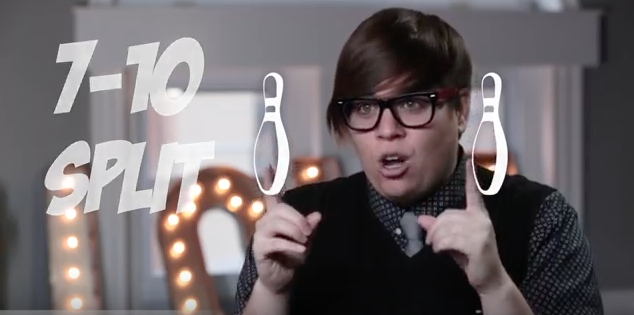
Shelley Moore, University of British Columbia (pictured at the top of the page) – How bowling to win offers insight into how to make education more inclusive for students with developmental disabilities.

Emma Vossen, University of Waterloo – What if academics wrote about their research in ways that people without PhDs could actually understand?

Ian Wereley, Carleton University – How can Britain’s transition from coal to oil in the 20th century help us move to a post-oil economy in the 21st

Avoid graphic humiliation: deliver value from your presentation’s first sentence

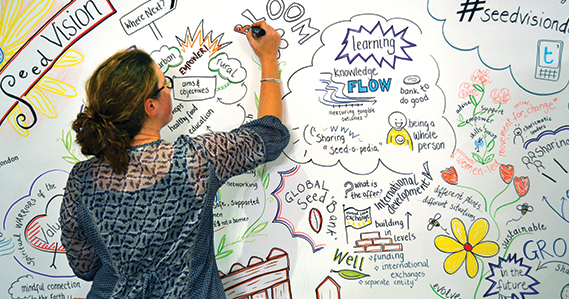
For five long minutes, the graphic recorder’s raised right hand was stalled over the paper in front of her, a stunning demonstration of the speaker’s failure to deliver useful content. Although knowledgeable and articulate, the woman at the microphone had already used up half of her allotted time – and she had said absolutely nothing of value.

What was worse, everyone in the audience was acutely aware of this. Because adjacent to her lectern stood the motionless graphic recorder – a person paid to fill the billboard-sized poster in front of her with pictures and diagrams that represented in image form the message being delivered.

The trouble was, the speaker had just spent way too much time metaphorically clearing her throat, thanking all sorts of people, and talking about her long history with the institution hosting the event. The graphic recorder – who had been drawing frantically throughout the previous speakers’ remarks in an attempt to keep up with the stream of concrete suggestions and stories – hovered over the paper, waiting… hoping… for something notable.

Thanking others is an appropriately generous impulse, and appreciated by those who’ve gone to the trouble of organizing an event that brings people together. But when you’re asked to share insights in a restricted time frame during a packed conference program, all audience members – including, and maybe especially, the conference organizers! – want you to cut to the chase.

Furthermore, because you only have one chance to make a first impression, it’s always smart to make sure that the first words coming out of your mouth deliver value. Consider the messages you send when you invest energy in coming up with an opening to your remarks that arrests attention.

Crafting an engaging first sentence is something we reinforce in the commentary writing workshops, and the same principle also applies to presentations and speeches. Beginning your remarks with a provocative statement, intriguing contradiction or moving story sends several important messages to the audience. These include:

  1. “I’m well-prepared.”

  2. “I won’t waste your time.”

  3. “You’re likely to hear something of value.”

And offering something that’s concrete enough to be illustrated is among the strategies that’s most useful to keep in mind. Here’s my favourite demonstration of how powerful this is. A few years ago at the annual academic Congress put on by the Canadian Federation for Social Sciences and the Humanities, I invited the scholars in my workshop to describe their research in terms of its impact. One participant volunteered:

“My research looks at mechanisms to enhance equity within the pedagogical environment and reduce attrition rates.”

He’d clearly focused on impact, and done so quite concisely. But the inaccessible language was more likely to alienate than inspire most people outside his academic field. We worked on his description to translate it into something that was less conceptual, and more concrete – something, in other words, that would be easy for a graphic recorder to draw and for audience members to picture. Consider how much more relatable, and powerful, it would be to hear someone say:

“I’m working to make classrooms safer so more kids stay in school.”

The added benefit of making sure that your opening sentence is content-rich and tailored to arrest the attention of people in the room is that the energy you get back in the form of their laughter, empathy or intellectual engagement is likely to dispel any lingering nerves you might have as a speaker. Starting the relationship off on the right foot does wonders for your confidence, and you can do worse than imagine that a graphic recorder is poised beside you, ready to make vividly apparent to the audience whether you’re sharing platitudes or gems, theoretical pronouncements or news-they-can-use.

Informed Opinions is being invited to deliver more and more workshops that focus on supporting women across sectors in honing their platform skills. Last week we delivered a semi-private session in Ottawa, and received the following feedback:

  • “Best presentation course I’ve done.”

  • “Good blend of theory and practical tips. The course was excellent.”

  • “The quality and planning ensured a valuable learning experience. You don’t take our attendance for granted, but work to tailor every minute.”

We’ll be looking for opportunities to make similar sessions available in more cities across the country. Let us know if you’re interested.

In the meantime, check out the 3-minute video blogs we produced in collaboration with University Affairs magazine. COPA (the Canadian Online Publishing Awards) recognized the series at their annual conference last year. Here’s episode 2, focusing on the power of speaking in a way that helps audiences visualize your message.