How to leverage 700 words for maximum impact

Is it possible to draw attention to egregious sexism, make clear the consequences of rape myths, and place a judge under review in a single op ed?

Yes on all counts — as two university law professors demonstrated yesterday.

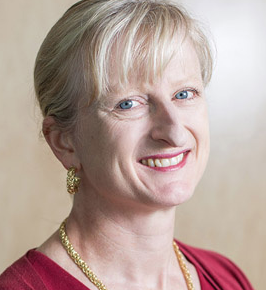
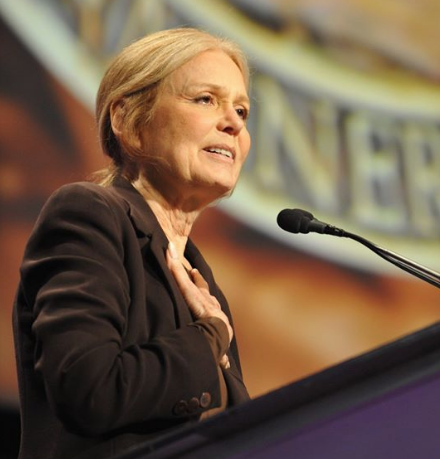
Monday’s Globe and Mail ran a commentary by Elaine Craig (above left, Dalhousie University) and Alice Woolley (above right, University of Calgary) about an Alberta judge whose remarks to and about the complainant in a sexual assault trial were sufficiently indefensible that an appeal court overturned his decision.

Here’s an excerpt from their op ed:

Judge Robin Camp implied that if the complainant had not wanted to have sex, she could have taken steps to prevent the attack. He pressed her with questions such as, “Why couldn’t you just keep your knees together?” And he offered, “If you were frightened, you could have screamed.”

In holding the accused, a man who outweighed the woman by more than 100 pounds, not guilty, Judge Camp stated the woman had failed to explain “why she allowed the sex to happen if she didn’t want it.” Canadian courts have long recognized there is no foundation to the stereotype that a woman cannot be raped against her will.

The judge commented repeatedly on the complainant’s morality, concluding that her sense of values “leave[s] a lot to be desired.” He insisted it mattered whether she had “the moral or physical strength to rebuff men if she felt like it.” Historically, the undue focus on the complainant’s moral composition resulted in criminal proceedings in which it was the sexual-assault victim, rather than the accused, who was put on trial. In what is perhaps a telling error, Judge Camp referred to her as “the accused” throughout his reasons.

Within 24 hours, more than 3,000 people had shared the op ed online, and other news outlets were reporting the story. More importantly, the Globe featured a front page story in today’s paper revealing that:

  1. The Federal Court of Canada is now barring the judge from hearing any cases involving sexual conduct; and
  2. Norman Sabourin, the director of the Canadian Judicial Council has initiated a review of the judge, which could lead to his removal. Sabourin explicitly indicated that it was the commentary by Craig and Woolley that alerted him to the issue and triggered this disciplinary action.

In the meantime, Judge Camp has issued a public apology and is promising to take sensitivity training on his own time and at his own expense.

Leveraging the reach, authority and influence offered by mainstream news media to focus attention on societal failures doesn’t always result in so swift and encouraging a response. But the potential is there, and sometimes the agency is rewarded with measurable impact.

How to engage readers from the first sentence — and repurpose your content, too

It could be a stressful exercise.

But by the time we force our commentary writing workshop participants into allowing others in the room to vote on the engagement capacity of their opening sentences, they’ve already laughed and commiserated enough that the “thumbs down” votes don’t feel personal. And the collective intelligence of the colleagues present invariably serves up a great alternative.

Given the intense competition for attention — so much of it click bait designed to distract readers with celebrity photos, political scandals or both — it’s critical to make your lede as strong as possible.

In advance of a recent visit to Concordia in Montreal, I promised a piece about Informed Opinions to the University’s online publication. Drafting it on Easter weekend, I sought feedback on a couple of my own possible ledes from my husband and adult stepdaughter.

Which one would do a better job of compelling you to read on? Would you be intrigued by the insults reflected in…

“There’s nothing like being called a “feminazi” or member of the “Bitch of the Year Club” to reinforce your resolve. If you’re ornery.”

OR made curious by the emphasis on fertility evident in…

“Most women spend decades of their lives either avoiding pregnancy, trying to become pregnant, or dealing with the consequences of having been pregnant.”

In fact, they both chose a different one. David voted for the second, rejecting the first because, in his view, condemning women as “feminizis” is so passé. In contrast, Madi argued that many women are called much worse online and so the acknowledgement of it would resonate with lots of potential readers. Their disagreement was both useful (it reminded me that no lede will be equally effective with all demographics), and not (a unanimous vote would have made it easier to choose!) However, given that my primary purpose in writing the piece was to introduce women to Informed Opinions and the resources we offer, I went with Madi’s preference.

REPURPOSE YOUR CONTENT

Over the past five years, in pursuit of raising the profile of the project and the issue we’re working to address, I’ve written op eds for a variety of publications. You could do the same, and reach more people in the process. Although the substance of my commentaries is similar in each, I don’t look at the priors when tackling the new, and I craft a new lede for every piece.

Some of the op eds have been inspired by current stories, and so I’ve built the opener around the news hook. For example, last fall I capitalized on the news coverage of the Jian Ghomeshi and Bill Cosby scandals, writing…

“You probably didn’t notice, but in newspapers and newscasts across North America recently the number of references to women went up, along with the amount of ink and air time given to exploring how they think and what influences their decisions.”  Toronto Star

And last March, I was able to use a social media furor as the hook and the lede…

“Don’t blame the messenger, folks: When Steve Paikin, host of The Agenda blogged and tweeted recently about the show’s difficulties in recruiting female guests, he elicited a firestorm of protest.”   Huffington Post

Storytelling is often a good way to to engage; the challenge is to hit the right balance between precision and concision: you want enough detail to make it interesting, but to get to the point as quickly as possible. In hindsight, I could have deleted “on my way to the old port” from the following, so readers would get to “Of course” faster…

“I was cutting across the parking lot of St. Patrick’s Basilica in Montreal on my way to the old port the day Pope John Paul II died in 2005. A TV reporter stopped me to ask if I would comment. Of course, I declined.”   Ottawa Citizen, Vancouver Sun, Montreal Gazette

Contradictions are another good way to pique curiosity. Putting two things that don’t belong together in the same sentence (say, Hugh Hefner and Winston Churchill) can compel readers to keep going to discover the connection. In the one below, my emotional response to my audience’s apparent support is disconcerting…

“I’m standing in front of a room full of CBC radio producers and researchers in Toronto, and they’re all nodding their heads, agreeing with the words I’ve just spoken. You’d think this would make me happy. Instead, I’m furious.” Western News 

Local papers want a local angle, so in advance of a public lecture at the University of Victoria, I chose to cite my political experience and drop my former boss’s name. (The dig at indefensible name-calling was a bit gratuitous, but it made the lede more concrete.)

“Even before my short-lived plunge into BC political waters as press secretary to premier Ujjal Dosanjh, I’d survived the kind of name-calling most people imagine being strictly reserved for terrorists or puppy mill operators.”   Victoria Times Colonist

Similarly, to promote a public lecture I was scheduled to deliver at the University of Waterloo, I emphasized the under-representation of women in STEMs, in recognition of the university’s reputation for high tech innovation.

“It’s hard to believe it’s been almost 20 years since Mattel released a “teen talk” Barbie doll programmed to proclaim “Math class is hard.”  Guelph Mercury

And in advance of a visit to Western University in London, a town where automotive manufacturing has played a big role in the economy, I cited a relevant movie…

“There’s a great moment in the recent British film, Made In Dagenham, that I’m guessing will resonate with many women, not just those who’ve worked in the macho car manufacturing industry.”  London Free Press 

When I first launched the project in 2010, I told a more detailed story about one particular name-calling experience and then bridged to the same point I get to more quickly in the example at the top of this blog…

“The way the envelope was addressed should have been enough to warn me that the letter inside was not amorous in nature. To the left of the postmarked stamp, in formal but shaky cursive, my new correspondent had written “Bitch of the Year Club” immediately beneath my correctly-spelled name. This was unfortunate; there could be no mistake to whom he was referring.”  Ottawa Citizen

In two higher education magazines, I’ve contrasted the relative degrees of gratification I’ve experienced when writing for a lay audience (reaching thousands, eliciting immediate feedback) versus an academic one…

“Writing my master’s thesis during the mid-1990s while I also was writing a regular column for the Vancouver Sun offered an exercise in stark contrast.”  University Affairs magazine

Academic Matters gave me more than twice the space as University Affairs, and I made my lede twice as wordy. This is not necessarily advised!

For three years in the mid-1990’s, I had the privilege of sending a weekly memo to thousands of readers of the Vancouver Sun on whatever topic most concerned me. Only a small fraction of them replied (often, it must be admitted, in language that made clear their profound disagreement with my position, syntax, or gender).”   Academic Matters

I encourage you to pay close attention to what ledes arrest and engage you, to adapt strategies you find effective, and to solicit feedback from friends, colleagues and family members before you submit your pieces for publication.

Just because you’ve written about an issue for one blog, newspaper or magazine, doesn’t mean you can’t repurpose it for others, to reach and influence an even wider audience.

What’s the easiest news hook for your next op ed?

I first learned this lesson from the Miss Canada beauty pageant, but on Thursday three Informed Opinions’ “grads” reminded me of it…

“If a reporter calls or emails to solicit your informed opinion about an current controversy or topical story, that’s an opportunity for you to provide additional analysis — that you have more control over — through an op ed.”

Almost 25 years ago, as a newly minted board member of MediaWatch (now Media Action), I agreed to comment on the demise of the national beauty contest. It had just been cancelled due to lack of advertiser interest, which I saw as a good sign.

I worked hard to wedge my context-informed celebration into a 10 second sound bite, and felt fine about the clip aired by the Vancouver TV station. But I had a lot more to say than 10 seconds, and so I wrote up the rest of my analysis into a 750 word argument and submitted it to the Vancouver Sun.

Since then, I’ve often written op eds as a result of being alerted by a reporter to an emerging story, knowing that the existing media attention increases the likelihood that an opinion editor will make space.

This week’s reminder, however, came courtesy of three other women and Corey Allen, of UBC’s media relations office. Corey sent me a link to a story published in the Vancouver Province that quoted UBC education professor Lisa Loutzenheiser. When I read the article, I discovered that in addition to Lisa’s comments, it also contained insights provided by University of Victoria political science professor, Janni Aragon, and University of Ottawa law professor, Rakhi Ruparelia.

All three of these women have participated in Informed Opinions’ workshops, and I was elated to see them agreeing to share their perspectives. And I was inspired to add my own context by writing an op ed in response to the story, which will be published in tomorrow’s paper, and is available online here.

It’s already attracting nasty comments, some of them sent to me directly via Twitter, but — inspired by widespread commentary about the NFL’s response to Ray Rice’s knockout punch — I had already spent time earlier this week reminding myself of some of the bigger picture reasons that women’s perspectives are so needed. That piece is published in today’s Toronto Star.

Women are raped, beaten and killed in this country every day; those of us who write op eds or get interviewed by journalists can handle a few haters compelled to object when we seek to make clear the connections.

3 Tricks to Improve Readership of your Op Ed

Informed Opinions’ Writing Compelling Commentary workshop is chock-full of concrete suggestions designed to help you write a timely and persuasive op ed and get it published in an influential media forum. And previous blog posts have offered lots of content that expands on the hand-outs we supply and the examples we offer in the session. But here are three quirky tips that I don’t always get to, and bear repeating, in any case:

1. Mention a famous person whose attention you’d like to attract

In an op ed about the Feminist History Society published in the Globe and Mail four years ago, I quoted Gloria Steinem. I happened to be shamelessly exploiting Hugh Hefner for my own purposes, and Ms. Steinem had once observed that his major “contribution” to the world had been to “make more women more sexually available to more men”. The quote was pithy and relevant, and made the piece better.

It also ensured that Ms. Steinem saw the column and learned of the Feminist History Society. (This outcome was not one I’d intentionally sought, but I was thrilled to discover that I had inadvertently introduced a project I support to a woman I admire.)

2. Make it easy for an editor to illustrate

Ditching abstract and theoretical language for concrete examples or analogies that make it easier for readers to visualize what you’re talking about and why they should care is always a good idea. And sometimes doing so has dramatic results.

Writing about the Women’s World conference in the Ottawa Citizen three summers ago, I referred to Christine Lagarde, the head of the IMF, in my lede. Ms. Lagarde is an enormously intelligent, powerful and internationally recognized French woman, who also happens to cut an imposing and elegant figure. (She’s tall, has striking white hair, and dresses well.) When my op ed was published, the Citizen accompanied it with a photograph of Lagarde, which would have significantly increased its readership.

(My delight was slightly tempered by the cost to my husband. Coincidently, he had an op ed on another topic on the same page – sadly without any reader-engaging artwork, since space allocations usually only afford room for one.)

3. Break up your text

Academics accustomed to writing for scholarly journals are often surprised to realize how short the paragraphs tend to be in daily newspapers. But mimicking this style is a good idea if you want to be published in vehicles that reach a broader audience. News consumers are usually scanning content and often in a hurry, so a piece of writing that requires them to focus careful attention on long paragraphs is more likely to be shelved for later (which usually translates into never). It’s easier for readers to commit to short bits of information, and they’re more likely to read to the end of a piece that’s broken up into digestible chunks.

Similarly, if your subject matter lends itself to subheads or numbered points, that, too, can be a means of making it easier to scan and absorb. In a recent piece I wrote in response to Steve Paikin’s controversial blog post about the difficulty of convincing women to come on TV, I summarized the three categories of reasons our research has found to be salient among female experts.

Huff Post called shortly after I posted my response on this blog and asked to publish it on their site. The timeliness and profile of the issue were clearly pivotal, but the subheads probably didn’t hurt.

Why women decline interviews – and how we’re trying to change that

Don’t blame the messenger, folks: When Steve Paikin, host of The Agenda blogged and tweeted recently about the show’s difficulties in recruiting female guests, he elicited a firestorm of protest. But what he says rings true to me. Our experience is that women decline interviews much more often than their male counterparts.

Many journalists have told us this, and hundreds of expert women we’ve surveyed over the past four years have acknowledged their reluctance.

This is why Informed Opinions exists in the first place. In 1994, as the president of MediaWatch, I personally called dozens of expert women across the country to invite them to be listed in an experts resource guide for journalists. In response, dozens of them said to me, “Oh, Shari; I’m so flattered to be asked. But I’m really not the best person.” Regrettably, 20 years later, this remains a common response. (Which is why we created the cartoon at the right.)

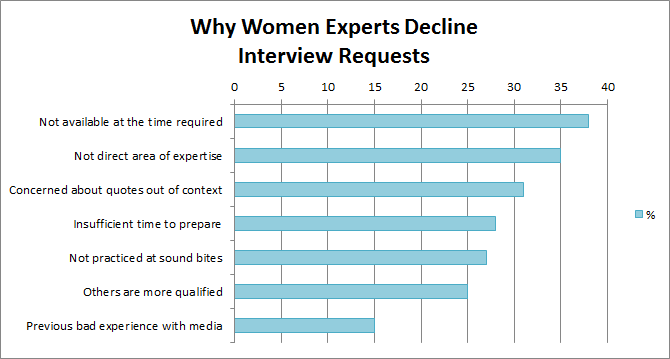
The data in the chart below was drawn from surveys of university professors, business and NGO leaders from all over Canada. We asked them to identify why they turned down media interview requests. Their answers fall into three main categories.

1. THEY’RE TIME-STRAPPED  Expert women – like expert men – are busy. They have demanding jobs (they’re experts!), and their time is highly scheduled (meetings, deadlines, carpools, kids’ activities, parents’ medical appointments, meals – in other words, life). Many men juggle similar responsibilities, but lots of the most senior men have wives who take on more of those tasks.

And guess what? Although it’s dangerous to make generalizations, I’m going to go out on a limb here and say that, in my experience, lots of women have little to no desire for the limelight. They don’t lack confidence or ambition, they’re just not motivated by public profile. They want to have impact, but they don’t need to be front and centre; if they can make a difference behind the scenes, that’s fine. Especially if it’s more efficient.

Because busy, high-achieving women are very protective of and pragmatic about how they spend their time. They won’t willingly shoe-horn another appointment into their already crammed schedule without being convinced that doing so is going to be worth the collateral damage to rest of their day.

Note to journalists: you need to give them some incentive. (More about that below.)

2. THEY HOLD THEMSELVES UP TO A HIGHER STANDARD OF AUTHORITY  Women – even if they hold a PhD, have 30 years of experience, and have published well-regarded books on an issue – are usually conscious of who else in their field would be even better to address the specific topic of the day. And so when they say, “I’m really not the best person,” they’re not being falsely modest or begging you to stroke their ego; they’re simply acknowledging a fact.

At the same time, on some level, they know that the world itself holds them up to a higher standard of authority. They don’t need to know Charlotte Whitton’s famous quote — “Whatever women do they must do twice as well as men to be thought half as good…” to understand that it applies to them. They only need to have watched a fraction of the news coverage of Hilary Clinton over the past 20 years.

Consider: The former US Secretary of State has a formidable intellect, punishing work ethic and for four years, she held one of the most powerful jobs in the world. And yet lazy, ignorant bloggers and trolls were able to generate headlines simply by dissing the woman for her hair, her make-up and her clothing.

Women aren’t stupid: they understand that television is a visual medium. And if they’re having a bad hair day, some viewers will deem that worth condemning. (CBC broadcaster Wendy Mesley told me back in the 1990s when her hair was longer than it is now that she received far more mail about her fly-away locks than about her reporting.)

(For the record, the very first piece of snail mail I received as a newly minted columnist with the Vancouver Sun was addressed to Shari Graydon, President, Bitch of the Year Club.)

3. THEY DON’T TRUST THE MEDIA  Finally, because expert women pay attention to the news, they notice and object to sensationalist headlines, irresponsible reporting, de-contextualized data or misleading quotes. And they’re not interested in risking their reputation in a high stakes game where they have no control over the end product.

Can you blame them?

No. But that doesn’t mean we don’t encourage them to accept interviews more often anyway. That’s our raison d’etre. We believe that the dramatic gender imbalance in public discourse (the ratio of male to female perspectives remains about 4 to 1 in the most influential Canadian media) has a huge impact on our society. We’re convinced that many policies and priorities fail to account for the differing needs of women, of children, of people living with disabilities, of the elderly because women’s voices are so often absent.

SO here are a few of the things we say to the women we speak to and train:

  • As long as women abdicate the public discourse to men, our experience-informed perspectives will have less capacity to influence the policy decisions and spending priorities made on our collective behalf.
  • If you turn down a media interview in your field, the reporter or producer isn’t going to end up interviewing “the BEST person” you had in mind, she’s going to interview the guy in the office next to you.
  • Most journalists only have room in their story for one sound bite or a 30-word quote. Surely you know enough about the issue to be able to provide a nugget or two of context or analysis that will enhance the audience’s understanding of the story.
  • If the interview is longer – 7 minutes, let alone half an hour – all the better: you’ll have an opportunity to provide nuance and recommend solutions.
  • The news media have extraordinary capacity to draw attention to an issue, a cause or concern… They can help you make the changes you’d like to see… If you have a voice in the media, people are more likely to return your calls, give money to your cause, pass laws that you support.
  • You may be criticized for speaking up – especially if you advocate for women, or gays and lesbians, or Aboriginal people. But the name calling and appearance shaming you’re subjected to for expressing your informed opinion, pales in comparison to the female genital mutilation, gang rape or murder that many women in this country and around the world experience. If women with the privileges of education and employment, safe housing and secure food, health care and legal equality are not prepared to step forward, what hope is there for those without such benefits?

Informed Opinions is working to amplify women’s voices and bridge the gender gap in public discourse. We teach smart women to translate their expertise into concise, persuasive written commentary, recognizing that doing so constitutes the “gateway drug” to agreeing to interviews. (Once they’ve had the opportunity to reflect on and craft their ideas and analysis, controlling every word, they’re more willing to say “yes” to the interview requests they receive as a result.

We also manage an Experts Database of women designed to make it easier for journalists to access knowledgeable female sources from across the country. Regrettably, when we recently relied on volunteer help to migrate our old site to a new platform, the Experts Database was left behind. We’re working to fix that, and hope to have it up by the end of the week. 

TL;DR – advice to ignore, but implications to heed

Hanging out with teenagers can be an enlightening experience.

Last week, I participated in a panel discussion convened by MediaSmarts, “Canada’s centre for digital and media literacy” and a repository of fabulous resources for teachers, parents and kids. The teenagers present from across Canada asked really smart questions, many of which betrayed both deep scepticism of marketers and consumption-driven culture, and highly-developed social consciousness.

In exhorting them to pursue these passions, one of my panelist colleagues, Susan Krashinsky, the media reporter for the Globe and Mail, recommended that they sometimes ignore the “TL;DR” instructions that accompany social media posts referring to in-depth features or reports.

Although I’ve been on Twitter, Facebook and LinkedIn for a couple of years, I apparently follow the wrong people, because until Susan mentioned it, I’d never come across the abbreviation, which is essentially a warning to the short-of-time (or intellectually lazy). It signifies “too long; don’t read.”

(Luckily for Dickens, Tolstoy and Proust, this now frequently-dispensed advice is a recent phenomenon.)

Susan’s point about the need to invest time and attention in informing oneself (beyond what’s available on Twitter posts and entertainment sites) is an important one.

But the attitude — and information overload reality behind it — that’s expressed in the “too long; don’t read” acronym is also important for anyone seeking to raise the profile of critical issues to consider. Many people no longer have the time or patience to wade through long-winded or densely-written material in search of the gems that might eventually, with effort, be on offer. If we want to influence people with our crafted arguments, it helps to be able to get to the point quickly, and deliver a clear thesis, compelling support, effective counter statement and convincing conclusion as concisely as possible.

Newspaper op ed pages and online blogs give you a platform to persuade, but they don’t guarantee that readers will stick with you just because what you’re writing about is important.

This is a lesson that both scholars and social justice advocates need to learn.

A few days before the panel discussion, I had the opportunity to support members of the Canadian Research Institute for the Advancement of Women (CRIAW) in exploring how they can make better use of social media platforms to share their great work.

For almost four decades, CRIAW has been publishing rigorous research on critically important issues. I so appreciate their indispensable work, and have cited their studies and relied on their resources many, many times.  Given the complexity of the topics they’re exploring, and the in-depth nature of their analyses, it’s not surprising that many of the documents they produce are lengthy. But in today’s communications environment, I worry that when even the “short version” of a “fact sheet” on violence against women is 14 pages long, it’s more likely to fall into the “TL;DR” abyss.

In addition to encouraging teenagers to ignore the “too long; don’t read” advice, those of use producing knowledge and disseminating resources can help bridge the gap by making an effort to write a bit shorter.

Changing lives through media commentary

“You really have to write that!”

This enthusiastic exhortation — often exclaimed simultaneously by a chorus of voices — is a common refrain in the commentary writing workshops we lead. Although I’m clear about the benefits provided by the tips and strategies we teach, I’m also keenly aware of how much additional value participants derive from sharing their ideas with a room full of other women — women who invariably reinforce how important what they have to say is, and how eagerly it will be consumed by others.

So I wasn’t the only one thrilled to see Justice Studies professor Michelle Stewart being interviewed on CBC’s Power & Politics program last week. Earlier this spring in a workshop at the University of Regina everyone in the room was moved by the plight of the two students whose desperate situation she described.

Last week she published an op ed in the Ottawa Citizen (also picked up by the Edmonton Journal) laying out the situation faced by Victoria Ordu and Favour Amadi, two Nigerian students facing deportation for the crime of having worked briefly off campus while attending the University of Regina. You can read more about the unnecessarily punitive government response and buck passing in Michelle’s piece, or watch her calmly and decisively advocate for the students on the CBC link above.

Will the resulting media and public attention garnered for the situation by Michelle and her colleagues (including URegina President, Vianne Timmons, who has written to the prime minister) shame the government into acting?

Stay tuned…

2 words to make your writing more accessible

Let’s say you have a graduate degree and/or 20 years of experience in your field, and you’re used to speaking or writing for people who are similarly well-informed. Chances are you sometimes find it difficult to translate your knowledge into sentences that engage a lay audience.

But whether you’re writing a newspaper commentary, or speaking into a broadcaster’s microphone, the ability to phrase concepts and issues in ways that the average person can understand is a great asset.

In our writing workshops, we often encourage expert participants to try running a sample of their text through the Gunning Fog Index. The index measures the readability of English writing, estimating the years of formal education somebody needs to understand a text on first reading.

It’s a very useful tool. But here’s another, simpler and more practical approach: When you sit down to put words to the page, start with

“Hi Mom” (or Dad, or Sis)*.

Unless your relative happens to have his or her own PhD in the field, the act of targeting your communication to a real life audience member will force you to find much less formal and more colloquial language.

This advice comes courtesy of the folks at Podium Coaching, and I’m justifying the gratuitous hippo pic because it was the most interesting image that popped up in my google search of “mom”.

Expert status less important than insightful context

I have no legal training or experience in the sex trade. No one would ever mistake me as a candidate for the corner office of a large corporation. I am not a celebrity and have never been pregnant.

And yet in recent months, major daily newspapers have published my commentary about:

Two of the three op eds were not even my ideas, but written in response to emails from newspaper editors looking for someone to weigh in on the topics.

Was I the most authoritative person to offer commentary and analysis? Clearly not. But I’m a writer who knows how to find and assimilate authoritative information, and enliven it with attitude and accessible context. And I’m a woman whose life experience in related areas influenced my perceptions and ideas about the issues.

At dinner parties and book club meetings, many of the women I know regularly offer interesting and thoughtful insights on issues of the day, regardless of how relevant their day-job is to the topic at hand.

We should feel equally empowered to massage our insights into commentary that adds to the public discourse – even if we’re not “the best person”.

Last week, Kate Heartfield, a volunteer mentor-editor with both Informed Opinions and the US-based Op Ed Project, who also holds down a demanding day-job as Acting Editorial Page Editor with the Ottawa Citizen (while raising children and writing fiction in her spare time), tweeted her need for more submissions.  Then she emailed me to say that all the ones in her pipeline happened to be by men.

For the record, this is probably the case at most newspapers across the country, almost all the time. And it’s why Informed Opinions exists. Because in a world full of complex, intractable, social, economic and environmental problems, we need a rich diversity of analyses reflecting as broad an array of perspectives as possible.

The good news ending to this particular story is that in response to my own email encouraging Informed Opinions’ grads to submit to Kate, Equal Voice executive director, Nancy Peckford wrote and had published a great piece on female premiers, my own op ed about Kate Middleton’s “bravery” ran the day after, and my colleague Ashley piqued interest in her proposed commentary on the abuse of internships. Three other Ottawa-area grads also emailed to say that, thanks to the reminder and incentive, they would be pitching Kate soon.

I hope they do. Because my piece, published in the Ottawa Citizen, the Montreal Gazette and the Calgary Herald, was the only female voice on each of the pages where it appeared.

What if I hadn’t bothered? What if you don’t?

When they get it wrong

It’s one of the most commonly-cited deterrents to doing media interviews: not having control over how the words you speak will be used in the resulting story, whether it’s in a newspaper, on the radio or on TV.

But just because you can’t oversee the editing or transmission process doesn’t mean you shouldn’t participate — even when a journalist or news outlet occasionally gets it wrong.

Consider Elizabeth Sheehy’s recent experience. The University of Ottawa law professor appeared on CBC Radio’s Sunday Morning to provide context about violence against women and the impact of granting bail to men accused of abusing their partners.

Disappointingly, the public broadcaster got the title of her new book wrong on its website and edited the interview in a way that cut out some information she felt was critically important.

However, when her initial request to correct the title and provide a link to the missing information failed to elicit a response, she contacted CBC’s ombud’s office, and within an hour, the website reference was corrected, and a note about the excluded information was posted, along with a new link to the original interview.

Which just goes to show that a little persistence pays off.

As importantly, the broadcast generated some great letters that were read on-air the following week, expanding the conversation and allowing more perspectives to be heard.

Because the internet allows information to remain accessible indefinitely, if and when a reporter misquotes you or relays inaccurate information (usually inadvertently), it’s important to request that the record be corrected.