
Interview tips from best-selling author and media interview veteran Ann Douglas

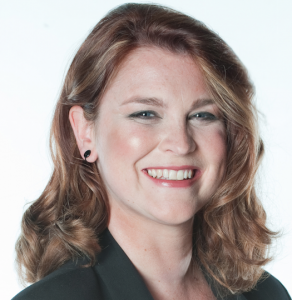
Prolific author, volunteer advocate on mental health issues, mother of four — notwithstanding the demands on Ann Douglas’ time implied by all of those roles, she also regularly makes time to engage with media. In the course of promoting her best-selling parenting books, she’s done many hundreds of print, broadcast and online interviews. And she’s learned a lot in the process.

Earlier this year, Ann spoke to University of Waterloo graduate student, Alkim Karragac as part of a SSHRC-funded research project being conducted by fellow Informed Opinions’ grad and UWaterloo Geography and Environmental Management professor Nancy Worth.

Ann’s comments — like her more than two dozen books — are candid and thoughtful, full of humour, insight and practical advice. We persuaded her to allow us to share some of the experience-informed perspective reflected in that interview with you.

On controlling the outcome of interviews

In my early days as an author, I might have let the journalist take control of the conversation, but I did my preparation ahead of time, and knew exactly what points I wanted to make. Then it was just a matter of looking for an opportunity to introduce them naturally during the conversation.

I do homework ahead  of time to learn a little bit about the person, and if they’re writing about football, and parenting, and cooking, odds are they’re stretched a little thin, and they’re just not going to have a lot of time to delve deep. So sometimes I’ll share some additional background material, basically do some of their homework for them, so that I don’t find myself in the frustrating  position of having my tips put in a context that makes me look ridiculous.

When I do magazine interviews, I’ve also become feistier during the fact-checking process. If I don’t think something rings true, if it doesn’t sound like me, I’m not afraid to say that anymore. I’ll say, “you know, I think the writer might have misunderstood, but the message I was trying to get across was ABC.” That way it’s on the record what I’ve actually said.

Sometimes I’ll ask if I can provide my comments in writing, because then I know if they quote me, it’s going to accurately reflect my words. When they paraphrase, they sometimes get off track. And I’ve also learned that there are some stories that are going to be a no-win, like “let’s talk about the ten things this mum did wrong.” I reject all interviews that in any way dance around that narrative, because I’m not about blaming and shaming parents.

On being proactive with media

Over time, I started generating my own opportunities. I learned early on that when you’re pitching stories to journalists, you’re going to get a huge number of no’s. Because maybe the outlet you’re pitching did their parenting story for this week already. It doesn’t mean you have a bad idea, it just means that they can’t do another story on your topic right now.
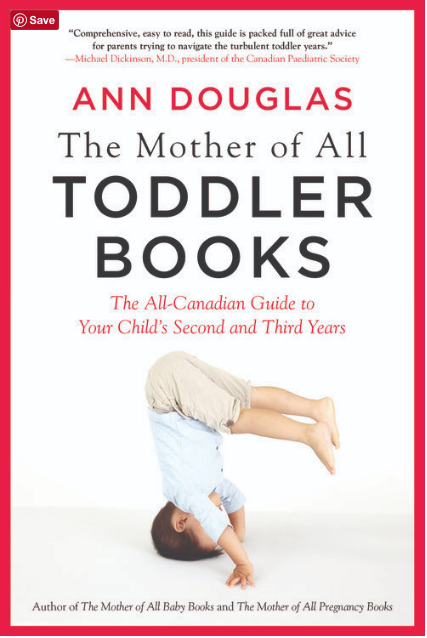
Ann Douglas’ much anticipated next book will be published in February 2019 by Harper Collins

I learned how to really build relationships. I’d say most of the interviews I get today are repeat interviews with people who’ve spoken with me a number of times over the years. Now when they think parenting story, they think of me. Other people find me on Twitter.

On what not to wear, and hair torture

A Breakfast Television interview I did back in 1998 taught me not to wear sparkling clothes on TV, because it looks like you’re a bridesmaid who’s come in from a wedding reception. (In my defence, I had a breastfeeding baby, had stayed overnight in a bed and breakfast, and was operating on no sleep!)

I have bionically curly hair, and many times I’ve arrived for a magazine photo shoot or on-camera TV interview, and they’ve insisted on torturing my hair with three different kinds of hair straighteners. On one occasion I was subjected to this thing that was like a clothing steamer; it felt like my scalp was being scorched. Because their idea was that I had to have smooth, perfectly coiffed hair. (But my husband says if Margaret Atwood can show up with curly hair, I can too!)

Sometimes I have so much fun doing the media, that tends to buoy me along. Radio is my  favourite medium, because there’s no physical  appearance anxiety, no hair torture: you are who you are.

Ann was already an accomplished media star before she encountered Informed Opinions. But after attending one of our Writing Compelling Commentary workshops a few years ago, she became a vocal champion of the project. And now — icing on a delicious cake — she’s a monthly supporter, as well.

We’re honoured to have her as part of our experts database, and most appreciative of her generosity — which is expansive. If you check out her blog, you’ll see that, in addition to giving away time-tested and research-supported parenting advice of her own, she regularly profiles the work of other authors.

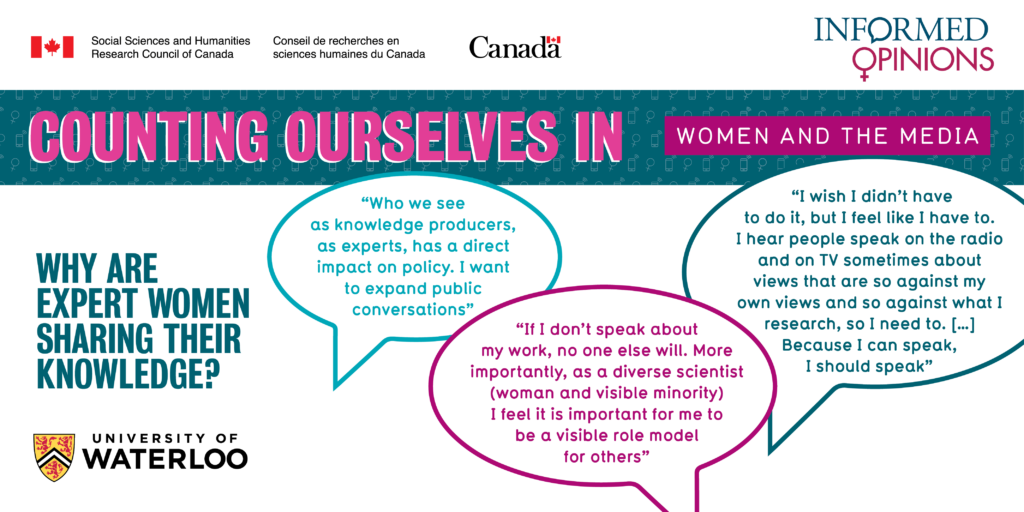
How journalists and universities can make it easier for experts to say “yes” to media interviews

Nancy Worth is a rock star in our world.

After participating in one of our Writing Compelling Commentary workshops a little over a year ago, the University of Waterloo professor asked us if we’d be interested in collaborating on some research about our work. Then she developed the proposal, successfully applied to the Social Sciences and Humanities Research Council for financial support, and oversaw the bulk of the work.

We’ve written before about the reasons women experts engage less often with media than their male colleagues. But Nancy’s initiative focused on what motivated the women in our growing experts database to “count themselves in.” Through a survey of 193 experts, and in-depth interviews with 34, we gained a deeper understanding of their reasons, experiences and the remaining barriers to women’s participation in media.

The resulting report, Counting Ourselves In: Understanding why women decide to engage with media, is now available online. It offers a concise and accessible overview of what we learned. In this post, we’re building on and extrapolating from some of the explicit insights about how journalists and universities can better facilitate women experts’ media engagement.

The women who’ve chosen to be listed in our database do so for a variety of reasons, but included among these is that they take seriously Albert Einstein’s dictum: “Those who have the privilege to know have the duty to act.” Many see media engagement as a form of public service.

But they’re usually very busy, juggling many competing demands. And for academics in particular, unless a media opportunity is focused explicitly on their research, the rewards of being quoted in a news story or featured on a talk show program are not always clear.

WHAT JOURNALISTS CAN DO TO HELP

  1. BE CLEAR ABOUT WHAT YOU NEED

“When journalists tell me in the email who they are, what they’re doing and why they’re interested in this story, that’s really helpful for me to figure out if this is something I know enough about and also is this a person I can trust.”

Many journalists are resistant to sharing their questions in advance of an interview. We get why this might be desirable when interviewing a politician or CEO with an inclination to give canned and unilluminating, versus colourful and authentic, answers.

But if you’re looking for hard data or insight related to a technical or scientific issue, emailing your questions to the source first is likely to result in much better, clearer and more helpful responses. They can review the relevant research, make note of the specific numbers, or come up with an analogy that will help your audience understand the topic more easily.

“I don’t need to know all the specific questions but are we going to talk about my research programme, about women in science, about soft skills… Sometimes journalists will also let me know who else they’re talking to. Knowing what others cover allows me to focus on another area that maybe is not going to be the super obvious piece.”

2. REDUCE THE AMOUNT OF TIME NEEDED TO PARTICIPATE

If you’re like most Canadians, you bank and/or shop online and so appreciate how much time doing so saves you. Although we regularly encourage the experts we train and support to go into the studio for an interview if they can (better sound and video quality, chance to build rapport with the host), the extra time required to do so is often prohibitive. This is especially true for those living outside of major centres.

Yes, YouTube is rife with bad Skype interviews (the intruding child! the barking dog! the ghoulish up-shot!), but these are all avoidable. The built-in cameras on laptops have improved significantly and most people, if reminded, can find a corner of their home that offers a backdrop relatively free of clutter, and lighting that will successfully illuminate their face, rather than leaving them in silhouette.

3. AVOID FRAMING THE ISSUE IN PRO AND CON TERMS

Debate style programs that require participants to be all-in on one side of a complex issue are often unappealing to thoughtful experts – especially women. Deep knowledge of a subject and the research underlying it usually means appreciating that studies sometimes contradict one another and explaining evidence accurately can require equivocation.

If, when soliciting the participation of a new source, you frame the issue in polarizing terms, and give the expert the impression that you’re looking for them to come down hard on one side or the other, don’t be surprised if you get turned down from those who know the most. They understand that stark pro or con framing can do a disservice to issues and audiences alike.

4. CHECK QUOTES ON COMPLEX OR TECHNICAL ISSUES TO ENSURE ACCURACY

What might seem like a minor error of slight rewording on your part can often provoke grave alarm from a source whose scientific reputation depends on her attentiveness to accuracy and nuance.

If you’re translating complicated or technical information about a subject you don’t know well, it’s worth double-checking your quotes. We’ve heard many scholars swear off doing media altogether after being seriously misrepresented by a journalist who – either due to carelessness or the desire to make material more accessible to a broader audience – inadvertently changed the meaning of the information shared in a way seen as egregious by the source.

WHAT UNIVERSITIES CAN DO

1. RECOGNIZE MEDIA ENGAGEMENT AS COMMUNITY SERVICE

“Really, in our line of work, you don’t get much credit. The time you spend on media work means less time doing your research, and it’s hard enough for women to try to climb up through the ranks in the university.”

The time scholars spend in administrative jobs and serving on adjudication committees is often recognized as service to the university. Media engagement helps policy makers and members of the public alike better understand complex issues. Acknowledging it in a systematic way would help.

2. PROMOTE A CULTURE THAT VALUES KNOWLEDGE MOBILIZATION

“I think universities need to offer more training, need to make people feel that this is valuable work, need to count or recognize it in some way.”

Scholars are trained in critical thinking, and the competitive nature of academic life reinforces the inclination to critique, rather than celebrate, others’ work – especially if that “work” might be perceived as “not serious”, or oversimplifying sophisticated theories or scientific concepts. At almost every university workshop we deliver, someone raises concerns about the likelihood of being criticized by colleagues for being a microphone hog.

This is a barrier to engagement that universities can help to overcome by actively celebrating the contribution that knowledge mobilization makes. And by reminding scholars that the research-informed insights they possess are most valuable when applied to addressing issues affecting people and the planet. Achieving that kind of impact becomes much more likely when the information is made accessible.

3. OFFER TEACHING RELIEF

As an encouraging sign, relative to the point above, some universities now offer an annual prize to scholars who have demonstrated significant knowledge mobilization through media. Given the hours of labour involved in preparing for, getting to and giving media interviews, offering some measure of teaching relief is likely to increase scholars’ willingness to aid in enhancing the university’s public profile.

4. MAKE IT PHYSICALLY EASY FOR SCHOLARS TO ENGAGE

Despite the fact that the University of Waterloo doesn’t teach journalism, its campus does boast a TV studio. This makes it much easier for faculty members and grad students to do professional quality TV interviews without having to battle traffic to and from Toronto on the congested 401.

Setting up a similar facility may not be possible for most campuses. But we’ve heard from a number of faculty members what a difference it would make to their own ability to engage with media if their institutions were able to designate a space on campus with professional equipment that would facilitate similar engagement.

Relentless change-maker Nobina Robinson: more than 3 dozen op eds in 6 years

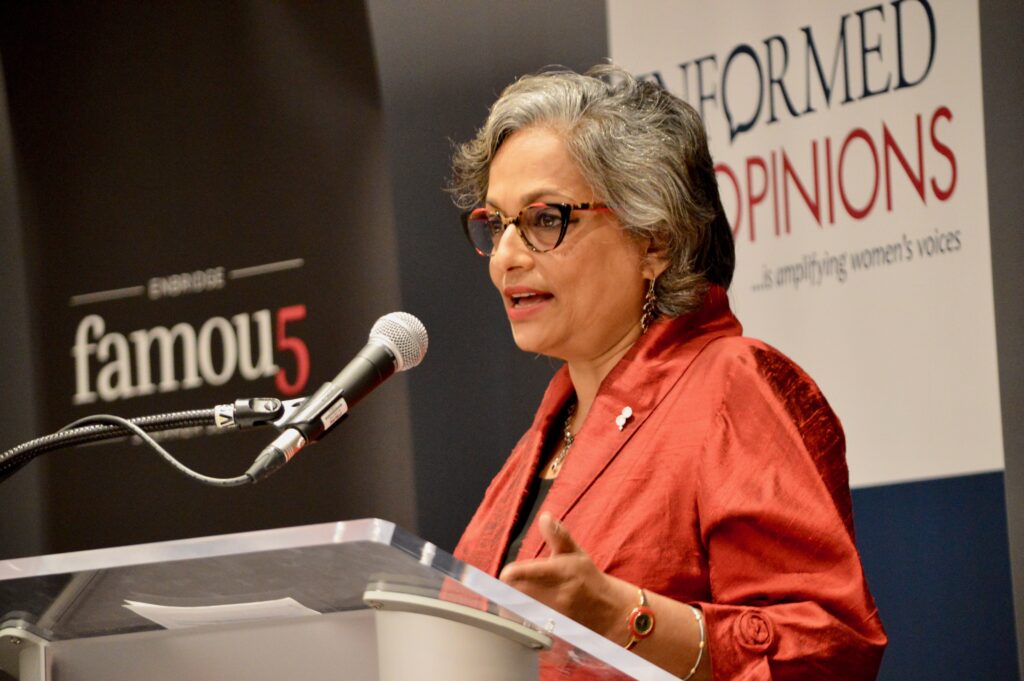
Nobina Robinson accepting her “OMG – Maybe I AM the best person” award at the National Arts Centre on October 18th.

You may not recognize her name, but chances are high that you’ve been influenced – if only indirectly – by her informed opinions.

Nobina Robinson attended one of our Writing Compelling Commentary workshops in 2012. Since then, she’s authored or co-authored more than three dozen op eds. Her commentary has been published in a wide variety of influential print and online publications across Canada. In the process, she’s changed conversations about, and broadened public appreciation for, the critically important role polytechnics — institutes that offer applied education and training — play in preparing workers to contribute in Canada’s evolving economy.

That’s why we celebrated Nobina at an event co-hosted by the Ottawa-based Famous Five organization on the anniversary of the Persons Case. We wanted to publicly salute her significant contribution to Canadian public discourse, and to encourage other women to follow her inspirational example.

A short video made for her recent retirement as CEO of Polytechnics Canada makes clear her capacity to inspire. The video features testimonials from the presidents of polytechnic institutions across the country who sum up her character and impact with words like focused and tenacious, fearless and formidable, passionate and influential. They credit her with putting their institutions on the agenda of political decision-makers and changing the conversation about post secondary education in Canada.

Little wonder that Algonquin College recently awarded her an honorary degree, or that she’s received appointments from both the CD Howe Institute and the University of Calgary’s School of Public Policy.

Here Nobina explains in her own words why engaging with media was important to her.

1. What were you hoping to achieve by writing commentary?

Investing time and resources in writing commentary is a key part of smart public policy advocacy, particularly given the proliferation of new media platforms for getting the message out. My aim was to successfully break the dominant narrative in Canadian policy circles whereby most commentators argue that only a university education or degree, and only university research and basic science are key to the skills and innovation challenges of our country. Given the significant role polytechnic grads play in today’s economy, I wanted to make the case that Canadian higher education and innovation systems need to harness a diversity of educational programs for the country’s growth. I wanted to broaden how we conceive of talent to include technicians, technologists, apprentices and non-traditional learners.

2. What kind of response did your commentaries generate?

Understandably, members of my organization were pleased and even surprised at the kind of access to media pages we began to get. The recognition and positive response from the very decision-makers we were trying to influence was even more surprising and gratifying. The best response was when other journalists picked up on the written commentaries and asked to interview me, generating the kind of “earned media” that positions you as a credible expert on the issues you’re addressing.

3. What, if anything, surprised you about the experience?

Two things. One, I had to learn the difference between promotion and expert commentary, leading to an appreciation of the more subtle ways in which written analyses must function in order to be effective advocacy. Crafting evidence-based, persuasive arguments and publishing them in influential media is more compelling than many more traditional lobbying activities.

Also, I didn’t realize how limited the knowledge base would be among general reporters regarding issues such as science funding, innovation lag, skills shortage, career bias and higher education. I often had to become better about slowing down, backing up, and offering context to brief the reporter on background, before moving to the formal part of the interview to share information relevant to the particular issue for quotation purposes.

4. What advice can you offer to other women who may still be reluctant to engage with media?

Just do it. But do it with purpose, with clarity and with an appreciation for the media’s own constraints (word limits, deadlines, limited understanding of the issues you’re writing about). No writing is wasted, no draft is useless. Keep all versions, and enjoy watching your ideas and commentary take shape. If you don’t enjoy it, if you treat commentary as an obligation or a chore, your words will not shine. 

5. Any other thoughts about sharing your informed opinions through media that might be useful for other women?

The mission of Informed Opinions is so essential and so focused – amplifying the voice of women commentators means strengthening democracy. I never thought I was doing such a laudable/high-minded thing, but now I know that quality public writing – on any subject – at a time of so much noise, is vital.

Secondly, there is a network to help those who may be shy in making their expertise known – from attending workshops, to accessing free online resources, to receiving advice on how to navigate engaging with media engagement… Informed Opinions offers strength in growing numbers of women experts; the organization is an energizer that we should all use more often, and support constantly.

-/-

Informed Opinions is enormously grateful to Nobina for not only her generous words about, and support for our work, but also for her enthusiastic embrace of media. We are deeply honoured to call her an Informed Opinions’ “graduate”, a member of our experts database, and a valuable ally.

And we were delighted to publicly recognized her for “being a she that others can see.”

9 tips to improve the chances of getting your op ed published

In the dog days of summer 2017, when many people were at the beach, or glued to the media coverage of Charlottesville’s neo-Nazi march and the shocking response from the leader of the free world, a small posse of women with informed opinions were speaking up to make change.

University of Ottawa law prof, Liz Sheehy and Ottawa Rape Crisis Centre executive director Sunny Marriner co-wrote about sexual assault; Rakhi Ruparelia, also a member of the law faculty at UOttawa, called out racism in Canada; Canada Research Chair in Global Women’s Issues, Bipasha Baruah, linked the rise of acid attacks around the world to toxic masculinity; Amira Elghawaby chronicled the affluent empathy gap; and Michelle Stack challenged educators to take responsibility for addressing tough issues in the classroom. (All of these pieces are featured in the 2017 graduate showcase section of our website, where we’ll post your published commentaries, too, if you send them to us.)

Even though Rakhi was nursing an ill relative, when she received an email from Christina Spencer at the Ottawa Citizen asking her to weigh in, she says,

“I didn’t hesitate… I reminded myself the article
didn’t have to be perfect, just out there.”

This is important advice for all of us to remember – I call it “the reasonable man approach”. We don’t allow ourselves to turn down an opportunity that a reasonable man would be quick to embrace.

When people approach you to write commentary, be interviewed, or speak at an event, they never ask if you’re “the best”, and they’re not expecting perfection. They’re usually looking for someone who can offer context, add value, or provide insight.

And if they’ve reached out to you on the basis of their past knowledge of you, your internet profile, or someone’s explicit recommendation, you can likely do all of that and more. This is the conclusion a reasonable man comes to right away. (For more on this principle applied to public speaking, read this.)

If you haven’t yet taken our Writing Compelling Commentary workshop, or if you’re worried you’ve forgotten much of what we shared, our new online Learning Hub has an entire section featuring reminders and strategies. In the meantime, you can learn a lot from the advice someone gives to others – and it’s often less painful. Especially when the insights permit you to avoid making mistakes, as opposed to having to rectify the ones you’ve already made.

In that spirit, here are some suggestions I’ve given to a handful of smart women whose first drafts contained one or more elements that were likely to get in the way of them persuading their intended audience, or being accepted for publication in the first place.

Before you hit the “send” button on your own submission, it’s worth revisiting the following:

  1. Decide on the publication you want your comments to appear in before you start writing. Targeting your work helps shape how you write it, what arguments you marshal, and what examples you give (e.g. If you’re extolling the benefits of meditation to a business audience, you’ll emphasize findings about boosted productivity; if speaking to educators, you’ll cite research showing an improved ability to stay awake in class). Identifying the publication in advance also tells you the number of words the editors are looking for.
  2. Anticipate and explicitly address the resistance to new ideas, or a different perspective on a misunderstood issue. Effective commentaries anticipate, acknowledge and then refute at least some of the objections that readers are likely to have to the opinions being expressed. If you’re going to advocate that more city-dwellers should trade their cars in for bikes, you need to acknowledge that those with physical disabilities or a long highway commute have legitimate reasons not to.
  3. Conceptual language is usually a deterrent for anyone who’s not already familiar with or interested in your topic. Look for ways to translate theoretical phrases into concrete ones so readers can visualize what you’re describing. That’s why “performing surgery” is better than “surgical intervention”, why “feeling optimistic” is better than “optimism”.
  4. Exclamation marks are almost never a good idea. (Among other things, their inclusion immediately tells the editor that you probably don’t read her page! And she’s not going to like that!!)
  5. Too much data is overwhelming. Each stat cited becomes less impactful as a result. Pick one or two of the most compelling stats in support of your point, and then provide a concrete, relatable example that fleshes out the numbers, plants an image in readers’ minds, and elicits an emotional response that will complement the intellectual one.
  6. Save the self-interested promo for a news release. Any piece that explicitly and unapologetically focuses on telling the government to appoint a champion to promote a policy that neatly aligns with your organizations’ mandate is, by definition, too self-interested; it reads more like a news release, and that’s not what comment sections are for.
  7. Yes, you need a news hook. Demonstrating the immediacy of your argument – by tying it to an emerging trend, recent government announcement, or upcoming event – gives the editor a reason to publish your piece now, as opposed to “next month.” (Because “next month” usually translates into “never” — unless you re-submit next month, with a now-timely news hook).
  8. Avoid repetitious language. When readers come across the same word or phrase repeated several times in the course of a paragraph, or throughout an entire article, they’re more inclined to tune out and move on to something else. Check your thesaurus for other commonly-used, accessible ways to refer to the issue, and/or rewrite sentences to eliminate duplicate words and phrases.
  9. In many cases where you’re providing examples in a list, sticking to the old rhetorical rule of three is a good idea. Speechwriters and playwrights have long demonstrated that three is the perfect number to establish and reinforce a point (I came, I saw, I conquered), but four or five becomes too many, muddying the point or becoming redundant.

If you’re seeking to publicly position yourself as a credible authority in your field, offering analysis in the form of an op ed disseminated through a respected publication is a good strategy.

And the good news is that regular columnists like to take time off in the summer, just like the rest of us. That means that it’s sometimes easier to get into the publication of your choice in July and August.

But reviewing your work in light of the tips in the above checklist gives you even more of an edge.

Whose attention would you most like to attract?

Gloria Steinem… senior bureaucrats… somebody who funds the kind of work you do? Whose attention would you most like to attract?

In recent years, Canadian women writing timely, engaging and persuasive commentary have elicited responses from all of the above. Others have sparked international conversations, investigative journalism, and a reversal of government policy.

And those are just the ones we know about.

I first discovered the power of op eds as a fledgling graduate student 25 years ago. I had just joined the board of Media Action in 1991 when the Miss Canada pageant was cancelled. A local TV station in BC where I lived called looking for someone to comment.

Having previously worked in public relations, I knew the importance of soundbites. I marshalled my analysis into a single sentence, made more vivid by use of an analogy.

“I’m delighted,” I said, “that a contest that treats women’s bodies like cattle at an auction is no longer popular enough to attract advertisers.”

After the station aired my quote, my ordinarily supportive mother called me.

“Honey,” she said, “you looked awful!”

This was not the response I’d been hoping for. But to be fair, I was displaying my traditional winter pallor, and my 15-second clip was wedged between 15 seconds of Miss Canada 1990, and Miss Canada 1991, both of whom were a decade younger than me, sporting professional make-up and – this is important – certified beauty queens.

(In my mother’s defence, I think it was the first time she realized that, despite my many charms, I was not, actually, pageant material.)

The real value of the experience, however, was that I had a lot more to say than the 15 seconds that aired. So I channeled the rest of my critique into a written opinion piece that I submitted to the local newspaper.

When they published it, I was over the moon.

Emboldened by my newfound ability to command the attention of hundreds of thousands of readers in my hometown of Vancouver, I began expounding on other unfortunate trends in the media’s portrayal of women.

The exposure led to more interview requests, speaking opportunities and – who knew? – eventual acceptance into the grad school program to which I’d failed to gain entry the previous year.

I was intoxicated by the sense of agency this mediated access to a broader audience gave me. Making the knowledge I was acquiring at grad school more accessible to parents and teachers, media producers and policy makers was enormously satisfying. And doing so opened new doors – giving me the opportunity to write a weekly column, produce a TV series, appear on radio. A book contract, speechwriting work and a job in the premier’s office followed.

“What became eminently clear to me was that having a public voice made it infinitely easier to get people to return my phone calls, give money to my cause, and help me make change in areas I felt were important.

This is why it’s so satisfying for me to share the skills and strategies I’ve learned with others. And since 2010, hundreds have applied the lessons to their own advocacy and knowledge dissemination efforts.

Some of my lessons have been happy accidents. (Attracting the attention of Gloria Steinem, for example.)

And some effective strategies I’ve learned from the women who’ve participated in the workshops. Lisa Philipps made it easy for readers to understand the downside of balanced budget legislation by packaging her argument in five subheads. She received queries about her analysis from two levels of government. For her part, Catherine Connelly parlayed an op ed on temporary foreign workers into a successful research funding application.

The workshops we deliver have supported hundreds of women in drawing attention to issues they know and care about, positioning themselves as authoritative go-to sources in the process. Many continue to stay in contact with us years after their workshop participation so we can share their insights on Facebook and Twitter, and through Informed Opinions’ website.

On April 27th at the beautiful Verity Club in Toronto, we’ll be offering our last open Writing Compelling Commentary workshop until the fall. Spots are still available at a sliding scale rate. You can find out more information, and register here, if interested.

“They read my entire op-ed in the debate!”

“I nearly fell out of my chair,” laughs Janet McLaughlin, recalling her shock upon hearing the Leader of the Opposition publicly quote her in the Ontario legislature.

Janet McLaughlin

The House was embroiled in a critical debate about funding for autism programs, an issue McLaughlin cares about deeply.

That’s when the Assistant Professor of Health Studies at Wilfrid Laurier University’s Brantford campus realized just how empowering voicing her opinion could be.

“I realized, I can think all these private thoughts and write all these policy documents, but the way to influence people is to write op-eds and to do media interviews.”

But until the Ontario government declared its intention to make children over five ineligible for funded autism support programs, it wasn’t something that she had spent a lot of time thinking about.

“Writing op-eds was not a priority,” McLaughlin admits.

Still, when she was invited to participate in an Informed Opinions workshop in the fall of 2015 on doing just that, she decided to attend.

So when the government announced its plans a few months later, McLaughlin, the mother of a young boy who has autism, was fully versed on the importance of speaking up.

She started with a letter to the Premier of Ontario, Kathleen Wynne, outlining how the government’s proposed changes would negatively impact her family. But when she received a form letter in response, she knew it was time to go public.

McLaughlin revised her letter into an op-ed and, after edits from Informed Opinions’ founder, Shari Graydon, The Toronto Star accepted it for publication.

“I was so thrilled,” she recalls. “To see it there, right on the op-ed page… it was really gratifying. I got a lot of feedback from doing that. A lot of people saw it.”

Then, to her astonishment, the MPP for Kitchner-Waterloo, Catherine Fife, read the a significant portion of the article out loud in the legislature.

“In doing so, it got on record,” says McLaughlin. “And if the Premier missed reading it in the Star, she would definitely have heard it then. I really felt that it had an impact.”

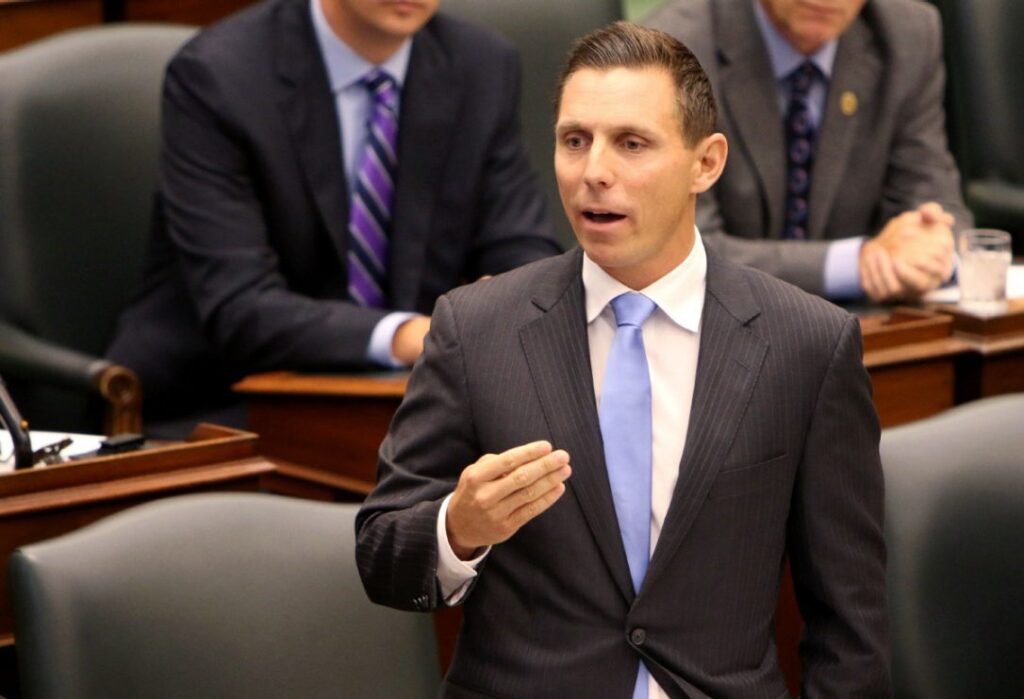
Patrick Brown, MPP, Leader of the Progressive Conservative Party of Ontario

A few weeks later, she donned her academic hat and analyzed the government’s proposed policy, writing a paper that she then boiled down into a second op-ed. Knowing that time was of the essence if she was going to help inform debate in the Legislature, McLaughlin submitted it to online publication The Huffington Post.

“Within two hours it was up,” she says. The next day, her piece was read aloud in its entirety as part of the debate. She followed with a third op-ed, also published on Huffington Post, and soon found herself responding to calls from the media.

More thrillingly, however, was the news that all her hard work had paid off. In late June, the Liberal government announced that it was backing away from its proposed funding changes for autism programs.

“So basically, everything that I asked for in my policy documents and my op-eds they did….in just a matter of months,” says McLaughlin.

While she credits the many who protested the government’s proposed program changes, McLaughlin is grateful that she was able to use her position as an academic, and the skills she learned from Informed Opinions, to make a tremendous difference – both for her own son, as well as the many other Ontario children waiting for autism treatment.

“I really can’t thank Shari enough,” she says. “I likely wouldn’t have written the op-eds had I not taken her workshop or had the assurance of her writing support. She has made a real difference, giving me the knowledge of how to do this, but also showing me that I have the right to speak up. It’s been a truly empowering experience.”

Most recently, McLaughlin seized her professional capacity to add value when TVO commissioned her to write a commentary on the rights of migrant agricultural workers, a piece that allowed her to summarize a decade’s worth of her research for a broad readership. She has since distributed copies to politicians for consideration.

Experience has taught her that it could make a difference.

Media Calling? Here’s What to Ask

It’s Tuesday morning and you’re busily catching up on work at your desk when the phone rings.. It’s a journalist wanting to ask you a few questions about some breaking news – a topic you happen to know quite a bit about.

Whether it’s a request for a TV or radio interview or someone looking for a quick quote for a newspaper article, you can significantly enhance your preparedness by asking some key questions of your own about the context:

What kind of interview is it?

Is the journalist after a quick on-the-spot quote for a newspaper article, or are you being ‘pre-interviewed’ by a radio or TV producer to see if you’re the right fit for their program? Make sure you know what you’re dealing with right off the bat.

If it’s a broadcast interview (radio or TV): 

  • What do you want me to talk about?
  • How long will the interview be?
  • Who will be interviewing me? Will that person be in the same room as me, or will they be in a different space? (If you’re doing a television ‘double-ender’, you’ll be alone in a small studio facing a camera and hearing the interviewer, who could be in a different city, in your ear. It’s nice not to be surprised at the last minute).
  • Will anyone else be interviewed at the same time? If yes, who? Is it a panel discussion? If not, will I be expected to respond to another guest’s interview? Will we be in the same space or in different studios?
  • Will I be able to see the questions in advance? (The answer is usually no because of a fear you’ll over-prepare, but you can always ask).
  • Will you be editing the interview or running it in its entirety? (Editing allows for the possibility of cutting around any mistakes or taking out a question in the interest of time).
  • Will a version of the interview also appear online? (Some outlets, like CBC News, repurpose some of their radio and TV interviews as articles on their website).
  • Should I bring my own coffee? (No really: in these times of austerity, many media organizations no longer provide coffee, no matter how early the interview. If you need the caffeine jolt, arm yourself accordingly!)

TV-specific questions: 

  • Will the interview be taped in a studio under serious lighting? If so, do you have a make-up artist on hand to provide powder or foundation? (If not, you may want to invest in a bit of that yourself so you don’t look especially washed out.)
  • Will I be seated behind a desk, shot from the waist up, or on a set where my entire body is visible (e.g. couch, high stool, requiring you to think about whether you want to wear a skirt – tight-fitting ones often ride up and expose more of your thighs than you may have planned on revealing)
  • Are there any colours or prints I should avoid wearing? (e.g. if the background is black, and you wear black, your head may end up looking like it’s floating)
  • Is it true that the camera adds 10 lbs? (Kidding, Don’t ask that; it’s a myth perpetuated to keep Hollywood starlets too weak to protest being paid less than their male colleagues.)

Radio-specific questions: 

  • Will the interview be videotaped? (Some radio outlets now have cameras in their studios which they use periodically to create web-friendly content from their interviews. It’s best to ask so you can prepare accordingly).

If it’s an interview for a print or online article:

  • Will I be able to review the article before it goes to print/is posted online? (The answer to this is also usually no, but some journalists will let you review your own quotes out of context). You could instead offer, if relevant:

“Given the complex nature of the issue and how unfamiliar it is to most members of the public, I would be happy to check the scientific or technical accuracy of any relevant explanations before publication, if that would be helpful.”

Of course, today’s speedy technological changes and the rise of social media mean the lines are blurring between types of media, with more newspapers featuring video on their websites, and with more broadcast outlets focusing on creating web content. If you have a question about what they want from you and how they’ll be using your interview, never hesitate to ask.

Whether you’re completely new to media interviews or want to hone your skills. Join our workshop with journalist Jacky Habib to master your next interview. 

How prepared are you for a live radio or TV interview?

Chances are, if you’re reading this, you’re in no danger of being characterized as a “rent-a-gob”.

That’s the term CBC radio host, Robyn Bresnahan laughingly used last week to describe the expert source who’s willing to talk about anything, regardless of how distant the topic is from his professional background.

The women Informed Opinions typically works with are much more likely to hail from the opposite end of the chutzpah continuum: although confident about their subject matter expertise, when asked by journalists to provide context in an interview, they’re often inclined to defer to someone else. And many view the prospect of a live conversation on radio or TV as especially intimidating.

That’s why we were delighted to partner with CBC Ottawa last week to provide a handful of expert women with an informal orientation. Some of the broadcasters behind Ottawa Morning (local radio) and Power and Politics (national TV) invited us in to their studios to help de-mystify the experience.

Producers Karla Hilton, Ruth Zowdu, and Amy Castle joined host Robyn Bresnahan to describe the process from first contact and pre-interview by a researcher, to the on-air drill, taking questions throughout.

For both TV and radio, they explained, the pre-interview conversation is designed to determine whether or not your expertise lines up with the focus of the segment they’re aiming to do. If they don’t end up using you after all, it’s not personal.

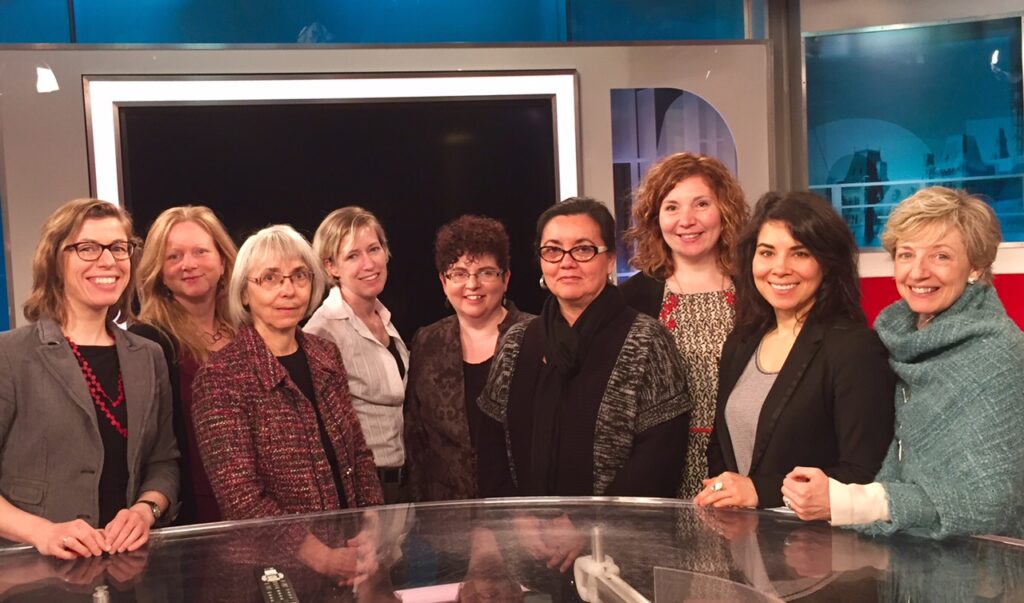
Expert women able to offer context on reproductive health, the environment, violence against women, social policy, international development, and indigenous issues recently benefited from a de-mystification exercise in broadcast interviews, courtesy of the generosity of some CBC Ottawa hosts and producers.

Many experts enter the interview preoccupied by the fear of being judged by their colleagues as having simplified the issues.” But as Karla advised: “You’re not speaking to your colleagues, you’re speaking to 200,000 people who know almost nothing about the topic.” Making information accessible, something a lay audience can understand, is not ‘dumbing down’, she said, “it’s all about relatability.”

Added Robyn, “Pretend you’re talking to your mother… Offer examples. Describe the human elements. Forget the acronyms. If you use them, I’ll just have to unpack them or ask you to explain.” She also stressed,

“We’re looking for stories with people at their centre.”

And yet many of the expert women we support don’t want to be at the centre themselves. They don’t mind offering analysis, but they don’t seek the spotlight, and they’re all too able to imagine the discomfort they would feel if put on the spot by an aggressive reporter intent on making them look bad.

But not all — or even most — broadcast programs reflect the kind of interview style made famous by investigative reporters on shows like 60 Minutes or The Fifth Estate. Yes, public officials are often questioned in a manner designed to hold them to account for the decisions they’re making and the public dollars they’re spending.

But the value of other subject matter experts is usually their ability to help listeners, viewers and readers to make sense of breaking news, emerging trends or intractable challenges. And the host of the radio or TV program doesn’t want you to feel like a deer in the headlights. Said Robyn,

“We want you to feel comfortable so we can have a relaxed conversation and you’ll want to come back.”

She also reminded the academic and non-profit sector experts that if they are asked to participate in a program, it’s because they’ve demonstrated in the pre-interview that their perspective will add value. “You’re here for a reason,” she said.

The Ottawa women who had the opportunity to visit CBC’s studios last week were enormously appreciative of the insights they gained into the process, and the practical tips they’ll be able to apply to future interview opportunities.

Building on the success of this visit, we’ll be looking for opportunities to partner with other broadcasters across the country who are similarly interested in increasing the number of expert women available to their viewers and listeners.

In the meantime, if you sign up to receive blog updates (see below), in future posts we’ll be providing a checklist of the questions you should ask the reporter when contacted for an interview, and more detailed suggestions regarding the things none of us like to ask, but we all worry about. (How important is make-up? What should you wear? And is it true that the camera adds 10 extra pounds?)

Also of note, the media interview skills workshops we deliver provide much of this context, in addition to concrete preparation strategies and mock interview practice. And the Resources section of our website makes some of these insights available for free.


Are you uncomfortable calling yourself an expert?

I’m sitting in a restaurant with my friend Frances. (Note that this blog post was originally published pre-pandemic.) A longtime print journalist and frequent guest on radio public affairs shows, she is knowledgeable, articulate and funny – in both of Canada’s official languages.

At the moment, however, she’s on the verge of turning down an interview request.

The radio producer wants her to come on air to talk about a recent decision related to disruptive taxi company Uber. But Frances didn’t cover the decision and hasn’t really paid much attention to the issue. So she’s about to say “no” to the interview.

The problem is, I’m sitting right there! She’s heard me lament the fact that women frequently give up opportunities to provide their informed analysis because they think they’re “not the best person,” and knows I’ve spent the past five years trying to motivate them to respond differently.

Plus, having spent three decades as a reporter herself, she also knows how often journalists on deadline default to male sources who don’t hold themselves up to such an unrealistic standard. And she’s clear about the depth and value added to a story when it features comments from a variety of perspectives.

So instead of immediately declining the interview, she says:

“Here’s what I could talk about…”

Now the truth is, I’m not paying attention to the conversation she’s having across the table with the radio producer, because I’m otherwise occupied. So I wouldn’t actually have known to take her to task for turning down the opportunity, unless she’d confessed to me afterwards.

As for the next time someone calls you, I’ll have even less chance of knowing that you’re being asked to weigh in. But don’t let that stop you from sharing what you know. Take a page from Frances’ book, and consider how the knowledge you have might intersect with the topic they’re featuring. Offer to provide context and analysis that – while it may not focus on the precise angle being pitched to you – will still enlighten listeners or viewers or readers.

Your male colleagues do this all the time. The information they share often makes a valuable contribution, enhancing people’s understanding of important issues.

No doubt yours will, too.

And in the process, it can position you as an authority likely to be contacted for future stories or speaking opportunities that expand your ability to have an impact on issues you care about.

Still unsure what constitutes an informed opinion? Learn more here. And please share this post with friends and colleagues whose expertise or informed opinions you think might benefit public conversations on any topic. Once they’ve read it, encourage them to click on the “Apply to join” link.

7 Things Journalists Want Women To Know

Want to know what journalists think? Ask them. That’s what we did last fall by hosting a series of roundtable luncheons in cities right across the country. Our goal was simple: to pick their brains about ExpertWomen.ca, the new, improved and expanded database we’re starting to build.

We’re now incorporating their valuable ideas and insights into our new tool (and we’ll let you know when it’s up and running!). But over the course of those lunches we also gleaned more than a few things they want women to know about working with them. And we figured they were worth sharing.

1. They really do care about what you have to say.

Journalists across the country agreed that the conversation changes when women’s voices are included. “I think women have a particular point of view that we don’t hear a lot,” said one. Another highlighted the fact that when women don’t speak, some issues simply don’t get airtime. What we heard? “We need to draw on women’s insights more often.” It’s not a lack of desire that keeps them from calling on women.

2. They need you to say yes to the interview 

But the fact is, almost everyone agreed that getting a woman’s voice to print or to air is often a challenge. That’s because women are far more inclined than men to turn down interview requests. “Too often the women I reach out to say ‘sorry, I’m not the right person,” said one exasperated reporter. “They don’t seem to understand that I’m just looking for a conversation… not a book chapter!” Over and over again journalists stressed that their time constraints mean that they often default to interviewing a man, simply because he’s fastest to respond. “At the end of the day,” said one, “you still need someone to put on the air.” 

3. And they need you to do it quickly.

It’s fine to take a breath and collect your thoughts before you call a journalist back, but speed is of the essence, especially as newsroom resources become more and more scarce. Many journalists said women frequently need more convincing before they’ll do an interview – which doesn’t always work with their timelines. “When you’re on a short deadline, it’s easier to go to people you know will say yes,” a journalist explained – and more often than not, that means calling a man.

4. They appreciate it when you’re clear about when you won’t be available

The journalists we spoke with are mindful of the fact that many women face unique time pressures, especially if they’re parents. “A lot of women have full time jobs,” said one reporter. “They don’t see doing media as a priority.” If you absolutely can’t be available at a particular time, it’s important to be clear about that up front. Even if you can’t do the interview, let them know that you would be keen to talk at another time. Interestingly, more than one journalist noted that men hardly ever cite daycare pickup as a reason for not doing an interview, while it’s common among women. (Might this be an incentive for you to solicit a bit more help on that front?)

5. They want you to refer them to other smart women

Many of the journalists we spoke with are actively working to build up their go-to lists of smart, media-friendly women. If you can’t do the interview, they’re always grateful if you can refer them to another qualified woman.

6. They want you to be proactive 

Breaking news in your area of expertise? Get on social media and share what you know. Because here’s the thing about journalists: they are pretty much tethered to their electronic devices at all times. If something’s being discussed on Twitter, chances are they’re paying attention. Don’t be afraid to let your voice be heard in those forums because, as one journalist said, “we’ll notice.” If you’re less keen on social media, it never hurts to fire off a quick email to a journalist directly to let him or her know you’re willing to be interviewed.

7. They urge you to ignore the trolls 

Nobody likes a troll, especially not an anonymous one spewing unproductive comments online. News organizations know that online comments can deter some women from saying yes to media interviews. That’s why more and more are doing away with online commenting altogether in favour of fostering dialogue through social media. The truth is, journalists have to deal with online trolls too. Their solution (and ours, too!)? Just ignore ‘em.