
 Advocacy


Structural barriers shape who gets selected long before merit is evaluated:
- Informal networks favour dominant groups
- Party gatekeepers filter out outsiders
- Incumbency advantages protect existing (often male) candidates
- Financial barriers exclude many qualified people
Women face additional hurdles: specifically, they are:
- Less likely to be recruited by parties
- Less likely to be nominated in safe ridings
- More likely to face funding gaps and higher scrutiny
- More likely to be run in a riding, their party has little chance of winning
The evidence makes clear: Countries using quotas have noticed that legislative performance improves, deliberation becomes more inclusive and public trust rises.
In Sweden, after quotas were introduced, researchers found the qualifications of people elected improved. When parties are forced to recruit women candidates, they seek the best-qualified people they can, and let some of their less-qualified male defaults go.
Sources: Electoral Gender Quotas and Democratic Legitimacy, American Political Science Review; Gender Quotas and the Crisis of the Mediocre Man: Theory and Evidence from Sweden, American Economic Association
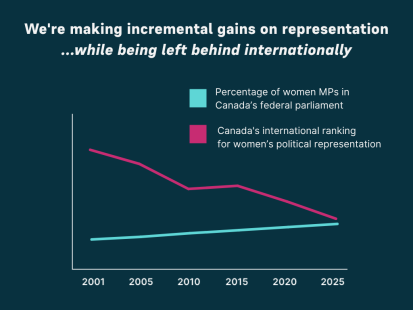
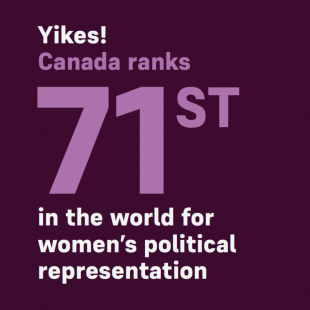
The status quo in Canada:
- We’ve relied on incremental change, rather than recognizing and addressing systemic barriers.
- As a result, women remained less than 30% of Parliament for over 100 years
- Progress without intervention has been painfully slow and inconsistent
- At this rate, we won’t reach gender parity until 2115
In contrast, other democratic countries that adopted party quotas increased women’s representation significantly faster.
Got questions? Email us at info@informedperspectives.org.
 News & Announcements