


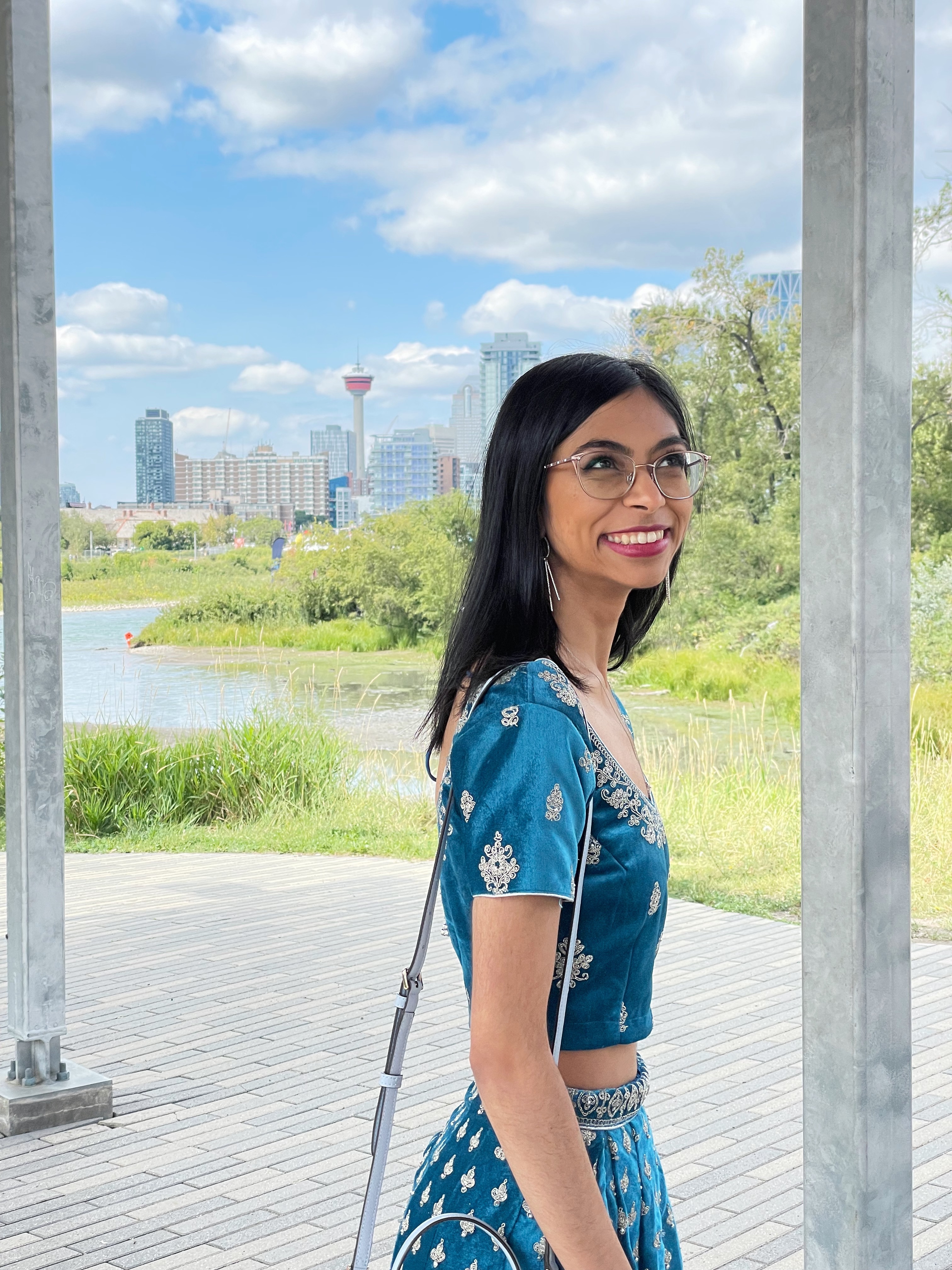
Ziyana Kotadia
Delegate to the United Nations Commission on the Status of Women, Shift: The Project to End Domestic Violence
Ziyana Kotadia is a feminist advocate, writer, and researcher. Armed with an MPhil in Multi-Disciplinary Gender Studies from the University of Cambridge and a BA in Global Gender Studies from Western University, Kotadia has served in several leadership roles, including as the inaugural Chair of the Safe Campus Coalition, Vice-President University Affairs of Western University’s Students' Council, and President of the Huron University College Students’ Council. Kotadia has given interviews about her work in gender justice to various national Canadian media outlets including the Globe and Mail, the Toronto Star, CBC, CTV News, and Global News, and has engaged with Canadian thought leaders such as Sophie Grégoire Trudeau to advance gender equity work. She is currently an advisor to Senator Marilou McPhedran at the Senate of Canada, works in communications and public affairs at Shift: The Project to End Domestic Violence, and recently represented Canadian youth as an official delegate to the 68th Session of the UN Commission on the Status of Women. Ziyana has published a variety of works on gender justice and anti-violence including op-eds, academic articles, book chapters, and poems.
Contact Expert
Please provide the required information below to contact Ziyana Kotadia.
Ziyana Kotadia is a feminist advocate, writer, and researcher. Armed with an MPhil in Multi-Disciplinary Gender Studies from the University of Cambridge and a BA in Global Gender Studies from Western University, Kotadia has served in several leadership roles, including as the inaugural Chair of the Safe Campus Coalition, Vice-President University Affairs of Western University’s Students' Council, and President of the Huron University College Students’ Council. Kotadia has given interviews about her work in gender justice to various national Canadian media outlets including the Globe and Mail, the Toronto Star, CBC, CTV News, and Global News, and has engaged with Canadian thought leaders such as Sophie Grégoire Trudeau to advance gender equity work. She is currently an advisor to Senator Marilou McPhedran at the Senate of Canada, works in communications and public affairs at Shift: The Project to End Domestic Violence, and recently represented Canadian youth as an official delegate to the 68th Session of the UN Commission on the Status of Women. Ziyana has published a variety of works on gender justice and anti-violence including op-eds, academic articles, book chapters, and poems.
Canadian Women's Foundation
Toronto Star
“We know that the fall is a particularly precarious time for students given that we’re at higher risk for sexual assault in the first eight weeks of the academic year,” said Ziyana Kotadia, a Western student and contributor to the national action plan released Monday.
Toronto Star
“Students are feeling frustrated and angry,” said fourth-year student Ziyana Kotadia. “Many of our students don’t feel safe, in residence or on campus. It’s definitely been a difficult few days for our students.”
The Globe and Mail
The Philanthropist
“Gender justice is really not a luxury; it is an increasingly vital project,” Ziyana Kotadia says. “Programs like Girls Belong Here are reshaping dominant narratives surrounding who is capable of leadership and nurturing the capacity of girls, non-binary youth, and young women to step into these roles.”
The Toronto Star
While welcoming the legislation, “ultimately, the really powerful potential of this bill is challenged by its loopholes and gaps that could serve to create harm for survivors under the guise of being survivor-centric legislation,” said Ziyana Kotadia, chair of the Safe Campus Coalition.
Western News
Kotadia, who noted the USC has been doing a lot of anti-GBSV work with students throughout the year, added, “It was powerful to see so many students and community members stand in solidarity with survivors and see how much the university community cares about making safety a priority.”
CBC News
London Free Press
Western News
“Ultimately, there needs to be a holistic solution” to gender-based and sexual violence, Ziyana Kotadia, vice president, university affairs, with the University Students’ Council, said recently. That includes not just built environment on campus but proactive education, policy, procedures and prevention, Kotadia said. “Safety and belonging on campus are deeply tied to many factors, including amenities and physical spaces. They add to the cultural narratives that say, ‘everyone is welcome, and everyone will have safe access,’” said Kotadia.
Toronto Star
Ziyana Kotadia, vice president of university affairs for Western’s University Students’ Council, said student concerns have been raised to the university, especially as many have contracted the illness in recent weeks. “We have been hearing from students in a variety of disciplines about their concerns with exams being held in-person given the effects the current wave of COVID-19 is having on our student body,” Kotadia said.
CTV London
“Ensuring that menstrual products are free and accessible to students who need them will reduce financial and social barriers to education that menstruators experience and build a culture where we can all feel empowered to move through spaces on campus with a sense of belonging,” said Ziyana Kotadia, the VP of university affairs at USC.
Global News
“We are beyond thrilled that our advocacy has had an impact and that Western has recognized the importance of providing free menstrual products to the student community,” says Ziyana Kotadia, USC vice-president university affairs. “Ensuring that menstrual products are free and accessible to students who need them will reduce financial and social barriers to education that menstruators experience and build a culture where we can all feel empowered to move through spaces on campus with a sense of belonging.”
CBC News
Nous avons besoin que les établissements postsecondaires et les gouvernements mettent en œuvre ces appels à l'action dès maintenant pour lutter contre l'épidémie de violence sexuelle sur les campus, indique Ziyana Kotadia.
Global News
Kotadia highlighted the importance of “addressing the intersections of other forms of systemic oppression.” “I think what’s important here is to make sure we’re taking up a lens that implicates the structures, and the social norms that produce gender-based violence (such as) ableism, sexism, racism, which create and maintain this culture where inequality and violence are normalized,” she said.
The Western Gazette
The Western Gazette
Toronto Star
Toronto Star
Ziyana Kotadia, in Calgary, Alberta
Ziyana Kotadia, delivering keynote speech
Abstract: At the intersection of misogyny and heteronormativity, queer women in Canada face significant systemic barriers in pursuing political leadership, including experiences of harassment and violence. In transgressing gendered leadership norms in the high-stakes and high-visibility terrain of electoral politics, queer women are subject to disproportionate surveillance and discipline under the regulatory power of the heterosexual matrix. In taking up a recent quantitative study by the LGBTQ Victory Institute as well as media coverage of Kathleen Wynne’s leadership as the first openly lesbian and LGBTQ-identifying premier in Canada, this paper argues that in order to meaningfully support queer women to enter the field of electoral politics in Canada, we must move beyond encouraging representation and instead consider how violence against queer women in politics enforces systemic exclusion. This paper offers that understanding the trauma experienced by queer women in politics – both as candidates and elected leaders – is vital for illuminating the structural powers that perpetuate this violence and dismantling the systems that reproduce this harm.
Breakfast Television
Yours in Solidarity
iHeart Radio
Books
Research
Published by Liberated Arts: A Journal for Undergraduate Research
Master of Philosophy
in Multi-Disciplinary Gender StudiesUniversity of Cambridge
November 30, 2024
Bachelor of Arts
in Honours Specialization in Global Gender StudiesWestern University
Master of Philosophy
in Multi-Disciplinary Gender StudiesUniversity of Cambridge
Canadian Women's Foundation
Toronto Star
“We know that the fall is a particularly precarious time for students given that we’re at higher risk for sexual assault in the first eight weeks of the academic year,” said Ziyana Kotadia, a Western student and contributor to the national action plan released Monday.
Toronto Star
“Students are feeling frustrated and angry,” said fourth-year student Ziyana Kotadia. “Many of our students don’t feel safe, in residence or on campus. It’s definitely been a difficult few days for our students.”
The Globe and Mail
The Philanthropist
“Gender justice is really not a luxury; it is an increasingly vital project,” Ziyana Kotadia says. “Programs like Girls Belong Here are reshaping dominant narratives surrounding who is capable of leadership and nurturing the capacity of girls, non-binary youth, and young women to step into these roles.”
The Toronto Star
While welcoming the legislation, “ultimately, the really powerful potential of this bill is challenged by its loopholes and gaps that could serve to create harm for survivors under the guise of being survivor-centric legislation,” said Ziyana Kotadia, chair of the Safe Campus Coalition.
Western News
Kotadia, who noted the USC has been doing a lot of anti-GBSV work with students throughout the year, added, “It was powerful to see so many students and community members stand in solidarity with survivors and see how much the university community cares about making safety a priority.”
CBC News
London Free Press
Western News
“Ultimately, there needs to be a holistic solution” to gender-based and sexual violence, Ziyana Kotadia, vice president, university affairs, with the University Students’ Council, said recently. That includes not just built environment on campus but proactive education, policy, procedures and prevention, Kotadia said. “Safety and belonging on campus are deeply tied to many factors, including amenities and physical spaces. They add to the cultural narratives that say, ‘everyone is welcome, and everyone will have safe access,’” said Kotadia.
Toronto Star
Ziyana Kotadia, vice president of university affairs for Western’s University Students’ Council, said student concerns have been raised to the university, especially as many have contracted the illness in recent weeks. “We have been hearing from students in a variety of disciplines about their concerns with exams being held in-person given the effects the current wave of COVID-19 is having on our student body,” Kotadia said.
CTV London
“Ensuring that menstrual products are free and accessible to students who need them will reduce financial and social barriers to education that menstruators experience and build a culture where we can all feel empowered to move through spaces on campus with a sense of belonging,” said Ziyana Kotadia, the VP of university affairs at USC.
Global News
“We are beyond thrilled that our advocacy has had an impact and that Western has recognized the importance of providing free menstrual products to the student community,” says Ziyana Kotadia, USC vice-president university affairs. “Ensuring that menstrual products are free and accessible to students who need them will reduce financial and social barriers to education that menstruators experience and build a culture where we can all feel empowered to move through spaces on campus with a sense of belonging.”
CBC News
Nous avons besoin que les établissements postsecondaires et les gouvernements mettent en œuvre ces appels à l'action dès maintenant pour lutter contre l'épidémie de violence sexuelle sur les campus, indique Ziyana Kotadia.
Global News
Kotadia highlighted the importance of “addressing the intersections of other forms of systemic oppression.” “I think what’s important here is to make sure we’re taking up a lens that implicates the structures, and the social norms that produce gender-based violence (such as) ableism, sexism, racism, which create and maintain this culture where inequality and violence are normalized,” she said.
The Western Gazette
The Western Gazette
Toronto Star
Toronto Star
Ziyana Kotadia, in Calgary, Alberta
Ziyana Kotadia, delivering keynote speech
Abstract: At the intersection of misogyny and heteronormativity, queer women in Canada face significant systemic barriers in pursuing political leadership, including experiences of harassment and violence. In transgressing gendered leadership norms in the high-stakes and high-visibility terrain of electoral politics, queer women are subject to disproportionate surveillance and discipline under the regulatory power of the heterosexual matrix. In taking up a recent quantitative study by the LGBTQ Victory Institute as well as media coverage of Kathleen Wynne’s leadership as the first openly lesbian and LGBTQ-identifying premier in Canada, this paper argues that in order to meaningfully support queer women to enter the field of electoral politics in Canada, we must move beyond encouraging representation and instead consider how violence against queer women in politics enforces systemic exclusion. This paper offers that understanding the trauma experienced by queer women in politics – both as candidates and elected leaders – is vital for illuminating the structural powers that perpetuate this violence and dismantling the systems that reproduce this harm.
Books
Research
Published by Liberated Arts: A Journal for Undergraduate Research
Master of Philosophy
in Multi-Disciplinary Gender StudiesUniversity of Cambridge
2024
Bachelor of Arts
in Honours Specialization in Global Gender StudiesWestern University
Master of Philosophy
in Multi-Disciplinary Gender StudiesUniversity of Cambridge
LOCATION
Calgary, Alberta, Canada
LANGUAGES SPOKEN
SPECIALIZED BEATS
EXPERTISE
RECOGNITION
Women Empowerment Awards: Rising Star National Award Finalist
The Rising Star Award recognizes young people aged 14-24 whose examples serve to inspire our next generation through entrepreneurship, advocacy, community involvement or global change. The Women Empowerment Awards celebrates the achievements of women leaders and entrepreneurs, and I am so honoured to join the ranks of the women who have been recognized through these awards.
Alberta Top 30 Under 30
The Top 30 Under 30 Award is an annual campaign by the Alberta Council for Global Cooperation. The award features 30 outstanding young people, nominated by their community and selected by a committee of peers, for their commendable work in making the world a more just, fair, and sustainable place for all.