


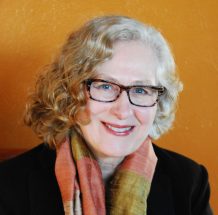
Catherine Morris
,
Catherine Morris has worked in the field of international human rights for over two decades, and in the field of peace and conflict studies and practice for more than four decades, including founding, leadership, policy, research, and teaching in academic institutions and civil society organizations in Canada, Thailand, Cambodia, Rwanda, Bolivia, and Europe. She served as an Adjunct Professor, Faculty of Law at the University of Victoria from 2001 to 2016 and is currently an associate with UVic's Centre for Asia Pacific Initiatives. She currently serves as the UN Main Representative for Lawyers' Rights Watch Canada, NGO in consultative status with the UN.
Contact Expert
Please provide the required information below to contact Catherine Morris.
Catherine Morris has worked in the field of international human rights for over two decades, and in the field of peace and conflict studies and practice for more than four decades, including founding, leadership, policy, research, and teaching in academic institutions and civil society organizations in Canada, Thailand, Cambodia, Rwanda, Bolivia, and Europe. She served as an Adjunct Professor, Faculty of Law at the University of Victoria from 2001 to 2016 and is currently an associate with UVic's Centre for Asia Pacific Initiatives. She currently serves as the UN Main Representative for Lawyers' Rights Watch Canada, NGO in consultative status with the UN.
ADDITIONAL TITLES AND AFFILIATIONS
- Visiting Professor, Chulalongkorn University, Bangkok, Thailand (2002 to 2016)
- Visiting Professor, European Peace University, Austria (2011-2013)
- Adjunct Professor, Faculty of Law University of Victoria (2001-2016)
- UN Main Representative, Lawyers' Rights Watch Canada (since 2016)
- Director, Peacemakers Trust (since 1999)
The Toronto Star
Joshua Boyle and Caitlan Coleman were travelling in Central Asia when they were captured in Afghanistan in 2012. Their innocence, youth and citizenship in Canada and the U.S. made them ideal hostages. They — and their children — are innocent of wrongdoing or involvement in Afghanistan’s conflicts. This family is no less entitled to protection against human rights violations than diplomats, aid workers or journalists. Instead of inspiring public outrage at their captivity, they have been forgotten.
The Georgia Straight
One of the worst things about Bill C-51 is that it threatens the rule of law and undermines the integrity and independence of Canadian courts. Bill C-51 would allow CSIS and the Minister of Public Safety to co-opt and harness judges in violations of the Charter of Rights and Freedoms (Charter) or other laws in or outside of Canada. This concern must be singled out in the clamour of worries expressed by hundreds of academics, judges, lawyers, indigenous leaders, human rights defenders, and other experts who point out Bill C-51’s compromises to Canadians’ rights to liberty, fair hearings, privacy, and freedom of expression ...
The Cambodia Daily
Cambodia’s escalating post-election and labor tensions have so far led to two tragic shooting deaths and numerous injuries. Peaceful protests have escalated into rock-throwing and scuffling with police who suppress demonstrations with tear gas, water cannons, batons, rubber bullets and even live ammunition. While excessive use of force and firearms by police must be condemned, demonstrators must learn three compelling reasons for remaining peaceful even in the face of provocation ...
The Diplomat
Ahead of next week’s U.S.-ASEAN summit at California’s Sunnylands retreat, human rights groups and others are calling on President Barack Obama to use the occasion to publicly raise concerns about human rights and democratic regression in Southeast Asia ...
Christian Week
George W. Bush's luncheon visit to Toronto on September 19 has come and gone, but a bitter taste lingers among - and about - Christians ...
Toronto Star
Omar Khadr may finally be home, but he’s not exactly welcome. Government statements have repeatedly branded him as a “war criminal” and a “convicted terrorist” — inflammatory characterizations that disregard both facts and laws ...
IAPS Dialogue, Institute of Asia and Pacific Studies, University of Nottingham,
Cambodia’s elections are always a bell-weather of peace and human rights in the country. In the 4 June 2017 local commune elections, seven million people, more than 85 per cent of registered voters, peacefully turned out to elect 12,000 representatives in 1,646 communities around the country. Observers found some noticeable irregularities, but in comparison with past elections, the polls went ‘smoothly.’ Yet the commune elections were no harbinger of peace. For months during the run up to the elections, long-ruling Prime Minister Hun Sen and his Cambodian People’s Party (CPP) demonstrated a long-familiar pattern of violent threats and deployed another potent weapon – the law.
Slaw.ca: Canada's Online Legal Magazine
Reflections on the 19 June 2020 UN Human Rights Council resolution on systemic racism, police brutality, and unlawful suppression of peaceful protest. The brutal torture and murder of ...George Floyd, in the United States (US) on 25 May 2020 has sparked global outrage about systemic racism and impunity for police violence against Black people, Indigenous Peoples and people of colour. Protestors have taken to the streets in thousands of places around the world, including Canada. [...] Canada-wide protests since 25 May 2020 indicate that it is just as urgent to address systemic racism in Canada as it is in the US. The words of 20 UN officials of African descent on 14 June sum up the urgency of immediate action around the world, including Canada: “Now is the time to move from words to deeds” and to “commit to harnessing our expertise, leadership and mandates to address the root causes and structural changes that must be implemented if we are to bring an end to racism.” In the words of Michelle Bachelet: “Time is of the essence,” “Patience has run out.”
Slaw.ca: Canada's Online Legal Magazine
The military coup in Myanmar shocked the world on the 1st of February, but the junta’s actions since then have surprised no one. International organizations, governments, and civil society organizations around the globe have expressed outrage or at least “concern” about the abrupt halt to Myanmar’s decade of stumbling political reform. Hundreds of thousands of people in Myanmar have courageously risen up in nonviolent protest and are calling on the world for help. They are awaiting urgent action by other countries and international organizations to use the international law tools and mechanisms available to reverse the military takeover.
Slaw.ca: Canada's Online Legal Magazine
The life of the Prosecutor of the International Criminal Court (ICC), Fatou Bensouda, became easier on 2 April 2021 when United States (US) President Biden lifted harsh economic sanctions against her that had been authorised by former-President Trump on 15 June 2020 and applied on 2 September 2020. Ms. Bensouda’s nine-year term ends in June 2021, and her successor, UK lawyer Karim Khan QC, will begin his term free of the threat of US sanctions against him. Human rights advocates around the world are also breathing more easily now that their efforts to seek accountability for perpetrators of international atrocity crimes are no longer constrained by “fear of punishment, including sanctions so serious that some characterize them as ‘economic death’.” [...] Does the removal of sanctions against the ICC signal a change in the historically fraught relationship between the US and the ICC? This article explains the nature of the ICC as an international court of competent jurisdiction, the history of US animosity against the Court, and the reasons the attacks against the Court have been of deep concern to States Parties to the Rome Statute and human rights non-government organizations (NGOs), including LRWC. Also explored are the prospects for change to US policy now that the sanctions have been lifted.
Slaw.ca: Canada's Online Legal Magazine
In 2021 the world has witnessed the abject failure of international organizations to curtail even the most grave human rights violations, including war crimes, crimes against humanity and genocide (“atrocity crimes”). The situation in Afghanistan is one case in point. In countries around the globe, international human rights law is routinely violated with impunity. Many are wondering what “human rights” mean when politicians and diplomats toss out the term with ease while remaining reckless or complicit in the face of human rights violations and atrocities.
Slaw.ca: Canada's Online Legal Magazine
The “two Michaels,” Kovrig and Spavor, are not the only Canadians who have been unjustly imprisoned in China. Another Canadian, Huseyin Celil, has been jailed in China since 2006 on specious “terrorism” charges for peacefully advocating the rights of Uyghur people. These cases provide windows into the morass of everyday violations against Chinese human rights advocates ensnared within China’s legal system. They also provide glimpses into some of the ways China flexes its international muscles to sustain its impunity for rights violations, including atrocity crimes.
Slaw.ca: Canada's Online Legal Magazine
by Catherine Morris, Stephen Rapp and Etienne Toussaint The recent findings of an international trial monitoring panel in the case of United States v. Donziger reveal the failure of a New York court to ensure a fair trial in accordance with international law and human rights standards. As the panel concluded in their extensive report, critical changes are needed in laws, rules, and courtroom procedures to ensure that the methods of US federal courts match their longstanding mission to uphold the rule of law.
Slaw.ca: Canada's Online Legal Magazine
Russia’s unlawful invasion of Ukraine has led the international community to respond with unprecedented speed and intensity. Reactions to this European conflict are in stark contrast with the lack of effective international action to halt ongoing atrocities in Myanmar, Afghanistan, China, and other places. The crisis in Ukraine has also brought to the foreground the limitations of international law and mechanisms to halt aggression and atrocity crimes. This article summarizes recent attempts within United Nations (UN) bodies to halt the war and atrocities in Ukraine. Also considered are actions in the International Court of Justice (ICJ) and the International Criminal Court (ICC), as well as suggestions for an ad hoc criminal tribunal for the crime of aggression. The article concludes with a discussion of the Achilles heel of the UN Security Council (SC) – the veto power held by its five permanent members (P5), Russia, the United States (US), China, the United Kingdom (UK), and France.
Slaw.ca: Canada's Online Legal Magazine
It takes four days for the public to turn away from news of a mass shooting in the United States (US). Within those four days, there will be up to eight more mass shootings and hundreds more gun-related deaths with little news coverage. Meanwhile, lack of effective laws and poor enforcement allow “crime guns” to filter through porous US borders to neighbouring countries. After each mass shooting, gun control advocates demand that governments “do something.” US and Canadian legislators take piecemeal measures as they twist in hot winds of polarized uproar that pits “gun rights” against “gun control.” Strikingly missing is a focus on people’s right to life and security and other fundamental human rights guaranteed by international law.
Slaw.ca: Canada's Online Legal Magazine
The role of the United Nations (UN) human rights chief is under intense international scrutiny after the long-awaited release of a strong report on grave human rights violations in China’s Xinjiang Uyghur Autonomous Region. On 8 September, a new UN High Commissioner for Human Rights (UNHCHR), Volker Türk, was appointed to assume the role after Ms. Bachelet’s four-year term ended at midnight on 31 August 2022. The transition to the new High Commissioner offers an opportunity to reflect on what has been described as the UN’s toughest job, some even wondering if it is impossible. The High Commissioner is called to implement a core mandate of the UN – human rights around the world – on a frayed shoe-string budget comprising a mere three percent of the regular UN budget, the rest of which is devoted to the UN’s other core mandates, peace and security and development.
Slaw.ca: Canada's Online Legal Magazine
Concerns for the wellbeing of older persons are rarely framed as human rights issues entrenched in age discrimination. This may now be changing after the shocking revelations of maltreatment and excess deaths of older persons in Canadian care homes in 2020. The abuses exposed in 2020 were predictable consequences of Canada’s longstanding neglect of older persons’ fundamental rights. Decades of efforts by Canadian civil society organizations (CSOs) along with international CSOs, and UN human rights bodies may now be gaining traction in a drive for a United Nations (UN) treaty to spell out and guarantee the fundamental human rights of older persons around the world. But efforts may continue to stall until leaders in Canada and other countries come to grips with the root cause of the abuses – endemic ageism.
Slaw.ca: Canada's Online Legal Magazine
by Catherine Morris & Rebekah Smith Disproportionate violence against Indigenous persons in Canada includes uncounted disappearances of Indigenous children, women, and men. Canada’s decades of failure to prevent and halt disappearances forms part of a long litany of grave international human rights violations against Indigenous Peoples. Continued reports of officially hushed-up violence lead to increasingly clarion allegations of genocide. An unknown number of children remain unaccounted for after going missing from Canada’s notorious “Indian Residential Schools.” Hundreds – possibly thousands – of Indigenous women, girls, two-spirit, and others with diverse gender identities (2SLGBTQQIA) have disappeared without adequate investigation. Police have forcibly taken Indigenous persons on “starlight tours,” failing to document arrests and abandoning detainees in remote locations, sometimes without sufficient clothing, food, or water. Canada’s pattern of failure to ensure effective and timely remedies for disappearances of Indigenous persons may amount to acquiescence in international crimes of enforced disappearance. Canada’s international law obligations require urgent steps to end official inaction and complicity. Concrete action would include accession to and implementation of the International Convention for the Protection of All Persons from Enforced Disappearance.
Slaw.ca: Canada's Online Legal Magazine
by Catherine Morris & Lauren A. McCarthy Russia is using the law as a weapon against its own citizens to silence all criticism of its unlawful war of aggression against Ukraine. International attention has been focused on Russia’s high-profile criminal prosecutions of independent journalists and opposition politicians. Comparatively little attention is being paid to thousands of dissenters punished with hefty fines under a new censorship law that forbids the “discrediting” of Russia’s armed forces. One Russian human rights organization, OVD-Info, is pushing back against the law by facilitating the submission of a battery of complaints to the Russian Constitutional Court. The complainants argue that the law against “discrediting” violates Russia’s Constitution. International human rights organizations and legal scholars from Canada, the United States, Australia, and Europe, have also examined the discrediting law and its application, finding that it violates Russia’s international law obligations as well. They are preparing several amicus curiae briefs to submit to the Russian Constitutional Court.
Slaw.ca: Canada's Online Legal Magazine
Canada has announced its candidacy for a seat on the United Nations Human Rights Council to begin in 2028. According to Canadian Minister of Foreign Affairs Mélanie Joly, Canada wants to reaffirm its “leadership in championing human rights around the world” given that human rights are under attack globally. When setting up the UN Human Rights Council in 2006, the UN General Assembly decided that all Council members would be required to live up to “the highest standards in the promotion and protection of human rights.” Canada has a vaunted international reputation for human rights, but closer examination reveals a murkier record. Human rights experts and advocates have long pointed out gaps, blind-spots, and implementation half-measures that challenge Canada’s standing as a human rights champion. Canada’s global leadership on human rights depends on the measures it takes to respect, protect, and fulfil human rights at home and abroad. This column outlines the process for election of Human Rights Council members and sets out gaps and possibilities for Canadian global leadership through ratification or accession to human rights treaties.
Slaw.ca: Canada's Online Legal Magazine
On August 30th each year, the world is reminded that hundreds of thousands of people in at least 85 countries don’t know where their loved ones are, or even whether they are alive or dead. For the victims of enforced disappearance and their families, every day is the Day of the Disappeared.
Slaw.ca: Canada's Online Legal Magazine
Businesses are deeply implicated in abuses of human rights defenders worldwide. In 2021 more than “a quarter of lethal attacks were linked to resource exploitation,” according to Global Witness. Indigenous Peoples are disproportionately attacked. Over 40 percent of fatal attacks targeted Indigenous people who make up only 5 percent of the world’s population. One in ten defenders killed were women, two-thirds of whom were Indigenous. Canada’s record of business abuses of human rights increasingly attracts international criticism. Canada is home to about half the world’s extractive companies operating in nearly 100 countries. When Indigenous land rights defenders protest business or government incursions on their lands, they are likely to be vilified, stigmatized, criminalized, threatened, or attacked. Canada is no exception.
Slaw.ca: Canada's Online Legal Magazine
by Catherine Morris & Julia Tchezganova Russia’s persecution of thousands of independent journalists, human rights defenders, anti-war dissenters, and opposition politicians in Russia is well known, especially the arbitrary detention and death of Alexei Navalny. Less well known are Russia’s threats and judicial harassment of people living in other countries – including Canada – for sharing views that dissent from official Russian narratives. For a seven-month period during 2023 and 2024, a permanent resident of Canada, Maria Kartasheva, found herself in fear of lengthy imprisonment in Russia. A Russian court tried and sentenced her in absentia for her peaceful online advocacy exposing Russia’s war crimes in Ukraine. Ms. Kartasheva was charged under Russia’s notorious “fake news” law – one of the laws used in trumped up charges against Alexei Navalny’s political allies, including those living in exile outside Russia. So far, Ms. Kartasheva’s nerve-wracking experience has had a happy ending. Yet, her story raises questions about Canada’s current capacity for practical, timely implementation of its international obligations and policies, particularly its obligation to ensure that residents of Canada are not unduly placed in fear of potential removal to countries where they would be unlawfully persecuted on political grounds.
Slaw.ca: Canada's Online Legal Magazine
British Columbia’s government is currently fighting the Law Society of British Columbia (LSBC) and the Trial Lawyers Association of British Columbia (TLABC) over BC’s new Legal Professions Act (Bill 21). They and others see Bill 21 as unlawfully terminating the independence of the profession of lawyers. Bill 21 also serves as a case study in the failure of democratic law-making. [...] ‘On 10 April 2024, the details of Bill 21 became public for the first time. The government’s intention became clear… it had unilaterally decided to impose its own institutional design for governance of lawyers. The Law Society of British Columbia (LSBC) would no longer exist. The identity of BC’s 14,000 lawyers would be changed from “members” of the LSBC to “licensees” of a new 17-member regulatory body. Their only say in governance would be to elect five of its 17 members. … There is now a dangerous prospect that BC’s example will embolden authoritarian governments to use similar anti-democratic procedures to silence members of self-governing bar associations.’
Slaw.ca: Canada's Online Legal Magazine
The August 2024 prisoner exchange involving Russia, the United States, and several other countries has been lauded as a triumph of international diplomacy. Foreign hostages were not the only people released by Russia. Rights advocates were joyfully surprised and relieved that several Russian human rights defenders and political prisoners were released as part of the deal. The August hostage exchange remains darkly tinged with the reality that Russia continues to hold over 1,300 prisoners on politically motivated charges. Worldwide, wrongfully detained people number at least a million. Authoritarian governments also conduct extraterritorial harassment to silence dissidents living abroad. This column seeks to illuminate issues that are overshadowed by intense media spotlights on State-to-State hostage-taking. Broader patterns of wrongful detention by China, Russia, and Iran are examined in light of international law. Concluding paragraphs offer reflections from a Canadian perspective on how to prevent and deter the taking of prisoners by State actors for purposes of economic or political leverage.
Slaw.ca: Canada's Online Legal Magazine
The Taliban’s unlawful takeover of Afghanistan in August 2021 has become a “human rights catastrophe.” Afghan women and girls are being erased from public life as their rights are systematically annihilated. On 26 September 2024, Canada announced a plan to take the Taliban to the International Court of Justice (ICJ) over their violations of Afghanistan’s obligations under the Convention on Elimination of All Forms of Discrimination against Women (CEDAW). The joint plan has been launched by Australia, Canada, Germany, and the Netherlands, with support from 22 other countries. UN experts and human rights organizations are applauding this groundbreaking initiative as a starting point. They are also calling on the international community, including Canada, to do more to defend the rights of women and girls, and all peoples of Afghanistan. Ethnic and religious minorities also face grave persecution.
Appearances
numerous oral statements at the UN Human Rights Council
Geneva (or online)
2026 Report of the Coalition for the Day of the Endangered Lawyer
online
Canada’s International Human Rights Obligations and Bill C-51
Victoria, BC
Corporate Land-Grabbing & Fabricated Charges in Cambodia: What Can Canadian Lawyers Do?
Vancouver, BC
International Human Rights and Access to Justice: International Right to Legal Aid
Victoria, BC
The Impact of Mediation on the Culture of Disputing in Canada
Victoria, BC
Human Rights in Transition in Thailand: Coups, Constitutions and Cases
University of Victoria, Canada
Truth, Lies, Reconciliation, and the Church in North America
Bergneustadt, Germany
Atrocity Crimes in Myanmar: Accountability and Responsibility
International Law Section of the BC Branch of the Canadian Bar Association, Vancouver
Human Rights and Equality
Bangkok, Thailand
Gaps Between Promises and Implementation of International Human Rights: Global Challenges
Phnom Penh, Cambodia
“What is the International Criminal Court (ICC)? The Situation of The Philippines.”
Vancouver, Canada
Human rights and humanitarian law in Afghanistan since 15 August 2021
University of Victoria, Canada
Human rights in Southeast Asia and China
Centre for Asia-Pacific Initiatives, University of Victoria, Canada
Accountability for Atrocity Crimes: Mechanisms for holding perpetrators accountable
Victoria, Canada
Books
Research
Published by Routledge, 2017
Published by New York: Wolters Kluwer Law & Business, and Hong Kong: CCH Hong Kong, 2013
J.D.
in LawUniversity of Alberta
LL.M.
in LawUniversity of British Columbia
The Toronto Star
Joshua Boyle and Caitlan Coleman were travelling in Central Asia when they were captured in Afghanistan in 2012. Their innocence, youth and citizenship in Canada and the U.S. made them ideal hostages. They — and their children — are innocent of wrongdoing or involvement in Afghanistan’s conflicts. This family is no less entitled to protection against human rights violations than diplomats, aid workers or journalists. Instead of inspiring public outrage at their captivity, they have been forgotten.
The Georgia Straight
One of the worst things about Bill C-51 is that it threatens the rule of law and undermines the integrity and independence of Canadian courts. Bill C-51 would allow CSIS and the Minister of Public Safety to co-opt and harness judges in violations of the Charter of Rights and Freedoms (Charter) or other laws in or outside of Canada. This concern must be singled out in the clamour of worries expressed by hundreds of academics, judges, lawyers, indigenous leaders, human rights defenders, and other experts who point out Bill C-51’s compromises to Canadians’ rights to liberty, fair hearings, privacy, and freedom of expression ...
The Cambodia Daily
Cambodia’s escalating post-election and labor tensions have so far led to two tragic shooting deaths and numerous injuries. Peaceful protests have escalated into rock-throwing and scuffling with police who suppress demonstrations with tear gas, water cannons, batons, rubber bullets and even live ammunition. While excessive use of force and firearms by police must be condemned, demonstrators must learn three compelling reasons for remaining peaceful even in the face of provocation ...
The Diplomat
Ahead of next week’s U.S.-ASEAN summit at California’s Sunnylands retreat, human rights groups and others are calling on President Barack Obama to use the occasion to publicly raise concerns about human rights and democratic regression in Southeast Asia ...
Christian Week
George W. Bush's luncheon visit to Toronto on September 19 has come and gone, but a bitter taste lingers among - and about - Christians ...
Toronto Star
Omar Khadr may finally be home, but he’s not exactly welcome. Government statements have repeatedly branded him as a “war criminal” and a “convicted terrorist” — inflammatory characterizations that disregard both facts and laws ...
IAPS Dialogue, Institute of Asia and Pacific Studies, University of Nottingham,
Cambodia’s elections are always a bell-weather of peace and human rights in the country. In the 4 June 2017 local commune elections, seven million people, more than 85 per cent of registered voters, peacefully turned out to elect 12,000 representatives in 1,646 communities around the country. Observers found some noticeable irregularities, but in comparison with past elections, the polls went ‘smoothly.’ Yet the commune elections were no harbinger of peace. For months during the run up to the elections, long-ruling Prime Minister Hun Sen and his Cambodian People’s Party (CPP) demonstrated a long-familiar pattern of violent threats and deployed another potent weapon – the law.
Slaw.ca: Canada's Online Legal Magazine
Reflections on the 19 June 2020 UN Human Rights Council resolution on systemic racism, police brutality, and unlawful suppression of peaceful protest. The brutal torture and murder of ...George Floyd, in the United States (US) on 25 May 2020 has sparked global outrage about systemic racism and impunity for police violence against Black people, Indigenous Peoples and people of colour. Protestors have taken to the streets in thousands of places around the world, including Canada. [...] Canada-wide protests since 25 May 2020 indicate that it is just as urgent to address systemic racism in Canada as it is in the US. The words of 20 UN officials of African descent on 14 June sum up the urgency of immediate action around the world, including Canada: “Now is the time to move from words to deeds” and to “commit to harnessing our expertise, leadership and mandates to address the root causes and structural changes that must be implemented if we are to bring an end to racism.” In the words of Michelle Bachelet: “Time is of the essence,” “Patience has run out.”
Slaw.ca: Canada's Online Legal Magazine
The military coup in Myanmar shocked the world on the 1st of February, but the junta’s actions since then have surprised no one. International organizations, governments, and civil society organizations around the globe have expressed outrage or at least “concern” about the abrupt halt to Myanmar’s decade of stumbling political reform. Hundreds of thousands of people in Myanmar have courageously risen up in nonviolent protest and are calling on the world for help. They are awaiting urgent action by other countries and international organizations to use the international law tools and mechanisms available to reverse the military takeover.
Slaw.ca: Canada's Online Legal Magazine
The life of the Prosecutor of the International Criminal Court (ICC), Fatou Bensouda, became easier on 2 April 2021 when United States (US) President Biden lifted harsh economic sanctions against her that had been authorised by former-President Trump on 15 June 2020 and applied on 2 September 2020. Ms. Bensouda’s nine-year term ends in June 2021, and her successor, UK lawyer Karim Khan QC, will begin his term free of the threat of US sanctions against him. Human rights advocates around the world are also breathing more easily now that their efforts to seek accountability for perpetrators of international atrocity crimes are no longer constrained by “fear of punishment, including sanctions so serious that some characterize them as ‘economic death’.” [...] Does the removal of sanctions against the ICC signal a change in the historically fraught relationship between the US and the ICC? This article explains the nature of the ICC as an international court of competent jurisdiction, the history of US animosity against the Court, and the reasons the attacks against the Court have been of deep concern to States Parties to the Rome Statute and human rights non-government organizations (NGOs), including LRWC. Also explored are the prospects for change to US policy now that the sanctions have been lifted.
Slaw.ca: Canada's Online Legal Magazine
In 2021 the world has witnessed the abject failure of international organizations to curtail even the most grave human rights violations, including war crimes, crimes against humanity and genocide (“atrocity crimes”). The situation in Afghanistan is one case in point. In countries around the globe, international human rights law is routinely violated with impunity. Many are wondering what “human rights” mean when politicians and diplomats toss out the term with ease while remaining reckless or complicit in the face of human rights violations and atrocities.
Slaw.ca: Canada's Online Legal Magazine
The “two Michaels,” Kovrig and Spavor, are not the only Canadians who have been unjustly imprisoned in China. Another Canadian, Huseyin Celil, has been jailed in China since 2006 on specious “terrorism” charges for peacefully advocating the rights of Uyghur people. These cases provide windows into the morass of everyday violations against Chinese human rights advocates ensnared within China’s legal system. They also provide glimpses into some of the ways China flexes its international muscles to sustain its impunity for rights violations, including atrocity crimes.
Slaw.ca: Canada's Online Legal Magazine
by Catherine Morris, Stephen Rapp and Etienne Toussaint The recent findings of an international trial monitoring panel in the case of United States v. Donziger reveal the failure of a New York court to ensure a fair trial in accordance with international law and human rights standards. As the panel concluded in their extensive report, critical changes are needed in laws, rules, and courtroom procedures to ensure that the methods of US federal courts match their longstanding mission to uphold the rule of law.
Slaw.ca: Canada's Online Legal Magazine
Russia’s unlawful invasion of Ukraine has led the international community to respond with unprecedented speed and intensity. Reactions to this European conflict are in stark contrast with the lack of effective international action to halt ongoing atrocities in Myanmar, Afghanistan, China, and other places. The crisis in Ukraine has also brought to the foreground the limitations of international law and mechanisms to halt aggression and atrocity crimes. This article summarizes recent attempts within United Nations (UN) bodies to halt the war and atrocities in Ukraine. Also considered are actions in the International Court of Justice (ICJ) and the International Criminal Court (ICC), as well as suggestions for an ad hoc criminal tribunal for the crime of aggression. The article concludes with a discussion of the Achilles heel of the UN Security Council (SC) – the veto power held by its five permanent members (P5), Russia, the United States (US), China, the United Kingdom (UK), and France.
Slaw.ca: Canada's Online Legal Magazine
It takes four days for the public to turn away from news of a mass shooting in the United States (US). Within those four days, there will be up to eight more mass shootings and hundreds more gun-related deaths with little news coverage. Meanwhile, lack of effective laws and poor enforcement allow “crime guns” to filter through porous US borders to neighbouring countries. After each mass shooting, gun control advocates demand that governments “do something.” US and Canadian legislators take piecemeal measures as they twist in hot winds of polarized uproar that pits “gun rights” against “gun control.” Strikingly missing is a focus on people’s right to life and security and other fundamental human rights guaranteed by international law.
Slaw.ca: Canada's Online Legal Magazine
The role of the United Nations (UN) human rights chief is under intense international scrutiny after the long-awaited release of a strong report on grave human rights violations in China’s Xinjiang Uyghur Autonomous Region. On 8 September, a new UN High Commissioner for Human Rights (UNHCHR), Volker Türk, was appointed to assume the role after Ms. Bachelet’s four-year term ended at midnight on 31 August 2022. The transition to the new High Commissioner offers an opportunity to reflect on what has been described as the UN’s toughest job, some even wondering if it is impossible. The High Commissioner is called to implement a core mandate of the UN – human rights around the world – on a frayed shoe-string budget comprising a mere three percent of the regular UN budget, the rest of which is devoted to the UN’s other core mandates, peace and security and development.
Slaw.ca: Canada's Online Legal Magazine
Concerns for the wellbeing of older persons are rarely framed as human rights issues entrenched in age discrimination. This may now be changing after the shocking revelations of maltreatment and excess deaths of older persons in Canadian care homes in 2020. The abuses exposed in 2020 were predictable consequences of Canada’s longstanding neglect of older persons’ fundamental rights. Decades of efforts by Canadian civil society organizations (CSOs) along with international CSOs, and UN human rights bodies may now be gaining traction in a drive for a United Nations (UN) treaty to spell out and guarantee the fundamental human rights of older persons around the world. But efforts may continue to stall until leaders in Canada and other countries come to grips with the root cause of the abuses – endemic ageism.
Slaw.ca: Canada's Online Legal Magazine
by Catherine Morris & Rebekah Smith Disproportionate violence against Indigenous persons in Canada includes uncounted disappearances of Indigenous children, women, and men. Canada’s decades of failure to prevent and halt disappearances forms part of a long litany of grave international human rights violations against Indigenous Peoples. Continued reports of officially hushed-up violence lead to increasingly clarion allegations of genocide. An unknown number of children remain unaccounted for after going missing from Canada’s notorious “Indian Residential Schools.” Hundreds – possibly thousands – of Indigenous women, girls, two-spirit, and others with diverse gender identities (2SLGBTQQIA) have disappeared without adequate investigation. Police have forcibly taken Indigenous persons on “starlight tours,” failing to document arrests and abandoning detainees in remote locations, sometimes without sufficient clothing, food, or water. Canada’s pattern of failure to ensure effective and timely remedies for disappearances of Indigenous persons may amount to acquiescence in international crimes of enforced disappearance. Canada’s international law obligations require urgent steps to end official inaction and complicity. Concrete action would include accession to and implementation of the International Convention for the Protection of All Persons from Enforced Disappearance.
Slaw.ca: Canada's Online Legal Magazine
by Catherine Morris & Lauren A. McCarthy Russia is using the law as a weapon against its own citizens to silence all criticism of its unlawful war of aggression against Ukraine. International attention has been focused on Russia’s high-profile criminal prosecutions of independent journalists and opposition politicians. Comparatively little attention is being paid to thousands of dissenters punished with hefty fines under a new censorship law that forbids the “discrediting” of Russia’s armed forces. One Russian human rights organization, OVD-Info, is pushing back against the law by facilitating the submission of a battery of complaints to the Russian Constitutional Court. The complainants argue that the law against “discrediting” violates Russia’s Constitution. International human rights organizations and legal scholars from Canada, the United States, Australia, and Europe, have also examined the discrediting law and its application, finding that it violates Russia’s international law obligations as well. They are preparing several amicus curiae briefs to submit to the Russian Constitutional Court.
Slaw.ca: Canada's Online Legal Magazine
Canada has announced its candidacy for a seat on the United Nations Human Rights Council to begin in 2028. According to Canadian Minister of Foreign Affairs Mélanie Joly, Canada wants to reaffirm its “leadership in championing human rights around the world” given that human rights are under attack globally. When setting up the UN Human Rights Council in 2006, the UN General Assembly decided that all Council members would be required to live up to “the highest standards in the promotion and protection of human rights.” Canada has a vaunted international reputation for human rights, but closer examination reveals a murkier record. Human rights experts and advocates have long pointed out gaps, blind-spots, and implementation half-measures that challenge Canada’s standing as a human rights champion. Canada’s global leadership on human rights depends on the measures it takes to respect, protect, and fulfil human rights at home and abroad. This column outlines the process for election of Human Rights Council members and sets out gaps and possibilities for Canadian global leadership through ratification or accession to human rights treaties.
Slaw.ca: Canada's Online Legal Magazine
On August 30th each year, the world is reminded that hundreds of thousands of people in at least 85 countries don’t know where their loved ones are, or even whether they are alive or dead. For the victims of enforced disappearance and their families, every day is the Day of the Disappeared.
Slaw.ca: Canada's Online Legal Magazine
Businesses are deeply implicated in abuses of human rights defenders worldwide. In 2021 more than “a quarter of lethal attacks were linked to resource exploitation,” according to Global Witness. Indigenous Peoples are disproportionately attacked. Over 40 percent of fatal attacks targeted Indigenous people who make up only 5 percent of the world’s population. One in ten defenders killed were women, two-thirds of whom were Indigenous. Canada’s record of business abuses of human rights increasingly attracts international criticism. Canada is home to about half the world’s extractive companies operating in nearly 100 countries. When Indigenous land rights defenders protest business or government incursions on their lands, they are likely to be vilified, stigmatized, criminalized, threatened, or attacked. Canada is no exception.
Slaw.ca: Canada's Online Legal Magazine
by Catherine Morris & Julia Tchezganova Russia’s persecution of thousands of independent journalists, human rights defenders, anti-war dissenters, and opposition politicians in Russia is well known, especially the arbitrary detention and death of Alexei Navalny. Less well known are Russia’s threats and judicial harassment of people living in other countries – including Canada – for sharing views that dissent from official Russian narratives. For a seven-month period during 2023 and 2024, a permanent resident of Canada, Maria Kartasheva, found herself in fear of lengthy imprisonment in Russia. A Russian court tried and sentenced her in absentia for her peaceful online advocacy exposing Russia’s war crimes in Ukraine. Ms. Kartasheva was charged under Russia’s notorious “fake news” law – one of the laws used in trumped up charges against Alexei Navalny’s political allies, including those living in exile outside Russia. So far, Ms. Kartasheva’s nerve-wracking experience has had a happy ending. Yet, her story raises questions about Canada’s current capacity for practical, timely implementation of its international obligations and policies, particularly its obligation to ensure that residents of Canada are not unduly placed in fear of potential removal to countries where they would be unlawfully persecuted on political grounds.
Slaw.ca: Canada's Online Legal Magazine
British Columbia’s government is currently fighting the Law Society of British Columbia (LSBC) and the Trial Lawyers Association of British Columbia (TLABC) over BC’s new Legal Professions Act (Bill 21). They and others see Bill 21 as unlawfully terminating the independence of the profession of lawyers. Bill 21 also serves as a case study in the failure of democratic law-making. [...] ‘On 10 April 2024, the details of Bill 21 became public for the first time. The government’s intention became clear… it had unilaterally decided to impose its own institutional design for governance of lawyers. The Law Society of British Columbia (LSBC) would no longer exist. The identity of BC’s 14,000 lawyers would be changed from “members” of the LSBC to “licensees” of a new 17-member regulatory body. Their only say in governance would be to elect five of its 17 members. … There is now a dangerous prospect that BC’s example will embolden authoritarian governments to use similar anti-democratic procedures to silence members of self-governing bar associations.’
Slaw.ca: Canada's Online Legal Magazine
The August 2024 prisoner exchange involving Russia, the United States, and several other countries has been lauded as a triumph of international diplomacy. Foreign hostages were not the only people released by Russia. Rights advocates were joyfully surprised and relieved that several Russian human rights defenders and political prisoners were released as part of the deal. The August hostage exchange remains darkly tinged with the reality that Russia continues to hold over 1,300 prisoners on politically motivated charges. Worldwide, wrongfully detained people number at least a million. Authoritarian governments also conduct extraterritorial harassment to silence dissidents living abroad. This column seeks to illuminate issues that are overshadowed by intense media spotlights on State-to-State hostage-taking. Broader patterns of wrongful detention by China, Russia, and Iran are examined in light of international law. Concluding paragraphs offer reflections from a Canadian perspective on how to prevent and deter the taking of prisoners by State actors for purposes of economic or political leverage.
Slaw.ca: Canada's Online Legal Magazine
The Taliban’s unlawful takeover of Afghanistan in August 2021 has become a “human rights catastrophe.” Afghan women and girls are being erased from public life as their rights are systematically annihilated. On 26 September 2024, Canada announced a plan to take the Taliban to the International Court of Justice (ICJ) over their violations of Afghanistan’s obligations under the Convention on Elimination of All Forms of Discrimination against Women (CEDAW). The joint plan has been launched by Australia, Canada, Germany, and the Netherlands, with support from 22 other countries. UN experts and human rights organizations are applauding this groundbreaking initiative as a starting point. They are also calling on the international community, including Canada, to do more to defend the rights of women and girls, and all peoples of Afghanistan. Ethnic and religious minorities also face grave persecution.
Books
Research
Published by Routledge, 2017
Published by New York: Wolters Kluwer Law & Business, and Hong Kong: CCH Hong Kong, 2013
J.D.
in LawUniversity of Alberta
LL.M.
in LawUniversity of British Columbia
LOCATION
Victoria, British Columbia, Canada
LANGUAGES SPOKEN
SPECIALIZED BEATS
EXPERTISE
RECOGNITION
Victoria Bar Association Volunteer Award
Catherine Morris received the Victoria Bar Association Volunteer Award in 2015 for her work on the rule of law through promotion of international human rights.