

 Advocacy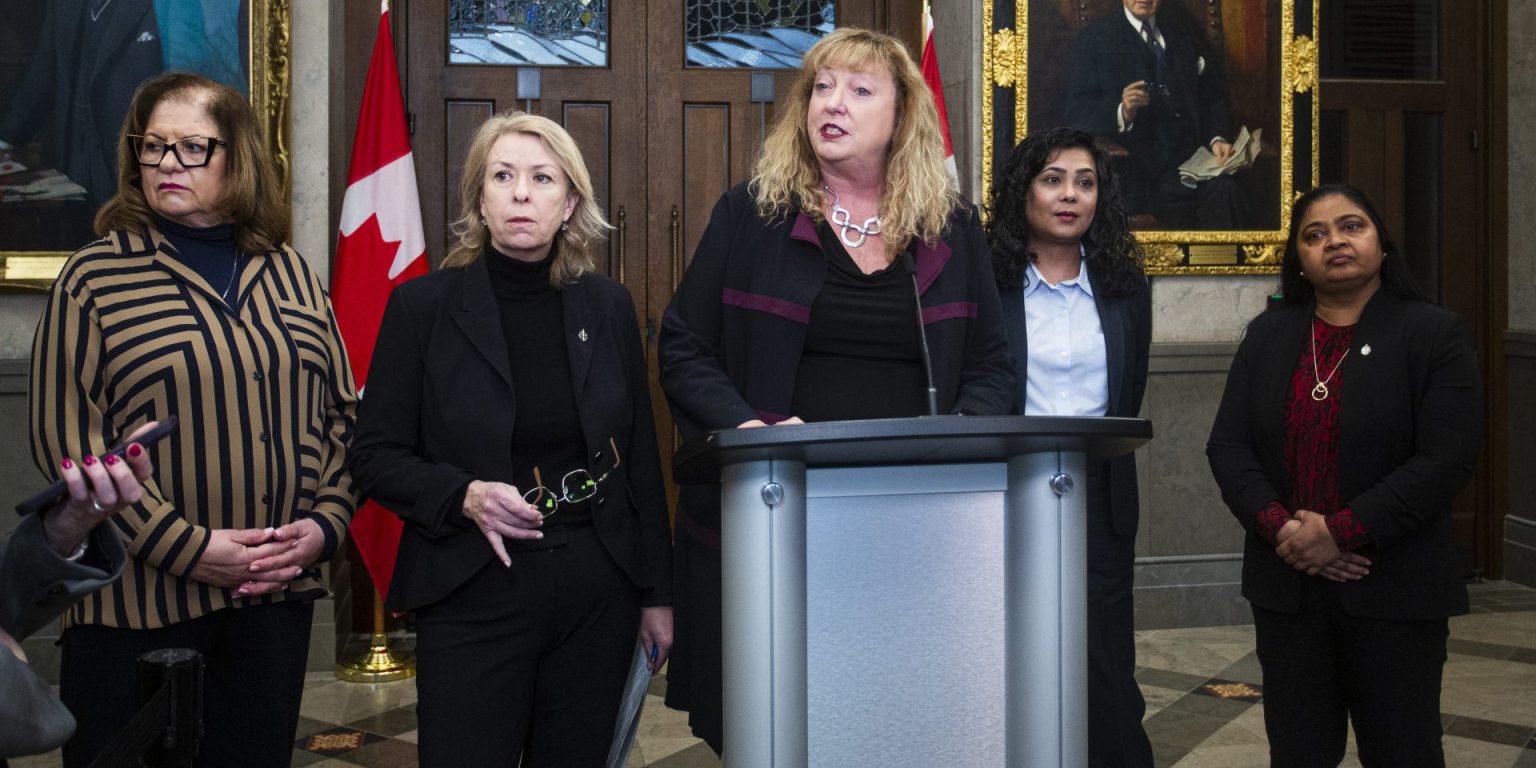


“Your body, my choice – forever.”
That’s what anti-feminist online influencer Nick Fuentes posted on X last year, fortified by Donald Trump’s election. His boast went viral.
A few months later, the hate-inciting Andrew Tate – accused of human trafficking and rape in Romania – was given sanctuary in the US.
Why did Tate base his anti-feminist empire in Romania? Because it’s the worst-performing country for gender equality in Europe. Eighty percent of Romanians believe the lie that women belong at home.
And why did Tate return to America? Because he knew his misogyny would be not only welcome, but celebrated there.
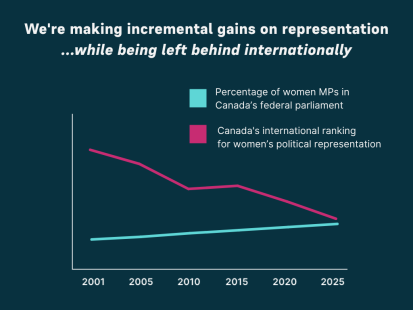
Not coincidentally, the US ranks 84th internationally for women’s representation in politics. That’s a shocking status for a country that, until recently, was considered a beacon of democracy. But at 73rd, Canada is only a few points ahead of our southern neighbour.
This Parliament, led by the members of the Committee on the Status of Women, has a chance to help change that. That the Committee has chosen to focus some of its resources on examining the threats that anti-feminist rhetoric pose in an increasingly online world is a recognition of how high the stakes are.
The lies being spread by the likes of Nick Fuentes and Andrew Tate include the contention that advancing women’s rights weakens society; that our role is to be subservient; and that we deserve to be violated. Those lies threaten our freedom, our economy and our democracy. And one of the best ways to combat them is to ensure that women’s contributions are equitable, visible and recognized as essential.
This week, Informed Perspectives presented a concrete proposal to the Committee to oppose the trends being weaponized by authoritarians and their online abbetors.
We pointed out that the women members’ very presence in Parliament is itself a start. But we argued that passively permitting men to continue to retain 70% of the electoral power implicitly reinforces the lies being spread.
We’re living next door to a terrifying case study, witnessing the catastrophic impact that anti-feminist rhetoric left unchecked can have, destroying decades of democratic norms and equality progress, almost overnight.
Consider: when the US began rolling back abortion rights, the only option many American women had to end an unwanted pregnancy was to turn to feminist networks in one of the most Catholic countries in the world: Mexico.
How did that happen? A dozen years ago, Mexico started requiring all political parties to run as many women as men in their national elections. As a result, a country previously famous for its machismo achieved gender parity.
Not surprisingly, women quickly used their political power to make it much easier to access reproductive health care. Their success benefited not only hundreds of thousands of Mexican women, but their American sisters, as well.
When a nation ensures that women hold half the seats and visibly exercise political authority, it makes equality the expected standard. It challenges the myths that misogyny spreads. By the same token, continuing to accept men’s significant overrepresentation bolsters perceptions that women don’t belong and aren’t capable of wielding power.
At the turn of this century, out of 181 countries. Canada ranked 28th for women in politics. Now we’re 73rd – much closer to the US than Mexico, which is 5th. We have accepted incremental change, while Mexico – and dozens of other nations – have said no to the status quo, and transformed their systems.
Informed Perspectives has studied the policy measures successful elsewhere. Here’s what we know could work in our system:
Require parties to run equal numbers of men and women, including in winnable ridings. Those that fail to comply, forfeit their right to compete. Period.
It’s not complicated; it wouldn’t be costly to implement; and it’s not controversial.
Abacus polling conducted last fall found that 86% of Canadians believe women and men should be equitably represented. In fact, Canada is now an outlier in the democratic world for having failed to take the kind of concerted action so many other countries have embraced.
We are encouraging the members of the Committee – alongside all women MPs and their enlightened male allies – to wield the power they have and collectively champion this overdue democratic change.
In doing so, they would not only challenge anti-feminist ideology and dramatically amplify women’s visibility and impact, they would also secure their place in history for having achieved this long -sought goal of balancing the power.